

Merch â Chanari Marw
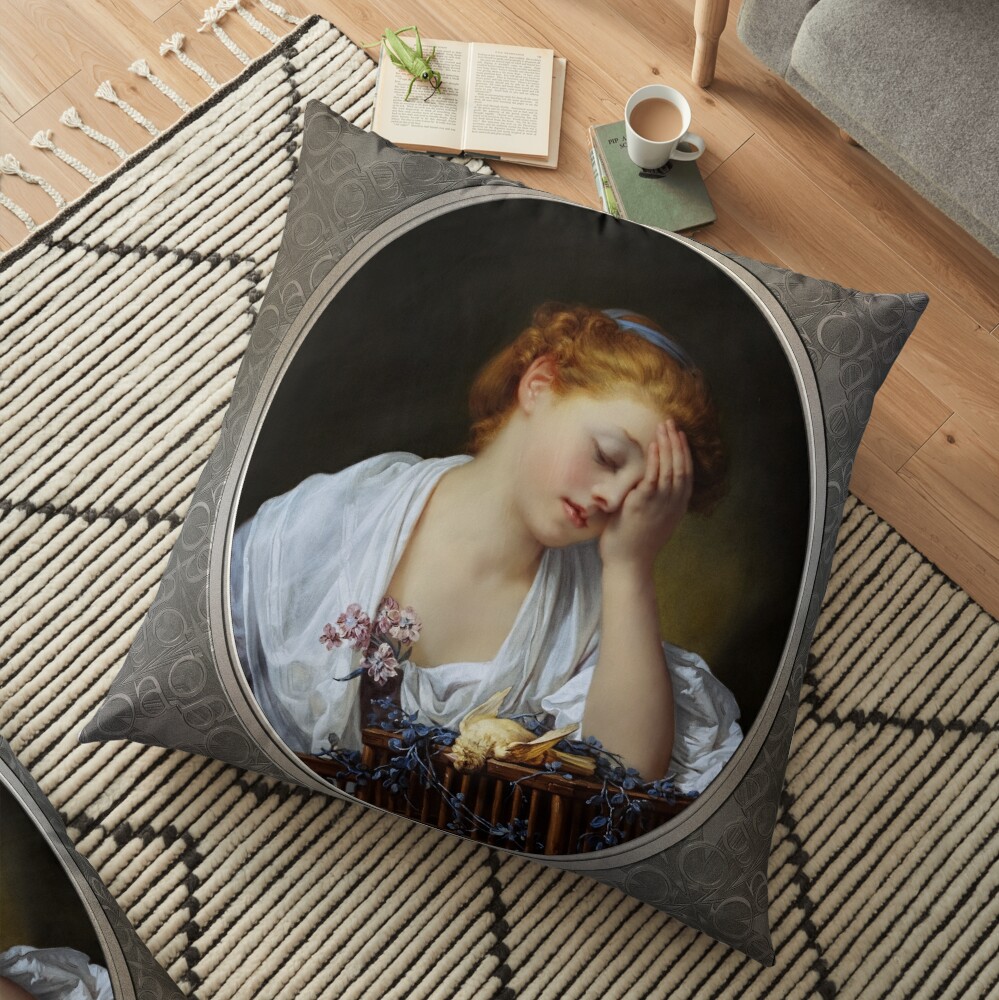
“Merch â Chanari Marw,” paentiwyd gan yr artist Ffrengig Jean-Baptiste Greuze (1725 – 1805), yn waith teimladwy sy’n procio’r meddwl sy’n adlewyrchu sgil yr artist i ddal emosiwn dynol trwy fynegiadau cain a manwl. Crëwyd yn hanner olaf y 18fed ganrif, mae'r darn hwn yn enghreifftio'r arddulliau Rococo a Neoglasurol cynnar a ddiffiniodd lawer o yrfa Greuze. Dwysedd emosiynol y paentiad, ynghyd â'i destun, yn archwilio themâu colled, diniweidrwydd, a natur fregus bywyd, pryderon cyffredin y cyfnod.
Tabl Cynnwys
Y prif bwnc
At the heart of this piece is the image of a young girl, her face marked by a deep sense of sorrow and contemplation. The girl is depicted with a naturalistic yet idealized beauty, characteristic of the Rococo style, with soft, delicate features and smooth skin. Her posture is languid yet graceful, with her right hand placed gently against her forehead, as if overwhelmed by grief or distress. The girl’s eyes are partially closed, her gaze directed downward in a moment of quiet sorrow, lending an air of introspection and melancholy to the scene.
Y pwnc, though youthful and tender in appearance, conveys a mature emotional depth. The girl’s expression is filled with quiet resignation, possibly a reflection on the death of the canary in her hand, which becomes the central motif of the artwork. The girl’s lips are slightly parted, suggesting an inward focus or the beginning of a sigh, reinforcing the sense of loss that pervades the composition. She is dressed in simple yet elegant white attire, which enhances her ethereal quality and focuses the viewer’s attention on her expression and the symbolism surrounding her.
Y Caniad Marw
In the girl’s left hand rests a dead canary, its small body lifeless and limp, positioned delicately alongside the girl’s skin. The bird’s natural beauty contrasts sharply with its death, and its fragility is emphasized by the tender handling of its form. The canary, a symbol of innocence and fragility, was often associated with themes of loss during the 18th century, particularly in works of art where death or suffering was a focal point. The bird’s delicate feathers and vivid yellow hue, though faded in death, are stark against the girl’s pale skin and the muted tones of the background.
The placement of the canary in the composition creates a balance between the girl’s sorrow and the physical object she holds. It is almost as if the girl’s grief is intertwined with the fate of the bird, serving as an emotional metaphor for her own youth and innocence, now marred by the irreversible passage of time or the inevitability of mortality. The canary’s death becomes a poignant symbol of life’s impermanence, a theme that resonates deeply within the context of 18th-century art and culture.
Y Tir a'r Defnyddiau
The background of the painting is dark and unobtrusive, with a smooth gradient of deep brown and black tones that do not distract from the central subject. This subtle backdrop creates a stark contrast to the girl’s delicate skin tones and the bright yellow feathers of the canary, focusing all attention on the emotional expression and the symbolism conveyed through the subject and her gesture. The artist’s use of light and shadow emphasizes the softness of the girl’s features and the texture of her attire, adding to the overall atmosphere of fragility and vulnerability.
The artist’s material choice of oil paint allows for a smooth, almost velvety finish, with every detail of the girl’s skin, wallt, and the canary rendered in exquisite realism. The texture of the girl’s white dress is particularly notable, ei blygiadau mân a'i grychau cain wedi'u paentio â sylw gofalus i olau a chysgod. Mae'r dechneg hon yn adlewyrchu meistrolaeth Greuze wrth rendro ffabrigau a gweadau, a oedd yn nodwedd o'i waith. Mae'r olewau hefyd yn dal y chwarae cynnil o olau ar groen y ferch, yn rhoi benthyg meddal iddi, ansawdd goleuol sy'n gwella effaith emosiynol gyffredinol y darn.
Mae'r deunyddiau a'r defnydd o olau yn y paentiad yn creu ymdeimlad o bresenoldeb bron yn fywydol, gan dynnu'r gwyliwr i mewn i'r foment agos-atoch a ddaliwyd gan Greuze. Mae’r sylw i fanylion yn mynegiant wyneb y ferch ac osgo ei dwylo yn gwahodd myfyrdod ymhellach, gwneud y gwaith celf hwn yn ddarn hynod deimladwy a mewnweledol.
Arddull, Thema, a hwyliau
Yr arddull Rococo, yn adnabyddus am ei bwyslais ar ras, geinder, a dwyster emosiynol, is apparent in the lightness of the girl’s attire and the fine detail of the canary. Fodd bynnag, Greuze’s painting moves beyond mere Rococo frivolity, with the artist adopting a more serious, reflective tone that aligns with the emerging Neoclassical interest in moral and emotional themes. The artist’s focus on human emotion, particularly the complex and often painful feelings associated with loss, suggests a transition from the lighter, more decorative themes of Rococo art to a more somber and introspective approach.
The mood of the painting is one of quiet sorrow, with the girl’s contemplation and the symbolism of the dead canary serving as a meditation on mortality, diniweidrwydd, and the fragility of life. The painting evokes a sense of empathy and introspection in the viewer, as the expression on the girl’s face suggests both vulnerability and the inevitability of loss. This emotional depth and subtlety are characteristic of Greuze’s work, which often sought to evoke strong, sentimental reactions from the viewer, particularly through the portrayal of youthful figures in moments of emotional intensity.
The theme of loss in “Merch â Chanari Marw” speaks to the human experience of grief and the way in which small moments of sorrow can be amplified by emotional reflection. The girl’s sorrowful expression, paired with the delicate stillness of the dead bird, forms a visual metaphor for the fragility of innocence, ieuenctid, and life itself. It is a contemplative piece, encouraging the viewer to reflect on the transient nature of existence and the inevitable passage of time.
Nghasgliad
“Merch â Chanari Marw” yn enghraifft feistrolgar o allu Jean-Baptiste Greuze i ennyn emosiwn a myfyrdod dwfn trwy ei bortreadau manwl a llawn mynegiant. Trwy ddefnyddio golau, gwead, a symbolaeth, Mae Greuze yn dal y cydbwysedd cain rhwng harddwch a cholled, diniweidrwydd a marwoldeb. Naws prudd y paentiad, ynghyd â'i weithrediad technegol coeth, yn ei wneud yn gynrychioliad rhyfeddol o'r profiad dynol ac yn fyfyrdod teimladwy ar freuder bywyd.
Mae hwn yn atgynhyrchiad hen feistr celf ddigidol wedi'i ailfeistroli o ddelwedd parth cyhoeddus sydd ar gael i'w brynu ar-lein fel a print cynfas wedi'i rolio.
Y greadigaeth gelfyddyd ddigidol hon, fel gyda'r holl waith celf sydd i'w gael ar wefan Xzendor7 ar gael i'w brynu ar-lein mewn amrywiaeth o fformatau deunydd gan gynnwys printiau cynfas, printiau acrylig, printiau metel, printiau pren, printiau wedi'u fframio, posteri, ac fel printiau cynfas wedi'u rholio mewn amrywiaeth o feintiau o 12 modfedd i 72 modfeddi yn dibynnu ar faint y gwaith celf gwirioneddol a'r siop argraffu ar alw y byddwch yn dewis prynu'r celf ohoni.
Mae’r gwaith celf hefyd ar gael ar ystod eang o ddillad dynion a merched, mygiau, totes, sgarffiau, llyfrau nodiadau a chyfnodolion a llawer o gynhyrchion addurno cartref.
Atgyffwrdd Ffotograff o Bortread o Ferch Gyda Chanari Marw
Am Yr Artist
Mae'r Wybodaeth Isod Yn Deillio O NGA.gov
Ganwyd Jean yn Tournus, Ffrainc yn 1725 fel chweched mab i feistr teiliwr a adnabu ei ddawn yn ifanc iawn; ei anfon i Lyon, Ffrainc i astudio gyda'r Peintiwr Portreadau Ffrengig Charles Grandon (1691 – 1762).
Tua'r oedran o 30 gadawodd Lyon, a theithiodd i Paris, France to study at the Académie royale de peinture et de sculpture or the Royal Academy of Painting and Sculpture; which at the time was the premier art institution of France during the latter part of the Ancien Régime (Old Regiem ~1500 to 1789), until it was abolished in 1793 during the French Revolution.
Though highly talented and very successful during the 1760s and 1770s, having patrons of the likes of the Marquise de Pompadour (1721 – 1764), Empress Catherine II of Russia (r. 1762 – 1796), and Ange Laurent de La Live de Jully (1725 – 1779); his rebellious nature and conflicts with Academy and Salon officials would prove to be his misfortune; especially after his marriage to Anne Marie Babuty in 1759; which would prove to be a disaster for him, as she was known to have had various affairs with his students and sitters, which caused him loss of income and public humiliation.
When the marriage ended 34 years later his wife received a substantial settlement, which left him in dire financial straights and by the time of his death in 1805 yn oed 80 he was nearly broke.