

Portread Benywaidd O Wraig Ifanc
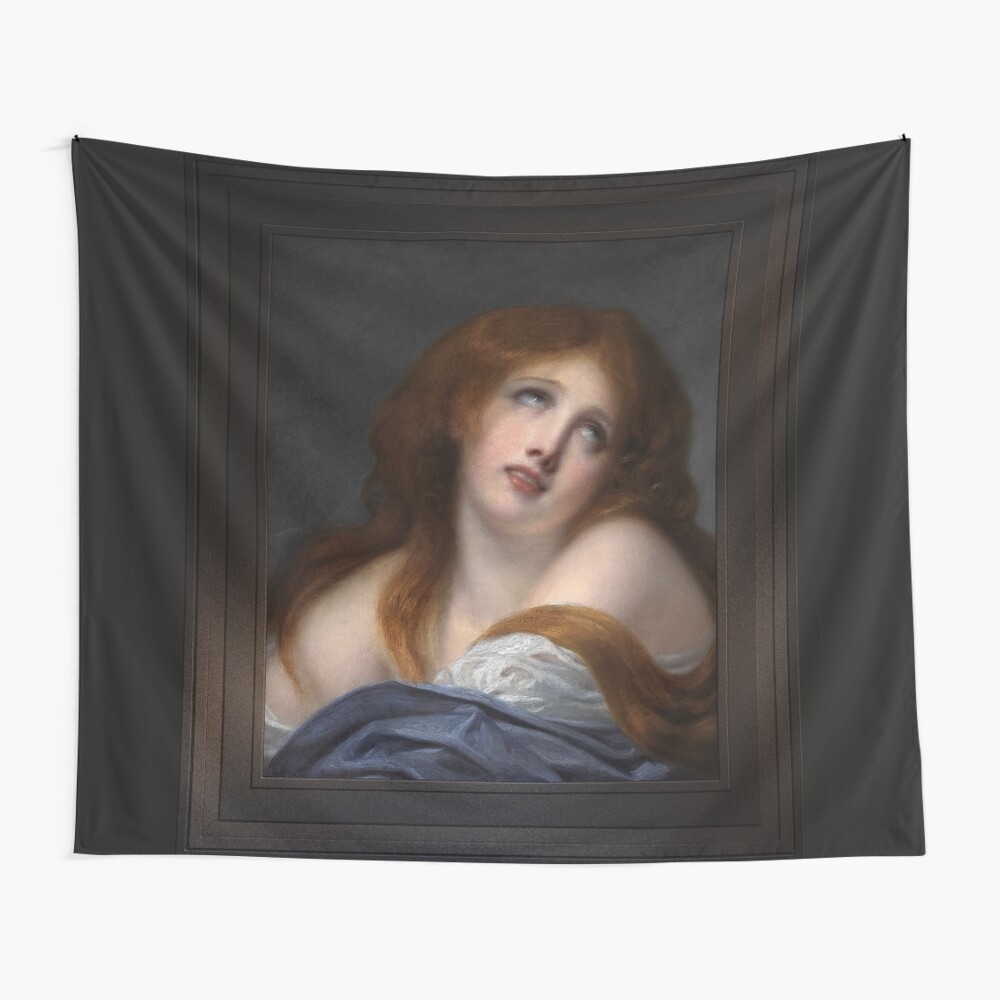
Y portread cain hwn, yn dwyn y teitl Portread Benywaidd O Wraig Ifanc, ei beintio gan Jean-Baptiste Greuze, arlunydd Ffrengig enwog a fu'n weithgar yn ystod y 18fed ganrif. Ganwyd yn 1725 a marw i mewn 1805, Roedd Greuze yn adnabyddus am ei bortreadau tyner ac emosiynol o'r cyflwr dynol. Roedd ei waith yn aml yn dal eiliadau o ddyfnder emosiynol dwys, a Portread Benywaidd O Wraig Ifanc yn enghraifft syfrdanol o hyn. Testun y portread, gwraig ifanc, yn ymddangos gyda'i phen wedi gogwyddo ychydig, gan syllu ar i fyny gyda mynegiant melancolaidd sy'n ymddangos fel pe bai'n ymgorffori cyflwr emosiynol cymhleth.
Tabl Cynnwys
Arddull a Thechneg
Mae arddull Greuze yn gyfuniad o geinder Rococo a thueddiadau Neoglasurol ei gyfnod sy’n dod i’r amlwg. Y brwswaith cain yn y paentiad hwn, ynghyd â defnydd cynnil o olau a chysgod, yn amlygu ei feistrolaeth ar chiaroscuro, techneg sy'n chwarae gyda chyferbyniadau rhwng golau a thywyllwch i greu ymdeimlad o ddyfnder a chyfaint. Y meddal, mae rendrad bron yn etheraidd o groen y fenyw a’r plygiadau moethus o ffabrig o amgylch ei hysgwyddau yn nodweddiadol o ddull coeth Greuze o ymdrin â phortreadau. Ei ddewis o dawel, cefndir tywyll yn gwella ansawdd goleuol y ffigwr ymhellach, gan ganolbwyntio pob sylw ar nodweddion cain ac osgo gosgeiddig y fenyw.
Mae defnydd yr artist o olau nid yn unig yn fodd i fodelu’r ffigwr, ond hefyd i bwysleisio dwyster emosiynol y pwnc. Y ffordd y mae'r golau yn gofalu croen y gwrthrych yn ysgafn, yn enwedig ei hwyneb a'i hysgwydd, adds a layer of tenderness and vulnerability to the portrait. This technique is often seen in Greuze’s work, where light symbolizes emotional clarity, diniweidrwydd, or purity.
Y Pwnc a Naws
The young woman depicted in the painting appears to be lost in thought, her expression caught in a moment of contemplation or introspection. Ei llygaid, slightly upturned, are soft and gazing into the distance, which could suggest a longing, a moment of pensive reflection, or even a quiet sorrow. The soft curves of her face, illuminated by the light, evoke a sense of fragility and grace, enhancing the feeling of emotional vulnerability. The woman’s slightly parted lips further add to her contemplative expression, as if she is on the verge of speaking but chooses instead to remain silent.
Gellir dehongli naws y paentiad fel un llonydd a hiraethus. Mae melancholy cynnil i olwg y fenyw, awgrym o rywbeth heb ei siarad. Mae dyfnder emosiynol y portread yn nodweddiadol o waith Greuze, a oedd yn aml yn archwilio themâu rhinwedd, cythrwfl emosiynol, a chysylltiad dynol. Yn wahanol i bortreadau mwy ffurfiol o'r cyfnod a oedd yn canolbwyntio ar fawredd allanol ac uchelwyr y gwrthrych, mae'r portread hwn yn ymchwilio i fyd mewnol y ffigwr, gan wahodd y gwyliwr i ddychmygu'r meddyliau a'r emosiynau sydd y tu ôl i'r syllu meddal.
Gwrthrychau a Deunyddiau
Prif ffocws y paentiad yw, wrth gwrs, y ferch ifanc ei hun, ond mae'r gwrthrychau o'i chwmpas hefyd yn chwarae rhan arwyddocaol wrth gyfleu naws a chyd-destun y portread. Roedd y ffabrig yn gorchuddio ei hysgwyddau, sidan neu sidan o bosibl, yn awgrymu ymdeimlad o geinder aristocrataidd. Mae plygion y ffabrig wedi'u rendro'n ofalus, pob cromlin a crych dal yn dra manwl gywir, ychwanegu gwead a dyfnder i'r ddelwedd. Mae'r cydadwaith ysgafn o olau ar y ffabrig yn cyferbynnu â llyfnder ei chroen, gan wella ymhellach y cyferbyniad rhwng ei ffigwr cain a'r deunyddiau moethus y mae hi wedi'u gorchuddio.
Tra bod y cefndir yn dywyll a heb ei addurno, er mwyn pwysleisio'r ffigwr, mae effaith gyffredinol y cyfansoddiad yn teimlo'n gytbwys. Mae symlrwydd y cefndir a’r ffocws ar nodweddion y fenyw yn awgrymu mai hi yw’r testun o’r pwys mwyaf, o ran arwyddocâd emosiynol a hunaniaeth bersonol.
Palet Lliw
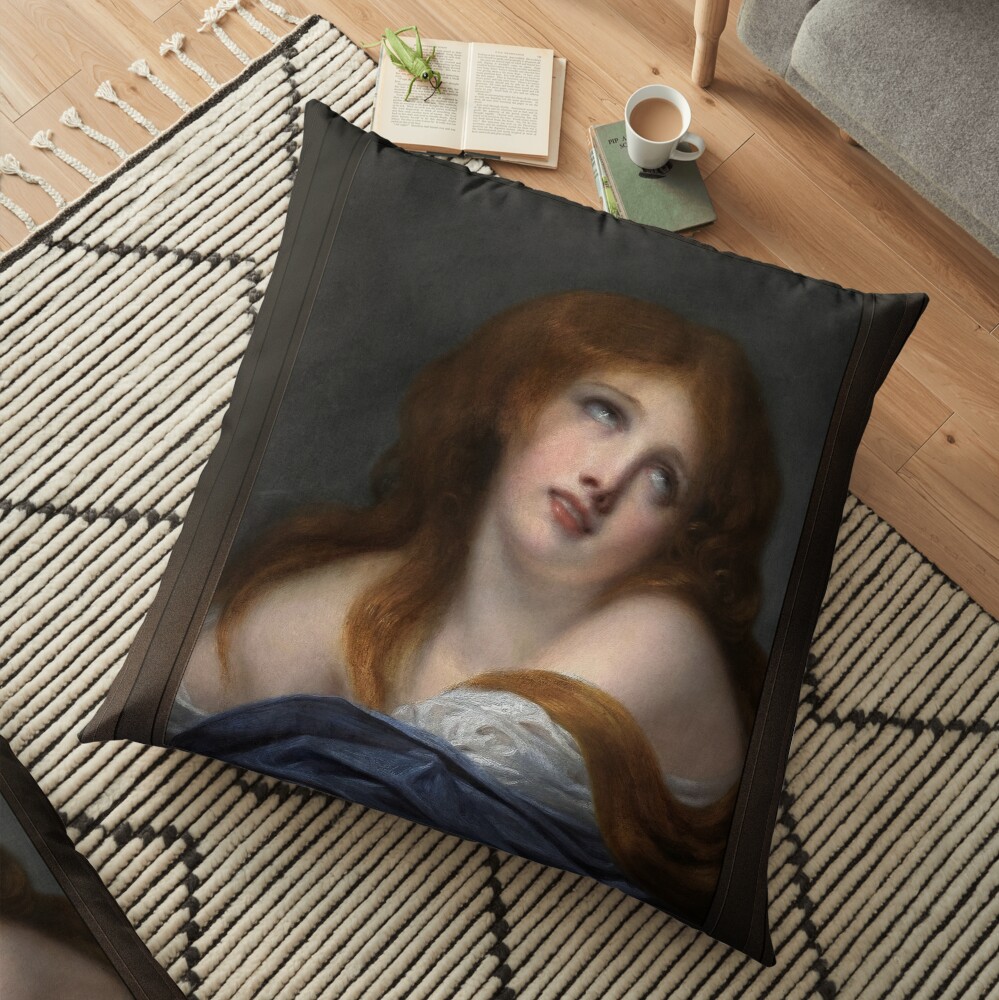
The color palette employed by Greuze is restrained but harmonious, with soft, muted tones that emphasize the delicate nature of the portrait. The colors of the fabric, a deep blue or grey, provide a subtle contrast to the pale complexion of the subject. The combination of blue and white gives the portrait an air of calm and tranquility, while the faint touches of warmth in the woman’s hair and skin tone create a sense of life and vitality. The careful application of these colors allows the subject to appear as if she is gently illuminated by a soft, natural light, giving the painting an almost lifelike presence.
Nghasgliad
Jean-Baptiste Greuze’s Female Portrait is a testament to his ability to capture the emotional subtleties of his subjects, conveying not just their physical likeness but also the deeper currents of their inner worlds. The delicate rendering of the subject, the serene but melancholic expression, and the soft, evocative use of light and shadow all work together to create a timeless piece of art that transcends the moment of its creation. The mood of the painting, suffused with a quiet sadness and introspection, invites the viewer to pause and reflect on the emotional complexities of the human experience. Greuze’s ability to infuse his portraits with such emotional depth makes this work a stunning example of 18th-century French portraiture.
Dyma atgynhyrchiad hen feistr celf ddigidol wedi'i ailfeistroli o ddelwedd parth cyhoeddus sydd ar gael fel print cynfas ar-lein.
Y greadigaeth gelfyddyd ddigidol hon, fel gyda'r holl waith celf sydd i'w gael ar wefan Xzendor7 ar gael i'w brynu ar-lein mewn amrywiaeth o fformatau deunydd gan gynnwys printiau cynfas, printiau acrylig, printiau metel, printiau pren, printiau wedi'u fframio, posteri, ac fel printiau cynfas wedi'u rholio mewn amrywiaeth o feintiau o 12 modfedd i 72 modfeddi yn dibynnu ar faint y gwaith celf gwirioneddol a'r siop argraffu ar alw y byddwch yn dewis prynu'r celf ohoni.
Mae’r gwaith celf hefyd ar gael ar ystod eang o ddillad dynion a merched, mygiau, totes, sgarffiau, llyfrau nodiadau a chyfnodolion a llawer o gynhyrchion addurno cartref.
Am Yr Artist
Mae'r Wybodaeth Isod Yn Deillio O NGA.gov
Jean was born in Tournus, Ffrainc yn 1725 as the sixth son of a master tiler who recognized his talent at a very early age; sending him to Lyon, France to study with the French Portrait Painter Charles Grandon (1691 – 1762).
At about the age of 30 he left Lyon, and traveled to Paris, France to study at the Académie royale de peinture et de sculpture or the Royal Academy of Painting and Sculpture; which at the time was the premier art institution of France during the latter part of the Ancien Régime (Old Regiem ~1500 to 1789), until it was abolished in 1793 during the French Revolution.
Though highly talented and very successful during the 1760s and 1770s, having patrons of the likes of the Marquise de Pompadour (1721 – 1764), Empress Catherine II of Russia (r. 1762 – 1796), and Ange Laurent de La Live de Jully (1725 – 1779); his rebellious nature and conflicts with Academy and Salon officials would prove to be his misfortune; especially after his marriage to Anne Marie Babuty in 1759; which would prove to be a disaster for him, as she was known to have had various affairs with his students and sitters, which caused him loss of income and public humiliation.
When the marriage ended 34 years later his wife received a substantial settlement, which left him in dire financial straights and by the time of his death in 1805 yn oed 80 he was nearly broke.