

A Girl With A Dead Canary
“A Girl With A Dead Canary,” painted by French artist Jean-Baptiste Greuze (1725 – 1805), is a poignant and thought-provoking work that reflects the artist’s skill in capturing human emotion through delicate and detailed expressions. Created in the latter half of the 18th century, this piece exemplifies the Rococo and early Neoclassical styles that defined much of Greuze’s career. The emotional intensity of the painting, paired with its subject matter, explores themes of loss, sakleysi, and the fragile nature of life, common concerns of the time.
Efnisyfirlit
Aðalviðfangsefnið
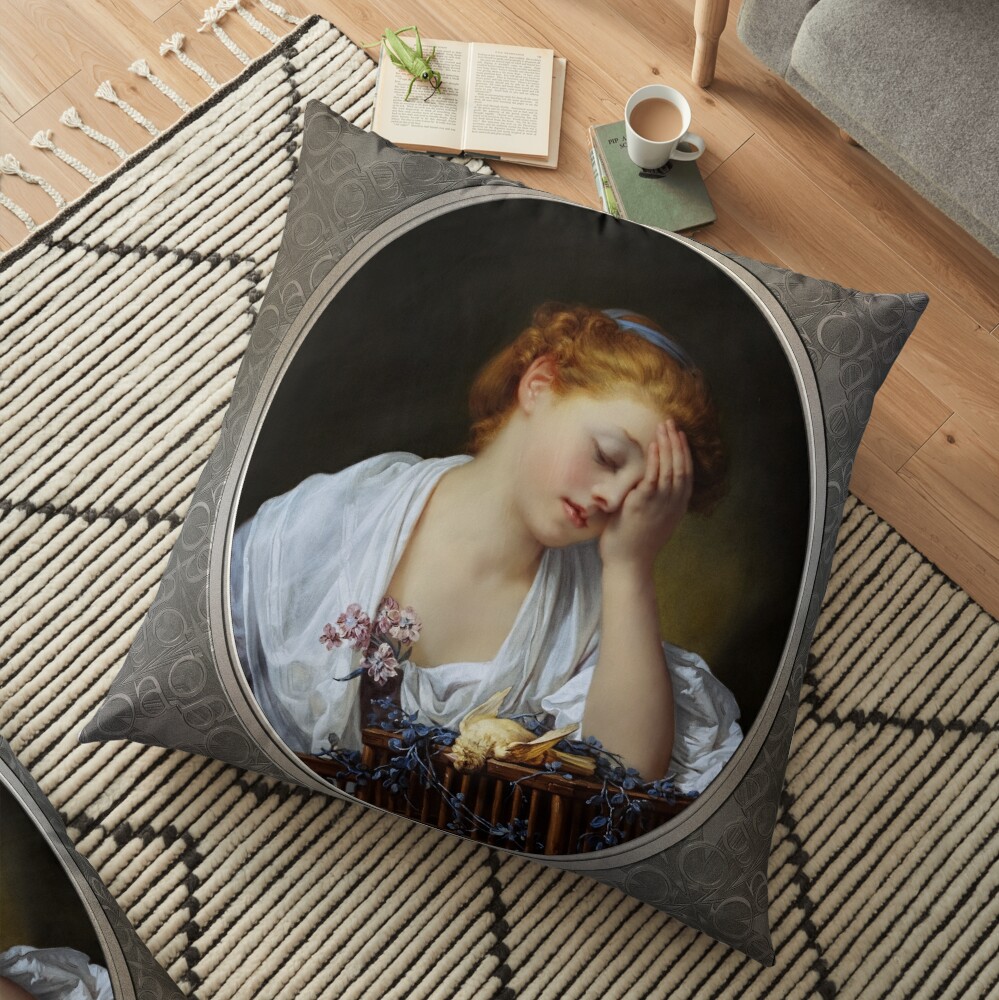
At the heart of this piece is the image of a young girl, her face marked by a deep sense of sorrow and contemplation. The girl is depicted with a naturalistic yet idealized beauty, characteristic of the Rococo style, með mjúkum, delicate features and smooth skin. Her posture is languid yet graceful, with her right hand placed gently against her forehead, as if overwhelmed by grief or distress. The girl’s eyes are partially closed, her gaze directed downward in a moment of quiet sorrow, lending an air of introspection and melancholy to the scene.
Viðfangsefnið, though youthful and tender in appearance, conveys a mature emotional depth. The girl’s expression is filled with quiet resignation, possibly a reflection on the death of the canary in her hand, which becomes the central motif of the artwork. The girl’s lips are slightly parted, suggesting an inward focus or the beginning of a sigh, reinforcing the sense of loss that pervades the composition. She is dressed in simple yet elegant white attire, which enhances her ethereal quality and focuses the viewer’s attention on her expression and the symbolism surrounding her.
The Dead Canary
In the girl’s left hand rests a dead canary, its small body lifeless and limp, positioned delicately alongside the girl’s skin. The bird’s natural beauty contrasts sharply with its death, and its fragility is emphasized by the tender handling of its form. The canary, a symbol of innocence and fragility, was often associated with themes of loss during the 18th century, particularly in works of art where death or suffering was a focal point. The bird’s delicate feathers and vivid yellow hue, though faded in death, are stark against the girl’s pale skin and the muted tones of the background.
The placement of the canary in the composition creates a balance between the girl’s sorrow and the physical object she holds. It is almost as if the girl’s grief is intertwined with the fate of the bird, serving as an emotional metaphor for her own youth and innocence, now marred by the irreversible passage of time or the inevitability of mortality. The canary’s death becomes a poignant symbol of life’s impermanence, a theme that resonates deeply within the context of 18th-century art and culture.
Landsvæði og efni
The background of the painting is dark and unobtrusive, with a smooth gradient of deep brown and black tones that do not distract from the central subject. This subtle backdrop creates a stark contrast to the girl’s delicate skin tones and the bright yellow feathers of the canary, focusing all attention on the emotional expression and the symbolism conveyed through the subject and her gesture. The artist’s use of light and shadow emphasizes the softness of the girl’s features and the texture of her attire, adding to the overall atmosphere of fragility and vulnerability.
The artist’s material choice of oil paint allows for a smooth, almost velvety finish, with every detail of the girl’s skin, hár, and the canary rendered in exquisite realism. The texture of the girl’s white dress is particularly notable, its fine folds and delicate creases painted with careful attention to light and shadow. This technique reflects Greuze’s mastery in rendering fabrics and textures, which was a hallmark of his work. The oils also serve to capture the subtle play of light on the girl’s skin, lending her a soft, luminous quality that enhances the overall emotional impact of the piece.
The materials and the use of light within the painting create an almost lifelike sense of presence, drawing the viewer into the intimate moment captured by Greuze. The attention to detail in the girl’s facial expression and the posture of her hands further invites contemplation, making this artwork a deeply moving and introspective piece.
Stíll, Þema, og skap
Rococo stíllinn, known for its emphasis on grace, glæsileiki, og tilfinningaleg styrkur, is apparent in the lightness of the girl’s attire and the fine detail of the canary. Hins vegar, Greuze’s painting moves beyond mere Rococo frivolity, with the artist adopting a more serious, reflective tone that aligns with the emerging Neoclassical interest in moral and emotional themes. The artist’s focus on human emotion, particularly the complex and often painful feelings associated with loss, suggests a transition from the lighter, more decorative themes of Rococo art to a more somber and introspective approach.
The mood of the painting is one of quiet sorrow, with the girl’s contemplation and the symbolism of the dead canary serving as a meditation on mortality, sakleysi, and the fragility of life. The painting evokes a sense of empathy and introspection in the viewer, as the expression on the girl’s face suggests both vulnerability and the inevitability of loss. This emotional depth and subtlety are characteristic of Greuze’s work, which often sought to evoke strong, sentimental reactions from the viewer, particularly through the portrayal of youthful figures in moments of emotional intensity.
The theme of loss in “A Girl With A Dead Canary” speaks to the human experience of grief and the way in which small moments of sorrow can be amplified by emotional reflection. The girl’s sorrowful expression, paired with the delicate stillness of the dead bird, forms a visual metaphor for the fragility of innocence, æsku, and life itself. It is a contemplative piece, encouraging the viewer to reflect on the transient nature of existence and the inevitable passage of time.
Niðurstaða
“A Girl With A Dead Canary” is a masterful example of Jean-Baptiste Greuze’s ability to evoke deep emotion and reflection through his detailed and expressive portraits. Through the use of light, áferð, og táknfræði, Greuze captures the delicate balance between beauty and loss, innocence and mortality. The painting’s somber mood, paired with its exquisite technical execution, makes it a remarkable representation of the human experience and a poignant meditation on the fragility of life.
Þetta er endurgerð stafræn list af gömlum meistara eftirgerð af mynd sem er í almenningseign sem hægt er að kaupa á netinu sem rúllað strigaprentun.
Þessi stafræna listsköpun, eins og með öll listaverkin sem finna má á Xzendor7 vefsíðunni er hægt að kaupa á netinu í ýmsum efnissniðum þar á meðal strigaprentun, akrýl prentun, málmprentun, viðarprentanir, innrömmuð prentun, veggspjöld, og sem rúlluð strigaprentun í ýmsum stærðum frá 12 tommur til 72 tommur eftir stærð raunverulegu listaverksins og prentunarversluninni sem þú velur að kaupa listina frá.
Listaverkin eru einnig fáanleg á breitt úrval af herra- og kvenfatnaði, krúsar, töskur, trefla, minnisbækur og dagbækur og margar heimilisskreytingarvörur.
Photo Retouching Of Portrait Of A Girl With A Dead Canary
Um Listamanninn
Upplýsingarnar hér að neðan eru fengnar úr NGA.gov
Jean fæddist í Tournus, Frakkland í 1725 sem sjötti sonur flísagerðarmeistara sem viðurkenndi hæfileika sína mjög snemma; að senda hann til Lyon, Frakkland til að læra hjá franska portrettmálaranum Charles Grandon (1691 – 1762).
Um það bil um aldur 30 hann fór frá Lyon, og fór til Parísar, Frakkland til að læra við Académie royale de peinture et de sculpture eða Royal Academy of Painture and Sculpture; sem á þeim tíma var fyrsta listastofnun Frakklands á síðari hluta Ancien Regime (Old Regiem ~1500 til 1789), þar til það var afnumið í 1793 í frönsku byltingunni.
Þó mjög hæfileikaríkur og mjög farsæll á 1760 og 1770, eiga verndara eins og Marquise de Pompadour (1721 – 1764), Katrín II keisaraynja af Rússlandi (r. 1762 – 1796), og Ange Laurent úr La Live de Jully (1725 – 1779); Uppreisnarmennska hans og átök við embættismenn Akademíunnar og stofunnar myndu reynast honum ógæfa; sérstaklega eftir hjónaband hans og Anne Marie Babuty í 1759; sem myndi reynast honum hörmung, enda var hún þekkt fyrir að hafa átt í ýmsum erindum við nemendur hans og sitja, sem olli honum tekjutapi og opinberri niðurlægingu.
Þegar hjónabandinu lauk 34 árum síðar fékk eiginkona hans verulega uppgjör, sem leiddi til þess að hann var í miklum fjárhagserfiðleikum og þegar hann lést í 1805 á aldrinum 80 hann var næstum brotinn.