

Dívka S Květinami
Maďarský malíř József Borsos (1821 – 1883) zachycuje nadčasový okamžik ve svém uměleckém díle s názvem “Dívka S Květinami,” vznikl v polovině 19. století. Malování, charakteristické pro romantická a realistická hnutí té doby, ztělesňuje vynikající zobrazení ženskosti, mládí, a přírodní krása, charakteristické pro Borsos’ práce. Umělec dovedně vyvažuje detailní realismus s emocionálně sugestivní kompozicí, pomocí svého mistrovství v olejových barvách vykresluje jak jemnou povahu svého námětu, tak svěží okolní prostředí. Atmosféra díla vtáhne diváka do klidu, téměř idylický svět, kde scéně dominuje tichá milost subjektu.
Obsah
Hlavní předmět: Dívka
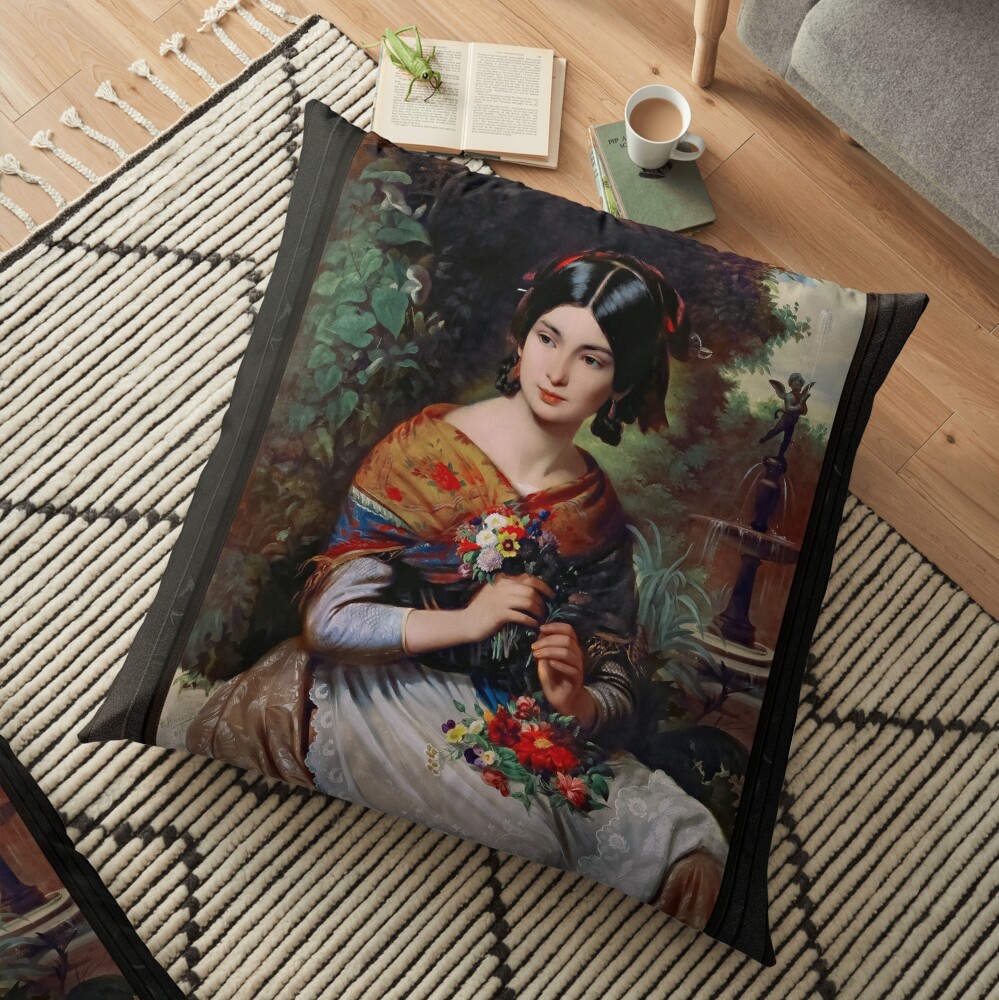
The focal point of the composition is a Mladá dívka, whose poised and graceful demeanor evokes a sense of calmness and natural beauty. She is seated amidst a vibrant garden, her posture elegant yet relaxed, as she gazes gently off to the side. Její tma, smooth hair is styled in a traditional manner with soft curls at the back, zvýraznění jejích jemných rysů. A red ribbon is tied in a bow at the back of her head, further accentuating her youth and femininity.
She holds a small bouquet of colorful wildflowers in her hands, which serves as both a literal and symbolic representation of her connection to nature. The flowers, carefully arranged in her hands, are a symbol of purity and the fleeting nature of youth. Their delicate appearance contrasts beautifully with the soft folds of the girl’s dress and her serene expression, which suggests a sense of inner peace or contemplation. The viewer can almost feel the subtle breeze that might be gently stirring the garden around her.
Oblečení a materiály
The girl’s clothing is rendered with exceptional detail, reflecting the fashion of the early 19th century. She wears a white gown with a lace overlay, which provides a tactile sense of texture and fine craftsmanship. The delicate embroidery on the lace is particularly striking, showcasing Borsos’ meticulous attention to detail.
Over her gown, she dons a colorful shawl, its rich hues of orange, červený, and purple contrast with the softness of her dress. The shawl is adorned with floral patterns, odráží přirozenou krásu zahrady a umocňuje tematickou jednotu díla. Kombinace šátku a róby je elegantní i jednoduchá, dokonalý odraz dívčiny tiché, ale sofistikované osobnosti.
Umělkyně se rozhodla ztvárnit látku svého oděvu způsobem, který zdůrazňuje jemnou texturu, s každým záhybem a závěsem pečlivě natřeným. Tato pozornost věnovaná tkanině a struktuře je charakteristickým znakem Borsos’ dílo a svědčí o jeho schopnosti přeměnit materiál v narativní prostředek, zlepšit celkovou náladu díla.
Okolní prostředí: Zahrada
Prostředí uměleckého díla hraje zásadní roli v náladě a tématu díla. Pozadí je vyplněno svěží zelení, depicting a well-maintained garden that speaks to both the prosperity of the subject’s environment and the artist’s detailed rendering of nature. Vysoký, leafy trees provide the backdrop, while a small, distant fountain adds a touch of elegance and tranquility to the scene. The fountain’s gentle flow of water, although subtle in the painting, introduces an element of movement that contrasts with the stillness of the girl, perhaps symbolizing the passage of time or the cyclical nature of life.
V dálce, a small statue of an angel or cherub stands atop the fountain, adding a classical touch to the composition. This element further enriches the work, linking the natural world to a more idealized, almost mythological realm. The fountain, along with the greenery and flowers in the foreground, creates a harmonious balance between the human and natural worlds, reinforcing the central theme of beauty and grace in its purest form.
Umělecký styl: Romantismus a realismus
Borsos’ style merges elements of both Romanticism and Realism, with a focus on idealized beauty and meticulous attention to detail. His brushwork is soft yet defined, with fine details that bring the scene to life, such as the delicate petals of the flowers and the texture of the fabric. The romantic elements are evident in the serene expression of the girl and the dreamlike quality of the surrounding garden. There is an almost timeless aspect to the painting, as though it could belong to any era of history, yet it firmly captures the spirit of the 19th century.
The use of light and shadow is also notable in this piece. Borsos employs a gentle, diffused light that highlights the girl’s features and creates soft, ambient shadows that add depth to the composition. The painting’s color palette is warm, dominated by earthy tones of green, hnědý, a zlato, which give the work a grounded, naturalistic feel, while still maintaining an air of elegance.
Mood and Emotional Tone
The emotional tone of the painting is one of calm introspection. The girl’s serene expression and poised posture invite the viewer to share in a quiet moment of contemplation. The lush surroundings, coupled with the subtle, natural details, evoke a feeling of peace and harmony. Na scéně je cítit nadčasovost, as though the girl’s moment of stillness is not bound by any specific era but instead exists in a timeless, idealized world.
The theme of beauty—both human and natural—is central to the emotional impact of the piece. The artist’s careful rendering of both the girl’s delicate features and the vibrant flowers speaks to a deep appreciation of nature’s grace and the fleeting, ephemeral quality of life. There is a sense that this moment of beauty, while fleeting, is meant to be savored and admired.
Závěr
“Dívka S Květinami” by József Borsos is a beautiful example of 19th-century Hungarian painting that blends the romance of nature with the realism of everyday life. Through his careful attention to detail, the artist creates a scene that is both grounded in reality and elevated by idealized beauty. The girl’s serene presence, combined with the lush garden and the subtle symbolism of the flowers, invites the viewer to contemplate the quiet beauty of life and the natural world.
Toto je remasterovaná reprodukce starých mistrů digitálního umění obrázku ve veřejné doméně, který je dostupný jako a tisk na plátno online.
Umělec bio Wikipedia.org
József came from a well to do family as his father was Márton Borsos an editor, lawyer and publisher and at the age of 16 he became a student of Hungarian Painter József Károly Schöfft (1776 – 1851); in Budapest Hungary.
Pak v 1840 he moved to Vienna to study at the Academy of Fine Arts under Austrian Painter Leopold Kupelwieser (1796 – 1862) who was often associated with the Nazarene movement.
Then three years later in 1843 he entered a private academy that was operated by Austrian Painter and Writer Ferdinand Georg Waldmüller (1793 – 1865), considered to be one of the most important painters of the Biedermeier period which lasted from 1815 na 1848.
Though his artistic talent made him financially successful, he lost most of his money in stock market speculation; after which he gave up painting and opened a photography studio with a painter and photographer known as Doctor Albert; and even though he made a consider fortune in the endeavor, he gave up the business and opened a restaurant the Szép Juhászné; which he operated for the rest of his life.