

Ariadne
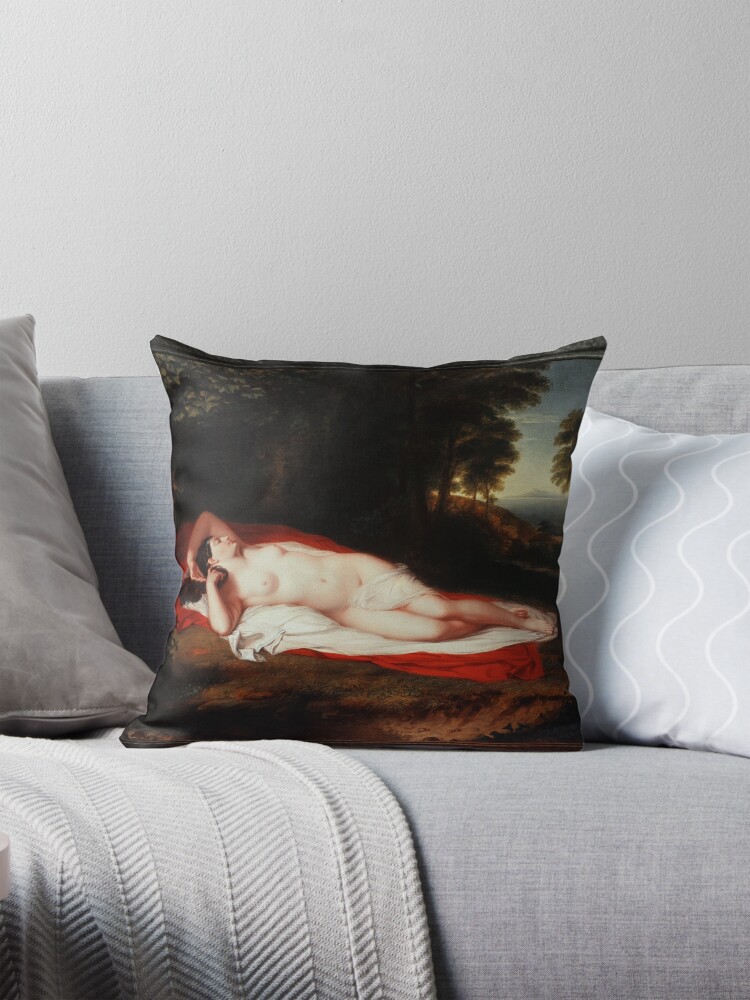
Ariadne c1831-35 od American Painter & Rytec Asher Brown Durand (1796 – 1886) byl součástí uměleckého hnutí romantismu a byl absolventem Hudson River School. Asher se soustředil především na krajinomalby.
Tento obraz Ariadne by Asher is from a copy of a painting by John Vanderlyn (1776 – 1852) which he did in preparation for the engraving he produced as was often the case; he would create an oil canvas of the size of the intended engraving.
Ariadne is the Cretan Princess of Greek Mythology who was briefly loved by Theseus (mýtický král a zakladatel-hrdina Athén), who abandoned her on the island of Naxos after he tired of her company.
Obsah
Overview of “Ariadne” by Asher Brown Durand
Asher Brown Durand, an American painter and engraver, is widely regarded as one of the central figures in the Hudson River School of landscape painting, a movement that celebrated the natural beauty of the American landscape. nicméně, Durand’s work often extended beyond landscapes, as seen in his 1831 – 1835 malování Ariadne. This piece reveals Durand’s mastery not only in capturing natural forms but also in his ability to imbue his subjects with an ethereal, almost mythological presence.
The Subject of the Artwork: Ariadne
At the center of Durand’s Ariadne stands a woman in repose, surrounded by the lush, undisturbed wilderness of an ancient, téměř idylická krajina. The subject of the painting is Ariadne, a figure from Greek mythology, known for her connection to the myth of Theseus and the Minotaur. Ariadne is often depicted as a symbol of love, ztráta, and betrayal, and Durand captures her at a moment of serene contemplation.
Ariadne’s pose is languid and contemplative, lying on a bed of red drapery that contrasts with the soft hues of the surrounding natural world. The figure appears relaxed, almost sleeping, with her head gently turned to the side. Her body is draped in a flowing, translucent white cloth, with the rich crimson fabric beneath her evoking a sense of luxury and opulence. Despite her reclined position, the contours of her body remain graceful, with the painter capturing the natural curves of her form with great care and sensitivity. Její tvář, though partially obscured by her positioning, seems peaceful, suggesting a deep inner calm or introspection.
The Landscape and Natural Setting
The backdrop of the painting is a lush, verdant landscape that stretches into the distance, bathed in the soft glow of an evening or early morning light. The scene is characterized by gently rolling hills, dense trees, and a distant body of water. Durand’s attention to detail in the depiction of nature reflects his dedication to the principles of the Hudson River School, where the natural world was revered and idealized. The foliage is painted in rich, deep greens, while the sky above is a delicate blend of soft blues and warm yellows, contributing to an atmosphere of tranquility and nostalgia.
The distant view across the water provides a sense of depth and space, inviting the viewer to imagine the vastness of the scene. The use of light in this painting is particularly notable; the artist’s careful rendering of shadows and highlights creates a sense of volume and texture, lending an almost three-dimensional quality to both the figure of Ariadne and the surrounding landscape. The light appears to envelop the figure, casting a soft glow on her skin and the folds of her drapery, while the shadowed areas deepen the sense of solitude and reflection.
The Symbolism of the Drapery
The red drapery beneath Ariadne is not just a visual element but also a symbolic one. V klasickém umění, drapery often served as a vehicle for expressing both the subject’s emotional state and their physical form. In this case, the deep red fabric can be interpreted as a symbol of passion, milovat, or even sacrifice. Ariadne, having been abandoned by Theseus after helping him escape the labyrinth, might be seen as embodying themes of loss and emotional turmoil, yet her peaceful repose and the lush, fertile landscape around her suggest a kind of quiet resolution or acceptance.
The white cloth she is draped in can be viewed as a symbol of purity or a new beginning, which is fitting given that the myth of Ariadne is often associated with transformation; both in the literal sense of her life being changed by her relationship with Theseus and in the mythological sense, where her fate takes a turn after her abandonment.
The Artistic Style and Technique
Durand’s Ariadne is painted in a classical Romantic style, where realism and idealism merge to create a vision of beauty that transcends the ordinary. The artist employs a fine balance of realism in the portrayal of both the figure and the landscape, yet there is an underlying idealization that makes the scene feel timeless. Durand’s technical skill is evident in the delicate rendering of light and shadow, the softness of the fabric, and the naturalistic details of the landscape.
The figures and forms are modeled with great precision, and the soft transitions of color suggest the artist’s deep understanding of the human body and the play of light across different surfaces. Durand’s fine attention to detail extends beyond the human form to the natural environment, where every leaf, branch, and rock is meticulously painted, contributing to the painting’s overall sense of realism and harmony.
Mood and Emotional Atmosphere
Nálada Ariadne is one of tranquility, samota, and quiet reflection. The soft light, gentle landscape, and languid pose of the subject all combine to create an atmosphere of serene contemplation. There is a sense of quiet beauty in the way the figure rests within the natural surroundings, suggesting both an intimate connection to nature and a contemplative escape from the tumult of the mythological world.
While the figure of Ariadne is deeply associated with themes of abandonment, zrada, and emotional pain in the myth, Durand’s portrayal focuses on a more introspective aspect of her character. The absence of a direct narrative moment, such as her abandonment or subsequent marriage to Dionysus, allows the viewer to contemplate Ariadne in a state of quiet resolution. Her calm expression and relaxed pose suggest an emotional distance from her previous life’s trials and tribulations, allowing for a more meditative engagement with her figure.
Závěr
v Ariadne, Asher Brown Durand merges his skill in landscape painting with his sensitivity to human emotion, producing a work that is both visually stunning and emotionally resonant. The painting is a delicate balance of idealized beauty and reflective solitude, drawing upon the classical traditions of mythology and landscape painting while imbuing the scene with a uniquely Romantic sensibility. Prostřednictvím tohoto dílu, Durand invites the viewer to contemplate not only the mythical figure of Ariadne but also the eternal beauty of the natural world, which offers a quiet sanctuary from the tumult of human life.

In the background past the trees and the hill she is resting on we can see a boat on the bank of a lake, people and a dog on the shore, with the smoke of a campfire rising into the air; lastly in the far distance we can see what appears to be a large island.
Toto je retušovaná digitální umělecká reprodukce obrazu ve veřejném vlastnictví, kterou si můžete zakoupit jako a tisk na plátno v rolích online.
Info níže z Wikipedia.org
Durand se narodil a nakonec zemřel v Maplewoodu, New Jersey (pak volal Jefferson Village). Byl osmým z jedenácti dětí. Durandův otec byl hodinář a stříbrník.
Durand byl vyučen rytcem od 1812 na 1817 a později vstoupil do partnerství s majitelem společnosti, Charles Cushing Wright (1796–1854), který ho požádal, aby řídil kancelář společnosti v New Yorku.
Během roku vyryl pro Johna Trumbulla Deklaraci nezávislosti 1823, což potvrdilo Durandovu pověst jednoho z nejlepších rytců v zemi.
Durand pomohl zorganizovat New York Drawing Association během 1825, která by se stala Národní akademií designu; od té doby bude organizaci sloužit jako prezident 1845 na 1861.
Asherovy rytiny na bankovkách byly použity jako portréty pro první americké poštovní známky, the 1847 série. Spolu se svým bratrem Cyrusem také vyryl část úspěšných 1851 problémy.
Jeho hlavní zájem se změnil z rytiny na olejomalbu 1830 s povzbuzením svého patrona, Luman Reed. Po dobu 1837, doprovázel svého přítele Thomase Colea na výpravě skicování k jezeru Schroon v pohoří Adirondacks a brzy poté se začal soustředit na krajinomalbu.
Léta strávil skicováním v Catskills, Adirondacks, a Bílé hory v New Hampshire, dělat stovky kreseb a olejových skic, které byly později začleněny do hotových akademických děl, což pomohlo definovat Hudson River School.
Durand je připomínán zejména pro jeho detailní zobrazení stromů, skály, a listí. Byl zastáncem čerpání přímo z přírody s co největším realismem. Napsal Durand, “Nechat [umělec] úzkostlivě přijímat cokoli [Příroda] představuje ho, dokud to neudělá, v míře, stali se intimními s její nekonečností ... nikdy ho nenechej znesvětit její posvátnost úmyslným odklonem od pravdy.”
Stejně jako ostatní umělci Hudson River School, Durand také věřil, že příroda je nevýslovným projevem Boha. Tento cit a své obecné názory na umění vyjádřil ve své eseji “Dopisy o krajinomalbě” v The Crayon, newyorské umělecké periodikum z poloviny 19. století. Napsal Durand, “[T]pravá provincie krajinářského umění je reprezentací Božího díla ve viditelném stvoření ...”
Durand je známý pro jeho 1849 obraz Spřízněné duše, který ukazuje kolegu umělce Hudson River School Thomase Colea a básníka Williama Cullena Bryanta v krajině Catskills Mountains. Toto bylo namalováno jako pocta Coleovi po Coleově smrti během 1848, a jako dárek Bryantovi.