

Stúlka með blómum
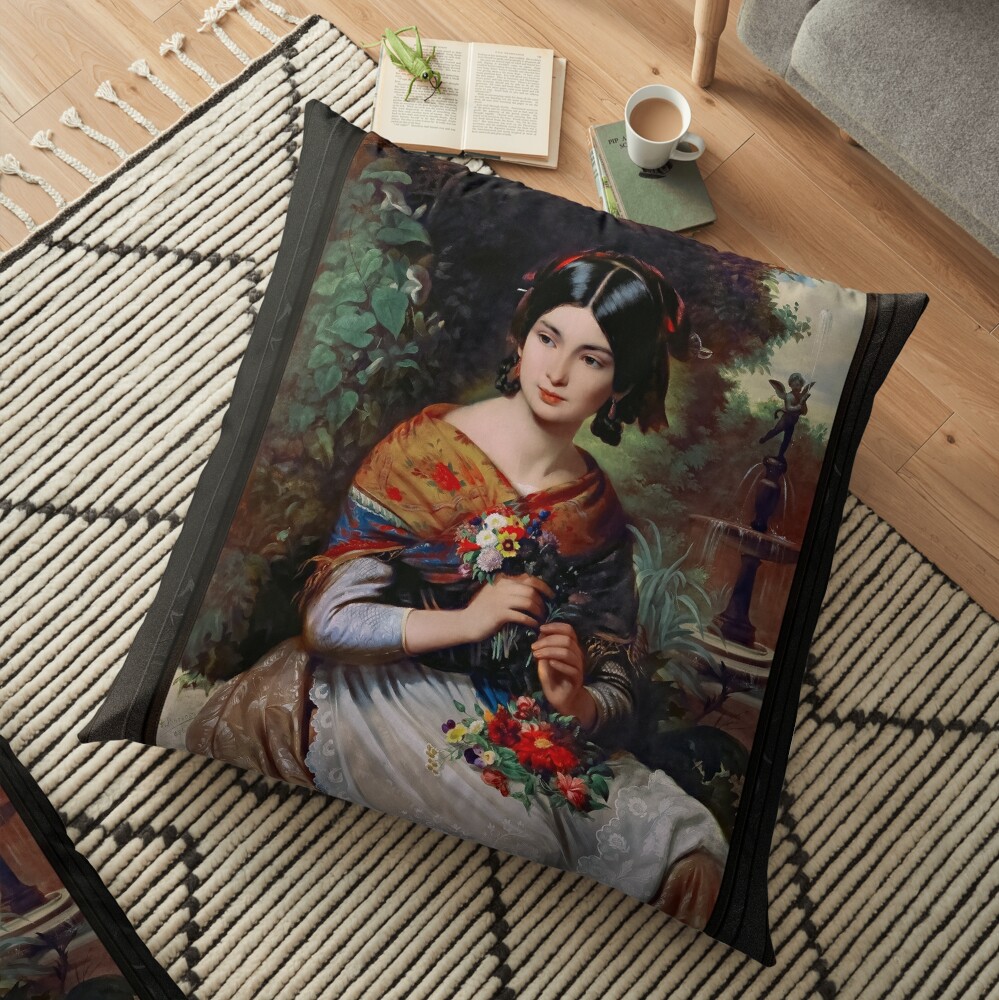
Hungarian painter József Borsos (1821 – 1883) captures a timeless moment in his artwork titled “Stúlka með blómum,” created in the mid-19th century. Málverkið, characteristic of the Romantic and Realist movements of the time, embodies an exquisite portrayal of femininity, æsku, and natural beauty, characteristic of Borsos’ work. The artist skillfully balances detailed realism with an emotionally evocative composition, using his mastery of oil paints to depict both the delicate nature of his subject and the lush surrounding environment. The atmosphere of the piece draws the viewer into a serene, almost idyllic world where the subject’s quiet grace dominates the scene.
Efnisyfirlit
Aðalefni: The Girl
The focal point of the composition is a young girl, whose poised and graceful demeanor evokes a sense of calmness and natural beauty. She is seated amidst a vibrant garden, her posture elegant yet relaxed, as she gazes gently off to the side. Her dark, smooth hair is styled in a traditional manner with soft curls at the back, highlighting her delicate features. A red ribbon is tied in a bow at the back of her head, further accentuating her youth and femininity.
She holds a small bouquet of colorful wildflowers in her hands, which serves as both a literal and symbolic representation of her connection to nature. Blómin, carefully arranged in her hands, are a symbol of purity and the fleeting nature of youth. Their delicate appearance contrasts beautifully with the soft folds of the girl’s dress and her serene expression, which suggests a sense of inner peace or contemplation. The viewer can almost feel the subtle breeze that might be gently stirring the garden around her.
Clothing and Materials
The girl’s clothing is rendered with exceptional detail, reflecting the fashion of the early 19th century. She wears a white gown with a lace overlay, which provides a tactile sense of texture and fine craftsmanship. The delicate embroidery on the lace is particularly striking, showcasing Borsos’ meticulous attention to detail.
Over her gown, she dons a colorful shawl, its rich hues of orange, rauður, and purple contrast with the softness of her dress. The shawl is adorned with floral patterns, echoing the natural beauty of the garden and enhancing the thematic unity of the piece. The combination of the shawl and gown is both elegant and simple, a perfect reflection of the girl’s quiet yet sophisticated personality.
The artist has chosen to depict the fabric of her attire in a way that emphasizes the delicate texture, with every fold and drape carefully painted. This attention to fabric and texture is a hallmark of Borsos’ work and is indicative of his ability to transform the material into a narrative device, enhancing the overall mood of the piece.
Surrounding Environment: The Garden
The setting of the artwork plays a crucial role in the mood and theme of the piece. The background is filled with lush greenery, depicting a well-maintained garden that speaks to both the prosperity of the subject’s environment and the artist’s detailed rendering of nature. Hávaxinn, leafy trees provide the backdrop, while a small, distant fountain adds a touch of elegance and tranquility to the scene. The fountain’s gentle flow of water, although subtle in the painting, introduces an element of movement that contrasts with the stillness of the girl, perhaps symbolizing the passage of time or the cyclical nature of life.
Í fjarska, a small statue of an angel or cherub stands atop the fountain, adding a classical touch to the composition. This element further enriches the work, linking the natural world to a more idealized, almost mythological realm. The fountain, along with the greenery and flowers in the foreground, creates a harmonious balance between the human and natural worlds, reinforcing the central theme of beauty and grace in its purest form.
Listrænn stíll: Romanticism and Realism
Borsos’ style merges elements of both Romanticism and Realism, with a focus on idealized beauty and meticulous attention to detail. His brushwork is soft yet defined, with fine details that bring the scene to life, such as the delicate petals of the flowers and the texture of the fabric. The romantic elements are evident in the serene expression of the girl and the dreamlike quality of the surrounding garden. There is an almost timeless aspect to the painting, as though it could belong to any era of history, yet it firmly captures the spirit of the 19th century.
The use of light and shadow is also notable in this piece. Borsos employs a gentle, diffused light that highlights the girl’s features and creates soft, ambient shadows that add depth to the composition. The painting’s color palette is warm, dominated by earthy tones of green, brown, og gulli, which give the work a grounded, naturalistic feel, while still maintaining an air of elegance.
Mood and Emotional Tone
The emotional tone of the painting is one of calm introspection. The girl’s serene expression and poised posture invite the viewer to share in a quiet moment of contemplation. The lush surroundings, coupled with the subtle, natural details, evoke a feeling of peace and harmony. There is a sense of timelessness to the scene, as though the girl’s moment of stillness is not bound by any specific era but instead exists in a timeless, idealized world.
The theme of beauty—both human and natural—is central to the emotional impact of the piece. The artist’s careful rendering of both the girl’s delicate features and the vibrant flowers speaks to a deep appreciation of nature’s grace and the fleeting, ephemeral quality of life. There is a sense that this moment of beauty, while fleeting, is meant to be savored and admired.
Niðurstaða
“Stúlka með blómum” by József Borsos is a beautiful example of 19th-century Hungarian painting that blends the romance of nature with the realism of everyday life. Með nákvæmri athygli sinni á smáatriðum, the artist creates a scene that is both grounded in reality and elevated by idealized beauty. The girl’s serene presence, combined with the lush garden and the subtle symbolism of the flowers, invites the viewer to contemplate the quiet beauty of life and the natural world.
Þetta er endurgerð stafræn list af gömlum meistara eftirgerð af mynd sem er í almenningseign sem er fáanleg sem strigaprentun á netinu.
Listamaður Bio fenginn frá Wikipedia.org
József kom frá vel stæðri fjölskyldu þar sem faðir hans var Márton Borsos ritstjóri, lögfræðingur og útgefandi og á umr 16 hann varð nemandi ungverska málarans József Károly Schöfft (1776 – 1851); í Búdapest Ungverjalandi.
Síðan inn 1840 hann flutti til Vínar til að stunda nám við Listaakademíuna undir austurríska málaranum Leopold Kupelwieser. (1796 – 1862) sem var oft tengdur Nasarethreyfingunni.
Síðan þremur árum síðar 1843 hann fór í einkaakademíu sem var starfrækt af austurríska málaranum og rithöfundinum Ferdinand Georg Waldmüller (1793 – 1865), talinn vera einn mikilvægasti málari Biedermeiertímabilsins sem stóð frá 1815 til 1848.
Þó listrænir hæfileikar hafi gert hann fjárhagslega farsælan, hann tapaði megninu af peningum sínum í spákaupmennsku á hlutabréfamarkaði; eftir það hætti hann að mála og opnaði ljósmyndastofu með málara og ljósmyndara þekktur sem doktor Albert; og þó að hann hafi gert talsverðan gæfu í þeirri viðleitni, hann hætti rekstrinum og opnaði veitingastað Szép Juhászné; sem hann starfrækti til æviloka.