

A Maiden With A Basket Of Roses
“A Maiden With A Basket Of Roses,” creat a 1900 by the renowned Italian artist Eugen von Blaas (1843 – 1931), is a remarkable piece of classical realism that captures the charm and grace of a young woman in a peaceful moment of rural life. Von Blaas, known for his exquisite depictions of women in classical attire, often painted portraits of figures with a deep connection to nature and delicate beauty. In this particular painting, the subject is a young maiden carrying a basket filled with roses, symbolizing purity and beauty. The soft colors, flowing fabrics, and the detailed rendering of the surroundings all contribute to a sense of tranquility and timelessness.
Taula de continguts
El tema i la composició
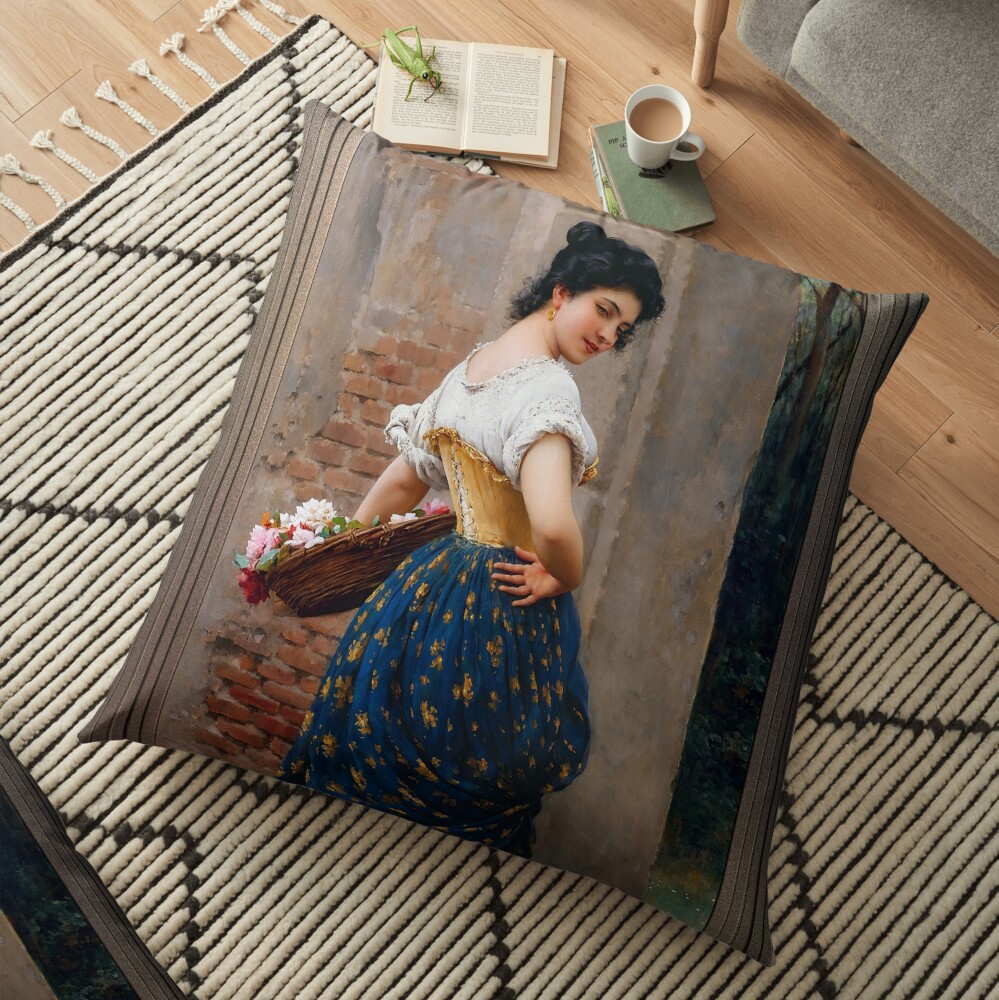
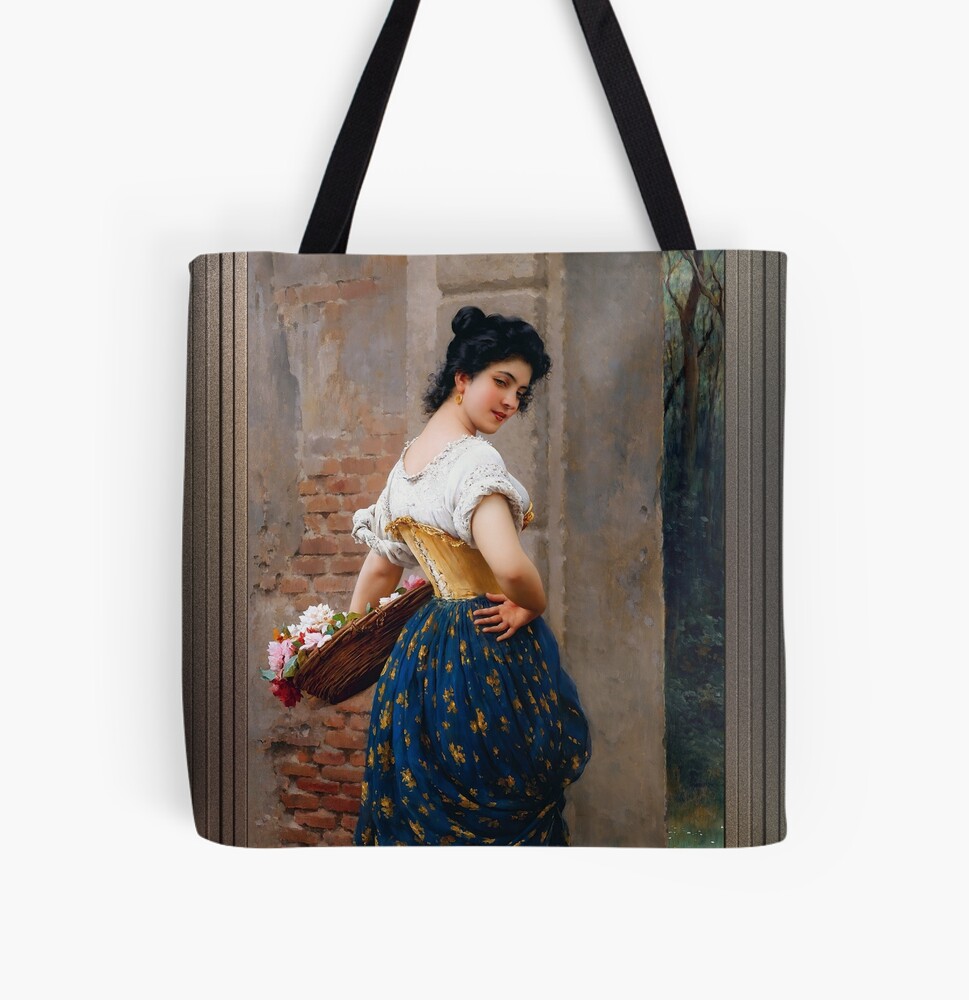
The central figure of this painting is a young woman dressed in a traditional gown, which is both elegant and simple. She is shown from a slight angle, with her body turned toward the viewer, but her gaze directed slightly over her shoulder, inviting the viewer into her world. The woman’s youthful face is framed by dark, curly hair, which has been styled in soft waves that cascade down to her neck. Her expression is gentle yet engaging, with a hint of curiosity and grace that draws the viewer’s attention.
Her attire is composed of a white blouse with intricate lace detailing around the neckline, offering a delicate contrast to the deep blue skirt she wears. The skirt, adorned with gold floral motifs, billows outward, creating a sense of movement. The rich texture of the fabric is depicted with remarkable realism, giving the viewer a sense of the fabric’s weight and the way it interacts with the light. The contrast of the pale blouse and the dark blue skirt serves to highlight the figure’s form while creating a striking balance in the composition.
A la seva mà dreta, the maiden holds a wicker basket filled with an assortment of roses. The basket is carefully rendered, showcasing the natural texture of the woven material. Les flors, predominantly in shades of pink and white, add a burst of color to the scene and enhance the sense of freshness and life. The roses seem to symbolize purity, bellesa, and perhaps a sense of youthful innocence, while their gentle placement in the basket conveys a natural elegance.
The subject’s red stockings and brown shoes provide additional contrast against the softer tones of her outfit, grounding the figure in the scene while drawing attention to her lower body. The way the artist has chosen to depict her legs, with the bright red of the stockings and the subtle motion of her gait, imbues the composition with a lively energy that prevents it from feeling static.
The Terrain and Background
The background of the painting is equally compelling, though it remains secondary to the primary focus on the maiden. The landscape suggests a rustic, rural environment with its muted tones of earth and greenery. A stone wall stands to the left of the maiden, partially covered in a layer of ivy, which enhances the natural setting. The wall appears aged, with traces of time evident in its weathered bricks. The artist has captured the rough texture of the bricks in fine detail, making them feel tactile and authentic.
Beyond the stone wall, the landscape fades into a soft, verdant garden or forest scene, which creates a harmonious connection between the maiden and her environment. The light filtering through the trees casts dappled shadows across the ground, suggesting the time of day is either early morning or late afternoon, when the sunlight is warm and golden. The soft greens and browns in the background mirror the colors in the maiden’s attire, further linking her to the natural world.
The overall composition of the painting draws the viewer’s attention to the maiden in the foreground, while the background remains a calm, serene setting that does not compete for attention. The natural world, captured in delicate brushwork, serves as a perfect complement to the human figure, reinforcing the theme of a harmonious relationship between mankind and nature.
Materials, Estil, and Technique
Eugen von Blaas’s mastery of oil painting is evident in the richness of the textures and the skillful use of light and shadow. His attention to detail is extraordinary, particularly in the rendering of the fabrics and the roses in the basket. Each rose petal is meticulously painted, with subtle shading that gives the flowers a lifelike quality. The play of light on the maiden’s skin and clothing further demonstrates the artist’s ability to capture the nuances of light, creating a three-dimensional sense of volume in the painting.
The painting’s style adheres to the principles of classical realism, which was popular during the 19th and early 20th centuries. The use of soft, naturalistic colors and the focus on the human form with a gentle yet realistic portrayal of details are hallmark traits of this movement. Von Blaas’s ability to render the folds of the fabric and the delicate features of the woman’s face showcases his deep understanding of anatomy and form.
The mood of the artwork is one of peacefulness and quiet reflection. The maiden’s serene expression and the tranquil setting evoke a sense of calm, as if the viewer is witnessing an intimate moment in the life of the subject. The artist captures a fleeting moment of beauty, one that is both timeless and specific to a particular moment in history, evoking a nostalgia for a simpler, more idyllic way of life.
Tema i estat d’ànim
The underlying theme of the painting revolves around beauty, natura, and the purity of youth. Les roses, as symbols of beauty and love, serve to reinforce these ideas, while the woman’s serene expression and graceful pose suggest a sense of contentment and inner peace. The rural setting, with its gentle greenery and natural light, further enhances the theme of harmony between humanity and nature. The mood of the painting is light, peaceful, and imbued with a sense of nostalgia for an idealized past.
Es tracta d'una reproducció d'antics mestres d'art digital remasteritzada d'una imatge de domini públic que està disponible com a Impressió de tela en línia.
Aquesta creació d'art digital, com amb totes les obres d'art que es poden trobar al lloc web de Xzendor7, es poden comprar en línia en una varietat de formats de material, incloses impressions de llenç, impressions acríliques, estampes de metall, estampes de fusta, impressions emmarcades, cartells, i com impressions de llenços enrotllats en una varietat de mides de 12 polzades a 72 polzades depenent de la mida de l'obra d'art real i de la botiga d'impressió sota demanda on trieu comprar l'art.
L'obra d'art també està disponible en una àmplia gamma de roba d'home i dona, tasses, bosses, mocadors, quaderns i revistes i molts productes de decoració de la llar.
Artista Bio
Informació a continuació derivada de Wikipedia.org
Va néixer a Albano, prop de Roma, a un pare tirolès i mare italiana. El seu pare Karl, també pintor, era el seu mestre. La seva mare, Agnesina Auda, era una dona romana benestant. La família es va traslladar a Venècia quan Karl es va convertir en professor a l'Acadèmia de Venècia. Sovint pintava escenes a Venècia, però també retrats i pintures religioses.
Entre les seves obres destaquen La forma nupcial a la sagristia; Bingo a Campielo a Venècia; Escena de titelles en una escola; i La Ninetta. El crític d'art Luigi Chirtani, quan el quadre es va exposar a la Mostra Nazionale di Venezia, ho va descriure com a bonic, afalagador, bonic, acaronada, netejat, polit, bugadera en un quadre del Sr. Bufeta, el retratista favorit dels grans aristòcrates venecians, vestit de setins de gala, joies brillants, pentinats dels rics.
Les seves imatges d'època colorides i més aviat teatralitzades de la societat veneciana, per exemple. Al Balcó (1877; Col·lecció particular), eren força diferents en comparació amb els delicats pastissos i aiguaforts dels patis, balcó i canals de la Venècia moderna.
Eugeni de Blaas’ les pintures es van exposar a la Reial Acadèmia, Societat de Belles Arts, New Gallery i Arthur Tooth and Sons Gallery de Londres, i també a la Walker Art Gallery de Liverpool