

Compartint les notícies c1904
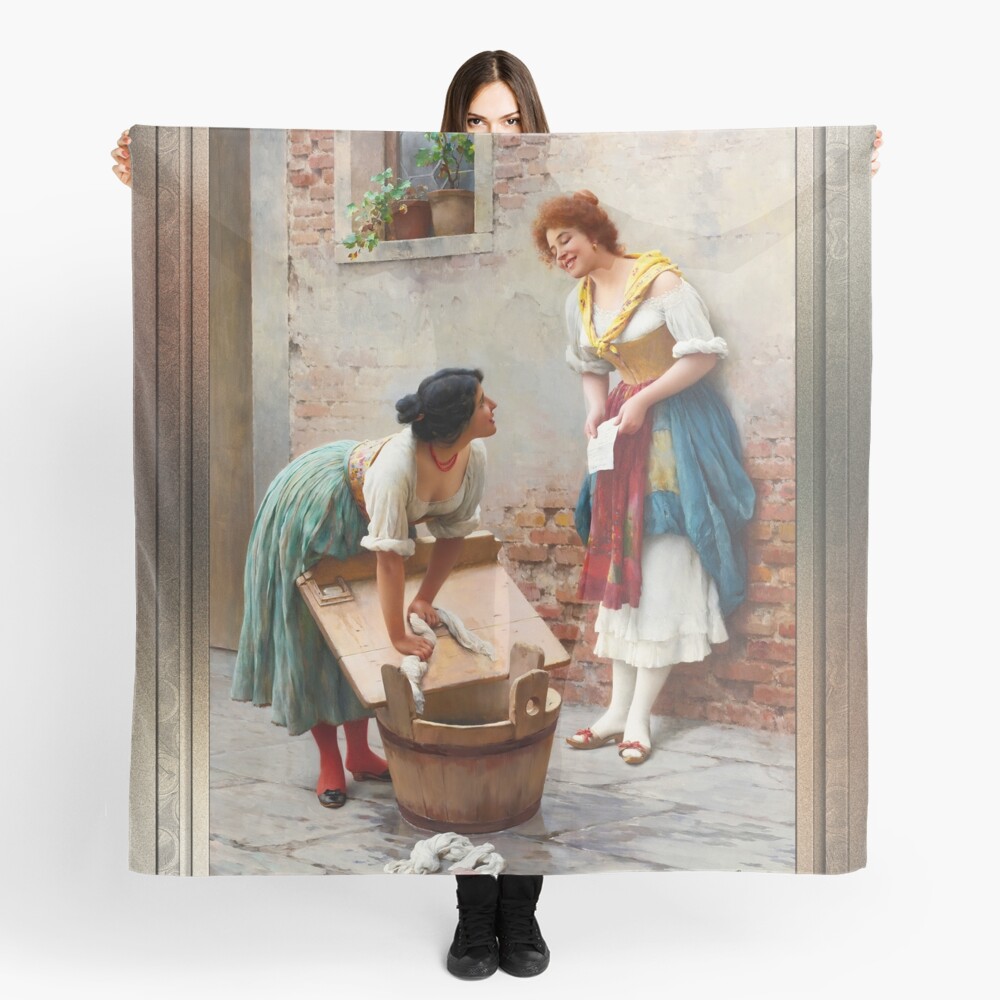
“Compartint Notícies,” creat a 1904 pel reconegut pintor italià Eugen von Blaas (1843 – 1931), és una escena captivadora que combina magistralment el realisme amb una narrativa emocional. El quadre és un exemple exquisit de Blaas’ habilitat per representar la vida quotidiana, especialment la vida de les dones a principis del segle XX. A través de la seva meticulosa atenció als detalls, paleta de colors vius, i pinzellada magistral, crea una escena plena de vida i calidesa, plena de narracions vibrants.
Taula de continguts
Tema principal i figures
El tema central de l'obra d'art gira al voltant de dues dones en un moment íntim de conversa. Una dona està inclinada sobre una gran banyera de fusta, presumiblement per atendre la bugaderia, while the other stands beside her with an expression of amusement or delight. The woman on the left, engaged in a domestic task, is depicted wearing a modest but vibrant dress with a loose blouse, típic de l'època. Her dark hair is tied back, and her posture suggests a sense of modesty or perhaps humility in the act of doing chores. Her bare feet are planted firmly on the cobbled stone ground, adding to the realism of her portrayal.
The second woman, who stands on the right, is portrayed with a lively and spirited demeanor. She is dressed in an equally colorful outfit that reflects the vibrancy and dynamism of the era. The woman’s attire consists of a yellow shawl draped around her shoulders, paired with a flowing skirt that combines various colors including a deep red, blau, i blanc. Her lively expression, highlighted by her slightly tilted head and a broad smile, suggests that she is sharing some joyful news with the other woman. A les seves mans, she holds a piece of paper, likely a letter or message, indicating that the news is being shared in a written form, adding an element of anticipation and curiosity.
The interaction between the two women is central to the composition, with the body language and facial expressions emphasizing the warmth and familiarity between them. The bent-over figure, who appears to be in the act of listening, engages with the storyteller in a way that conveys both attentiveness and joy. The scene captures the nuances of human emotion, offering a glimpse into the personal world of these women during this period.
Objectes i Materials
The scene is set in a quaint outdoor courtyard, with rustic architectural elements that reinforce the sense of domestic life. A simple wooden tub, with laundry spilling out, occupies the foreground of the image. The tub is made from rough-hewn wood, suggesting the utilitarian nature of the objects involved. A prop, laundry is scattered across the stone floor, including long lengths of rope and a few garments. The women’s task is clearly connected to their domestic responsibilities, yet the inclusion of the letter and the casual atmosphere gives a sense of lightness and joy to the scene.
En el fons, a brick wall with small windows and a few scattered potted plants further grounds the setting in a traditional, rustic environment. The potted plants add a touch of life to the otherwise earthy and practical surroundings, helping to contrast with the more serious undertones of the labor-intensive task at hand. These potted plants, which are lush and green, further enhance the feeling of warmth and natural beauty, softening the more mundane aspects of the domestic chore.
Terreny i Fons
The terrain in the artwork features a cobbled stone path, weathered and worn by use. The stones appear smooth, rounded, and uneven, creating a rustic charm that is typical of many rural or traditional European settings. The stone path is likely part of an open-air courtyard or alley that leads toward a larger structure, possibly a home or a communal area. The light filtering through the surrounding plants and the diffuse sunlight suggest a bright, clear day, which adds an overall feeling of positivity to the scene.
The background is dominated by the aged brick wall of the building, where a single window with a simple pot of green plants is framed neatly in the composition. The window provides a hint of depth to the scene, creating a sense of an enclosed space while also allowing the viewer to perceive the broader world outside. The bricks are rendered with a realistic touch, their textures and subtle color variations showing Blaas’ skill in capturing light and shadow, lending the wall a sense of history and weathering.
Estil i tècnica artística
Eugen von Blaas’ painting style is deeply rooted in academic realism, I aquesta peça no és una excepció. The precise rendering of figures and objects, combined with his use of light and shadow, demonstrates his technical skill. Blaas was known for his ability to create lifelike textures, i aquí, he employs his mastery in the depiction of fabric, skin tones, i elements naturals. The folds of the women’s garments are beautifully executed, capturing both the movement of the fabric and its tactile quality. De la mateixa manera, the laundry in the wooden tub is painted with great attention to detail, its white fabric contrasting against the rich colors of the women’s attire.
The warm palette used in the piece enhances its lighthearted, joyful atmosphere. The bright colors of the women’s dresses—yellow, vermell, blue—serve as a visual focal point that draws the viewer’s eye. These vivid colors are contrasted with the earthy tones of the stone ground and brick wall, grounding the composition in a more rustic, everyday setting. Els tons apagats del fons i la dinàmica femenina, vestits vibrants contribueixen a una composició equilibrada.
L'estat d'ànim de l'obra d'art és de felicitat compartida, intimitat domèstica, i companyonia. Parla de les relacions properes que les dones van formar durant el segle XX, particularment en entorns domèstics on l'acte de compartir notícies, ja fossin alegres o trivials, era una part important de la vida social.. Blaas capta aquest moment de connexió entre les dues figures, transformant una tasca quotidiana en una narració d'amistat i comunitat.
Conclusió
“Compartint Notícies” d'Eugen von Blaas és un testimoni de la capacitat de l'artista per retratar les subtileses de la interacció humana i la vida domèstica. L'escena és plena de calor, alegria, i un sentit d'experiència compartida. A través de la seva tècnica experta, Blaas gives the viewer an intimate glimpse into a world of vibrant color, emotional connection, and traditional tasks, all while masterfully capturing the essence of early 20th-century life.
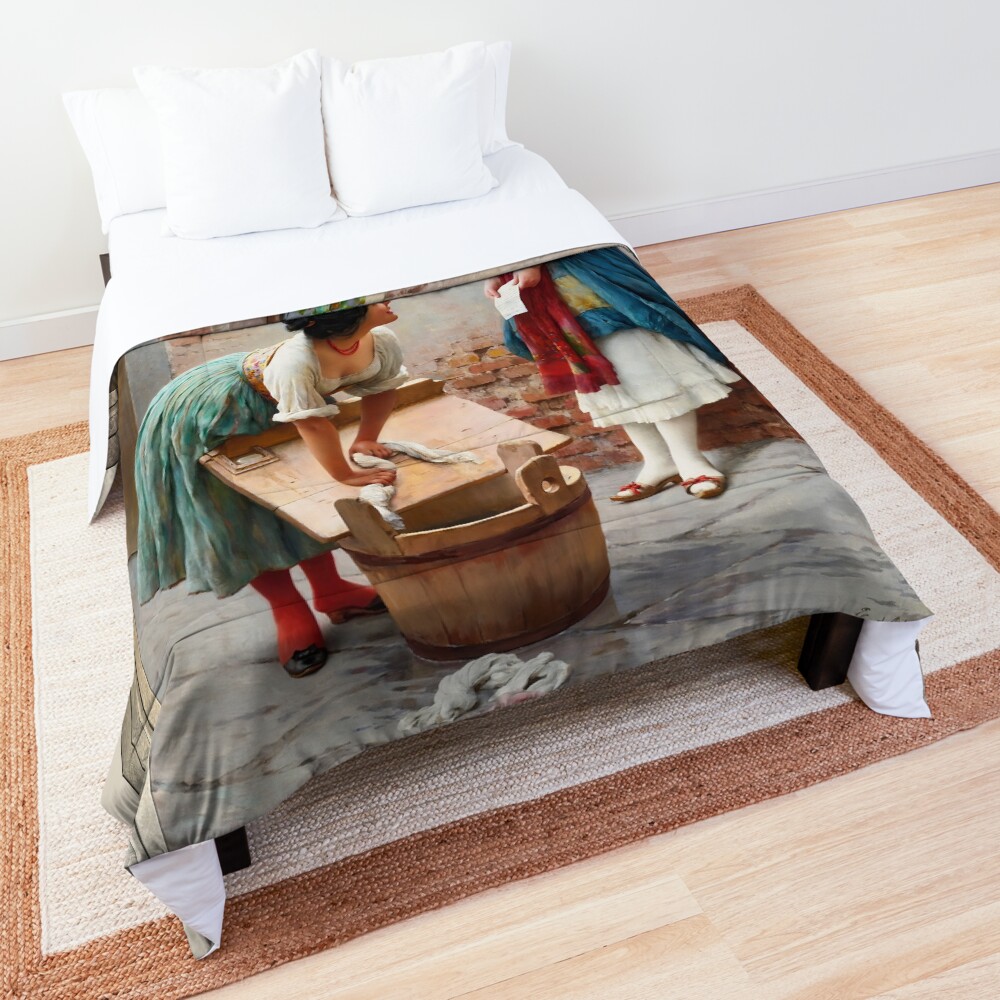
Es tracta d'una reproducció d'antics mestres d'art digital remasteritzada d'una imatge de domini públic que es pot comprar en línia en una varietat de formats de material, incloses impressions de llenç., impressions acríliques, estampes de metall, estampes de fusta, impressions emmarcades, cartells, i com impressions de lona enrotllada en una varietat de mides a partir de 12 polzades a 72 polzades depenent de la mida de l'obra d'art real i de la botiga d'impressió sota demanda on trieu comprar l'art.
Artista Bio
Informació a continuació derivada de Wikipedia.org
Eugen von Blaas was born at Albano, prop de Roma, a un pare tirolès i mare italiana. El seu pare Karl, també pintor, era el seu mestre. La seva mare, Agnesina Auda, era una dona romana benestant. La família es va traslladar a Venècia quan Karl es va convertir en professor a l'Acadèmia de Venècia. Sovint pintava escenes a Venècia, però també retrats i pintures religioses.
Entre les seves obres destaquen La forma nupcial a la sagristia; Bingo a Campielo a Venècia; Escena de titelles en una escola; i La Ninetta. El crític d'art Luigi Chirtani, quan el quadre es va exposar a la Mostra Nazionale di Venezia, ho va descriure com a bonic, afalagador, bonic, acaronada, netejat, polit, bugadera en un quadre del Sr. Bufeta, el retratista favorit dels grans aristòcrates venecians, vestit de setins de gala, joies brillants, pentinats dels rics.
Les seves imatges d'època colorides i més aviat teatralitzades de la societat veneciana, per exemple. Al Balcó (1877; Col·lecció particular), eren força diferents en comparació amb els delicats pastissos i aiguaforts dels patis, balcó i canals de la Venècia moderna.
Eugeni de Blaas’ les pintures es van exposar a la Reial Acadèmia, Societat de Belles Arts, New Gallery i Arthur Tooth and Sons Gallery de Londres, i també a la Walker Art Gallery de Liverpool