

A Maiden With A Basket Of Roses
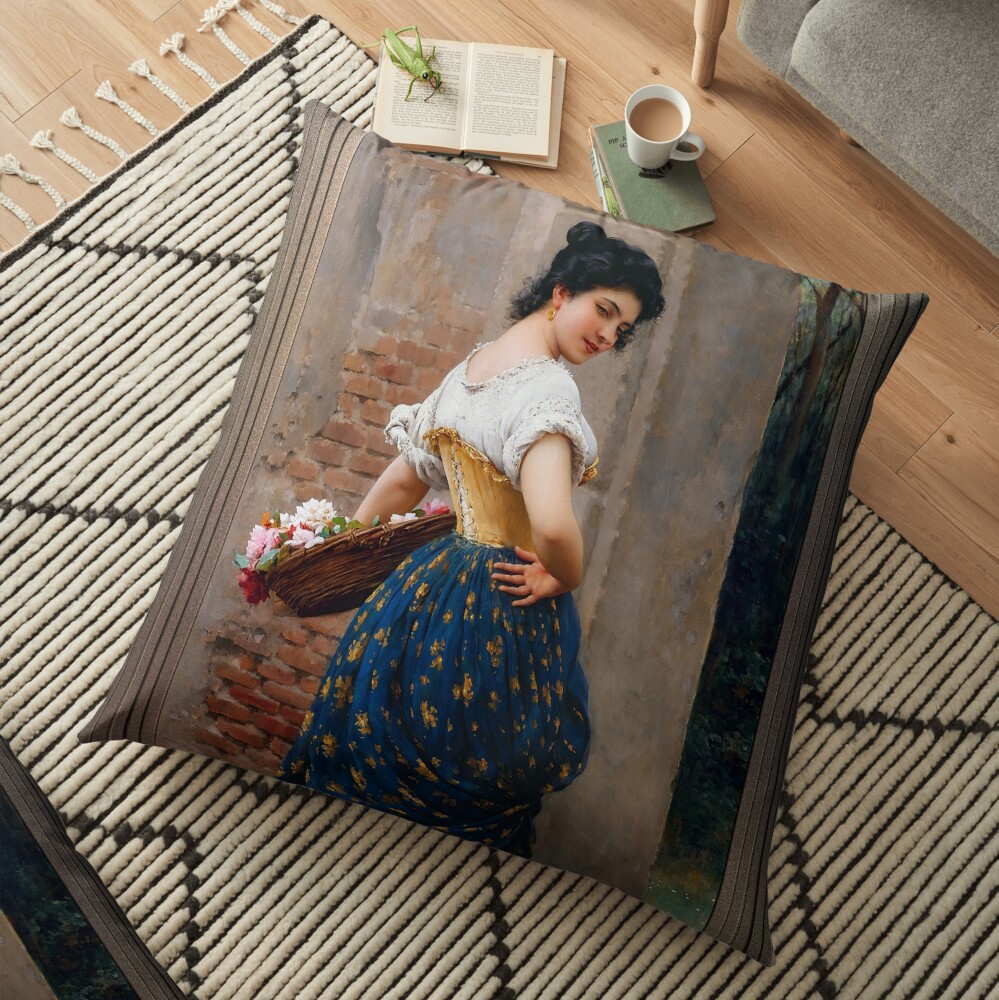
“A Maiden With A Basket Of Roses,” oprettet i 1900 by the renowned Italian artist Eugen von Blaas (1843 – 1931), is a remarkable piece of classical realism that captures the charm and grace of a young woman in a peaceful moment of rural life. Von Blaas, known for his exquisite depictions of women in classical attire, often painted portraits of figures with a deep connection to nature and delicate beauty. In this particular painting, the subject is a young maiden carrying a basket filled with roses, symbolizing purity and beauty. The soft colors, flowing fabrics, and the detailed rendering of the surroundings all contribute to a sense of tranquility and timelessness.
Indholdsfortegnelse
Emnet og kompositionen
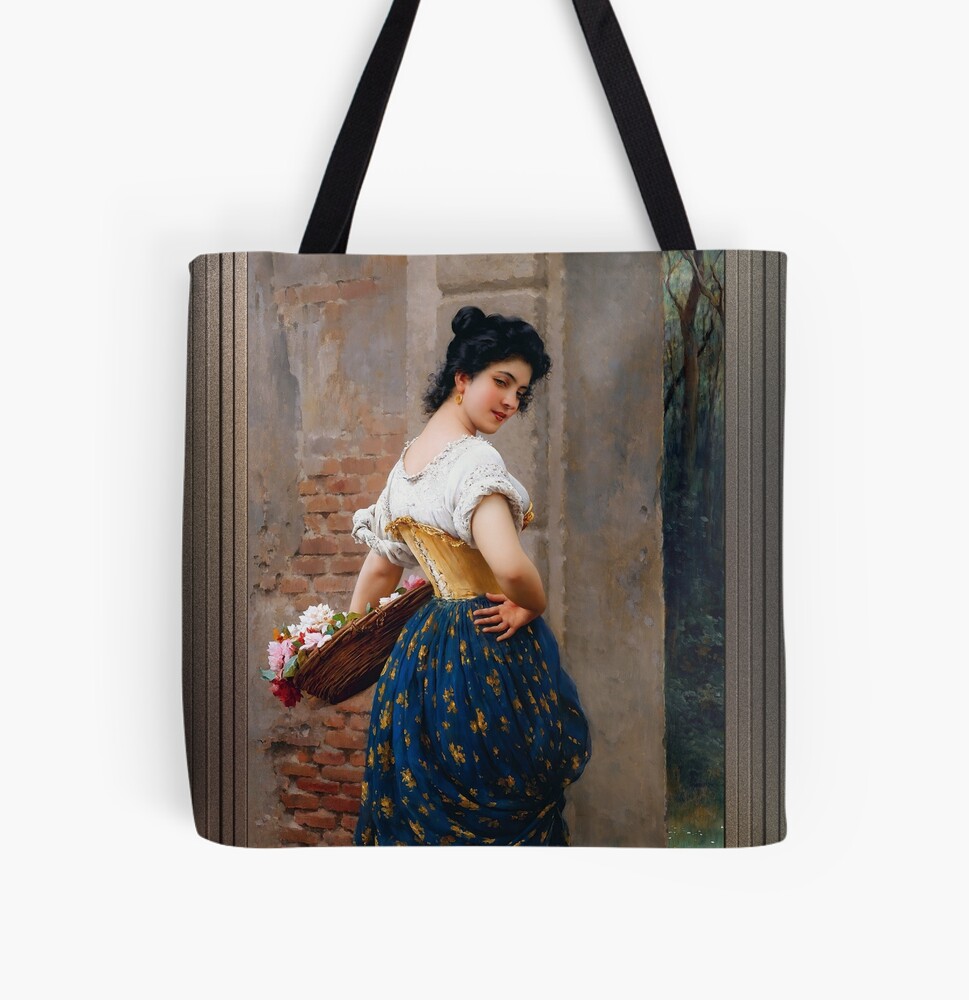
The central figure of this painting is a young woman dressed in a traditional gown, which is both elegant and simple. She is shown from a slight angle, with her body turned toward the viewer, but her gaze directed slightly over her shoulder, inviting the viewer into her world. The woman’s youthful face is framed by dark, krøllet hår, which has been styled in soft waves that cascade down to her neck. Her expression is gentle yet engaging, with a hint of curiosity and grace that draws the viewer’s attention.
Her attire is composed of a white blouse with intricate lace detailing around the neckline, offering a delicate contrast to the deep blue skirt she wears. Nederdelen, adorned with gold floral motifs, billows outward, creating a sense of movement. The rich texture of the fabric is depicted with remarkable realism, giving the viewer a sense of the fabric’s weight and the way it interacts with the light. The contrast of the pale blouse and the dark blue skirt serves to highlight the figure’s form while creating a striking balance in the composition.
I hendes højre hånd, the maiden holds a wicker basket filled with an assortment of roses. The basket is carefully rendered, showcasing the natural texture of the woven material. The flowers, predominantly in shades of pink and white, add a burst of color to the scene and enhance the sense of freshness and life. The roses seem to symbolize purity, skønhed, and perhaps a sense of youthful innocence, while their gentle placement in the basket conveys a natural elegance.
The subject’s red stockings and brown shoes provide additional contrast against the softer tones of her outfit, grounding the figure in the scene while drawing attention to her lower body. The way the artist has chosen to depict her legs, with the bright red of the stockings and the subtle motion of her gait, imbues the composition with a lively energy that prevents it from feeling static.
The Terrain and Background
The background of the painting is equally compelling, though it remains secondary to the primary focus on the maiden. The landscape suggests a rustic, rural environment with its muted tones of earth and greenery. A stone wall stands to the left of the maiden, partially covered in a layer of ivy, which enhances the natural setting. The wall appears aged, with traces of time evident in its weathered bricks. The artist has captured the rough texture of the bricks in fine detail, making them feel tactile and authentic.
Beyond the stone wall, the landscape fades into a soft, verdant garden or forest scene, which creates a harmonious connection between the maiden and her environment. The light filtering through the trees casts dappled shadows across the ground, suggesting the time of day is either early morning or late afternoon, when the sunlight is warm and golden. The soft greens and browns in the background mirror the colors in the maiden’s attire, further linking her to the natural world.
The overall composition of the painting draws the viewer’s attention to the maiden in the foreground, while the background remains a calm, serene setting that does not compete for attention. The natural world, captured in delicate brushwork, serves as a perfect complement to the human figure, reinforcing the theme of a harmonious relationship between mankind and nature.
Materialer, Stil, and Technique
Eugen von Blaas’s mastery of oil painting is evident in the richness of the textures and the skillful use of light and shadow. His attention to detail is extraordinary, particularly in the rendering of the fabrics and the roses in the basket. Each rose petal is meticulously painted, with subtle shading that gives the flowers a lifelike quality. The play of light on the maiden’s skin and clothing further demonstrates the artist’s ability to capture the nuances of light, creating a three-dimensional sense of volume in the painting.
The painting’s style adheres to the principles of classical realism, which was popular during the 19th and early 20th centuries. Brugen af blød, naturalistic colors and the focus on the human form with a gentle yet realistic portrayal of details are hallmark traits of this movement. Von Blaas’s ability to render the folds of the fabric and the delicate features of the woman’s face showcases his deep understanding of anatomy and form.
The mood of the artwork is one of peacefulness and quiet reflection. The maiden’s serene expression and the tranquil setting evoke a sense of calm, as if the viewer is witnessing an intimate moment in the life of the subject. The artist captures a fleeting moment of beauty, one that is both timeless and specific to a particular moment in history, evoking a nostalgia for a simpler, more idyllic way of life.
Tema og humør
The underlying theme of the painting revolves around beauty, natur, and the purity of youth. The roses, as symbols of beauty and love, serve to reinforce these ideas, while the woman’s serene expression and graceful pose suggest a sense of contentment and inner peace. The rural setting, with its gentle greenery and natural light, further enhances the theme of harmony between humanity and nature. The mood of the painting is light, peaceful, and imbued with a sense of nostalgia for an idealized past.
Dette er en remastered digital art old masters reproduktion af et offentligt domæne billede, der er tilgængeligt som en lærred print online.
Denne digitale kunstskabelse, som med alt det kunstværk, der kan findes på Xzendor7-webstedet, er det tilgængeligt for køb online i en række materialeformater, herunder lærredstryk, akryltryk, metaltryk, trætryk, indrammede tryk, plakater, og som rullede lærred udskriver i forskellige størrelser fra 12 tommer til 72 tommer afhængigt af størrelsen på det faktiske kunstværk og den print-on-demand-butik, du vælger at købe kunsten fra.
Kunstværket er også tilgængeligt på en bred vifte af mænds og kvinders beklædning, krus, totes, tørklæder, notesbøger og journaler og mange boligindretningsprodukter.
Kunstner Bio
Info nedenfor stammer fra Wikipedia.org
Han blev født i Albano, nær Rom, til en tyrolsk far og italiensk mor. Hans far Karl, også en maler, var hans lærer. Hans mor, Agnesina Auda, var en velhavende romersk kvinde. Familien flyttede til Venedig, da Karl blev professor ved Academy of Venice. Han malede ofte scener i Venedig, men også portrætter og religiøse malerier.
Blandt hans værker er bryllupsformen i sakristiet; Bingo i Campielo i Venedig; En dukketeater på en skole; og La Ninetta. Kunstkritikeren Luigi Chirtani, da maleriet blev vist på Mostra Nazionale di Venezia, beskrev det som Smukt, flatterende, smuk, kærtegnede, gjort rent, poleret, vaskeri i et maleri af Mr.. Blære, favoritportrætisten af store venetianske aristokrater, iklædt gallasatiner, skinnende smykker, de riges frisurer.
Hans farverige og temmelig teatrale periodebilleder af det venetianske samfund, for eksempel. På balkonen (1877; Privat samling), var ganske forskellige i forhold til sarte pasteller og raderinger af gårdene, balkon og kanaler i det moderne Venedig.
Eugene de Blaas’ malerier blev udstillet på Royal Academy, Fine Art Society, New Gallery og Arthur Tooth and Sons Gallery i London, og også på Walker Art Gallery i Liverpool