

A Revealing Blonde
Inngangur
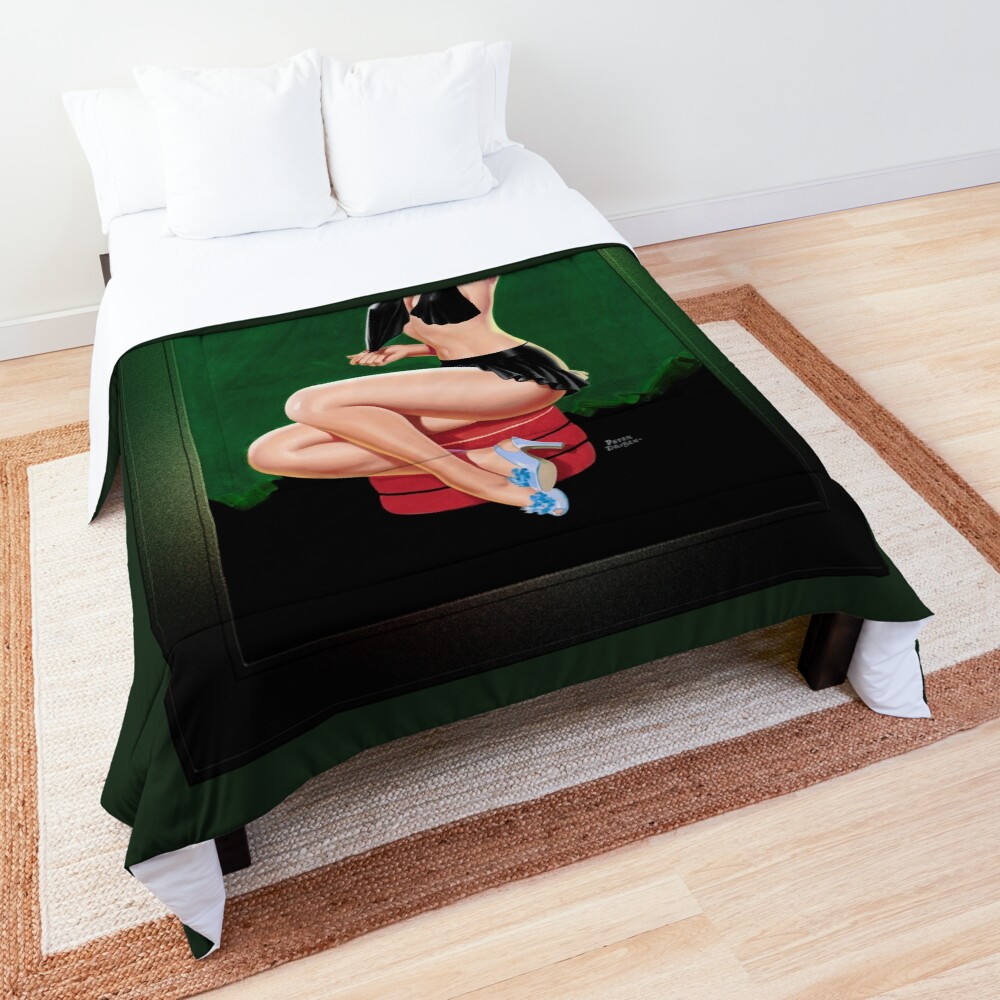
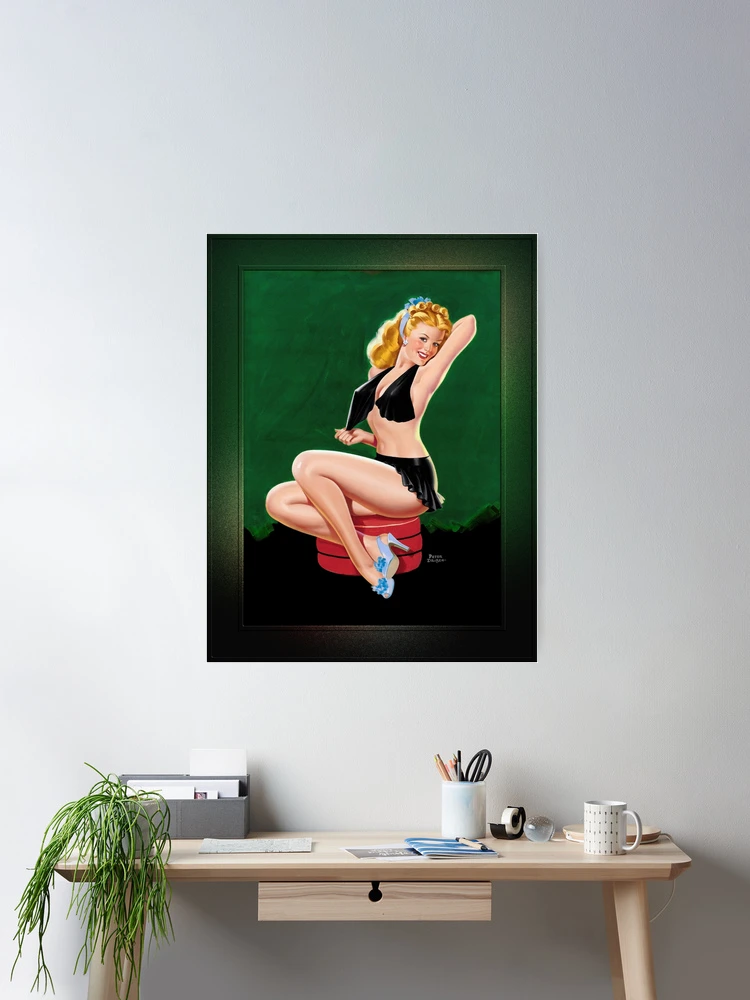
Peter Driben’s (1903 – 1968) artwork “A Revealing Blonde” captures the vivacious charm and sensuous elegance characteristic of mid-20th-century pin-up art. Renowned as one of the foremost illustrators of his time, Driben brings to life a captivating image of femininity, sjálfstraust, og aðdráttarafl, set against a strikingly minimal yet effective backdrop. This piece exemplifies the golden age of pin-up art, þar sem fegurð, cheekiness, and glamour were interwoven into every stroke.
Efnisyfirlit
Viðfangsefnið: A Timeless Pin-Up Beauty
At the heart of the composition is a vibrant blonde woman, depicted with a radiant smile and an air of effortless confidence. Her pose is dynamic and playful, with one arm gracefully arched behind her head while the other tugs lightly at her cropped black top, lending an air of flirtation and spontaneity. The woman’s golden curls cascade over her shoulders, accentuated by a blue ribbon that adds a touch of innocence to her otherwise sultry demeanor. Her features are meticulously detailed, from her sparkling eyes and rosy cheeks to her perfectly sculpted smile, embodying the idealized beauty standards of the era.
Klæðnaður hennar, though minimal, is purposeful in its design. The black bikini top and ruffled skirt balance simplicity and sophistication, highlighting her figure while maintaining a sense of tasteful allure. Completing her outfit are light blue heels adorned with floral embellishments, an elegant detail that enhances the overall harmony of the image.
Background and Color Palette
The background is an expanse of rich green, a choice that creates a vivid contrast against the subject’s golden hair and fair skin. This bold use of color not only draws attention to the central figure but also emphasizes her liveliness and energy. The green backdrop is smooth and devoid of intricate detail, allowing the viewer to focus entirely on the subject while evoking a sense of timeless sophistication.
The subtle shadowing beneath the figure anchors her to the scene, giving a three-dimensional quality to the otherwise flat composition. The vibrant colors, hreinar línur, and lack of extraneous elements underscore Driben’s mastery in distilling a scene to its essence, ensuring the subject remains the focal point.
The Composition and Style
Driben’s style is emblematic of the classic pin-up genre, blending elements of realism with stylized exaggeration to create an idealized representation of femininity. The contours of the subject’s body are carefully crafted to accentuate her curves, a hallmark of the pin-up aesthetic. The overall composition is balanced and symmetrical, with the circular stool and her poised posture serving as grounding elements amidst the vivid dynamism of her pose.
The technique employed here is unmistakably painterly, with smooth gradients and bold, well-defined lines. This reflects the influence of commercial illustration of the time, where clarity and visual impact were paramount. Driben’s brushwork, while refined, retains a sense of warmth and accessibility, inviting the viewer to engage with the artwork on a personal level.
Skap og þema
Stemningin á “A Revealing Blonde” is lighthearted and playful, encapsulating the optimistic spirit of post-war America. There is an undeniable sense of joy and self-assurance in the subject’s demeanor, celebrating femininity without pretense or inhibition. The flirtatious nature of her pose and expression, coupled with the bright and vibrant color palette, evokes feelings of nostalgia and admiration.
The theme of the artwork aligns with the broader cultural fascination with glamour, fegurð, and entertainment during the mid-20th century. Pin-up list, as epitomized by Driben’s work, was not just a celebration of beauty but also an expression of individuality and charm. Þetta stykki, sérstaklega, captures the playful yet empowering essence of the genre, offering a window into a bygone era where artistry and popular culture seamlessly intertwined.
Niðurstaða
“A Revealing Blonde” by Peter Driben is a quintessential example of classic pin-up art, combining technical excellence with a sense of fun and allure. The meticulous attention to detail in the subject’s features, klæðnaður, and pose, paired with the simplicity of the background, highlights Driben’s ability to create works that are both visually striking and emotionally resonant. This piece stands as a testament to the enduring appeal of pin-up art, celebrating the beauty, sjálfstraust, and charm that defined an era.
Þetta er endurgerð stafræn list af gömlum meistara eftirgerð af mynd sem er í almenningseign sem er fáanleg sem strigaprentun á netinu.
Um Listamanninn
Upplýsingar að neðan Frá Wikipedia.org
Peter Driben fæddist í Boston, og hann stundaði nám við Vesper George Art School áður en hann flutti til Parísar í 1925. Á meðan hann tók námskeið í Sorbonne í 1925, hann hóf röð af mjög vinsælum penna-og-blekiteikningum af sýningarstúlkum borgarinnar.
Í mars sl 1934 Driben bjó til sinn fyrsta þekkta pin-up sem var forsíða La Paree Stories; og af 1935, hann var að framleiða forsíður fyrir Snappy, Pep, New York nætur, Franskt næturlíf og Caprice.
Þegar vinsældir Driben héldu áfram að aukast seint á þriðja áratugnum bjó hann til fleiri forsíður fyrir önnur tímarit, þar á meðal Silk Stocking Stories, Kvikmyndagleði og alvöru skjáskemmtun.
Ferill Driben stækkaði í auglýsingagerð þegar hann flutti til New York seint 1936. Hér bjó hann til upprunalega þrívíddar útskornar gluggaskjái fyrir Philco útvarpstæki, Cannon baðhandklæði, og Weber bökunarfyrirtækið.
Kannski er frægasta verk hans upprunalegu veggspjöldin og auglýsingalistaverkin fyrir The Maltese Falcon. Peter Driben var einnig náinn vinur útgefandans Robert Harrison, og inn 1941 hann fékk samning um að framleiða forsíður fyrir nýja tímarit Harrisons Beauty Parade.
Þaðan hélt Peter áfram að mála hundruð kápa fyrir þá útgáfu og fyrir hina sjö titlana sem Harrison ætlaði að setja á markað. – Daðra, Hvísla, Er að horfa á, Blikk, Augljóst, Hlæsir, og Jóker.
Driben myndi oft birta allt að sex eða sjö forsíður sínar í hverjum mánuði. Verk Driben fyrir Harrison komu honum sem einn þekktasti og farsælasti pin-up og glamour listamaður Bandaríkjanna.. Rétt áður en hann byrjaði að vinna fyrir Harrison, Driben giftist listamanninum, leikkona og ljóðskáld, Louise Kirby.
Í 1944 honum bauðst hið óvenjulega tækifæri, fyrir pin-up listamann; sem átti að verða liststjóri New York Sun, embætti sem hann hélt til 1946. Í stríðinu, Vinsælt málverk hans af bandarískum hermönnum að lyfta fánanum í Iwo Jima vakti talsverða fjölmiðlaathygli.
Í 1956, Driben og Louise fluttu til Miami Beach, þar sem hann eyddi eftirlaunaárunum við að mála portrett (þar á meðal einn af Dwight D. Eisenhower) og önnur myndlistarverk, sem voru skipulögð í farsælar sýningar af eiginkonu hans. Driben lést í 1968, Louise inn 1984.