

A Single Rose: An Exploration of Vintage Pin-up Art
Kynning á listaverkinu
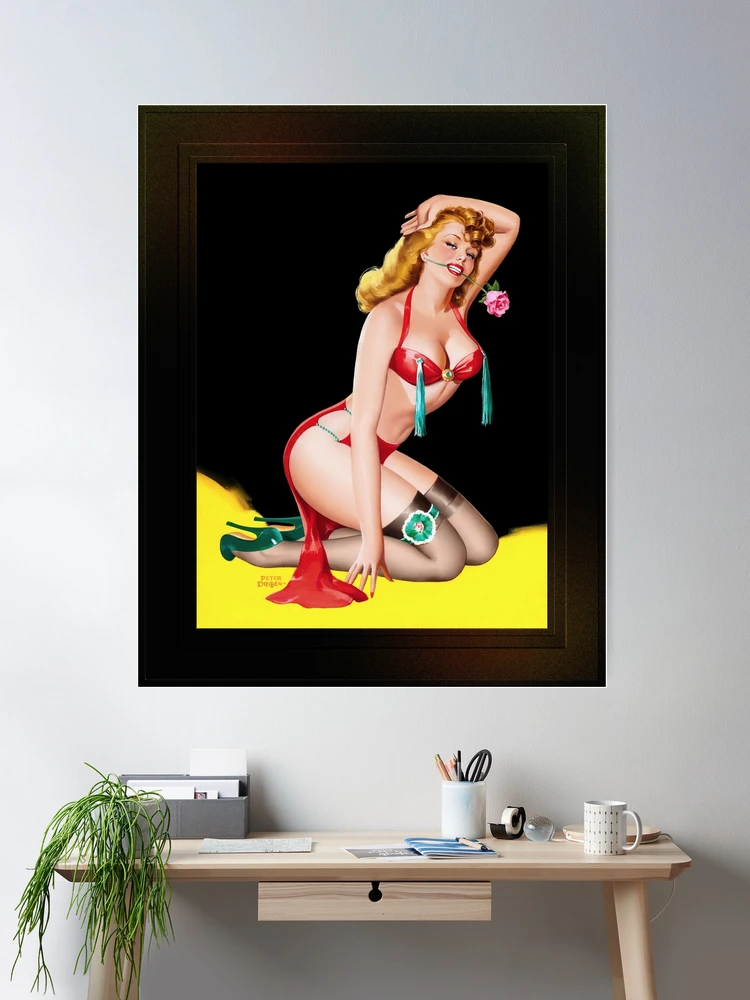
Pétur Driben‘s “A Single Rose” is a captivating piece of mid-20th-century American art that falls squarely within the genre of pin-up art, a style that reached its zenith during the 1940s and 1950s. Driben (1903 – 1968), known for his iconic pin-up girl illustrations, often depicted women in seductive, playful poses, encapsulating the spirit of the era’s more carefree and vibrant aspects. This artwork features one of his trademark sultry depictions, focusing on a beautiful young woman dressed in an eye-catching red outfit, her flirtatious pose further enhanced by the inclusion of a single rose held delicately between her lips.
Efnisyfirlit
Aðalefni: The Pin-up Girl
The central focus of the painting is the striking woman with blonde, glamorous hair styled in soft waves. She is positioned seductively in a kneeling posture, her body angled slightly to the side, with one leg bent at the knee to accentuate her curves. Her playful expression—highlighted by a subtle smile and the rose in her mouth—conveys a sense of confidence and allure. The woman’s bright red attire, a revealing bikini-like top and matching skirt, contrasts beautifully with her pale skin, further emphasizing her figure. A turquoise ribbon is tied around the neckline of the top, adding a touch of color and visual interest to the scene.
The overall pose of the model is one of playful defiance, with one hand behind her head, as if to draw attention to her curves and her overall sensuality. The rose, positioned between her lips, introduces a layer of femininity and subtle romance, a symbol often associated with love, ástríðu, og fegurð. This simple yet effective accessory becomes both a visual and symbolic focal point of the artwork, suggesting themes of desire, flirtation, and the timeless appeal of the female form.
Objects and Elements in the Artwork
Apart from the central figure, the painting incorporates several other objects that complement the subject and contribute to the overall mood of the piece. The bright red heels she wears add to her seduction, a bold fashion choice that speaks to the glamour and style of the 1940s. The artist has rendered these shoes with meticulous care, ensuring they catch the light in a way that adds dimension to the overall composition.
The background of the piece is stark and minimalist, utilizing a dark backdrop that contrasts sharply with the model’s pale skin and bright clothing. This contrast is typical of Driben’s style, which often used contrasting tones to make the subject stand out. The absence of any significant background elements keeps the focus squarely on the woman, allowing her pose and facial expression to be the primary narrative devices in the composition.
Auk þess, Driben uses shadows and highlights in a subtle yet effective manner. The light sources in the artwork appear to come from the front-left, casting gentle shadows on the woman’s face, her body, and her surroundings. The lighting draws attention to her curves and emphasizes her seductive posture. The smooth gradient of the yellow floor beneath her further enhances the sense of depth and space, making the figure of the woman appear as though she is poised on a stage, ready to capture the viewer’s full attention.
Efni og tækni
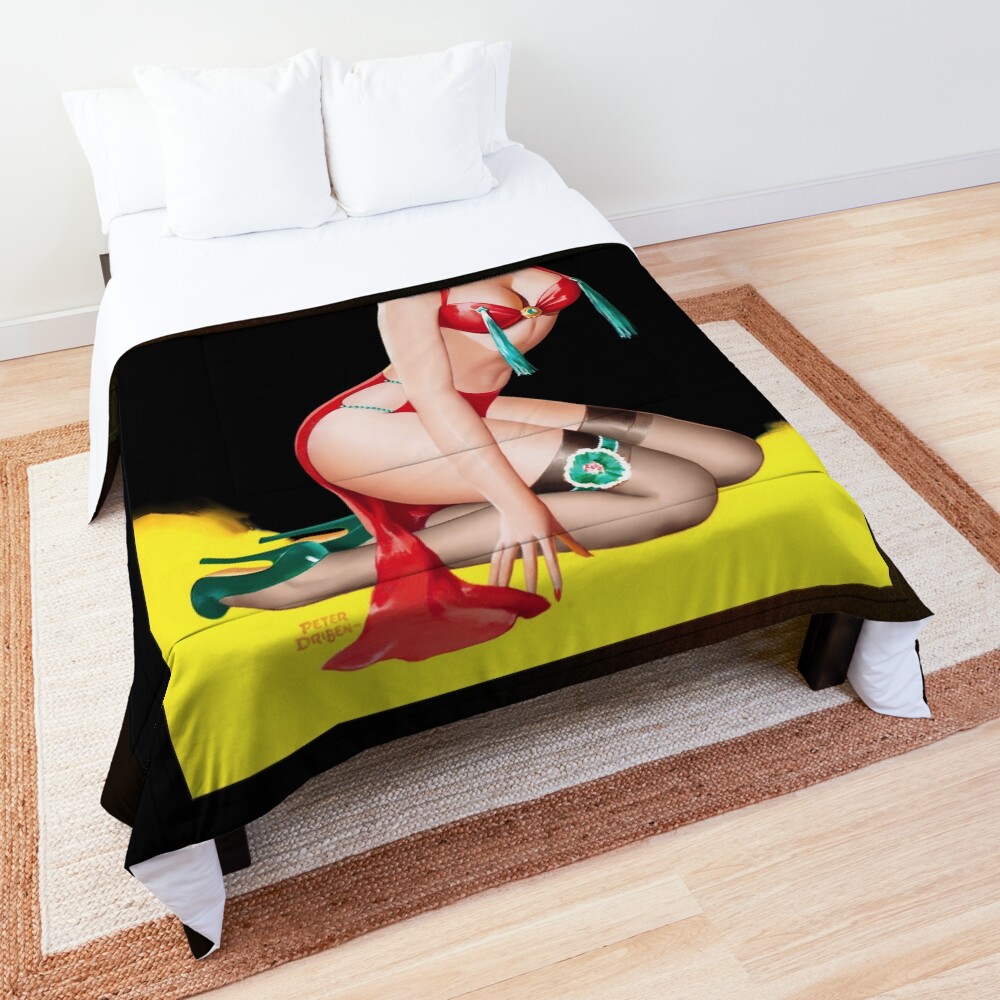
Driben’s technique is precise and controlled, showcasing his skill in rendering realistic textures and intricate details. The use of smooth, flowing brushstrokes gives the painting a polished appearance, especially in the depiction of the woman’s skin and clothing. The use of soft and radiant highlights creates a lifelike quality, while the subtle blending of shadows adds depth and form.
The smooth texture of the model’s skin contrasts beautifully with the softer, more muted surfaces of the surrounding elements, such as the yellow floor and the black background. The subtle textures used in the rose, her heels, and the turquoise ribbon reveal Driben’s eye for detail, elevating what might otherwise be a simple image into a sophisticated and visually appealing work.
Driben’s color palette is typical of the genre, with vibrant reds, grænu, and pinks creating an arresting visual spectacle. The striking red attire of the woman contrasts against the soft yellows of the floor and the dark background, ensuring that she remains the focal point of the piece. The teal accents of the ribbon around her neck offer a refreshing burst of color that enhances the sense of balance in the composition.
Þema og stemning
Þemað í “A Single Rose” speaks to the broader theme of sensuality and allure that is so prevalent in mid-century pin-up art. These works were designed not only to captivate the viewer’s attention but also to evoke a sense of fantasy and escapism. The exaggerated femininity of the model, her suggestive pose, and the flirtatious expression on her face all point to the ideals of glamour and sexuality that were prevalent in popular culture at the time.
The mood of the piece is playful yet seductive. The woman’s body language suggests both confidence and an invitation to indulge in the playful nature of the image, while the rose in her mouth adds a touch of romance and innocence to the otherwise provocative pose. The bright color choices and the smooth textures convey a sense of optimism, joy, og sensuality, while the minimal background directs the viewer’s attention entirely to the model and her allure.
This artwork reflects the pin-up style’s appeal as a celebration of femininity and beauty, encapsulating an era where women were idealized as symbols of glamour, sexuality, og náð. The model in this painting becomes a representation of the time period’s cultural ideals—a muse for both the artist and the audience.
Niðurstaða
“A Single Rose” by Peter Driben is a stunning example of vintage pin-up art that continues to capture the viewer’s imagination with its bold portrayal of feminine allure. Through its meticulous detail, vibrant color palette, and skillful composition, the artwork serves as both a visual feast and a cultural snapshot of the mid-20th century. Driben’s ability to render his subject with both sensuality and elegance ensures that this piece stands as a lasting representation of the glamour and appeal of the pin-up genre.
Þetta er endurgerð stafræn list af gömlum meistara eftirgerð af mynd sem er í almenningseign sem er fáanleg sem strigaprentun á netinu.
Um Listamanninn
Upplýsingar að neðan Frá Wikipedia.org
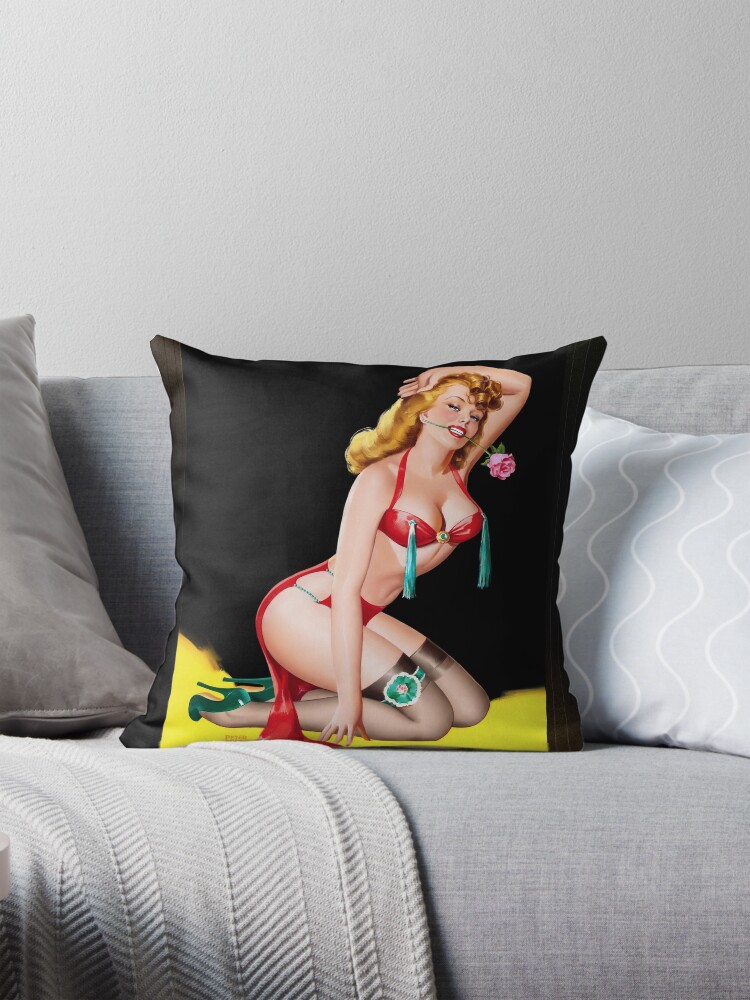
Peter Driben fæddist í Boston, og hann stundaði nám við Vesper George Art School áður en hann flutti til Parísar í 1925. Á meðan hann tók námskeið í Sorbonne í 1925, hann hóf röð af mjög vinsælum penna-og-blekiteikningum af sýningarstúlkum borgarinnar.
Í mars sl 1934 Driben bjó til sinn fyrsta þekkta pin-up sem var forsíða La Paree Stories; og af 1935, hann var að framleiða forsíður fyrir Snappy, Pep, New York nætur, Franskt næturlíf og Caprice.
Þegar vinsældir Driben héldu áfram að aukast seint á þriðja áratugnum bjó hann til fleiri forsíður fyrir önnur tímarit, þar á meðal Silk Stocking Stories, Kvikmyndagleði og alvöru skjáskemmtun.
Ferill Driben stækkaði í auglýsingagerð þegar hann flutti til New York seint 1936. Hér bjó hann til upprunalega þrívíddar útskornar gluggaskjái fyrir Philco útvarpstæki, Cannon baðhandklæði, og Weber bökunarfyrirtækið.
Kannski er frægasta verk hans upprunalegu veggspjöldin og auglýsingalistaverkin fyrir The Maltese Falcon. Peter Driben var einnig náinn vinur útgefandans Robert Harrison, og inn 1941 hann fékk samning um að framleiða forsíður fyrir nýja tímarit Harrisons Beauty Parade.
Þaðan hélt Peter áfram að mála hundruð kápa fyrir þá útgáfu og fyrir hina sjö titlana sem Harrison ætlaði að setja á markað. – Daðra, Hvísla, Er að horfa á, Blikk, Augljóst, Hlæsir, og Jóker.
Driben myndi oft birta allt að sex eða sjö forsíður sínar í hverjum mánuði. Verk Driben fyrir Harrison komu honum sem einn þekktasti og farsælasti pin-up og glamour listamaður Bandaríkjanna.. Rétt áður en hann byrjaði að vinna fyrir Harrison, Driben giftist listamanninum, leikkona og ljóðskáld, Louise Kirby.
Í 1944 honum bauðst hið óvenjulega tækifæri, fyrir pin-up listamann; sem átti að verða liststjóri New York Sun, embætti sem hann hélt til 1946. Í stríðinu, Vinsælt málverk hans af bandarískum hermönnum að lyfta fánanum í Iwo Jima vakti talsverða fjölmiðlaathygli.
Í 1956, Driben og Louise fluttu til Miami Beach, þar sem hann eyddi eftirlaunaárunum við að mála portrett (þar á meðal einn af Dwight D. Eisenhower) og önnur myndlistarverk, sem voru skipulögð í farsælar sýningar af eiginkonu hans. Driben lést í 1968, Louise inn 1984.