

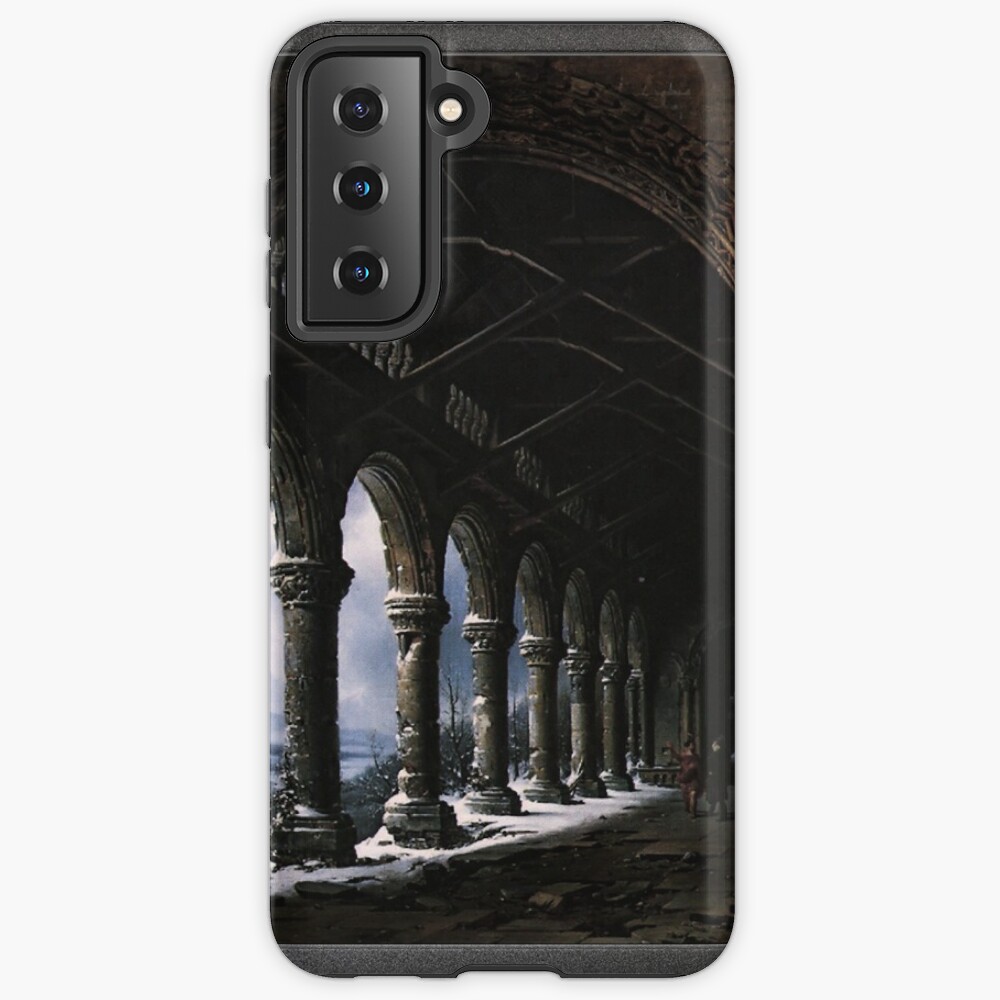
Een verwoeste gotische zuilengalerij
The Effect of Fog and Snow Seen through A Ruined Gothic Colonnade c1826 by French Painter Louis Daguerre (1787 – 1851), erkend voor zijn uitvinding van het Daguerreotypie-proces van fotografie en beschouwd als een van de grondleggers van de fotografie; hij was ook een ervaren schilder en ontwikkelaar van het Diorama-theater.
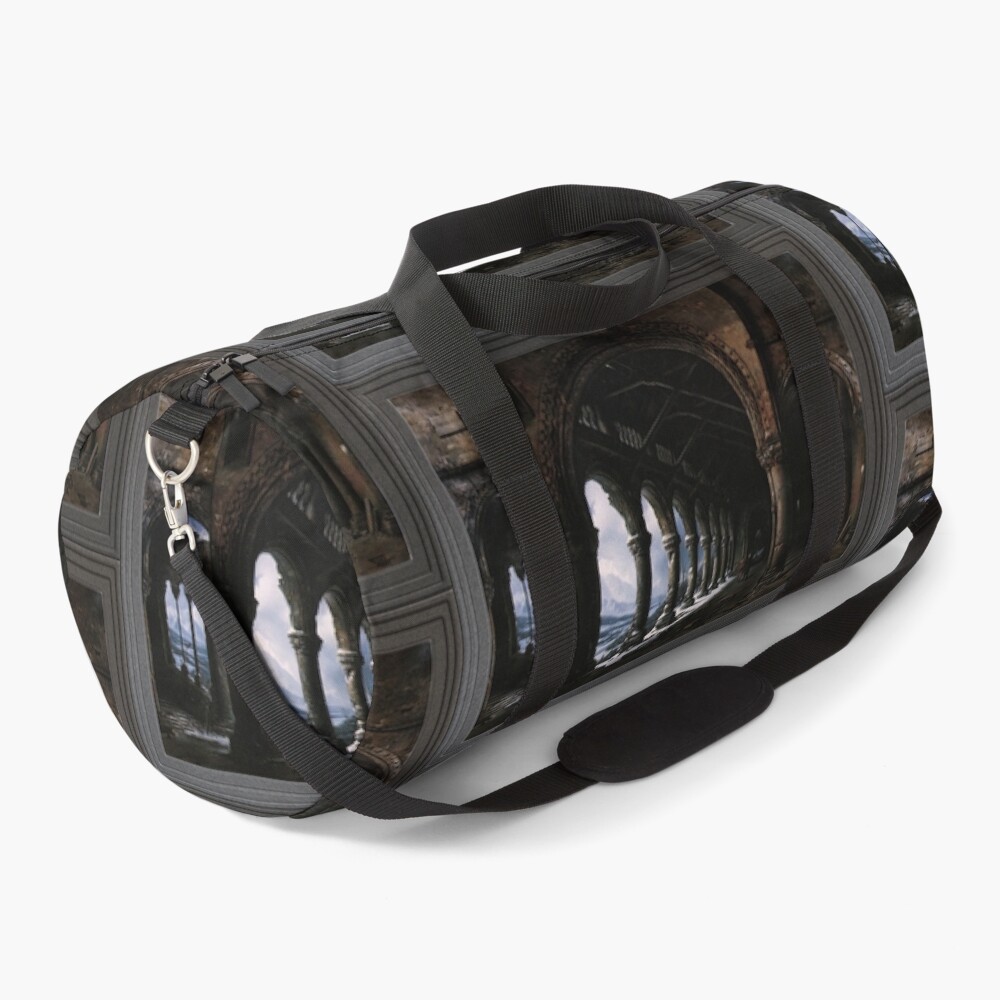
Een verwoeste gotische zuilengalerij is een krachtig boeiend beeld van een lang vergeten geruïneerd gotische structuur die uitkijkt over een met sneeuw bedekte bergketen terwijl twee mannen door de lange eenzame vervallen gang van het oude gotische gebouw lopen, met zijn prachtige zuilen en bogen.
A Ruined Gothic Colonnade is a retouched digital art old masters reproduction of a public domain image that is available as a online opgerold afdrukken.
Onderstaande informatie afgeleid van: Wikipedia.org
Louis-Jacques-Mandé Daguerre was born on the 18th of November in 1787 in Cormeilles-en-Parisis, Val d'Oise, Frankrijk; and is better known as Louis Daguerre, who was a French artist and photographer, recognized for his invention of the daguerreotype process of photography.
He is known as one of the fathers of photography, and even though he is most famous for his contributions to photography, he was also an accomplished painter and a developer of the diorama theater.

Hij was in de leer bij architectuur, theater ontwerp, and panoramic painting under the first French Panorama Painter Pierre Prévost (1764 – 1823).
He was exceedingly well adept at his skill of theatrical illusion, and he became a celebrated designer for the theater, which later led to him inventing the diorama, die in juli in Parijs werd geopend 1822.
In 1829, Daguerre partnered with French Inventor Nicéphore Niépce (1765 – 1833), who had produced the world’s first heliograph in 1822 en de oudste nog bestaande camerafoto in 1826 of 1827.
Though Niépce died suddenly in 1833, Daguerre continued experimenting with the photographic process, and evolved the method that would eventually be known as the daguerreotype.
Nadat pogingen om particuliere investeerders te interesseren vruchteloos bleken te zijn, Daguerre ging naar de beurs met zijn uitvinding in 1839; and at a joint meeting of the French Academy of Sciences and the Académie des Beaux Arts on 7 januari van dat jaar, de uitvinding werd aangekondigd en beschreven in algemene termen, maar alle specifieke details werden achtergehouden.
Onder garanties van strikte vertrouwelijkheid, Daguerre explained and demonstrated the process only to the Academy’s perpetual secretary François Arago, who proved to be an invaluable advocate.
Members of the Academy and other select individuals were allowed to examine specimens of Daguerre’s work at his studio, which won him enthusiastic praise; with the process being though of as nearly miraculous, which led to the news of the daguerreotype spreading quickly.
Then the French Government made arrangements to acquire the rights to Daguerre’s invention in exchange for a lifetime pension for himself and the 19 year old sone of Niépce’s son Isidore.
Then on August 19, 1939 the French Government presented his invention as a free gift to the world, with complete instruction on how to create photographs; later that year Daguerre was elected to the National Academy of Design as an Honorary Academician.
Daguerre is overleden, van een hartaanval, on July 10, 1851 in Bry-sur-Marne, 12 km (7 mij) van Parijs; and a monument was erected that marks his grave, and his name is also one of 72 other to be inscribed on the Eiffel tower.