

A Summertime Beauty
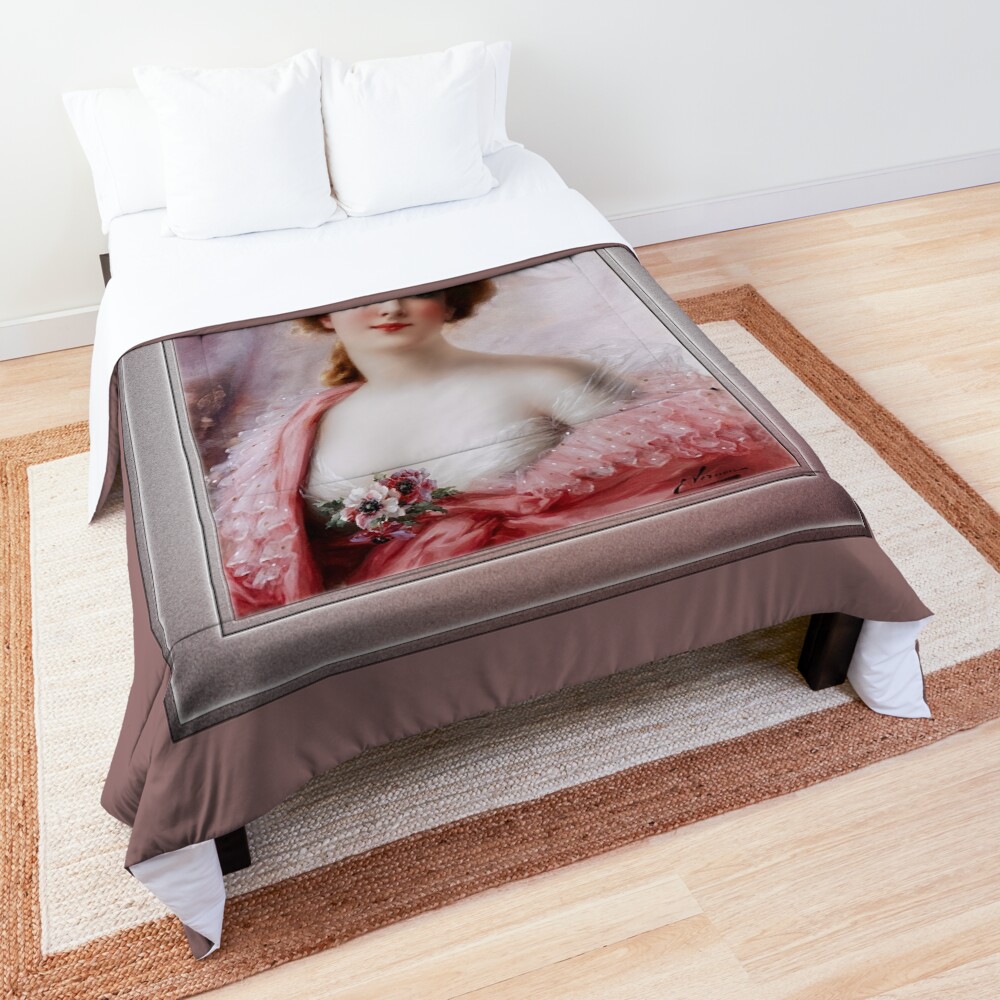
Emile Vernon, a renowned French artist (1872–1920), captured the essence of beauty and femininity in his 1910 sàr-obair, A Summertime Beauty. The painting portrays a delicate young woman amidst a soft and vibrant floral composition. A close-up of the subject reveals an ethereal beauty, with her poised expression and serene demeanor invoking a sense of tranquility and elegance. The mood of the painting is undeniably one of grace, evoking nostalgia and a celebration of youth and the natural world.
Clàr-innse
An cuspair: A Portrait of Grace
The central focus of the painting is a beautiful young woman, presented in a portrait format. Her hair is styled in soft waves, adorned with a delicate floral wreath composed of pale pink and white blossoms. This floral motif enhances her purity and innocence, while also symbolizing the joys of summer. The woman gazes gently toward the viewer with an inviting yet subtle smile, exuding an air of serenity and confidence.
Her attire consists of a soft, pink gown, which flows gently around her form and is dotted with delicate white flowers. The gown’s sheer texture gives a sense of lightness and softness, as though it were spun from the finest, airy fabric. The combination of the pale pink hue of the gown with the soft colors of the flowers gives a sense of harmony with nature, aligning with the summer theme that is central to the piece.
Am bog, rounded features of the woman’s face are expertly captured. Her cheeks are flushed with a natural rosy glow, complementing the flowers in her hair and the delicate floral arrangement on her gown. The artist has skillfully blended light and shadow to create a lifelike texture that conveys youth, health, agus spionnadh. Her expression is one of quiet confidence, while the soft gaze toward the viewer seems both intimate and distant, as if she is contemplating the fleeting nature of beauty itself.
Composition and Use of Color
Emile Vernon’s use of color in A Summertime Beauty is notable for its softness and lightness. The pastel tones dominate the piece, with the pink hues of the subject’s gown and the soft colors of the flowers creating a harmonious balance that emphasizes both the subject’s form and the floral elements in the painting. The artist’s palette focuses on tender colors like soft pinks, gealaichean, and light greens, conveying a sense of calm and peace.
The light background adds a dreamy quality to the scene, with faint hints of mauve and pale lavender subtly enhancing the overall warmth of the composition. The soft hues of the background mirror the gentle presence of the subject, creating an atmospheric depth that feels almost like a dream. Vernon’s skillful blending and layering of the colors ensure that the entire painting remains cohesive, with the subject and the surrounding flowers seamlessly merging into one harmonious composition.
The texture of the piece is delicate, with the artist using soft brushstrokes to define the woman’s face, falt, agus gùn. The use of smooth transitions between light and shadow gives a sense of volume and depth, particularly on the contours of her face and the fabric of her gown. The flowers adorning her hair and dress are rendered with exquisite detail, each petal painted with care, further enhancing the naturalistic quality of the painting.
Symbolism of the Floral Elements
In addition to portraying beauty, the flowers in A Summertime Beauty serve as a symbol of both youth and the ephemeral nature of life. The wreath in the woman’s hair and the flowers on her gown are rich in symbolism, often associated with purity, boireannachd, and the fleeting beauty of youth. Dh’ fhaodadh an roghainn de bhlàthan pinc is geal cuideachd a bhith a’ comharrachadh gràs agus neo-chiontachd, feartan a tha gu tric co-cheangailte ri seusan an t-samhraidh, àm de bheatha shoirbheachail agus spionnadh.
Chan e dìreach sgeadachail a th’ anns na flùraichean mun cuairt air a’ chuspair; tha iad a’ ceangal a’ chuspair ris an t-saoghal nàdarrach, ag àrdachadh cuspair co-sheirm eadar am boireannach agus an àrainneachd aice. Bidh iad a 'cur cuideam air a' bheachd gu bheil bòidhchead, coltach ri flùraichean, tha e sealach agus lag, a’ fàs anns an àm ach a’ seargadh le ùine. Tha an eadar-dhealachadh seo eadar na flùraichean fìnealta agus bòidhchead gun ùine na boireannaich a’ nochdadh cho dualtach ‘s a tha beatha dhaoine - tha an òigridh air bhog, ach tha an àilleachd a tha e a' samhlachadh, bith-bhuan ann an ealan.
Mood agus Cuspair an Obair-ealain
Tha faireachdainn iomlan an deilbh mar aon de mhothachadh socair, a’ glacadh mionaid de bhòidhchead nàdarrach. Tha faireachdainn socair a’ bhoireannaich agus an solas bog a tha timcheall oirre a’ dùsgadh faireachdainnean cianalais airson neo-chiontachd agus spionnadh na h-òige. Tha an roghainn de chuspair an t-samhraidh a 'co-thaobhadh ri faireachdainnean blàths, suaimhneas, agus uchd socair nàduir.
Tha an dealbh a’ toirt a-steach faireachdainn gun ùine, mar gum biodh an neach-coimhead a’ faicinn mionaid crochte ann an ùine. Tha comas Vernon air a’ chothromachadh fìnealta eadar òigridh agus nàdar a chuir an cèill san obair aige a’ soilleireachadh a mhaighstir air a bhith a’ glacadh bòidhchead agus cugallachd na beatha.. Tha an dealbh a’ nochdadh miann airson purrachd agus sìmplidheachd amannan nas sìmplidhe, agus tha am paileas dath bog agus faireachdainn ciùin a’ daingneachadh an tòn sìtheil agus eireachdail a tha a’ mìneachadh a’ phìos.

Co-dhùnadh
A Summertime Beauty by Emile Vernon is a captivating portrayal of youthful grace, encapsulating a moment in time where beauty and nature converge. The artist’s exceptional technique, use of color, and symbolic incorporation of floral elements create a harmonious composition that invites the viewer to reflect on the delicate and fleeting nature of life. With its soft, dathan pastel, faireachdainn sàmhach, and elegant portrayal of femininity, the painting remains a testament to the timeless beauty that Emile Vernon so skillfully immortalized.
Is e seo ath-riochdachadh seann mhaighstirean ealain didseatach ath-leasaichte de ìomhaigh fearann poblach a tha ri fhaighinn mar chlò-bhualadh canabhas air-loidhne.
An cruthachadh ealain didseatach seo, mar a tha leis a h-uile obair-ealain a gheibhear air làrach-lìn Xzendor7 ri fhaighinn airson a cheannach air-loidhne ann an grunn chruthan stuth a’ gabhail a-steach clò-bhualaidhean canabhas, dealbhan acrylic, clò-bhualaidhean meatailt, clò-bhualaidhean fiodha, lèileagan frèam, postairean, agus mar chlò-bhualadh canabhas air a roiligeadh ann an grunn mheudan bho 12 òirlich gu 72 òirlich a rèir meud an fhìor obair-ealain agus a’ bhùth clò-bhualaidh air iarrtas a thaghas tu airson an ealain a cheannach.
Tha an obair-ealain cuideachd ri fhaighinn air raon farsaing de dh’ aodach fireannaich is boireannaich, mugaichean, toitean, sgarfaichean, leabhraichean notaichean agus irisean agus mòran stuthan sgeadachaidh dachaigh.
Mu dheidhinn an Neach-ealain
Fiosrachadh gu h-ìosal bho Gailearaidh Ary Jan
Bha Émile Vernon na oileanach aig sgoil Fine Arts ann an Tours far an do choisinn e a’ chiad duais airson tarraing a-steach 1888; an dèidh sin fhuair e taic bho Uilleam Bouguereau agus Auguste Truphème.
An uairsin a-steach 1898 ghabh e pàirt ann an taisbeanadh Tours de Fine Arts agus Decorative Arts agus nas fhaide air adhart air a’ bhliadhna sin, ann an Taisbeanadh Luchd-ealain na Frainge agus a’ taisbeanadh obair hie gu cunbhalach an sin bho 1898 gu 1913; a’ taisbeanadh dhealbhan, cruthan-tìre, seallaidhean às a’ Bhreatainn Bhig, bouquets de bheatha fhathast a pheant e ann an dath-uisge, a bharrachd air figearan boireann, a thàinig gu bhith na speisealachadh nas fhaide air adhart.
Bha Émile air leth math anns na dealbhan aige le solas bog, figearan ionmholta de chlann agus boireannaich òga eireachdail, ris an robh e tric a' ceangal peata mar cat, cù no eun, agus sgeadaich e a dhealbhan le blàth-fhleasg, no bouquets de bhlàthan, fad a bheatha; ach bha e cuideachd na neach-ealain air leth ioma-chruthach a b’ urrainn peantadh le dian agus cumhachd mar a bha anns na h-obraichean aige an dealbh de Madame Vernon agus Sous la Lampe (Fon lampa).