

Tuiteam Phaeton
Fall Phaeton c1604 leis a' pheantair Flemish Peter Paul Rubens (1577 – 1640); air a mheas mar aon den luchd-ealain as buadhaiche san traidisean Baróc Flemish agus bha e cuideachd na pheantair aig àm an Ath-bheothachaidh.
Is e Fall of Phaeton an sgeulachd mu mhac Dia na Grèine Helios a fhuair miann a bhith a’ marcachd air Helios Chariot Across The Sky mar dhearbhadh gur e athair Phaeton a th’ ann.; oidhirp nach dèanadh eadhon Zeus oidhirp.
Tha seo gu dearbh a’ leantainn gu duilgheadasan leis nach urrainn don òganach smachd a chumail air na ceithir eich (Chaidh sinn, Eos, Phlegon agus Pyrois) a bhios a’ draibheadh a’ charbad agus Phaeton a’ tòiseachadh a’ milleadh na talmhainn le bhith ga reothadh agus an uairsin ga losgadh, cruthachadh Fàsach Nubian a bharrachd air a bhith a’ tiormachadh lochan is aibhnichean.
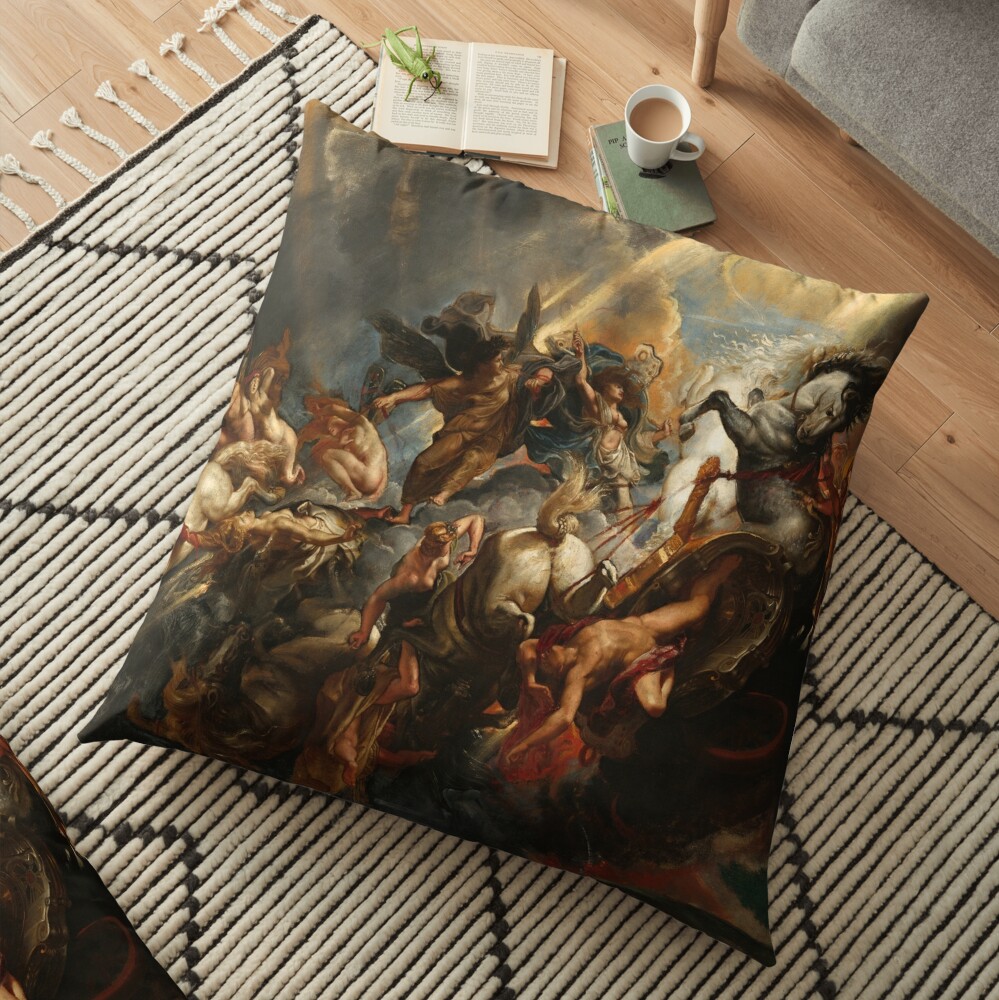
Zeus air seo fhaicinn, cho-dhùin e stad a chuir air teicheadh Paetons agus sgaoil e brat dealanaich a bhuaileas Phaeton a’ cur a chorp gun bheatha a ’tuiteam a dh’ ionnsaigh na talmhainn agus a ’crìochnachadh ann an Abhainn Eriadanos.
Tha The Fall of Phaeton na ath-riochdachadh ealain dhidseatach de dh’ ìomhaigh àrainn phoblach a tha ri fhaighinn air-loidhne mar clò-bhualadh canabhas.
Gu h-ìosal Fiosrachadh Bho Wikipedia.org
Sir Peadar Paul Rubens (An t-Ògmhios 28, 1577 – A 'Chèitean 30, 1640) bha e na neach-ealain Flemish agus na dhioplòmaiche bho Diùcachd Brabant ann an ceann a deas na h-Òlaind (Bheilg an latha an-diugh).
Tha e air a mheas mar an neach-ealain as buadhaiche ann an traidisean Baróc Flemish. Tha na sgrìobhaidhean aig Rubens a’ toirt iomradh air taobhan mì-chliùiteach de dh’ eachdraidh chlasaigeach is Chrìosdail. Chuir an stoidhle Baróc sònraichte aige agus mòr-chòrdte cuideam air gluasad, dath, agus ciallity, a lean sa bhad, stoidhle ealanta dràmadach air a bhrosnachadh anns an Fhrith-Ath-leasachadh.
B' e peantair a bh' ann an Rubens a' dèanamh pìosan altarach, dealbhan, cruthan-tìre, agus dealbhan eachdraidh de beul-aithris agus cuspairean allegorical. Bha e cuideachd na dhealbhadair pailt de chartùnaichean airson bùthan-obrach obair-ghrèis Flemish agus de dhealbhan aghaidh airson na foillsichearan ann an Antwerp.
A bharrachd air a bhith a ’ruith bùth-obrach mòr ann an Antwerp a rinn dealbhan a bha a’ còrdadh ri uaislean agus luchd-cruinneachaidh ealain air feadh na Roinn Eòrpa, Bha Rubens na sgoilear daonnachd foghlaimichte agus dioplòmasach a chaidh a dhèanamh na ridire le gach cuid Philip IV às an Spàinn agus Teàrlach I Shasainn. Bha Rubens na neach-ealain torrach. Tha liosta de na h-obraichean aige le Michael Jaffé 1,403 pìosan, às aonais grunn leth-bhreacan a chaidh a dhèanamh sa bhùth-obrach aige.
B’ e dealbhan eachdraidh sa mhòr-chuid a bh’ anns na h-obraichean coimisean aige, anns an robh cuspairean creideimh agus beul-aithris, agus seallaidhean seilge. Pheant e dealbhan, gu sònraichte de charaidean, agus fèin-dhealbhan, agus nas fhaide air adhart pheant e grunn chruthan-tìre. Dhealbhaich Rubens obair-ghrèis agus clò-bhualaidhean, cho math ris an taigh aige fhèin.
Bha e cuideachd a’ cumail sùil air sgeadachaidhean geàrr-ùine den inntrigeadh rìoghail a-steach gu Antwerp leis a’ Chàrdanal-Infante Ferdinand às an Ostair ann an 1635. Sgrìobh e leabhar le dealbhan de na lùchairtean ann an Genoa, a chaidh fhoillseachadh ann an 1622 mar Palaces of Genoa. Bha buaidh aig an leabhar air sgaoileadh stoidhle lùchairt Genoese ann an ceann a tuath na Roinn Eòrpa.
Bha Rubens na neach-cruinneachaidh ealain làidir agus bha aon de na cruinneachaidhean ealain is leabhraichean as motha ann an Antwerp. Bha e cuideachd na fhear-reic ealain agus tha fios gun do reic e àireamh chudromach de stuthan ealain ri George Villiers, 1st Diùc Buckingham.
B ’e aon de na prìomh luchd-ealain mu dheireadh a rinn feum cunbhalach de phannalan fiodha mar mheadhan taic, eadhon airson obraichean mòra, ach chleachd e canabhas cuideachd, gu h-àraidh nuair a dh'fheumadh an obair a chuir astar fada. Airson pìosan altarach bhiodh e uaireannan a’ peantadh air sglèat gus duilgheadasan meòrachaidh a lughdachadh.