

Et stort flodlandskab med vindmøller c1848
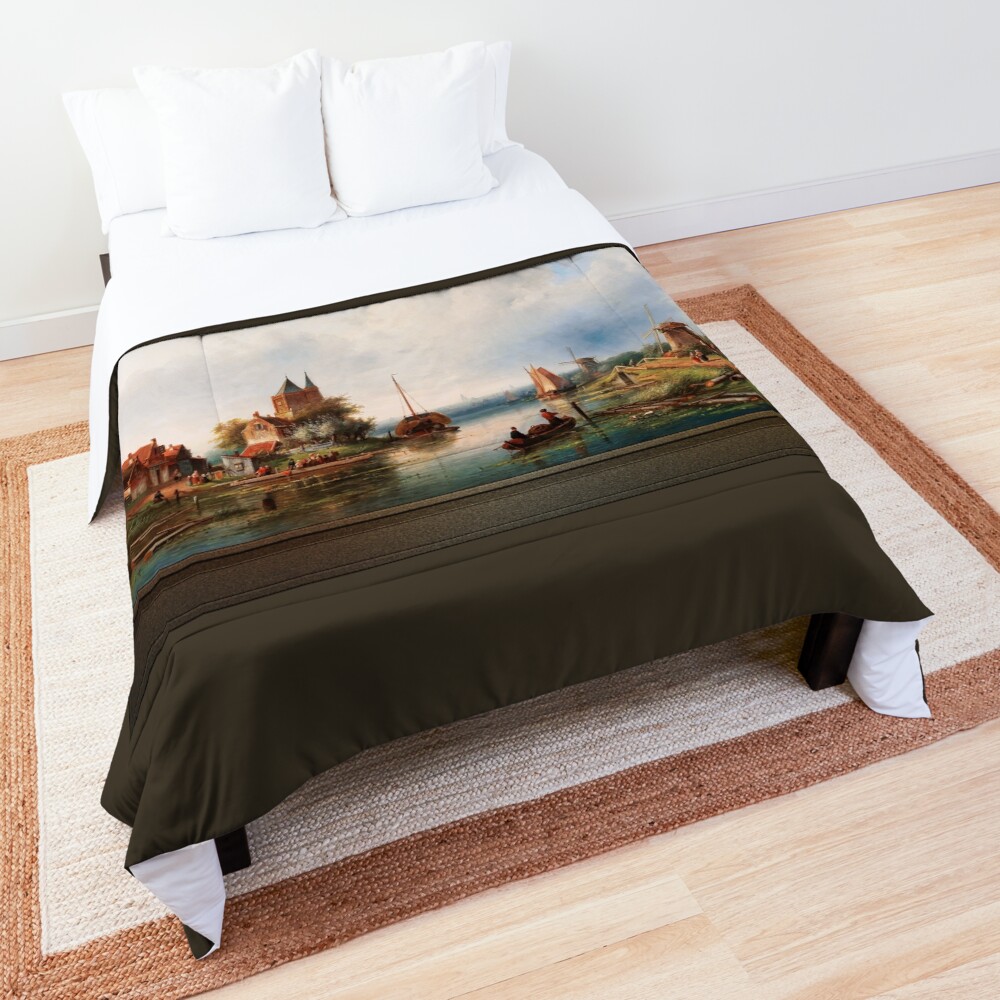
“Et stort flodlandskab med vindmøller,” skabt omkring 1848 af belgisk maler Charles Leickert (1816 – 1907), præsenterer en fredfyldt og ekspansiv flodscene, der er typisk for kunstnerens arbejde i midten af det 19. århundrede. Kendt for sine stemningsfulde landskaber, Leickert fangede mesterligt det hollandske landskabs skønhed, med særlig vægt på rolige farvande, frodige grønne områder, og det blide flow i dagligdagen. Dette maleri eksemplificerer de romantiske og hollandske realistiske traditioner, viser harmonien mellem natur og menneskelig indgriben.
Indholdsfortegnelse
Komposition og hovedemne
Det centrale tema i dette maleri kredser om de naturlige elementer i vand, jord, and the manmade structures that coexist within this environment. A wide, reflective river dominates the lower half of the composition, with gentle ripples that mirror the billowing clouds above. The water serves not only as a literal reflection but as a symbolic connection between the earth and sky, evoking a sense of peaceful coexistence. Along the river’s banks, a series of structures and windmills are scattered, positioned strategically to enhance the overall sense of depth and movement within the painting.
Leickert has used a light palette to portray the natural beauty of the scene. The placement of the windmills and boats enhances the sense of perspective, with the largest windmill situated on the far right and progressively smaller ones scattered to the left. This balance is masterfully achieved, with the placement of the windmills adding an architectural element that contrasts with the organic curves of the river.
Objekter og figurer
I forgrunden, a group of figures is engaged in various activities by the water. Some are gathered along the riverbank, while others are seen navigating the water in small boats, creating a dynamic interplay of motion and stillness. These figures, though relatively small in size compared to the landscape, provide an essential human element that anchors the otherwise vast and tranquil surroundings. Their interactions with the environment illustrate the influence of human life in an otherwise natural setting.
The boats depicted are typical of the time, with flat bottoms suited to the river’s calm waters. Some boats carry figures, while others are docked along the shore, subtly emphasizing the calm pace of life in this Dutch river landscape. The figures appear to be involved in daily routines, perhaps engaging in trade or leisure, thus grounding the viewer in the natural rhythms of the era.
Terræn og materialer
The terrain in Leickert’s painting is meticulously rendered, with the lush green foliage of the riverbanks contrasting sharply against the open sky. The grass and trees are painted with fine detail, showcasing the artist’s ability to capture the texture of the landscape. In the middle distance, the slightly elevated terrain is dotted with windmills that seem to rise out of the flatland, their sails gently caught by the wind. The windmills themselves are constructed of wood and thatch, indicative of their historical purpose to pump water or grind grain, providing insight into the cultural significance of such structures in the 19th century.
The distant horizon is filled with a mixture of grassy fields and soft rolling hills, leading the viewer’s eye towards a faint outline of a church tower and rooftops peeking through the trees. This hint of a small village suggests that this scene is not entirely remote but is part of a thriving rural community where both human life and nature coalesce harmoniously.
The sky in the painting is perhaps the most striking element, with a cloud-filled expanse that occupies a significant portion of the upper canvas. The clouds are soft, hvid, and billowy, painted in a manner that suggests the clear, temperate weather typical of the region. This tranquil sky further enhances the painting’s overall serene atmosphere, evoking a sense of calm and nostalgia. The subtle gradations of blue and white in the sky contrast with the darker green and brown hues of the river and land, giving the piece a natural balance.
Stil, Tema, og humør
Leickert’s work is representative of the Dutch Realist style, which focuses on naturalism, meticulous detail, and the accurate portrayal of everyday life. The colors are warm and earthy, contributing to the piece’s peaceful and reflective mood. There is no sense of urgency in the scene; i stedet, it exudes quietude, suggesting that life flows slowly and calmly, both for the people and the land they inhabit.
The themes of rural life and the interplay between nature and human activity are central to the piece. The inclusion of windmills, boats, and figures engaged in simple tasks speaks to an era where the natural landscape was integral to the livelihoods of the people. I dette maleri, Leickert invites the viewer to step into a quiet world where time moves at its own pace, and the bustle of modern life is absent. The mood created is one of nostalgia for a simpler time, where the bond between people and their environment was strong and unbroken.
Leickert’s use of perspective and his careful attention to light and shadow also contribute to the atmospheric qualities of the work. The sweeping view of the river, coupled with the balanced placement of the windmills and figures, draws the viewer into a world where the landscape is as important as the people within it. This careful composition enhances the feeling of timelessness and tranquility that permeates the entire scene.
Konklusion
“Et stort flodlandskab med vindmøller” is an exemplary piece by Charles Leickert that encapsulates the beauty and serenity of 19th-century Dutch landscape painting. The balance of natural and manmade elements, along with the finely rendered details of the terrain and sky, creates a scene of peaceful coexistence. The figures, boats, and windmills provide a sense of scale and humanity, reminding the viewer of the deep connection between people and nature. Leickert’s masterful technique and use of color serve to heighten the painting’s mood of tranquility, inviting the viewer to immerse themselves in the serene world of the past.
Dette er en remastered digital art old masters reproduktion af et offentligt domæne billede, der er tilgængeligt som en lærred print online.