

A View Of The Waterfalls At Terni With Figures In The Foreground c1835
Martin Verstappen’s (1773 – 1853) pintura, A View of the Waterfalls at Terni with Figures in the Foreground, sortua 1835, is an exceptional example of romanticism paisaia artea in the Belgian tradition, encapsulating the grandeur and majesty of nature while skillfully incorporating human figures into the scene. The work is a celebration of both natural beauty and the relationship between man and the vast, untamed forces of the earth. Konposizio honetan, Verstappen invites the viewer into an idyllic landscape where nature’s power is at the forefront, yet the presence of humanity reminds us of our place within the grandeur of the natural world.
Edukien taula
The Setting and Landscape
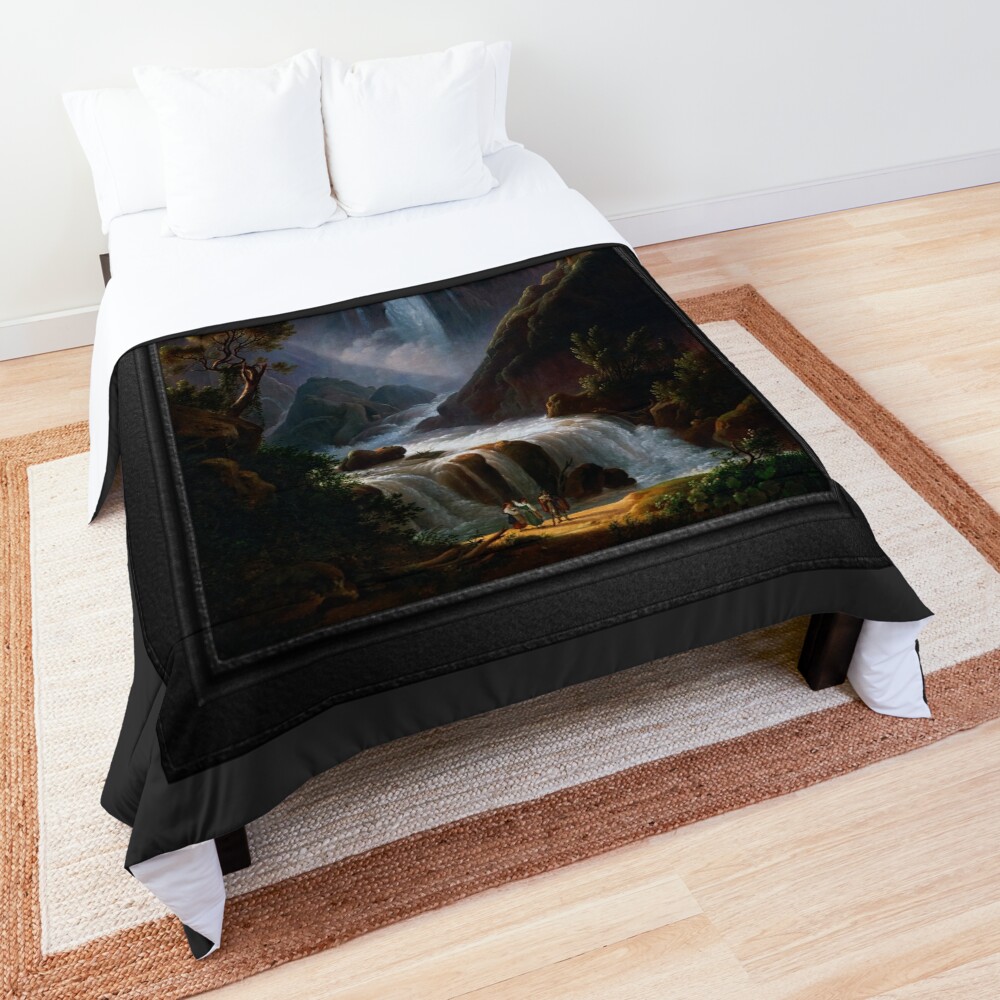
The painting depicts the renowned waterfalls at Terni, located in Italy, a popular subject for artists of the 19th century, owing to their dramatic beauty. The artist carefully captures the cascading torrents of water tumbling down a rocky precipice, their white, foamy froth creating a sharp contrast with the surrounding lush greenery. The waterfalls are portrayed with incredible attention to detail, emphasizing the energy and movement of the water as it plunges into the lower, hidden depths of the landscape. Verstappen’s handling of the water’s motion creates a sense of dynamic force, inviting the viewer to appreciate not only the sheer scale of the waterfall but also the fine balance of nature that sustains it.
Surrounding the falls is a rugged, verdant landscape, natur-munduaren indarra eta erresilientzia iradokitzen duten harkaitz eta zuhaitz-multzoek markatuta. Lurra malda leun dago, eszenaren dotoretasuna behatzeko talaia eskainiz. Basatitasun sentsazioa zeharkatzen du ingurunean, giza esku-hartze edo laborantza zantzurik gabe, mendeetan izan den lurraldearen ikuspegi domagabea eskainiz. Oparoa, hosto trinkoak pinturan sakontasun eta perspektiba sentsazioa sortzen du, ur-jauzia enkoadratuz eta begia konposizioaren erdigunean marraztuz.
Atzealdean, zeru leun eta distiratsu batek hodei-formazio leunek tartekatuta eguneko ordua goizean goiz edo arratsaldean izan behar dela iradokitzen du, zuhaitzetatik iragazten den eguzki-argi beroarekin eta ur-jauzitik ateratzen den lainoa argituz. The light itself is depicted with a sense of reverence, creating a serene, almost mystical aura around the scene, which imbues the entire landscape with a sense of wonder and awe.
The Figures in the Foreground
Lehen planoan, Verstappen introduces a group of figures, MOE, while seemingly dwarfed by the grandiosity of the natural landscape, add an important narrative element to the work. Three men, dressed in the attire of the 19th century, stand near the base of the waterfall, seemingly in conversation or contemplation. Their positions are carefully chosen to provide balance and scale within the composition, emphasizing their smallness in relation to the vastness of nature. The figures are depicted with remarkable attention to detail, their clothing and features painted with lifelike precision, which serves to further highlight their interaction with the powerful environment around them.
The presence of these human figures serves a dual purpose in the artwork. Lehenengoa, they allow the artist to introduce a human scale, giving the viewer a point of reference against the towering waterfall and immense landscape. Secondly, they offer a reminder of humanity’s connection to nature. Though small in stature, the figures are active participants in the scene, suggesting a harmonious relationship between man and the natural world. They appear to be in awe of the cascading water, perhaps on a journey of discovery, or simply appreciating the power of the natural world.
The Use of Light and Color
Verstappen’s expert use of light further enhances the mood and drama of the scene. The light falls gently on the figures, beren arropetan itzal leunak jarriz, aldi berean inguruko hostoaren berde biziak argitzen dituen bitartean. Zeruko argia zuhaitzetatik iragazten da, arroken eta uraren gainean tonu beroak botaz, giro lasai eta ia espirituala sortuz. Argi eta itzalen arteko elkarreraginak uraren ehundura eta inguruko paisaia azpimarratzen ditu, eszena bizia eta mugimenduz betea sentitzea.
Margolanaren kolore-paleta arreta handiz aukeratzen da ingurunearen edertasun naturala eta eszenaren sakontasun emozionala gogorarazteko.. Ur-jauziaren eta zuhaitzen urdin eta berde freskoak zeruaren eta irudien tonu beroagoekin kontrajartzen dira, begia konposizioan zehar marraztuz. Lur harritsuaren lur-marroi eta grisek oinarrizko kalitatea ematen diote eszenari, biguna, berriz, zeruko eta uretako kolore argiek transzendentzia sentsazioa sartzen dute.
The Romanticism and Emotional Tone
Lan hau erromantizismo mugimenduaren baitan kokatzen da, non natura sarri sublime eta menderatzaile gisa irudikatzen zen. Artista erromantikoek mundu naturalaren eragin emozional eta espirituala jaso nahi izan zuten, bere edertasunaren eta boterearen aurrean harridura eta harridura sentimenduak azpimarratuz. Verstappenek Terniko ur-jauzien irudikapena ez da ikuspegi eszeniko bat soilik, naturak sor dezakeen erantzun emozional sakonaren irudikapena baizik. Ur nahasia, harkaitzak, eta paisaiaren zabaltasunak mundu naturalaren indar kontrolaezinen metafora gisa balio dute, zifrek, berriz, gizateriaren lekua mundu honetan begirunea eta umiltasuna dela iradokitzen dute.
The mood of the painting is one of tranquil reverence, as the viewer is invited to experience the awe and wonder of nature’s grandeur. The painting does not focus on the human figures as central subjects, but rather uses them as a means of conveying the overwhelming beauty of the environment around them. Their smallness in relation to the landscape serves to remind us of our insignificance in the face of nature’s power, while also emphasizing the importance of humanity’s connection to the earth.
Bukaera
The View of the Waterfalls at Terni with Figures in the Foreground by Martin Verstappen is a stunning example of romantic landscape painting. Through its use of light, kolorea, eta konposizioa, the artist captures the dramatic beauty of nature while simultaneously highlighting humanity’s place within it. The figures in the foreground provide a sense of scale and connection, reminding us that while we may be small in comparison to the forces of nature, we are an integral part of the world around us. This painting serves as both an emotional and visual celebration of the natural world, invoking a sense of awe, wonder, eta begirunea.
Arte digital birmasterizatua da, sarean mihise inprimatu gisa eskuragarri dagoen domeinu publikoko irudi baten erreprodukzioa..
Arte digitalaren sorkuntza hau, Xzendor7 webgunean aurki daitezkeen artelan guztiak bezala sarean erosteko eskuragarri dago hainbat material formatutan, mihise inprimatuak barne., estanpatu akrilikoak, metal estanpatuak, egur estanpatuak, marko estanpatuak, kartelak, eta ijetzitako mihise estanpatu gisa hainbat tamainatan 12 zentimetroetara 72 hazbeteko artelanaren eta artea erosteko aukeratzen duzun eskaeraren arabera inprimatzeko dendaren tamainaren arabera.
Artelana gizonezkoen eta emakumezkoen arropa sorta zabal batean ere eskuragarri dago, katiluak, totes, zapiak, koadernoak eta aldizkariak eta etxeko dekorazio produktu ugari.