

A Water Idyll: Exploring Enchantment in Hans Zatzka’s Romantic Vision
A Water Idyll by 프랑스 화가에 의해 (1859-1945) P라고도 함. 론사드, 피에르 드 론사르, 또는 H. Zabateri와 그는 그의 많은 작품에 Joseph Bernard로 서명했습니다., 제이. 남자 이름, 또는 Bernard Zatzka는 그가 판매할 수 있는 작품의 수를 제한하는 제동 계약의 처벌을 피하기 위해; was a celebrated Austrian painter known for his idyllic scenes of nymphs, 요정들, and romantic landscapes, often imbued with a delicate sense of melancholy and enchantment.
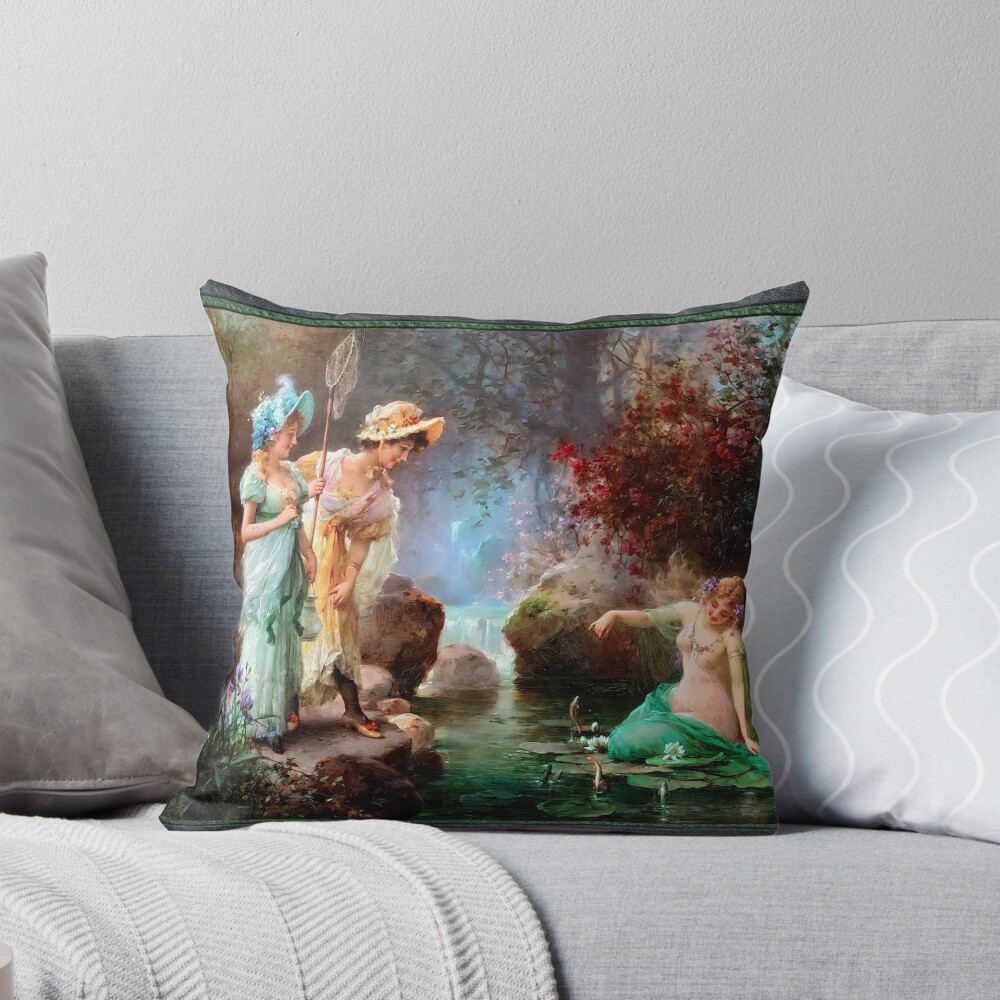
“A Water Idyll,” exemplifies this signature style, transporting the viewer to a secluded woodland pool where reality blurs with fantasy. The painting is not merely a depiction of nature; it’s an exploration of longing, observation, and the allure of the unseen world. Zatzka’s meticulous attention to detail, combined with his mastery of light and color, creates a captivating atmosphere that invites contemplation.
목차
구성 조화 & Narrative Suggestion
The composition is carefully structured around a central pool of water, acting as both a physical and metaphorical focal point. Two young women, dressed in fashionable attire of the late 19th century, stand on the bank, their gazes fixed upon a figure emerging from the depths – a nymph or water spirit.
The placement of these figures creates a clear visual triangle, guiding the eye across the canvas and establishing a narrative tension between the human world and the realm of myth. The background is densely populated with foliage, creating a sense of depth and seclusion, while also framing the central action. A small waterfall cascades into the pool, adding movement and auditory suggestion to the scene.
그림: Observation & Enchantment
The two women are rendered with remarkable detail, their expressions conveying a mixture of curiosity and wonder. One holds a butterfly net, suggesting an earlier pursuit of natural specimens, while the other leans forward slightly, her hand raised in a gesture of gentle inquiry. Their clothing – light-colored dresses with delicate embellishments – reflects the fashion of the era but also contributes to the overall sense of lightness and grace.
The nymph, partially submerged in the water, is depicted with an ethereal beauty. Her flowing hair, 꽃으로 장식된, blends seamlessly with the surrounding foliage. Her pose suggests a moment of emergence, as if she has just risen from the depths or is about to return beneath the surface. She extends her hand towards the women on the bank, creating a subtle connection between the two worlds.
Light and Color: A Romantic Palette
Zatzka’s use of light and color is crucial in establishing the painting’s mood. The scene is bathed in a soft, diffused light that filters through the trees, creating dappled patterns on the water and foliage. Warm tones – golds, 노란색, and greens – dominate the foreground, while cooler blues and violets are used to depict the deeper recesses of the pool and background forest. This contrast enhances the sense of depth and creates an atmosphere of mystery. 예술가는 능숙하게 사용한다 Chiaroscuro, using dramatic contrasts between light and shadow to highlight key elements and create a sense of drama. The overall palette is characteristic of Romanticism, emphasizing emotion and subjective experience over strict realism.
Botanical Detail & Environmental Storytelling
Beyond the figures, Zatzka’s painting showcases an impressive understanding of botanical detail. Various species of flowers and foliage are accurately depicted, adding to the richness and authenticity of the scene. The presence of wildflowers – irises, 백합, and other delicate blooms – reinforces the idyllic setting and suggests a place untouched by human intervention. The dense vegetation surrounding the pool creates a sense of enclosure, further isolating the figures from the outside world. This attention to environmental detail is not merely decorative; it contributes significantly to the painting’s overall narrative, suggesting a hidden sanctuary where nature and myth intertwine.
Zatzka’s Artistic Legacy & The Appeal of Romantic Fantasy
“A Water Idyll” exemplifies Zatzka’s enduring appeal as an artist who captured the imagination with his romantic visions. His paintings resonate with viewers seeking escape from the mundane, offering a glimpse into a world where beauty and enchantment reign supreme. Zatzka’s work was immensely popular during his lifetime, and continues to be admired for its technical skill, evocative atmosphere, and timeless themes of nature, 공상, and human longing. The painting’s enduring popularity speaks to the universal desire for connection with something beyond the ordinary – a yearning that Zatzka so eloquently captured on canvas.
유래 된 아티스트 바이오 Wikipedia.org
Hans Zatzka는 때때로 P로 알려져 있습니다.. 론사드, 피에르 드 론사르, 또는 H. 배터리, Joseph Bernard로 그의 많은 작품에 서명했습니다., 제이. 남자 이름, 또는 베르나르 자츠카.
Zatzka의 방대한 가명 배열의 목적은 그가 판매할 수 있는 예술품의 양을 제한하는 계약 위반에 대한 처벌을 피하는 것이었습니다..
이로 인해 일부 예술 데이터베이스에서 Joseph Bernard라는 가명으로 Zatzka의 작품을 같은 이름을 가진 프랑스 조각가와 혼동하게 되었습니다..
한스 자츠카 출생 8 3 월 1859 비엔나에서. 그의 아버지 Bartholomaüs는 건설 노동자였습니다., 그의 어머니는 Marie Karpischek Zatzka였습니다..
사이 1877 과 1882, 그는 Academie des Beaux-Arts에서 공부했습니다., 크리스티안 그리펜케를 밑에서, 칼 워징거, 그리고 칼 폰 블라스.
Zatzka는 교회 및 기타 기관의 프레스코화 제작을 통해 생계를 꾸릴 수 있었습니다..
에 1885, Zatzka는 Kurhaus Baden의 The Naiad of Baden 천장 프레스코를 만들기 위해 의뢰되었습니다..
Zatzka의 많은 작품은 오스트리아의 여러 교회에 바쳐진 종교화 및 제단 조각이었습니다..
하지만, 그는 여성의 그림으로 더 유명합니다., 요정들, 그리고 다른 환상적인 장면들.
자주, 그는 Richard Wagner의 작품과 Grimm 형제의 동화에서 영감을 얻었습니다..
19세기 말과 20세기 초에, Zatzka의 여러 작품이 사진으로 찍혀 상업적이고 수집 가능한 엽서로 만들어졌습니다..
1920년대, Zatzka의 스타일은 유럽 전역에서 선택의 장식이 되었습니다.. 게다가, 지난 30년 동안 Zatzka는 부활했습니다..