

Una joven con un abanico rojo
“Una joven con un abanico rojo,” creado en 1897 by Italian painter Eugen von Blaas (1843–1931), is an exquisite example of the artist’s talent for capturing elegant scenes from daily life, steeped in the opulence of late 19th-century Europe. In this particular painting, Blaas conveys the sophisticated world of aristocratic women, emphasizing grace, belleza, y refinamiento. The painting is not only a portrait of a young woman but also an embodiment of the fashion, attitudes, and natural beauty of its time.
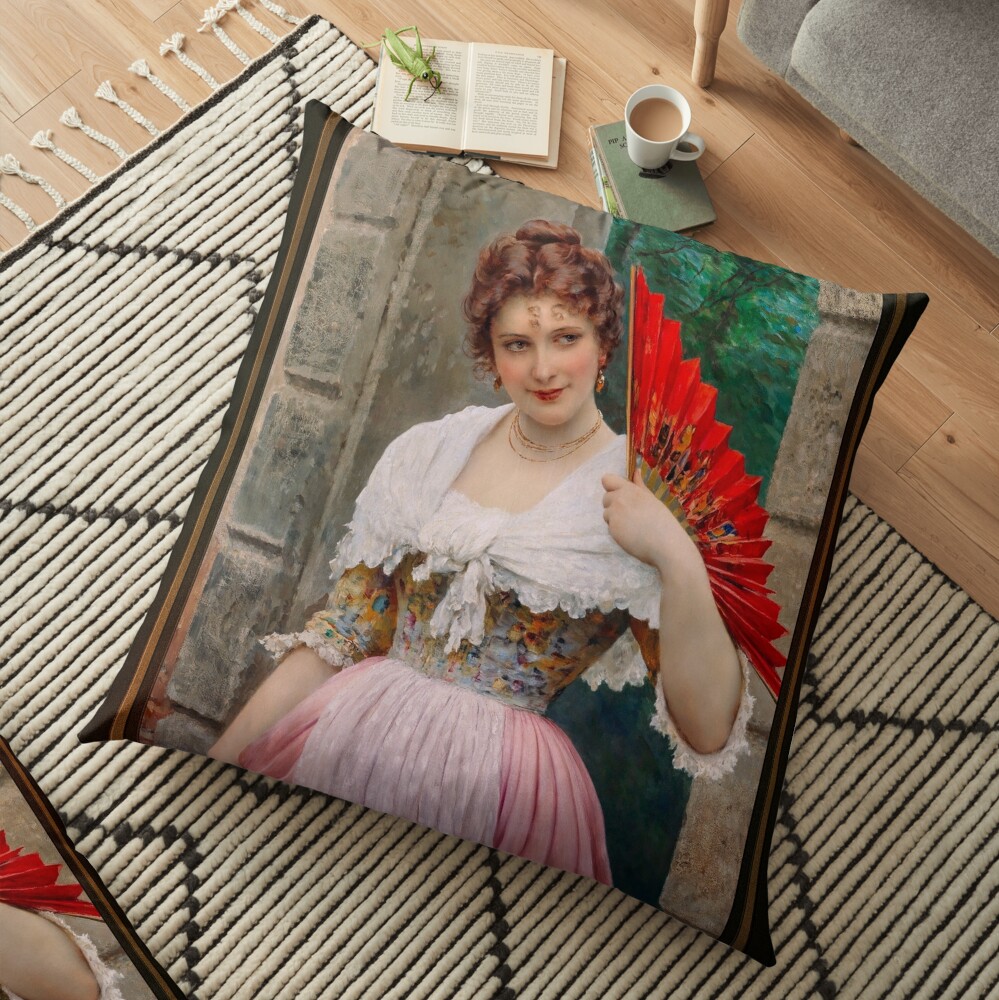
Tabla de contenido
El tema y la composición
At the center of the composition is a young woman, her delicate features framed by a soft cascade of light brown curls that hint at the youthful energy and warmth of the scene. She wears a gown that speaks to the fashionable styles of the late 19th century, with its high waistline, billowing skirt, and the intricate textile work that blends pastel hues of pink, lavender, y blanco.
The woman’s posture is relaxed yet refined, holding a vibrant red fan that contrasts sharply with the muted tones of her attire and background. The fan serves as both an accessory and an integral visual element, drawing the viewer’s eye immediately. The vibrant red of the fan, with its delicate painted designs, contrasts beautifully with her attire, and its boldness contrasts with the soft elegance of her gown.
The artist captures the woman’s gaze with a sense of intimacy and intrigue. Sus ojos, framed by soft curls, look to the side with a knowing expression, as if caught in a moment of daydreaming or perhaps conversing with someone off to the left of the frame. This subtle connection between the viewer and the subject draws the audience into the narrative of the scene, inviting them to imagine the woman’s thoughts or the circumstances of her moment in time.
El fondo y la configuración
El trasfondo de “Una joven con un abanico rojo” is a garden scene, visible through a stone archway. The earthy tones of the stonework and the lush green foliage beyond create a serene, almost idyllic atmosphere. The setting suggests an aristocratic outdoor space, perhaps a private garden or a terrace of a noble estate, offering a perfect setting for a leisurely afternoon. The contrast between the stone and the natural greenery serves as a metaphor for the blend of human sophistication and nature’s untainted beauty.
The setting enhances the sense of elegance, with the classical stonework surrounding the archway symbolizing tradition and permanence. The surrounding greenery, sin emabargo, offers a feeling of freshness and tranquility, reinforcing the timeless nature of the subject and her surroundings.
Materiales, Técnicas, y estilo
The work is painted using oil paints, a medium that allows for rich textures, profundidad, and light play. Blaas uses a masterful technique to capture the details of the woman’s clothing, creating a lifelike quality that feels almost tangible. The texture of the fabric, especially the soft folds of the gown, is rendered with meticulous attention to light and shadow, bringing a sense of volume and movement to the fabric.
The use of color in this painting is particularly striking. The soft pastels of the woman’s gown evoke a feeling of calm and softness, while the red of the fan is a bold statement, adding vibrancy and intensity to the composition. Blaas’s attention to detail, from the soft blush of the woman’s cheeks to the intricate design of the fan, showcases his ability to transform the mundane into something beautiful and worthy of admiration.

The Mood and Theme of the Artwork
The mood of the painting is serene, elegante, and contemplative. The young lady’s posture and expression convey a sense of calm and quiet confidence. La configuración, with its lush greenery and classical stonework, reinforces the notion of timeless beauty and aristocratic leisure. The fan, as an object, carries with it connotations of femininity, encanto, and social grace, as well as the more intimate aspect of personal comfort.
The theme of the painting revolves around the idealized representation of femininity during the late 19th century, a time when women were often seen as symbols of grace and decorum. Blaas captures the gentle beauty and poise of the woman, elevating her to an almost ethereal status. This type of portrayal was common in the art of the time, which sought to celebrate and idealize the lives of the upper classes, particularly women. The presence of nature in the background subtly reinforces the connection between the subject and her surroundings, suggesting that the young woman, while of aristocratic status, is still part of the natural world.
Conclusión
Eugen von Blaas “Una joven con un abanico rojo” encapsulates the charm and elegance of the late 19th century through both its subject and the artist’s technique. La interacción de la luz, color, and texture transforms an everyday moment into a celebration of beauty, moda, y feminidad. A través de esta pieza, Blaas invites the viewer into a world of aristocratic leisure, where elegance is embodied in both the subject and her surroundings. The painting’s combination of soft, delicate details and the vibrant contrast of the fan captures the essence of an era defined by sophistication and artistic refinement.
Esta es una reproducción de maestros antiguos de arte digital remasterizada de una imagen de dominio público que está disponible como Esta es una elegante chica de glamour art deco vintage..
Esta creación de arte digital, al igual que todas las obras de arte que se pueden encontrar en el sitio web de Xzendor7, están disponibles para su compra en línea en una variedad de formatos de materiales, incluidas impresiones en lienzo, impresiones acrílicas, impresiones de metal, impresiones de madera, láminas enmarcadas, carteles, y como lienzos enrollados en una variedad de tamaños, desde 12 pulgadas a 72 pulgadas según el tamaño de la obra de arte real y la tienda de impresión bajo demanda en la que elija comprar la obra de arte.
La obra de arte también está disponible en una amplia gama de prendas de vestir para hombres y mujeres., tazas, totalizadores, bufandas, cuadernos y diarios y muchos productos de decoración del hogar..
Biografía del artista
Información a continuación derivada de Wikipedia.org
Nació en Albano, cerca de Roma, de padre tirolés y madre italiana. su padre carlos, también pintor, fue su maestro. Su madre, agnesina auda, era una mujer romana acomodada. La familia se mudó a Venecia cuando Karl se convirtió en profesor en la Academia de Venecia.. A menudo pintaba escenas en Venecia., pero también retratos y pinturas religiosas.
Entre sus obras se encuentran La forma nupcial en la sacristía.; Bingo en Campielo en Venecia; Una escena de títeres en una escuela.; y la nineta. El crítico de arte Luigi Chirtani, cuando la pintura se exhibió en la Mostra Nazionale di Venezia, lo describió como hermoso, halagador, bonito, acariciado, limpiado, pulido, lavandera en un cuadro del Sr.. Vejiga, el retratista favorito de los grandes aristócratas venecianos, vestido con rasos de gala, joyas brillantes, peinados de los ricos.
Sus imágenes de época coloridas y bastante teatrales de la sociedad veneciana, p.ej. En el balcón (1877; Colección privada), eran bastante diferentes en comparación con los delicados pasteles y grabados de los patios, Balcón y canales de la Venecia moderna..
Eugenio de Blaas’ Las pinturas fueron expuestas en la Royal Academy., Sociedad de Bellas Artes, New Gallery y Arthur Tooth and Sons Gallery en Londres, y también en la Walker Art Gallery de Liverpool