

Bean Òg le Fan Dearg
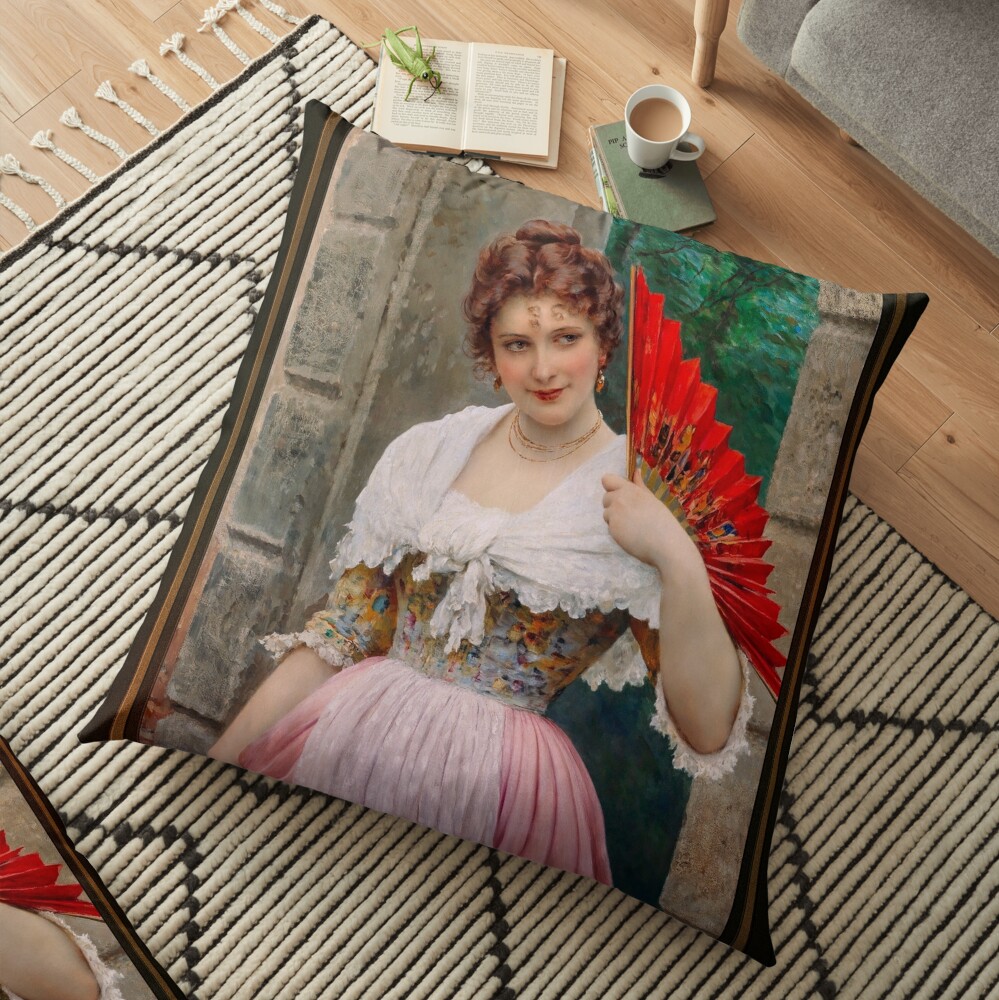
“Bean Òg le Fan Dearg,” air a chruthachadh a-steach 1897 by Italian painter Eugene von Blas (1843-1931), is an exquisite example of the artist’s talent for capturing elegant scenes from daily life, steeped in the opulence of late 19th-century Europe. Anns an dealbh shònraichte seo, Blaas conveys the sophisticated world of aristocratic women, emphasizing grace, bòidhchead, agus ath-leasachadh. The painting is not only a portrait of a young woman but also an embodiment of the fashion, attitudes, and natural beauty of its time.
Clàr-innse
An cuspair agus an sgrìobhadh
At the center of the composition is a young woman, her delicate features framed by a soft cascade of light brown curls that hint at the youthful energy and warmth of the scene. She wears a gown that speaks to the fashionable styles of the late 19th century, with its high waistline, billowing skirt, and the intricate textile work that blends pastel hues of pink, lavender, agus geal.
The woman’s posture is relaxed yet refined, holding a vibrant red fan that contrasts sharply with the muted tones of her attire and background. The fan serves as both an accessory and an integral visual element, drawing the viewer’s eye immediately. The vibrant red of the fan, with its delicate painted designs, contrasts beautifully with her attire, and its boldness contrasts with the soft elegance of her gown.
The artist captures the woman’s gaze with a sense of intimacy and intrigue. A sùilean, frèam le curls bog, look to the side with a knowing expression, as if caught in a moment of daydreaming or perhaps conversing with someone off to the left of the frame. This subtle connection between the viewer and the subject draws the audience into the narrative of the scene, inviting them to imagine the woman’s thoughts or the circumstances of her moment in time.
Cùl-fhiosrachadh agus suidheachadh
Cùl-fhiosrachadh a “Bean Òg le Fan Dearg” is a garden scene, visible through a stone archway. The earthy tones of the stonework and the lush green foliage beyond create a serene, almost idyllic atmosphere. The setting suggests an aristocratic outdoor space, perhaps a private garden or a terrace of a noble estate, offering a perfect setting for a leisurely afternoon. The contrast between the stone and the natural greenery serves as a metaphor for the blend of human sophistication and nature’s untainted beauty.
The setting enhances the sense of elegance, with the classical stonework surrounding the archway symbolizing tradition and permanence. The surrounding greenery, ge-tà, offers a feeling of freshness and tranquility, reinforcing the timeless nature of the subject and her surroundings.
Stuthan, Teicneòlasan, agus Stoidhle
The work is painted using oil paints, a medium that allows for rich textures, doimhneachd, and light play. Blaas uses a masterful technique to capture the details of the woman’s clothing, creating a lifelike quality that feels almost tangible. The texture of the fabric, especially the soft folds of the gown, is rendered with meticulous attention to light and shadow, bringing a sense of volume and movement to the fabric.
The use of color in this painting is particularly striking. The soft pastels of the woman’s gown evoke a feeling of calm and softness, fhad 'sa tha dearg an neach-leantainn na aithris dàna, a’ cur spionnadh agus dian ris a’ cho-dhèanamh. An aire aig Blas gu mion-fhiosrachadh, bho bhlàths bog gruaidhean na boireannaich gu dealbhadh toinnte an neach-leantainn, a’ taisbeanadh a chomas air an saoghal a thionndadh gu bhith na rud brèagha agus a tha airidh air urram.

The Mood and Theme of the Artwork
Tha faireachdainn an deilbh sàmhach, eireachdail eireachdail, agus meòrachail. Tha suidheachadh agus faireachdainn na boireannach òg a’ nochdadh faireachdainn de shocair agus de mhisneachd shàmhach. An suidheachadh, le uaineas lusach agus obair-cloiche clasaigeach, a’ daingneachadh a’ bheachd air bòidhchead gun ùine agus cur-seachad uaislean. Am fanadair, mar nì, carries with it connotations of femininity, seun, and social grace, as well as the more intimate aspect of personal comfort.
The theme of the painting revolves around the idealized representation of femininity during the late 19th century, a time when women were often seen as symbols of grace and decorum. Blaas captures the gentle beauty and poise of the woman, elevating her to an almost ethereal status. This type of portrayal was common in the art of the time, which sought to celebrate and idealize the lives of the upper classes, particularly women. The presence of nature in the background subtly reinforces the connection between the subject and her surroundings, suggesting that the young woman, while of aristocratic status, is still part of the natural world.
Co-dhùnadh
Eugen Von Blas's “Bean Òg le Fan Dearg” a’ toirt a-steach seun agus eireachdas deireadh na 19mh linn tro gach cuid a chuspair agus dòigh-obrach an neach-ealain. Eadar-chluiche an t-solais, dath, agus bidh inneach ag atharrachadh mionaid làitheil gu bhith na chomharrachadh air bòidhchead, fasan, agus boireannachd. Tron am pìos seo a, Tha Blas a’ toirt cuireadh don neach-coimhead gu saoghal cur-seachad uaislean, far a bheil eireachdas air a shamhlachadh an dà chuid anns a’ chuspair agus san àrainneachd aice. Cothlamadh de pheant bog, tha mion-fhiosrachadh fìnealta agus iomsgaradh beòthail an neach-leantainn a’ glacadh brìgh àm a tha air a mhìneachadh le sòghalachd agus ùrachadh ealanta.
Is e seo ath-riochdachadh seann mhaighstirean ealain didseatach ath-leasaichte de ìomhaigh raon poblach a tha ri fhaighinn mar a clò-bhualadh canabhas air-loidhne.
An cruthachadh ealain didseatach seo, mar a tha leis a h-uile obair-ealain a gheibhear air làrach-lìn Xzendor7 ri fhaighinn airson a cheannach air-loidhne ann an grunn chruthan stuth a’ gabhail a-steach clò-bhualaidhean canabhas, dealbhan acrylic, clò-bhualaidhean meatailt, clò-bhualaidhean fiodha, lèileagan frèam, postairean, agus mar chlò-bhualadh canabhas air a roiligeadh ann an grunn mheudan bho 12 òirlich gu 72 òirlich a rèir meud an fhìor obair-ealain agus a’ bhùth clò-bhualaidh air iarrtas a thaghas tu airson an ealain a cheannach.
Tha an obair-ealain cuideachd ri fhaighinn air raon farsaing de dh’ aodach fireannaich is boireannaich, mugaichean, toitean, sgarfaichean, leabhraichean notaichean agus irisean agus mòran stuthan sgeadachaidh dachaigh.
Neach-ealain Bio
Fiosrachadh gu h-ìosal a thàinig bho Wikipedia.org
Rugadh e ann an Albano, faisg air an Ròimh, gu athair Tyrolean agus màthair Eadailteach. Bha athair Karl, cuideachd peantair, bha an tidsear aige. A mhàthair, Agnesina Auda, bha i na boireannach Ròmanach math. Ghluais an teaghlach gu Venice nuair a thàinig Karl gu bhith na Àrd-ollamh aig Acadamaidh Venice. Bhiodh e tric a’ peantadh seallaidhean ann am Venice, ach cuideachd dealbhan-camara agus dealbhan cràbhach.
Am measg a shaothair tha An cruth banais anns an t-sacramaid; Bingo ann an Campielo ann am Venice; Sealladh pupaidean ann an sgoil; agus La Ninetta. An neach-breithneachaidh ealain Luigi Chirtani, nuair a chaidh an dealbh a thaisbeanadh aig Mostra Nazionale di Venezia, air a mhìneachadh mar Beautiful, rèidh, breagha, fo chùram, air a ghlanadh, snasta, nigheadaireachd ann an dealbh le Mgr. Bladder, an neach-dealbhaidh as fheàrr le uaislean mòra Venetian, air a sgeadachadh ann an gala satins, jewelry a 'deàrrsadh, gruagaichean nan beairteach.
Na h-ìomhaighean dathach agus caran theatar aige de chomann-sòisealta Venetian, m.e. Air an Balcony (1877; Cruinneachadh prìobhaideach), bha iad gu math eadar-dhealaichte an taca ri pastailean fìnealta agus eiseagan nan liosan, balcony agus canàlan Venice an latha an-diugh.
Eugene de Blas’ dealbhan air an taisbeanadh aig an Acadamaidh Rìoghail, Comann Ealain Fhìnealta, Gailearaidh Ùr agus Gailearaidh Arthur Tooth and Sons ann an Lunnainn, agus cuideachd aig Gailearaidh Ealain Walker ann an Liverpool