

גברת צעירה עם מניפה אדומה
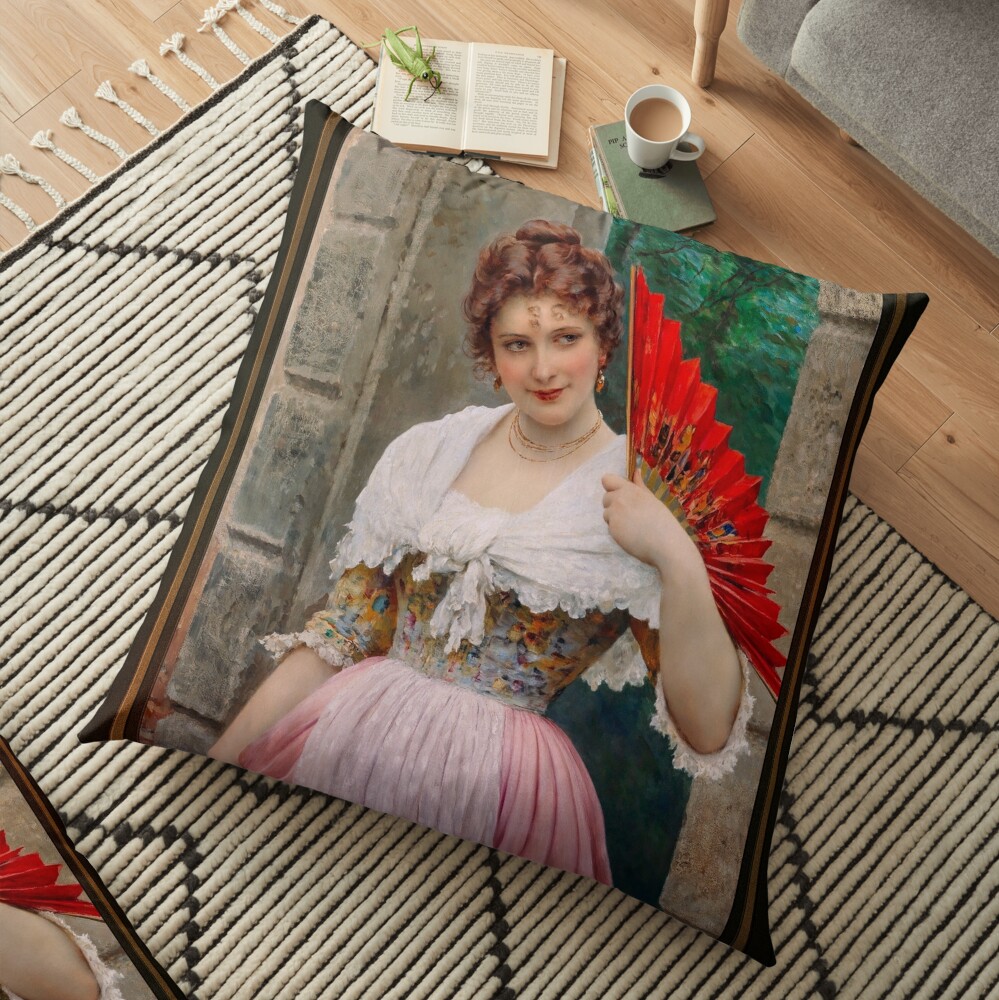
“גברת צעירה עם מניפה אדומה,” נוצר ב 1897 by Italian painter יוגן פון בלאס (1843-1931), is an exquisite example of the artist’s talent for capturing elegant scenes from daily life, steeped in the opulence of late 19th-century Europe. בציור המסוים הזה, Blaas conveys the sophisticated world of aristocratic women, emphasizing grace, יוֹפִי, ועידון. The painting is not only a portrait of a young woman but also an embodiment of the fashion, attitudes, and natural beauty of its time.
תוכן העניינים
הנושא והקומפוזיציה
At the center of the composition is a young woman, her delicate features framed by a soft cascade of light brown curls that hint at the youthful energy and warmth of the scene. She wears a gown that speaks to the fashionable styles of the late 19th century, with its high waistline, billowing skirt, and the intricate textile work that blends pastel hues of pink, אֲזוֹבִיוֹן, ולבן.
The woman’s posture is relaxed yet refined, holding a vibrant red fan that contrasts sharply with the muted tones of her attire and background. The fan serves as both an accessory and an integral visual element, drawing the viewer’s eye immediately. The vibrant red of the fan, with its delicate painted designs, contrasts beautifully with her attire, and its boldness contrasts with the soft elegance of her gown.
The artist captures the woman’s gaze with a sense of intimacy and intrigue. העיניים שלה, framed by soft curls, look to the side with a knowing expression, as if caught in a moment of daydreaming or perhaps conversing with someone off to the left of the frame. This subtle connection between the viewer and the subject draws the audience into the narrative of the scene, inviting them to imagine the woman’s thoughts or the circumstances of her moment in time.
הרקע וההגדרה
הרקע של “גברת צעירה עם מניפה אדומה” is a garden scene, visible through a stone archway. The earthy tones of the stonework and the lush green foliage beyond create a serene, almost idyllic atmosphere. The setting suggests an aristocratic outdoor space, perhaps a private garden or a terrace of a noble estate, offering a perfect setting for a leisurely afternoon. The contrast between the stone and the natural greenery serves as a metaphor for the blend of human sophistication and nature’s untainted beauty.
The setting enhances the sense of elegance, with the classical stonework surrounding the archway symbolizing tradition and permanence. The surrounding greenery, למרות זאת, offers a feeling of freshness and tranquility, reinforcing the timeless nature of the subject and her surroundings.
חומרים, טכניקות, וסגנון
The work is painted using oil paints, a medium that allows for rich textures, עוֹמֶק, and light play. Blaas uses a masterful technique to capture the details of the woman’s clothing, creating a lifelike quality that feels almost tangible. The texture of the fabric, especially the soft folds of the gown, is rendered with meticulous attention to light and shadow, bringing a sense of volume and movement to the fabric.
The use of color in this painting is particularly striking. The soft pastels of the woman’s gown evoke a feeling of calm and softness, while the red of the fan is a bold statement, adding vibrancy and intensity to the composition. Blaas’s attention to detail, from the soft blush of the woman’s cheeks to the intricate design of the fan, showcases his ability to transform the mundane into something beautiful and worthy of admiration.

The Mood and Theme of the Artwork
מצב הרוח של הציור שלווה, אֵלֶגַנטִי, and contemplative. The young lady’s posture and expression convey a sense of calm and quiet confidence. ההגדרה, with its lush greenery and classical stonework, reinforces the notion of timeless beauty and aristocratic leisure. The fan, as an object, carries with it connotations of femininity, קֶסֶם, and social grace, as well as the more intimate aspect of personal comfort.
The theme of the painting revolves around the idealized representation of femininity during the late 19th century, a time when women were often seen as symbols of grace and decorum. Blaas captures the gentle beauty and poise of the woman, elevating her to an almost ethereal status. This type of portrayal was common in the art of the time, which sought to celebrate and idealize the lives of the upper classes, particularly women. The presence of nature in the background subtly reinforces the connection between the subject and her surroundings, suggesting that the young woman, while of aristocratic status, is still part of the natural world.
מַסְקָנָה
Eugen von Blaas’s “גברת צעירה עם מניפה אדומה” encapsulates the charm and elegance of the late 19th century through both its subject and the artist’s technique. משחקי האור, צֶבַע, and texture transforms an everyday moment into a celebration of beauty, לְעַצֵב, ונשיות. דרך היצירה הזו, Blaas invites the viewer into a world of aristocratic leisure, where elegance is embodied in both the subject and her surroundings. The painting’s combination of soft, delicate details and the vibrant contrast of the fan captures the essence of an era defined by sophistication and artistic refinement.
זהו רפרודוקציה של אמנות דיגיטלית מחודשת של אמן ישן של תמונה ברשות הרבים הזמינה בתור א הדפסת קנבס באינטרנט.
יצירת אמנות דיגיטלית זו, כמו כל יצירות האמנות שניתן למצוא באתר Xzendor7 זמין לרכישה אונליין במגוון פורמטים חומריים כולל הדפסי קנבס, הדפסי אקריליק, הדפסי מתכת, הדפסי עץ, הדפסים ממוסגרים, עמוד הבית של Xzendor7, וכהדפסי קנבס מגולגלים במגוון גדלים מ 12 אינצ'ים ל 72 אינצ'ים בהתאם לגודל הגרפיקה בפועל ולחנות ההדפסה לפי דרישה ממנה תבחר לקנות את האמנות.
יצירות האמנות זמינות גם במגוון רחב של בגדי גברים ונשים, ספלים, טוטס, צעיפים, מחברות ויומנים ומוצרי עיצוב לבית רבים.
ביו אמן
מידע למטה נגזר Wikipedia.org
הוא נולד באלבנו, ליד רומא, לאב טירולי ולאם איטלקייה. אביו קארל, גם צייר, היה המורה שלו. אמו, אגנסינה אודה, הייתה אשה רומאית אמידה. המשפחה עברה לוונציה כאשר קארל הפך לפרופסור באקדמיה של ונציה. הוא צייר לעתים קרובות סצנות בוונציה, אלא גם פורטרטים וציורים דתיים.
בין יצירותיו ניתן למנות את צורת הנישואין בסקריסטיה; בינגו בקמפילו בוונציה; סצנת בובות בבית ספר; ולה נינטה. מבקר האמנות לואיג'י צ'ירטני, כאשר הציור הוצג ב-Mostra Nazionale di Venezia, תיאר את זה כיפה, מַחמִיא, יפה, ליטף, נקי, מְלוּטָשׁ, כובסת בציור של מר. שַׁלפּוּחִית הַשֶׁתֶן, הפורטרט האהוב על אריסטוקרטים ונציאנים גדולים, לבוש בסאטן גאלה, תכשיטים נוצצים, תסרוקות של עשירים.
תמונותיו התקופתיות הצבעוניות והתיאטרליות למדי של החברה הוונציאנית, לְמָשָׁל. על המרפסת (1877; אוסף פרטי), היו שונים למדי בהשוואה לפסטלים עדינים וחריטות של החצרות, מרפסת ותעלות של ונציה המודרנית.
יוג'ין דה בלאס’ הציורים הוצגו באקדמיה המלכותית, חברה לאמנות יפה, גלריה חדשה וגלריית ארתור שן ובניו בלונדון, וגם בגלריה לאמנות ווקר בליברפול