

המצותת
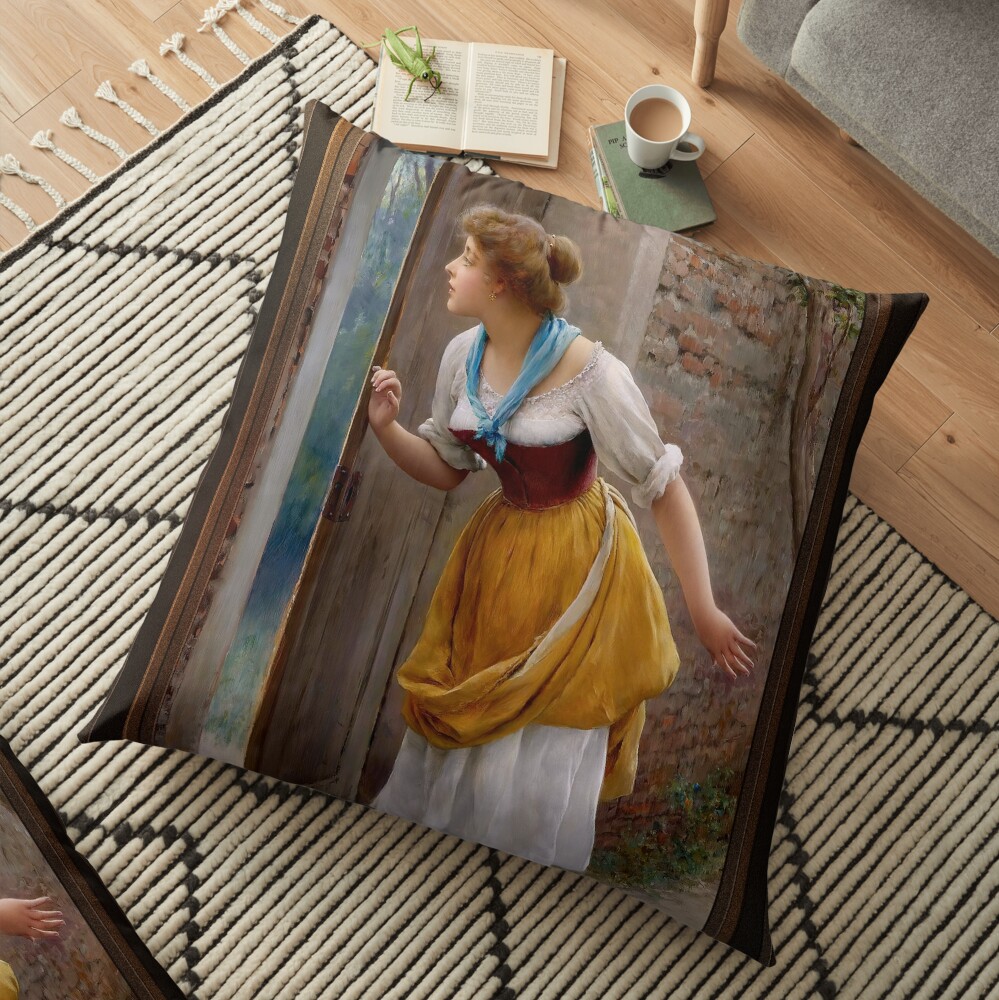
“המצותת,” נוצר ב 1906 של הצייר האיטלקי יוגן פון בלאס (1843-1931), הוא תיאור בולט של אישה צעירה שנקלעה לרגע של סקרנות ותככים. העבודה מדגימה את מיומנותו של האמן בהצגת התמימות והמורכבות הרגשית העדינה של נושאיו.
ממוקמת על רקע כפרי של גווני אדמה שקטים, הציור הוא שילוב אלגנטי של ריאליזם ונרטיב אינטימי. הצעירה, עם ראשה מופנה לעבר דלת שנפתחה חלקית, מביט בתשומת לב ממוקדת, כאילו היא מקשיבה למשהו בצד השני. הקומפוזיציה לוכדת רגע שקט אך מותח, מתאים באופן מושלם לז'אנר ציור הז'אנר שבו פון בלאס ידוע.
תוכן העניינים
הנושא העיקרי
בלב יצירה זו עומדת האישה הצעירה, צורתה העדינה ממוסגרת על ידי הפתח הפגום. היא לבושה בתלבושת איכרים אירופאית מסורתית, שילוב של גווני אדמה שעומדים בניגוד חד עם התוסס של הצעיף הכחול הבולט שלה והחולצה הלבנה הרכה. הלבוש של האישה, גופה הדוק וארגמן, חצאית זורמת עם גוון צהוב, מטביע בה גם ענווה וגם חסד.
הקפלים הרכים של החצאית והסינר שלה מרמזים שהיא כנראה עובדת בית או דמות בעלת מעמד חברתי צנוע. היציבה שלה היא של ציפייה, גופה זוויתי לכיוון הדלת, הטיה קלה של הראש עושה רושם של הקשבה קשובה למשהו שהיא לא אמורה לשמוע.
ידה מונחת בעדינות על הדלת, כאילו היא עומדת למשוך אותו לרווחה יותר, but remains suspended in a moment of indecision. The figure is set in motion by her movement and the life-like quality that von Blaas has captured. The gaze of the woman is directed just beyond the edge of the door, her expression caught between curiosity and hesitation, her eyes seemingly searching for clues, seeking the source of whatever caught her attention. The focus on her facial expression adds to the intrigue, leaving the viewer wondering what she has overheard or glimpsed.
חפצים ופרטים
The woman’s presence in the scene is made even more striking by the surrounding environment. The setting is a narrow, rustic alleyway or courtyard, evident from the rough-hewn stonework and the rich texture of the brick wall behind her. The architecture and terrain of this backdrop reveal much about the time period and social setting. The wall is aged and weathered, lending the scene a sense of history, as though this moment of eavesdropping is taking place within a space that has witnessed many such private encounters before.
The door itself is also a key element in the composition, its wood dark and aged, showing visible signs of wear. A rusty metal handle contrasts with the rich textures of the bricks, bringing a level of realism to the artwork. The woman’s hand is almost in direct contact with this handle, emphasizing the fragility of the moment, she stands on the cusp of something unknown, a boundary between what is public and private.
טֶבַע, גַם, plays an essential role in the painting. בפינה השמאלית העליונה, a small tree or shrub grows beside the stone wall, a gentle hint of greenery that adds a touch of life to an otherwise neutral-toned environment. הצמחים, though sparse, help to temper the rigid, industrial feel of the brickwork, bringing warmth and organic balance to the composition.
סגנון וטכניקה
Eugen von Blaas was known for his meticulous attention to detail and his ability to create paintings that seemed to almost breathe with life. “המצותת” is a prime example of this. The artist’s technique is deeply rooted in the realist tradition, with an emphasis on natural light, מִרקָם, and the precise rendering of human figures. The folds of the woman’s skirt and the fine fabric of her blouse are painted with great care, capturing every nuance of material and texture. The soft play of light across her face and the shadows around the door give depth and dimension, creating a believable three-dimensional space.
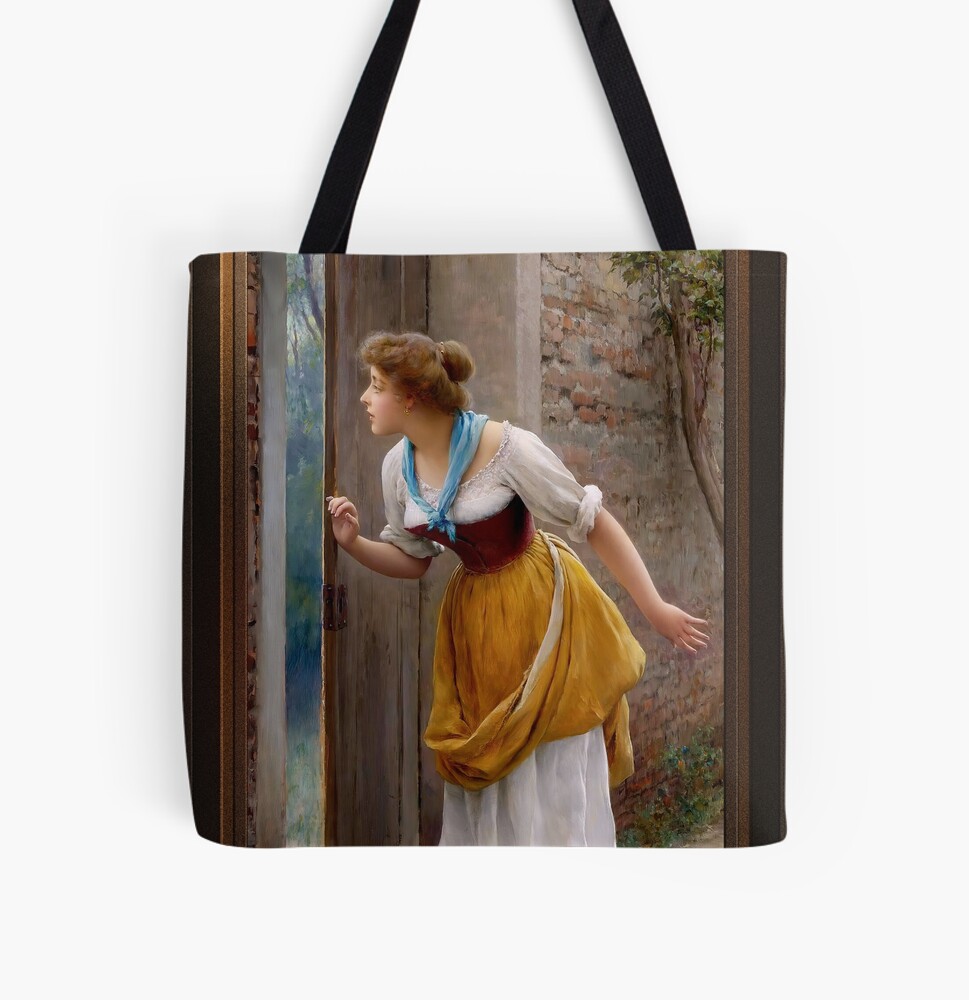
The colors in this piece are warm yet restrained, with the earthy tones of the bricks and the woman’s clothing forming a harmonious palette. The soft yellows and whites in her attire contrast with the more muted colors of the background, creating a focal point in the figure of the woman.
The blue scarf, tied around her neck, serves as a striking visual accent, drawing attention to her face and adding a sense of softness and tranquility. This color contrast enhances the overall emotional tone of the work, תורם לאווירה של מתח שקט.
עבודת המכחול פנימה “המצותת” הוא גם מדויק וגם זורם. טיפול האמן בטקסטורות, מהלבנים הכפריות ועד לקפלי הבד העדינים, מפורט להפליא. פניה של האישה מוצגות ברכות המזמינה את הצופה להתחבר אליה רגשית, תוך שימת דגש על הריאליזם שפון בלאס ביקש להשיג. לציור איכות צילום, לכידת רגע חולף בבהירות כזו שכמעט נראה כאילו זו הייתה יכולה להיות סצנה אמיתית שהאמן ראה בה.
נושא ומצב רוח
הנושא של “המצותת” הוא אחד של סקרנות, מֶתַח, ואולי אפילו סודיות. מעשיה של האישה מרמזים על תחושת האזנה - משהו אסור או פרטי שהיא מנסה לחשוף. תחושת המציצנות הזו מוסיפה אלמנט של עומק פסיכולוגי ליצירה, drawing the viewer into a narrative of hidden knowledge and the consequences of discovering something that was never meant to be heard.
The mood of the painting is one of quiet tension. While there is no overt action, the woman’s body language and her gaze create a sense of suspense. There is an implicit suggestion of something unfolding just beyond the door, something that the woman cannot see fully, but is nonetheless drawn to. The muted background and the stillness of the moment heighten the suspense, allowing the viewer to project their own interpretation onto the scene.
מַסְקָנָה
Eugen von Blaas’s “המצותת” is a masterful depiction of a fleeting moment in time, skillfully capturing the emotional nuances of curiosity and the tension between public and private spaces. The realism and attention to detail invite the viewer to contemplate not only the physical setting but also the internal world of the subject. In its quiet suspense, the painting speaks to universal themes of human nature—our desire to know what lies beyond the threshold, and the complex emotions that come with uncovering secrets not meant for our ears.
זהו רפרודוקציה של אמנות דיגיטלית מחודשת של אמן ישן של תמונה ברשות הרבים הזמינה בתור א הדפסת קנבס באינטרנט.
יצירת אמנות דיגיטלית זו, כמו כל יצירות האמנות שניתן למצוא באתר Xzendor7 זמין לרכישה אונליין במגוון פורמטים חומריים כולל הדפסי קנבס, הדפסי אקריליק, הדפסי מתכת, הדפסי עץ, הדפסים ממוסגרים, עמוד הבית של Xzendor7, וכהדפסי קנבס מגולגלים במגוון גדלים מ 12 אינצ'ים ל 72 אינצ'ים בהתאם לגודל הגרפיקה בפועל ולחנות ההדפסה לפי דרישה ממנה תבחר לקנות את האמנות.
יצירות האמנות זמינות גם במגוון רחב של בגדי גברים ונשים, ספלים, טוטס, צעיפים, מחברות ויומנים ומוצרי עיצוב לבית רבים.
ביו אמן
מידע למטה נגזר Wikipedia.org
הוא נולד באלבנו, ליד רומא, לאב טירולי ולאם איטלקייה. אביו קארל, גם צייר, היה המורה שלו. אמו, אגנסינה אודה, הייתה אשה רומאית אמידה. המשפחה עברה לוונציה כאשר קארל הפך לפרופסור באקדמיה של ונציה. הוא צייר לעתים קרובות סצנות בוונציה, אלא גם פורטרטים וציורים דתיים.
בין יצירותיו ניתן למנות את צורת הנישואין בסקריסטיה; בינגו בקמפילו בוונציה; סצנת בובות בבית ספר; ולה נינטה. מבקר האמנות לואיג'י צ'ירטני, כאשר הציור הוצג ב-Mostra Nazionale di Venezia, תיאר את זה כיפה, מַחמִיא, יפה, ליטף, נקי, מְלוּטָשׁ, כובסת בציור של מר. שַׁלפּוּחִית הַשֶׁתֶן, הפורטרט האהוב על אריסטוקרטים ונציאנים גדולים, לבוש בסאטן גאלה, תכשיטים נוצצים, תסרוקות של עשירים.
תמונותיו התקופתיות הצבעוניות והתיאטרליות למדי של החברה הוונציאנית, לְמָשָׁל. על המרפסת (1877; אוסף פרטי), היו שונים למדי בהשוואה לפסטלים עדינים וחריטות של החצרות, מרפסת ותעלות של ונציה המודרנית.
יוג'ין דה בלאס’ הציורים הוצגו באקדמיה המלכותית, חברה לאמנות יפה, גלריה חדשה וגלריית ארתור שן ובניו בלונדון, וגם בגלריה לאמנות ווקר בליברפול