

빨간 부채를 들고 있는 아가씨
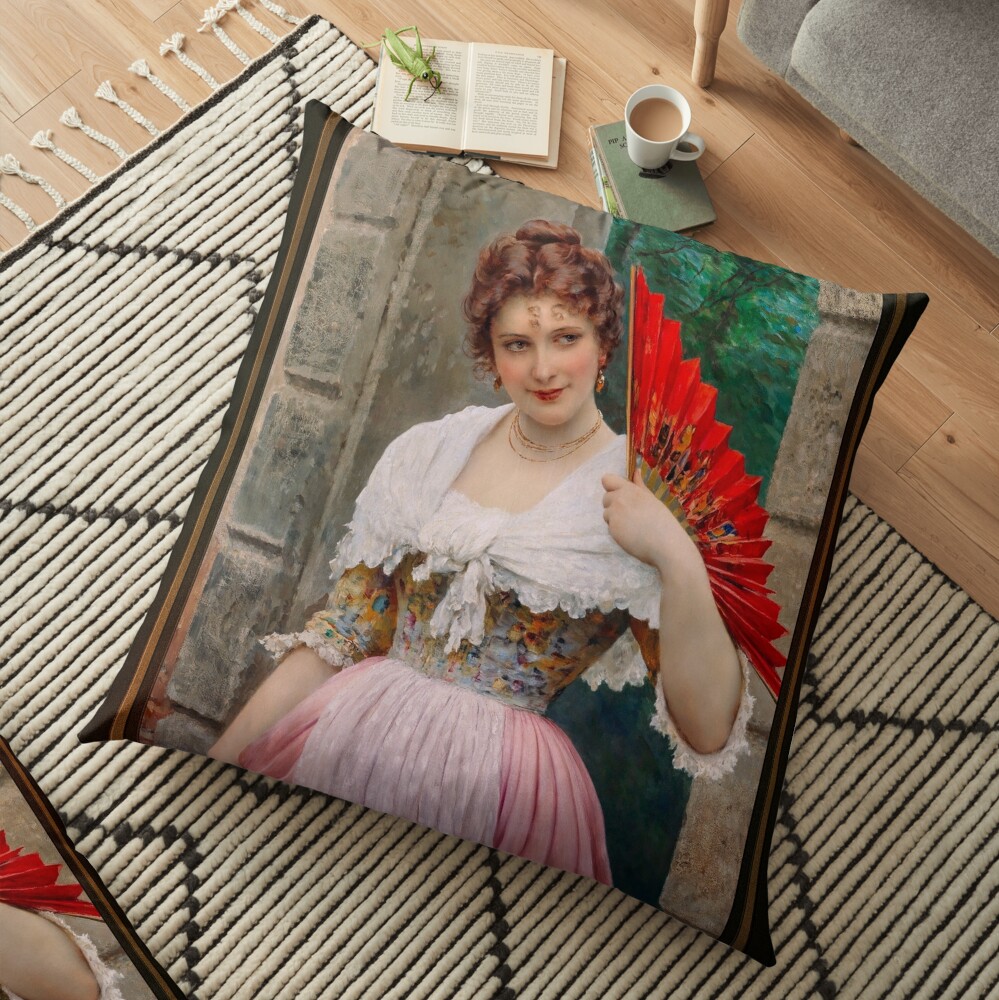
“빨간 부채를 들고 있는 아가씨,” 다음에서 생성됨 1897 by Italian painter 오이겐 폰 블라스 (1843-1931), is an exquisite example of the artist’s talent for capturing elegant scenes from daily life, steeped in the opulence of late 19th-century Europe. 이 특별한 그림에서, Blaas conveys the sophisticated world of aristocratic women, emphasizing grace, 아름다움, 그리고 정제. The painting is not only a portrait of a young woman but also an embodiment of the fashion, attitudes, and natural beauty of its time.
목차
주제와 구성
At the center of the composition is a young woman, her delicate features framed by a soft cascade of light brown curls that hint at the youthful energy and warmth of the scene. She wears a gown that speaks to the fashionable styles of the late 19th century, with its high waistline, billowing skirt, and the intricate textile work that blends pastel hues of pink, 라벤더, 그리고 흰색.
The woman’s posture is relaxed yet refined, holding a vibrant red fan that contrasts sharply with the muted tones of her attire and background. The fan serves as both an accessory and an integral visual element, drawing the viewer’s eye immediately. The vibrant red of the fan, with its delicate painted designs, contrasts beautifully with her attire, and its boldness contrasts with the soft elegance of her gown.
The artist captures the woman’s gaze with a sense of intimacy and intrigue. 그녀의 눈, framed by soft curls, look to the side with a knowing expression, as if caught in a moment of daydreaming or perhaps conversing with someone off to the left of the frame. This subtle connection between the viewer and the subject draws the audience into the narrative of the scene, inviting them to imagine the woman’s thoughts or the circumstances of her moment in time.
배경과 설정
의 배경 “빨간 부채를 들고 있는 아가씨” is a garden scene, visible through a stone archway. The earthy tones of the stonework and the lush green foliage beyond create a serene, almost idyllic atmosphere. The setting suggests an aristocratic outdoor space, perhaps a private garden or a terrace of a noble estate, offering a perfect setting for a leisurely afternoon. The contrast between the stone and the natural greenery serves as a metaphor for the blend of human sophistication and nature’s untainted beauty.
The setting enhances the sense of elegance, with the classical stonework surrounding the archway symbolizing tradition and permanence. The surrounding greenery, 하나, offers a feeling of freshness and tranquility, reinforcing the timeless nature of the subject and her surroundings.
재료, 기법, 그리고 스타일
The work is painted using oil paints, a medium that allows for rich textures, 깊이, and light play. Blaas uses a masterful technique to capture the details of the woman’s clothing, creating a lifelike quality that feels almost tangible. The texture of the fabric, especially the soft folds of the gown, is rendered with meticulous attention to light and shadow, bringing a sense of volume and movement to the fabric.
The use of color in this painting is particularly striking. The soft pastels of the woman’s gown evoke a feeling of calm and softness, while the red of the fan is a bold statement, adding vibrancy and intensity to the composition. Blaas’s attention to detail, from the soft blush of the woman’s cheeks to the intricate design of the fan, showcases his ability to transform the mundane into something beautiful and worthy of admiration.

작품의 분위기와 주제
그림 분위기가 차분해요, 우아한, and contemplative. The young lady’s posture and expression convey a sense of calm and quiet confidence. 설정, with its lush greenery and classical stonework, reinforces the notion of timeless beauty and aristocratic leisure. The fan, as an object, carries with it connotations of femininity, 매력, and social grace, as well as the more intimate aspect of personal comfort.
The theme of the painting revolves around the idealized representation of femininity during the late 19th century, a time when women were often seen as symbols of grace and decorum. Blaas captures the gentle beauty and poise of the woman, elevating her to an almost ethereal status. This type of portrayal was common in the art of the time, which sought to celebrate and idealize the lives of the upper classes, particularly women. The presence of nature in the background subtly reinforces the connection between the subject and her surroundings, suggesting that the young woman, while of aristocratic status, is still part of the natural world.
결론
Eugen von Blaas’s “빨간 부채를 들고 있는 아가씨” encapsulates the charm and elegance of the late 19th century through both its subject and the artist’s technique. 빛의 상호작용, 색깔, and texture transforms an everyday moment into a celebration of beauty, 패션, 그리고 여성스러움. 이 작품을 통해, Blaas invites the viewer into a world of aristocratic leisure, where elegance is embodied in both the subject and her surroundings. The painting’s combination of soft, delicate details and the vibrant contrast of the fan captures the essence of an era defined by sophistication and artistic refinement.
이것은 공개 도메인 이미지의 리마스터링된 디지털 아트 올드 마스터 복제입니다. Boucher는 Guay의 작품으로 일련의 그림을 그리고 Madame de Pompadour가 조각하여 호의를 받는 궁정에게 잘 묶인 책으로 배포했습니다..
이 디지털 아트 창작, Xzendor7 웹사이트에서 찾을 수 있는 모든 예술 작품과 마찬가지로 캔버스 인쇄를 포함한 다양한 재료 형식으로 온라인에서 구매할 수 있습니다., 아크릴 프린트, 금속 지문, 목판화, 액자 인쇄, 포스터, 그리고 압연 캔버스로 다양한 크기로 인쇄됩니다. 12 인치에 72 실제 작품의 크기와 작품을 구매하기로 선택한 주문형 인쇄소에 따라 인치.
이 작품은 다양한 남성복과 여성복에서도 볼 수 있습니다., 머그, 토트백, 스카프, 노트북, 저널 및 다양한 홈 데코 제품.
아티스트 약력
아래에서 파생 된 정보 Wikipedia.org
그는 알바노에서 태어났다., 로마 근처, 티롤인 아버지와 이탈리아인 어머니에게. 그의 아버지 칼, 역시 화가, 그의 선생님이었다. 그의 어머니, 아그네시나 아우다, 부유한 로마 여성이었다. 칼이 베니스 아카데미의 교수가 되었을 때 가족은 베니스로 이사했습니다.. 그는 종종 베니스에서 장면을 그렸습니다., 뿐만 아니라 초상화와 종교 그림.
그의 작품 중에는 성찬의 결혼식 형식이 있습니다.; 베니스 캄피엘로의 빙고; 학교의 인형극; 그리고 라니네타. 미술평론가 루이지 치르타니, 이 그림이 베네치아의 모스트라 나치오날레(Mostra Nazionale di Venezia)에 전시되었을 때, 아름답다고 표현했다, 유망한, 예쁜, 애무, 청소, 우아한, Mr.의 그림 속 세탁소. 방광, 베네치아의 위대한 귀족들이 가장 좋아하는 초상화가, 갈라 새틴을 입은, 빛나는 보석, 부자의 헤어스타일.
베네치아 사회에 대한 그의 화려하고 다소 연극적인 시대 이미지, 예를 들어. 발코니에서 (1877; 개인 소장품), 섬세한 파스텔과 안뜰의 에칭과는 사뭇 달랐다., 현대 베니스의 발코니와 운하.
유진 드 블라스’ 왕립 아카데미에서 그림이 전시되었습니다., 미술협회, 런던의 새로운 갤러리와 Arthur Tooth and Sons 갤러리, 리버풀의 Walker Art Gallery에서도