

Młoda dama z czerwonym wachlarzem
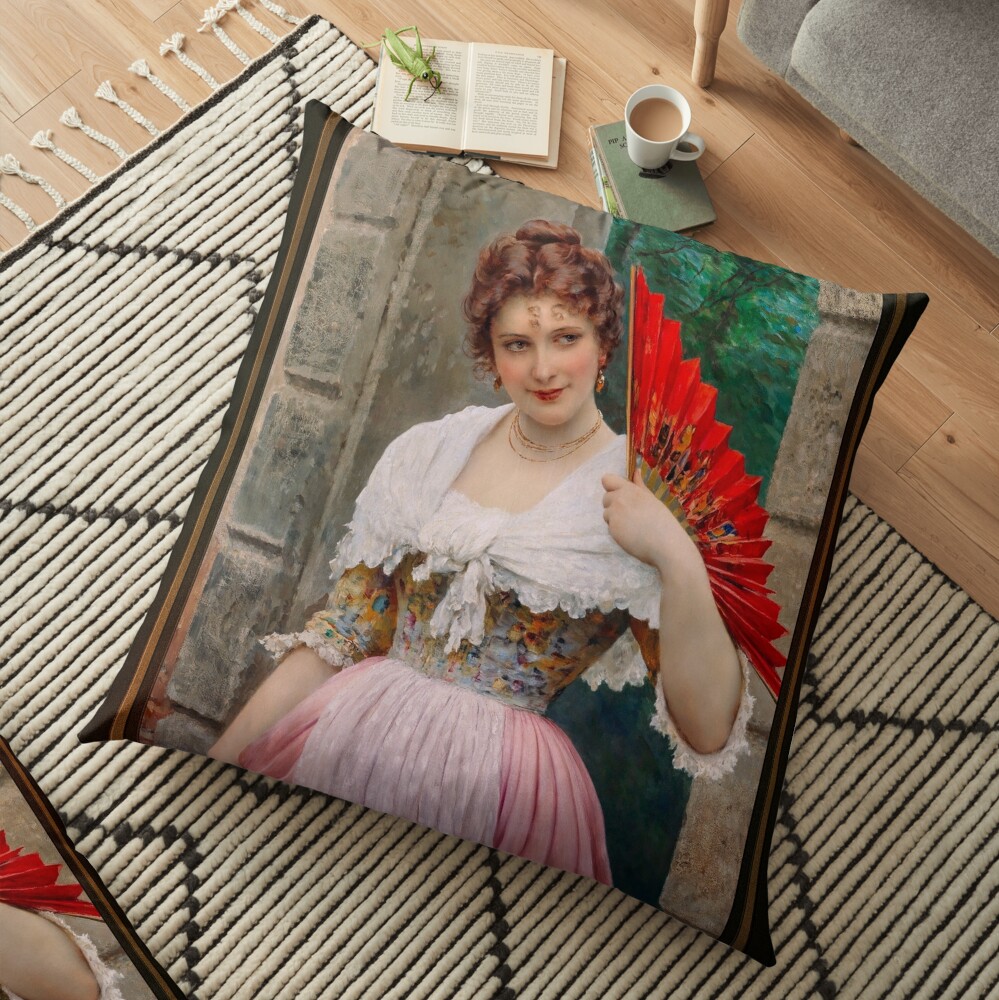
“Młoda dama z czerwonym wachlarzem,” stworzony w 1897 by Italian painter Eugen von Blaas (1843–1931), is an exquisite example of the artist’s talent for capturing elegant scenes from daily life, steeped in the opulence of late 19th-century Europe. In this particular painting, Blaas conveys the sophisticated world of aristocratic women, emphasizing grace, piękno, i wyrafinowanie. The painting is not only a portrait of a young woman but also an embodiment of the fashion, attitudes, and natural beauty of its time.
Spis treści
Temat i kompozycja
At the center of the composition is a young woman, her delicate features framed by a soft cascade of light brown curls that hint at the youthful energy and warmth of the scene. She wears a gown that speaks to the fashionable styles of the late 19th century, with its high waistline, billowing skirt, and the intricate textile work that blends pastel hues of pink, lavender, and white.
The woman’s posture is relaxed yet refined, holding a vibrant red fan that contrasts sharply with the muted tones of her attire and background. The fan serves as both an accessory and an integral visual element, drawing the viewer’s eye immediately. The vibrant red of the fan, with its delicate painted designs, contrasts beautifully with her attire, and its boldness contrasts with the soft elegance of her gown.
The artist captures the woman’s gaze with a sense of intimacy and intrigue. Jej oczy, framed by soft curls, look to the side with a knowing expression, as if caught in a moment of daydreaming or perhaps conversing with someone off to the left of the frame. This subtle connection between the viewer and the subject draws the audience into the narrative of the scene, inviting them to imagine the woman’s thoughts or the circumstances of her moment in time.
Tło i ustawienie
Tło “Młoda dama z czerwonym wachlarzem” is a garden scene, visible through a stone archway. The earthy tones of the stonework and the lush green foliage beyond create a serene, almost idyllic atmosphere. The setting suggests an aristocratic outdoor space, perhaps a private garden or a terrace of a noble estate, offering a perfect setting for a leisurely afternoon. The contrast between the stone and the natural greenery serves as a metaphor for the blend of human sophistication and nature’s untainted beauty.
The setting enhances the sense of elegance, with the classical stonework surrounding the archway symbolizing tradition and permanence. The surrounding greenery, jednak, offers a feeling of freshness and tranquility, reinforcing the timeless nature of the subject and her surroundings.
Przybory, Techniki, and Style
The work is painted using oil paints, a medium that allows for rich textures, głębokość, and light play. Blaas uses a masterful technique to capture the details of the woman’s clothing, creating a lifelike quality that feels almost tangible. The texture of the fabric, especially the soft folds of the gown, is rendered with meticulous attention to light and shadow, bringing a sense of volume and movement to the fabric.
The use of color in this painting is particularly striking. The soft pastels of the woman’s gown evoke a feeling of calm and softness, while the red of the fan is a bold statement, adding vibrancy and intensity to the composition. Blaas’s attention to detail, from the soft blush of the woman’s cheeks to the intricate design of the fan, showcases his ability to transform the mundane into something beautiful and worthy of admiration.

The Mood and Theme of the Artwork
The mood of the painting is serene, elegancki, i kontemplacyjny. The young lady’s posture and expression convey a sense of calm and quiet confidence. Ustawienie, with its lush greenery and classical stonework, reinforces the notion of timeless beauty and aristocratic leisure. The fan, as an object, carries with it connotations of femininity, czar, and social grace, as well as the more intimate aspect of personal comfort.
The theme of the painting revolves around the idealized representation of femininity during the late 19th century, a time when women were often seen as symbols of grace and decorum. Blaas captures the gentle beauty and poise of the woman, elevating her to an almost ethereal status. This type of portrayal was common in the art of the time, which sought to celebrate and idealize the lives of the upper classes, particularly women. The presence of nature in the background subtly reinforces the connection between the subject and her surroundings, suggesting that the young woman, while of aristocratic status, is still part of the natural world.
Wniosek
Eugen von Blaas’s “Młoda dama z czerwonym wachlarzem” encapsulates the charm and elegance of the late 19th century through both its subject and the artist’s technique. The interplay of light, kolor, and texture transforms an everyday moment into a celebration of beauty, moda, i kobiecość. Przez ten kawałek, Blaas invites the viewer into a world of aristocratic leisure, where elegance is embodied in both the subject and her surroundings. The painting’s combination of soft, delicate details and the vibrant contrast of the fan captures the essence of an era defined by sophistication and artistic refinement.
Jest to zremasterowana cyfrowa reprodukcja starych mistrzów obrazu z domeny publicznej, która jest dostępna jako druk na płótnie online.
To dzieło sztuki cyfrowej, podobnie jak wszystkie dzieła sztuki, które można znaleźć na stronie internetowej Xzendor7, można kupić online w różnych formatach materiałów, w tym odbitki na płótnie, wydruki akrylowe, metalowe nadruki, druki na drewnie, wydruki w ramkach, plakaty, oraz jako zwinięte wydruki na płótnie w różnych rozmiarach od 12 cale do 72 cale w zależności od rozmiaru rzeczywistej grafiki i sklepu z drukiem na żądanie, w którym zdecydujesz się kupić sztukę.
Grafika jest również dostępna na szerokiej gamie odzieży męskiej i damskiej, kubki, torby, szaliki, notesy i czasopisma oraz wiele produktów do dekoracji wnętrz.
Biografia artysty
Informacje poniżej pochodzą z Wikipedia.org
Urodził się w Albano, w pobliżu Rzymu, do ojca Tyrolka i matki Włoszki. Jego ojciec Karl, także malarz, był jego nauczycielem. Jego matka, Agnesina Auda, była zamożną Rzymianką. Rodzina przeniosła się do Wenecji, kiedy Karl został profesorem Akademii Weneckiej. Często malował sceny w Wenecji, ale także portrety i obrazy religijne.
Wśród jego prac jest Forma ślubna w zakrystii; Bingo w Campielo w Wenecji; Scena lalkowa w szkole; i La Ninetta. Krytyk sztuki Luigi Chirtani, kiedy obraz był wystawiany w Mostra Nazionale di Venezia, opisał to jako piękne, pochlebny, piękny, pieszczona, wyczyszczony, błyszczący, praczka na obrazie Mr. Pęcherz moczowy, ulubiony portrecista wielkich weneckich arystokratów, ubrana w galowe satyny, lśniąca biżuteria, fryzury bogatych.
Jego barwne i raczej teatralne obrazy z epoki weneckiego społeczeństwa, np. Na balkonie (1877; Prywatna kolekcja), były zupełnie inne w porównaniu z delikatnymi pastelami i akwafortami dziedzińców, balkon i kanały nowoczesnej Wenecji.
Eugeniusz de Blaas’ obrazy były wystawiane w Akademii Królewskiej, Towarzystwo Sztuk Pięknych, New Gallery i Arthur Tooth and Sons Gallery w Londynie, a także w Galerii Sztuki Walker w Liverpoolu