

A Maiden With A Basket Of Roses
“A Maiden With A Basket Of Roses,” stworzony w 1900 by the renowned Italian artist Eugen von Blaas (1843 – 1931), is a remarkable piece of classical realism that captures the charm and grace of a young woman in a peaceful moment of rural life. Von Blaas, known for his exquisite depictions of women in classical attire, often painted portraits of figures with a deep connection to nature and delicate beauty. In this particular painting, the subject is a young maiden carrying a basket filled with roses, symbolizujący czystość i piękno. The soft colors, flowing fabrics, and the detailed rendering of the surroundings all contribute to a sense of tranquility and timelessness.
Spis treści
Temat i kompozycja
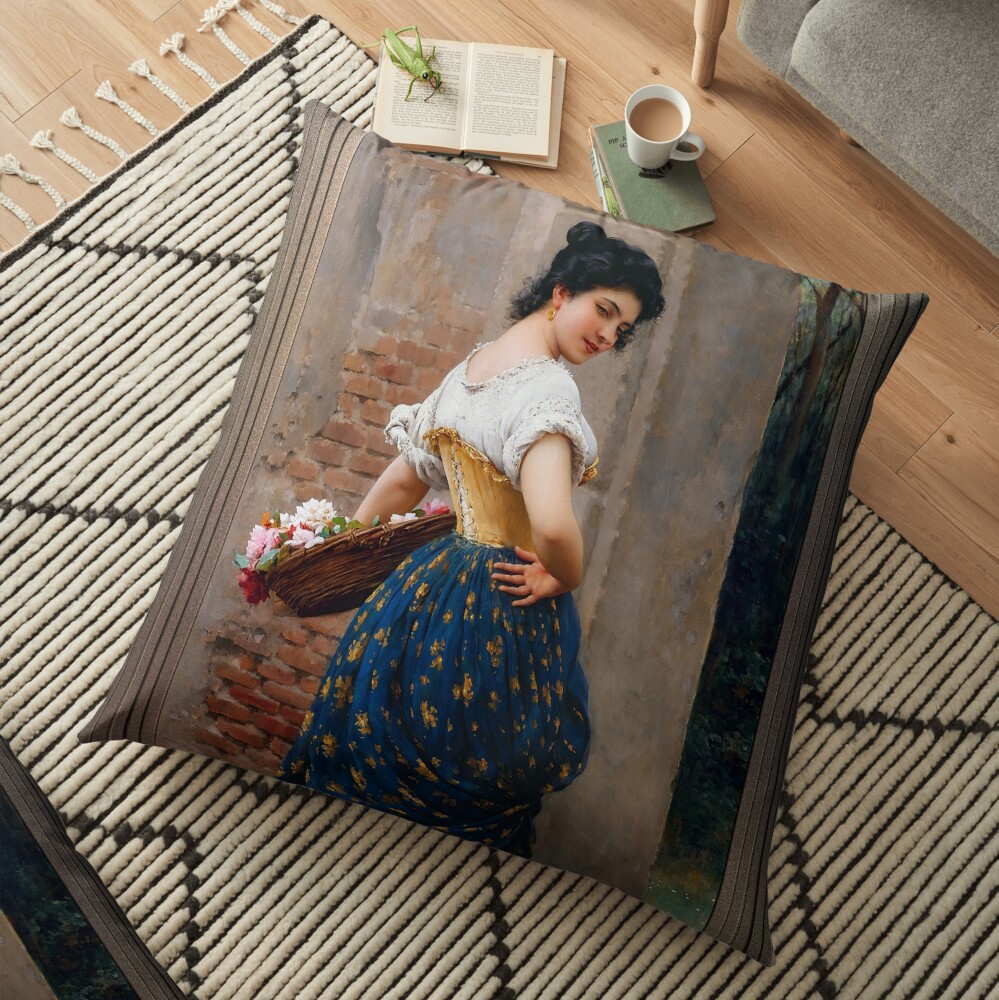
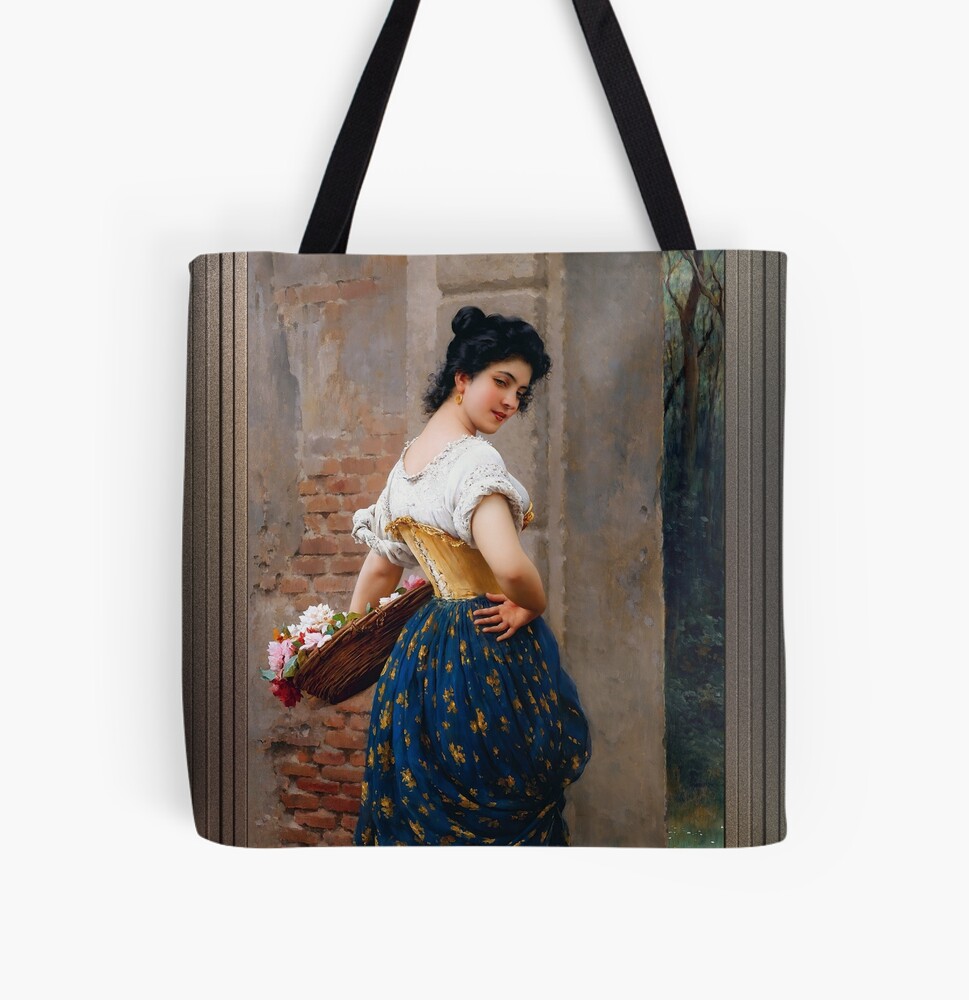
The central figure of this painting is a young woman dressed in a traditional gown, which is both elegant and simple. She is shown from a slight angle, with her body turned toward the viewer, but her gaze directed slightly over her shoulder, inviting the viewer into her world. The woman’s youthful face is framed by dark, curly hair, which has been styled in soft waves that cascade down to her neck. Her expression is gentle yet engaging, with a hint of curiosity and grace that draws the viewer’s attention.
Her attire is composed of a white blouse with intricate lace detailing around the neckline, offering a delicate contrast to the deep blue skirt she wears. The skirt, adorned with gold floral motifs, billows outward, tworząc wrażenie ruchu. The rich texture of the fabric is depicted with remarkable realism, giving the viewer a sense of the fabric’s weight and the way it interacts with the light. The contrast of the pale blouse and the dark blue skirt serves to highlight the figure’s form while creating a striking balance in the composition.
W jej prawej ręce, the maiden holds a wicker basket filled with an assortment of roses. The basket is carefully rendered, showcasing the natural texture of the woven material. Kwiaty, predominantly in shades of pink and white, add a burst of color to the scene and enhance the sense of freshness and life. The roses seem to symbolize purity, piękno, and perhaps a sense of youthful innocence, while their gentle placement in the basket conveys a natural elegance.
The subject’s red stockings and brown shoes provide additional contrast against the softer tones of her outfit, grounding the figure in the scene while drawing attention to her lower body. The way the artist has chosen to depict her legs, with the bright red of the stockings and the subtle motion of her gait, imbues the composition with a lively energy that prevents it from feeling static.
The Terrain and Background
The background of the painting is equally compelling, though it remains secondary to the primary focus on the maiden. The landscape suggests a rustic, rural environment with its muted tones of earth and greenery. A stone wall stands to the left of the maiden, partially covered in a layer of ivy, which enhances the natural setting. The wall appears aged, with traces of time evident in its weathered bricks. The artist has captured the rough texture of the bricks in fine detail, making them feel tactile and authentic.
Beyond the stone wall, the landscape fades into a soft, verdant garden or forest scene, which creates a harmonious connection between the maiden and her environment. The light filtering through the trees casts dappled shadows across the ground, suggesting the time of day is either early morning or late afternoon, when the sunlight is warm and golden. The soft greens and browns in the background mirror the colors in the maiden’s attire, further linking her to the natural world.
The overall composition of the painting draws the viewer’s attention to the maiden in the foreground, while the background remains a calm, serene setting that does not compete for attention. The natural world, captured in delicate brushwork, serves as a perfect complement to the human figure, reinforcing the theme of a harmonious relationship between mankind and nature.
Przybory, Styl, and Technique
Eugen von Blaas’s mastery of oil painting is evident in the richness of the textures and the skillful use of light and shadow. His attention to detail is extraordinary, particularly in the rendering of the fabrics and the roses in the basket. Each rose petal is meticulously painted, with subtle shading that gives the flowers a lifelike quality. The play of light on the maiden’s skin and clothing further demonstrates the artist’s ability to capture the nuances of light, creating a three-dimensional sense of volume in the painting.
The painting’s style adheres to the principles of classical realism, which was popular during the 19th and early 20th centuries. Użycie soft, naturalistic colors and the focus on the human form with a gentle yet realistic portrayal of details are hallmark traits of this movement. Von Blaas’s ability to render the folds of the fabric and the delicate features of the woman’s face showcases his deep understanding of anatomy and form.
The mood of the artwork is one of peacefulness and quiet reflection. The maiden’s serene expression and the tranquil setting evoke a sense of calm, as if the viewer is witnessing an intimate moment in the life of the subject. The artist captures a fleeting moment of beauty, one that is both timeless and specific to a particular moment in history, evoking a nostalgia for a simpler, more idyllic way of life.
Temat i nastrój
The underlying theme of the painting revolves around beauty, Natura, and the purity of youth. The roses, as symbols of beauty and love, serve to reinforce these ideas, while the woman’s serene expression and graceful pose suggest a sense of contentment and inner peace. The rural setting, with its gentle greenery and natural light, further enhances the theme of harmony between humanity and nature. The mood of the painting is light, peaceful, and imbued with a sense of nostalgia for an idealized past.
Jest to zremasterowana cyfrowa reprodukcja starych mistrzów obrazu z domeny publicznej, która jest dostępna jako druk na płótnie online.
To dzieło sztuki cyfrowej, podobnie jak wszystkie dzieła sztuki, które można znaleźć na stronie internetowej Xzendor7, można kupić online w różnych formatach materiałów, w tym odbitki na płótnie, wydruki akrylowe, metalowe nadruki, druki na drewnie, wydruki w ramkach, plakaty, oraz jako zwinięte wydruki na płótnie w różnych rozmiarach od 12 cale do 72 cale w zależności od rozmiaru rzeczywistej grafiki i sklepu z drukiem na żądanie, w którym zdecydujesz się kupić sztukę.
Grafika jest również dostępna na szerokiej gamie odzieży męskiej i damskiej, kubki, torby, szaliki, notesy i czasopisma oraz wiele produktów do dekoracji wnętrz.
Biografia artysty
Informacje poniżej pochodzą z Wikipedia.org
Urodził się w Albano, w pobliżu Rzymu, do ojca Tyrolka i matki Włoszki. Jego ojciec Karl, także malarz, był jego nauczycielem. Jego matka, Agnesina Auda, była zamożną Rzymianką. Rodzina przeniosła się do Wenecji, kiedy Karl został profesorem Akademii Weneckiej. Często malował sceny w Wenecji, ale także portrety i obrazy religijne.
Wśród jego prac jest Forma ślubna w zakrystii; Bingo w Campielo w Wenecji; Scena lalkowa w szkole; i La Ninetta. Krytyk sztuki Luigi Chirtani, kiedy obraz był wystawiany w Mostra Nazionale di Venezia, opisał to jako piękne, pochlebny, piękny, pieszczona, wyczyszczony, błyszczący, praczka na obrazie Mr. Pęcherz moczowy, ulubiony portrecista wielkich weneckich arystokratów, ubrana w galowe satyny, lśniąca biżuteria, fryzury bogatych.
Jego barwne i raczej teatralne obrazy z epoki weneckiego społeczeństwa, np. Na balkonie (1877; Prywatna kolekcja), były zupełnie inne w porównaniu z delikatnymi pastelami i akwafortami dziedzińców, balkon i kanały nowoczesnej Wenecji.
Eugeniusz de Blaas’ obrazy były wystawiane w Akademii Królewskiej, Towarzystwo Sztuk Pięknych, New Gallery i Arthur Tooth and Sons Gallery w Londynie, a także w Galerii Sztuki Walker w Liverpoolu