

Juna Virino En Renesanca Kostumo
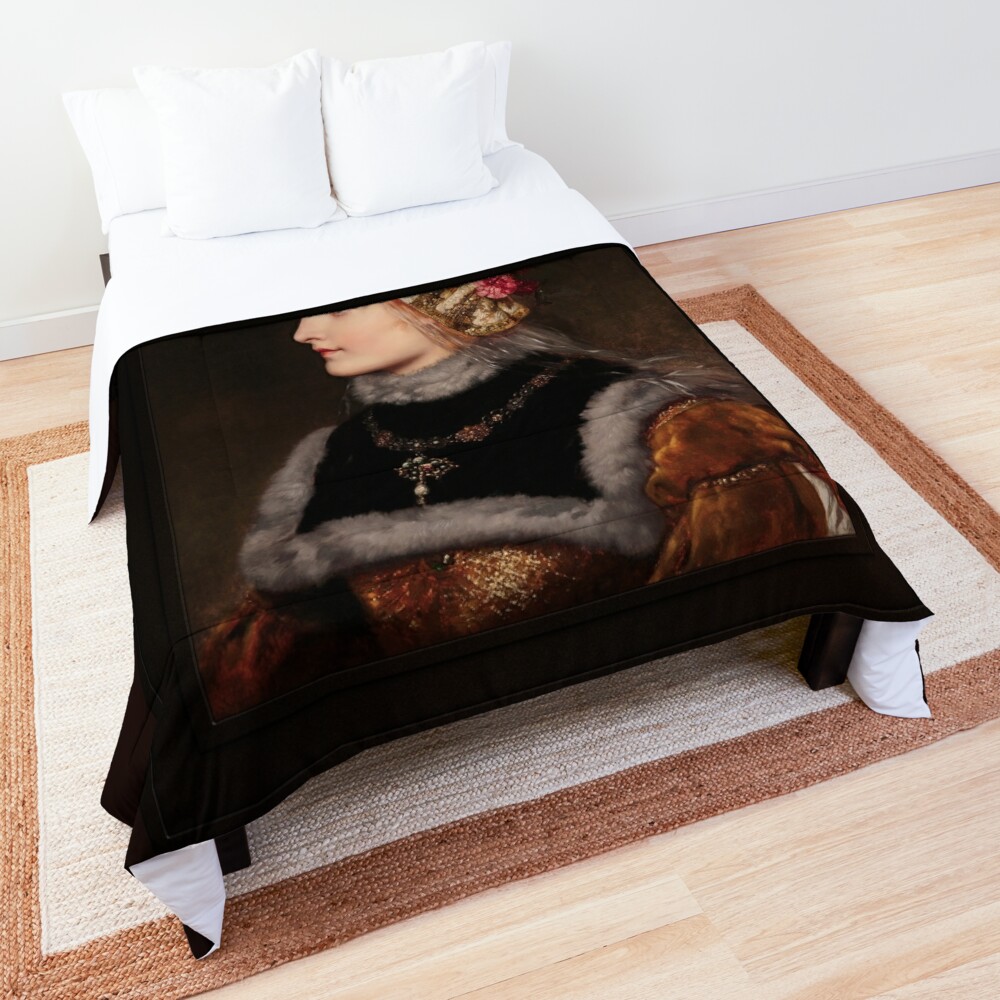
La pentraĵo Junulino en Renesanca Kostumo c. 1879 de Wilhelm Menzler (1846 – 1926) kaptas la esencon de luksa historia epoko per la portreto de juna virino ornamita en brila Renesanca kostumo. Menzler, lerta germana artisto konata pro sia atento al detaloj kaj majstrado de historiaj temoj, mergas la spektanton en scenon el la Renesanco, subtile miksante la elegantecon de la pasinteco kun la 19-ajarcenta romantismo de sia propra tempo. Ĉi tiu delikata peco invitas la spektanton aprezi ne nur la vestaĵon kaj trajtojn de la temo, sed ankaŭ la senton de nobelaro kaj graco, kiu transcendas tempon..
Enhavtabelo
La Ĉefa Temo
La centra figuro en ĉi tiu artaĵo estas juna virino kies vizaĝo eligas trankvilan fidon kaj gracon. Ŝia juneca sed digna esprimo parolas pri la sofistika konduto atendata de virinoj en la Renesanca socio.. Ŝi estas prezentita en profilo, rigardante iomete maldekstren, kun aero de sereneco kaj kontemplado kiu estas karakteriza de portretado de ĉi tiu epoko. Ŝiaj molaj trajtoj estas prezentitaj kun milda precizeco, kiu donas al la pentraĵo vivosimilan kvaliton, kaptante kaj ŝian fizikan belecon kaj emocian profundon kiu sugestas ke ŝi estas pli ol nura reprezentado de moda virino de historio..
La juna virino estas longa, orbrunaj haroj, parte videbla sub ŝia ornamita kaptuko, fluas en molaj ondoj, kiuj aldonas naturan elementon al la portreto, kontrastante kun la strukturitaj detaloj de ŝia kostumo. Ŝiaj vizaĝtrajtoj estas delikate pentritaj per subtila ombra tekniko, kontribuante al la realisma bildigo de ŝia vizaĝo. La alta kvalito de la laboro de Menzler estas evidenta en la bona detalo de la haŭtnuancoj, estigante preskaŭ fotografian klarecon kiu montras la kapablon de la artisto miksi realismon kun romantika idealigo.
La Kostumo
La renesanca vesto de la virino estas eble la plej okulfrapa elemento de ĉi tiu portreto. Ŝia robo, konstruita el luksaj ŝtofoj, inkluzivas riĉajn teksturojn de veluro kaj silko. La oraj nuancoj de ŝia robo, plifortigita per komplikaj ŝablonoj, trembri kvazaŭ kaptite en milda lumo, plifortigante la nocion de aristokratio kaj riĉeco. The bodice is decorated with jewels and ornate trimmings that are indicative of the nobility during the Renaissance, a period where fashion was an important means of social expression. The gown’s deep neckline is partially concealed by a black, fur-lined collar, which further enhances the sophistication of the piece.
A particularly notable aspect of her attire is the exquisite headdress, a feature that takes center stage in the portrait. La kappeco, richly embroidered in gold and cream tones, is accentuated by a flower tucked on the side. The way Menzler has rendered the texture of the fabric—highlighting the gleam of the silk and the delicate folds—demonstrates his mastery in capturing the materials of the period. The structure of the headpiece, with its angular lines, reflects the fashions of the late Renaissance, a stark contrast to the natural softness of the woman’s hair, creating a harmonious yet structured aesthetic.
La Fono kaj Agordo
La fono de la pentraĵo estas malhela kaj silenta, serving to place all focus on the subject while also lending an air of mystery to the composition. La profunda, shadowy tones behind the woman allow the opulence of her gown and the delicate features of her face to shine. The lack of any distinct or busy background elements suggests that the subject is not tied to any specific setting, instead embodying the broader ideals of Renaissance aristocracy. The softness of the background also contrasts with the sharpness and precision of the woman’s detailed costume and the flawless rendering of her face, further emphasizing the subject’s elegance and importance.
The absence of other objects or figures in the painting allows for an undistracted focus on the woman’s attire and facial expression, elevating her presence as a symbol of the Renaissance era’s ideals of beauty and grace. The dark background, with its subtly graduated hues, also adds a sense of depth, which enhances the lifelike quality of the portrait.
Materialoj kaj tekniko
Wilhelm Menzler’s technique reflects the academic tradition of the 19th century, focusing on precision, naturalism, and attention to detail. The artist’s use of oil paints brings a richness and depth to the portrait, with the texture of the fabric and the subtle transitions in light captured with great care. The soft blending of colors in the woman’s skin tone contrasts with the more defined lines of her gown and accessories, making them appear almost tangible. The brushwork is fine and controlled, enhancing the realism of the subject without sacrificing the painterly quality that defines Menzler’s work.
The fur-lined collar, the folds of her gown, and the light-catching jewels have been painstakingly rendered, demonstrating Menzler’s expertise in creating the illusion of depth and volume. The shading around the contours of the woman’s face and neck further adds to the naturalistic effect, while the jewel-like details in her attire are placed with careful precision, allowing them to sparkle in the dim lighting of the portrait. The attention to detail in the rendering of the fabric textures, such as the velvet of the gown and the shimmering gold of the headdress—reflects a high level of craftsmanship and an understanding of the way light interacts with different materials.
Xzendor7 Foto Retuŝa Filmeto De Juna Virino En Renesanca Kostumo de Wilhelm Menzler
Temo kaj Humoro
The mood of the painting is one of serenity, nobility, kaj introspekto. The woman is captured in a moment of quiet dignity, embodying the values of elegance and poise that were central to Renaissance ideals. The subtle grace with which she carries herself suggests a person of high social standing, perhaps a noblewoman or courtier, who is both aware of her status and yet remains humble in her expression. La mallumo, almost somber background contrasts with the warmth of the woman’s attire, creating a sense of timelessness.
The work also evokes a sense of romance, as Menzler brings the viewer into a world of historical opulence and refinement, a world that, while no longer accessible in the 19th century, remains immortalized through art. The combination of realism and idealization in the portrayal of the woman’s face, costume, and presence evokes a nostalgia for the past, blending historical accuracy with the artist’s personal vision of an idealized, graceful era.
Konkludo
Junulino en Renesanca Kostumo by Wilhelm Menzler stands as a stunning example of late 19th-century portraiture. La zorgema atento de la artisto al detaloj, particularly in the rendering of fabrics and jewels, brings to life a young woman from the Renaissance, her beauty and dignity captured in a timeless moment. Through his work, Menzler not only honors the grandeur of the Renaissance period but also breathes new life into it, offering viewers a glimpse of the elegance, fashion, and ideals that defined an era long past.
Ĉi tio estas readaptita cifereca arta reproduktaĵo de malnovaj majstroj de publika domajna bildo disponebla kiel a tolo presaĵo rete.