

Eng jonk Fra am Renaissance Kostüm
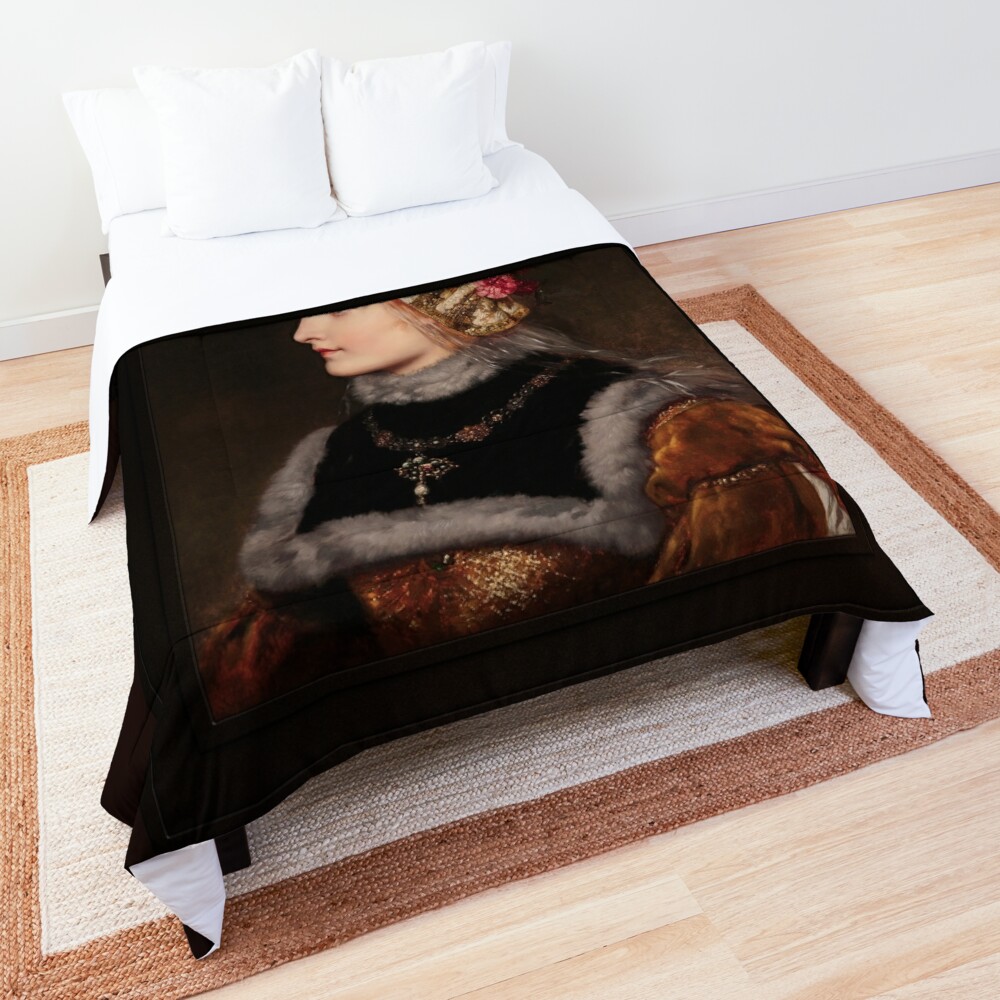
D'Molerei Eng jonk Fra am Renaissance Kostüm c. 1879 vum Wilhelm Menzler (1846 – 1926) erfaasst d'Essenz vun enger opulenter historescher Ära duerch de Portrait vun enger jonker Fra, déi an engem glänzenden Renaissancekostüm dekoréiert ass. Menzler, e kompetente däitsche Kënschtler bekannt fir seng Opmierksamkeet op Detailer a Meeschterleeschtung vun historeschen Themen, taucht den Zuschauer an eng Szen aus der Renaissance, subtil d'Eleganz vun der Vergaangenheet mat der 19. Joerhonnert Romantik vu senger eegener Zäit vermëschen. Dëst exquisite Stéck invitéiert den Zuschauer net nëmmen d'Kleedung an d'Features vum Thema ze schätzen, awer och de Sënn vun Adel a Gnod, déi d'Zäit iwwerschreift.
Inhaltsverzeechnes
D'Haaptthema
Déi zentral Figur an dësem Konschtwierk ass eng jonk Fra, där hir Gesiicht roueg Vertrauen a Gnod ausstrahlt. Hire jugendlechen awer würdege Ausdrock schwätzt zum sophistikéierte Verhalen, dee vu Fraen an der Renaissance Gesellschaft erwaart gëtt. Si ass am Profil duergestallt, liicht no lénks kucken, mat enger Loft vu Rou a Kontemplatioun, déi charakteristesch ass Hollarriatioun aus dëser Ära. Hir mëll Fonctiounen ginn mat enger sanft Präzisioun gemaach, wat dem Bild eng lieweg Qualitéit gëtt, souwuel hir kierperlech Schéinheet an eng emotional Déift erfaassen, déi suggeréiert datt si méi ass wéi nëmmen eng Representatioun vun enger fashionable Fra aus der Geschicht.
Déi jonk Fra ass laang, gëllen-brong Hoer, deelweis siichtbar ënner hirem dekoréierte Kappstéck, fléisst a mëlle Wellen, déi en natierlecht Element zum Portrait bäidroen, am Géigesaz zu de strukturéierten Detailer vun hirem Kostüm. Hir Gesiichtsmerkmale si delikat gemoolt mat enger subtiler Schattentechnik, zu der realistescher Rendering vun hirem Visage bäidroen. Déi héich Qualitéit vum Menzler senger Aarbecht ass evident an der fein Detailer vun den Hauttéin, eng bal fotografesch Kloerheet bréngt, déi dem Kënschtler seng Fäegkeet weist Realismus mat romantescher Idealiséierung ze vermëschen.
De Kostüm
D'Renaissance Kleedung vun der Fra ass vläicht dat opfällegst Element vun dësem Porträt. Hirem Kleed, aus luxuriéise Stoffer gebaut, enthält räich Texturen vu Samt a Seid. Déi gëllen Téin vun hirem Kleed, verstäerkt duerch komplizéiert Musteren, shimmer wéi wann an engem mëllen Liicht gefaangen, d'Notioun vun Aristokratie a Räichtum verstäerken. D'Kierper ass mat Bijouen an dekoréierten Trimmen dekoréiert, déi den Adel während der Renaissance weisen, eng Period wou Moud e wichtegt Mëttel fir sozial Ausdrock war. Déi déif Halslinn vum Kleed ass deelweis vun engem Schwaarz verstoppt, Pelz-gezeechent Halsband, wat d'Verfeinung vum Stéck weider verbessert.
E besonnesch bemierkenswäerten Aspekt vun hirer Kleedung ass déi exquisite Kappbekleedung, eng Feature, déi am Portrait am Mëttelpunkt steet. De Kappstéck, räich a Gold a Crème Téin bestickt, gëtt ënnersträicht vun enger Blummen déi op der Säit verstoppt ass. De Wee wéi de Menzler d'Textur vum Stoff gemaach huet - de Glanz vun der Seid an déi delikat Falten ënnersträicht - weist seng Meeschterschaft bei der Erfaassung vun de Materialien vun der Period. D'Struktur vun der headpiece, mat senge Wénkellinnen, reflektéiert d'Moud vun der spéider Renaissance, e staarke Kontrast zu der natierlecher Weichheet vun den Hoer vun der Fra, eng harmonesch awer strukturéiert Ästhetik ze kreéieren.
Den Hannergrond an Astellung
Den Hannergrond vum Bild ass donkel a gedämpft, déngt fir all Fokus op d'Thema ze setzen an och eng Loft vu Geheimnis un d'Kompositioun ze léinen. Déi déif, Schatten Téin hannert der Fra erlaben d'Opulenz vun hirem Kleed an déi delikat Feature vun hirem Gesiicht ze blénken. De Mangel u markanten oder beschäftegten Hannergrondelementer suggeréiert datt d'Thema net un eng spezifesch Astellung gebonnen ass, amplaz déi méi breet Idealer vun der Renaissancearistokratie verkierpert. D'Weichheet vum Hannergrond kontrastéiert och mat der Schärft a Präzisioun vum detailléierte Kostüm vun der Fra an der perfekter Rendering vun hirem Gesiicht, weider d'Eleganz an d'Wichtegkeet vum Thema ënnersträichen.
D'Feele vun aneren Objeten oder Figuren am Bild erlaabt en onoflenkt Fokus op d'Kleedung an d'Gesiichtsausdrock vun der Fra, hir Präsenz als Symbol vun der Renaissance Ära d'Idealer vu Schéinheet a Gnod erhéijen. Den donkelen Hannergrond, mat sengen subtil graduéierten Téin, gëtt och e Gefill vun Déift, wat d'Liewensqualitéit vum Portrait verbessert.
Materialien an Technik
Dem Wilhelm Menzler seng Technik reflektéiert d'akademesch Traditioun vum 19. Joerhonnert, konzentréieren op Präzisioun, Naturalismus, an Opmierksamkeet op Detailer. D'Benotzung vum Kënschtler vun Uelegfaarwen bréngt de Portrait e Räichtum an Déift, mat der Textur vum Stoff an den subtilen Iwwergäng am Liicht mat grousser Suergfalt erfaasst. Déi mëll Mëschung vu Faarwen am Hauttéin vun der Fra kontrastéiert mat de méi definéierte Linnen vun hirem Kleed an Accessoiren, sou datt se bal konkret schéngen. D'Brushwork ass gutt a kontrolléiert, de Realismus vum Thema ze verbesseren ouni d'maleresch Qualitéit opzeginn, déi dem Menzler seng Aarbecht definéiert.
De Pelz-gezeechente Halsband, d'Fëllen vun hirem Kleed, an d'Liichtopfälleg Bijoue goufen ustrengend gemaach, dem Menzler seng Expertise ze demonstréieren fir d'Illusioun vun Tiefe a Volumen ze kreéieren. D'Schatten ëm d'Konturen vum Gesiicht an den Hals vun der Fra bäidréit weider den naturalisteschen Effekt, wärend déi Bijou-ähnlech Detailer an hirem Kleedung mat virsiichteg Präzisioun plazéiert sinn, erlaabt hinnen an der däischter Beliichtung vum Portrait ze blénken. D'Opmierksamkeet op Detailer an der Rendering vun de Stofftexturen, sou wéi de Samt vum Kleed an dat glänzend Gold vum Kappbekleedung - reflektéiert en héije Niveau vun Handwierk an e Verständnis vun der Aart a Weis wéi d'Liicht mat verschiddene Materialien interagéiert.
Xzendor7 Photo Retouching Video vun enger jonker Fra am Renaissance Kostüm vum Wilhelm Menzler
Thema a Stëmmung
D'Stëmmung vum Bild ass eng vu Rou, Adel, an Introspektioun. D'Fra gëtt an engem Moment vu roueger Dignitéit ageholl, d'Wäerter vun der Eleganz a Poise verkierpert déi zentral zu Renaissance Ideale waren. Déi subtile Gnod, mat där si sech selwer mécht, proposéiert eng Persoun mat héije soziale Stand, vläicht eng Adel oder Geriicht, dee souwuel hire Status bewosst ass an awer an hirem Ausdrock bescheiden bleift. Déi donkel, bal somberen Hannergrond kontrastéiert mat der Hëtzt vun der Fra hir Kleedung, e Gefill vun Zäitlosegkeet ze kreéieren.
D'Aarbecht erënnert och e Gefill vu Romantik, wéi de Menzler den Zuschauer an eng Welt vun historescher Opulenz a Verfeinerung bréngt, eng Welt déi, iwwerdeems net méi zougänglech am 19. Joerhonnert, bleift duerch Konscht veréiwegt. D'Kombinatioun vu Realismus an Idealiséierung an der Porträtatioun vum Gesiicht vun der Fra, Kostüm, a Präsenz rifft eng Nostalgie no der Vergaangenheet op, vermëschen historesch Richtegkeet mat der perséinlecher Visioun vum Kënschtler vun engem idealiséiert, graziéis Ära.
Conclusioun
Eng jonk Fra am Renaissance Kostüm vum Wilhelm Menzler steet als e beandrockend Beispill vu Portraite vum spéide 19. Joerhonnert. Dem Kënschtler seng virsiichteg Opmierksamkeet op Detailer, besonnesch am Rendering vu Stoffer a Bijouen, bréngt eng jonk Fra aus der Renaissance zum Liewen, hir Schéinheet an Dignitéit an engem zäitlosen Moment ageholl. Duerch seng Aarbecht, De Menzler éiert net nëmmen d'Grandeur vun der Renaissancezäit, mee blaast et och neit Liewen an, bitt Zuschauer en Abléck vun der Eleganz, Moud, an Idealer déi eng Ära laang Vergaangenheet definéiert hunn.
Dëst ass eng remastered digital Konscht al Master Reproduktioun vun engem Public Domain Bild dat als verfügbar ass Leinwandprint online.