

Den Onschëllegen Schwan (De Schwan; Onschold)
“Den Onschëllegen Schwan (De Schwan; Onschold)” ass eng bemierkenswäert Aarbecht erstallt vum Elisabeth Sonrel (1874 – 1953), an 1905, déi graziéis a seriö Qualitéiten, déi mat der symbolistescher Bewegung verbonne sinn, déi vill vum spéide 19. a fréie 20. Joerhonnert definéiert. Gebuer zu 1874 a passéiert fort 1953, De Sonrel war e franséische Kënschtler deem seng Wierker dacks dat ätherescht an dat äerdlecht gemëscht hunn, dreemlech Szenen ze produzéieren déi zudéifst vun der Mythologie an der natierlecher Welt beaflosst goufen. Dëst spezifescht Stéck, infuséiert mat béide Rou a delikater Schéinheet, perfekt illustréiert dem Sonrel seng Fäegkeet fir d'Eleganz vun natierleche Formen mat symbolesche Räichtum ze kombinéieren.
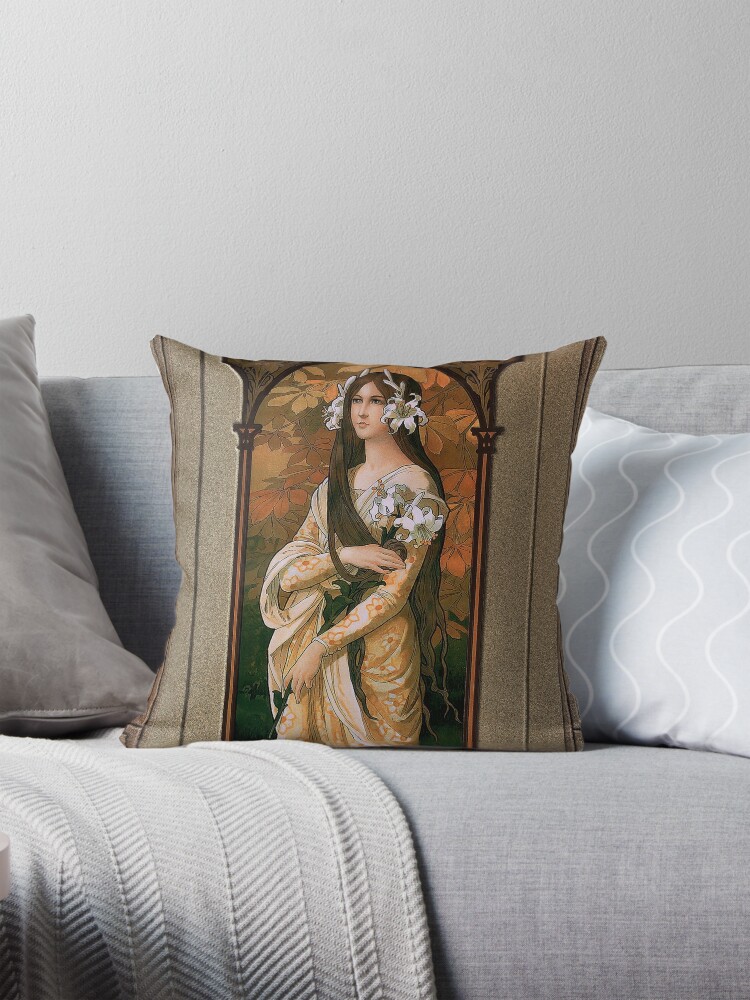
Déi zentral Figur vum Bild ass eng jonk Fra gekleet an engem opulente giele Kleed mat mëllen Blummenmuster.. Hir laang brong Hoer kaskaden laanscht hir Schëlleren, verwéckelt mat wäisse Lilies, déi hir e reng a bal mystesch Erscheinung ginn. Si steet roueg, ausgeglach Haltung mat engem Schwan um Féiss, symboliséiert d'Onschold an d'Gnod, déi dem Vugel an d'Figur zougeschriwwen ass, déi se duerstellt. Déi mëll Rendering vun hirem Gesiicht, mat engem Ausdrock vun Iwwerleeung, invitéiert den Zuschauer hir Gedanken ze iwwerdenken wärend hien de rouege Kader kuckt deen hatt ëmginn.
Inhaltsverzeechnes
Kompositioun an Ëmgéigend
D'Zesummesetzung vum Bild zeechent sech duerch eng harmonesch Mëschung vum natierlechen a mënschlechen, mat der Figur vun der Fra an engem vertikalen Format gesat, deen de verlängerten Stil vum Thema betount. Si läit géint eng Lush, gréngen Hannergrond, wou delikat Hierscht Blieder an Nuancen vun orange, Gold, a gréng proposéieren d'Zäit vum Joer a schaaft en Kuliss, dee schéin kontrastéiert mam blass, luminéisen Kleed, deen hatt unhuet. Déi subtil Inklusioun vum Schwan erhéicht de symboleschen Aspekt vum Wierk weider, wéi Schwanen sinn traditionell mat Themen vun Rengheet verbonnen, Onschëlleg, a Schéinheets, verstäerkt den Titel vum Stéck.
De Schwan, déi un de Féiss vun der Fra läit, schéngt hir eege graziéis Haltung ze spigelen. Säin Hals kromme delikat, bal wéi wann d'Linnen vun hirer Figur echoen. Dës visuell Verbindung tëscht Mënsch an Vugel verdéift d'Symbolismus vum Bild weider, suggeréiert eng harmonesch Relatioun tëscht Mënschheet an Natur. Dem Schwan seng wäiss Fiedere reflektéieren d'Onschold vun der Fra, bitt eng roueg Präsenz déi d'Vibranz vun den Hierschtblieder am Hannergrond ausbalancéiert.
Faarfpalette an Technik
Dem Sonrel seng Benotzung vu Faarf ass ee vun de markantste Aspekter vum Bild. Déi mëll Pastelltéin vum giele Kleed sinn ausgeglach duerch déi äerdlech Téin vum Blieder hannert der Figur, eng waarm an invitéierend Ambiance ze kreéieren. Déi giel, gëllen, a subtile Gréng vum Kleed vermëschen mat den Orangen a Roude vun den Hierschtblieder, e Gefill vu roueger Rou opruffen, déi sech weider an der Weichheet vum Hannergrond reflektéiert. Déi gedämpft Nuancen schaffen zesummen fir d'Opmierksamkeet op d'Figur vun der Fra ze zéien, erlaabt hir de Brennpunkt vum Stéck ze bleiwen.
D'Technik, déi vum Sonrel beschäftegt gëtt, weist hir Fäegkeet fir mëll Pinselstécker ze benotzen an eng sanft Uwendung vu Liicht a Schied. De Pinselwierk, obwuel präzis, behält eng Loft vu Flëssegkeet déi d'allgemeng Delikatesse vun der Szen verbessert. Et gëtt eng bal transluzent Qualitéit op d'Haut vun der Fra, suggeréiert hir ätheresch Natur, während d'Detailer am Kleed, Blummen, a Blieder gi mat enger subtiler awer bewosst Opmierksamkeet op Textur a Form gemaach. Dës Mëschung vum Realismus mat engem dreemen, bal aner Weltqualitéit ass charakteristesch fir dem Sonrel seng Approche zum Molen.
Symbolismus a Bedeitung
De Schwan an “Den Onschëllegen Schwan” ass net nëmmen en dekorativen Element, mä éischter eng mächteg Symbol. A verschiddene Kulturen, de Schwan ass mat Rengheet verbonnen, Transformatioun, an d'helleg. An der griichescher Mythologie, zum Beispill, Schwanen waren dacks mat Gëtter a Gëttinnen verbonnen, verkierpert souwuel Gnod an déi méi héich Räicher vun der Schéinheet. Hei, D'Rengheet vum Schwan spigelt sech an der Figur vun der jonker Fra, dee mat engem Ausdrock vun Onschold a Rou duergestallt gëtt. D'Lilie Blummen, déi mat hiren Hoer intertwine, weider verstäerken dës Symbolik vu Rengheet an Onschold.
D'Kombinatioun vun der roueger Haltung vun der Fra, dem Schwan seng graziéis Präsenz, an déi natierlech Elementer ronderëm si kreéiert eng zäitlos Zeen vu Rou, d'Verbindung tëscht Mënschheet an Natur ënnersträichen. Den Hierschtëmfeld kéint als Representatioun vun der flotter Natur vun Onschold a Schéinheet gesi ginn, erënnert de Betrachter un déi transient Momenter am Liewen. Déi sanft Curve vun der Fraefigur an déi mëll Téin vum Stéck ginn dem Bild eng nostalgesch Qualitéit, e Gefill vu Verlaangen no engem méi einfachen opruffen, méi purer Zäit.
Stil an artistesch Afloss
“Den Onschëllegen Schwan” ass e prime Beispill vum symbolistesche Stil, déi duerch e Schwéierpunkt op Emotiounen markéiert war, d'Imaginatioun, an eng Exploratioun vun de mysteschen a metaphysesche Räicher. Dem Sonrel seng Aarbecht ass déif an dëser Traditioun agebonnen, Momenter festzehalen, déi e Gefill vu Reverie a Kontemplatioun opruffen. Déi gutt Linnen, Opmierksamkeet op Detailer, a Gebrauch vu symbolesche Biller verbannen och hir Aarbecht mat der Art Nouveau Bewegung, déi a Frankräich während hirer Zäit bléie war. Déi floral Motiver, fléissend Linnen, an organesch Formen am Bild alignéieren et mat den dekorativen an dekorativen Elementer déi den Art Nouveau definéiert hunn.
A punkto Stëmmung, d'Bild strahlt eng roueg aus, friddlech Atmosphär, gefëllt mat enger Loft vun zäitlos Gnod. D'Ausdrock vun der Thema, déi mëll Luucht, an déi harmonesch Relatioun tëscht der Figur an dem Schwan all bäidroen zu engem Sënn vu Rou a Rengheet. Et ass e Wierk dat den Zuschauer encouragéiert ze pausen, fir déi subtil Schéinheet vun der Szen ze schätzen, a fir iwwer déi méi déif Symbolik ze reflektéieren déi ënnert der Uewerfläch läit.
Conclusioun
An “Den Onschëllegen Schwan (De Schwan; Onschold),” D'Elisabeth Sonrel erfaasst déi delikat Schéinheet vun der Onschold duerch d'Bildung vun enger jonker Fra an enger roueger, dreamlike Kader. Déi virsiichteg Zesummesetzung, combined with the symbolic imagery of the swan and the soft palette, creates a work that is both visually captivating and emotionally resonant. Through her meticulous rendering of natural forms and the symbolic interplay between the human and the animal, Sonrel invites the viewer into a world of tranquil reverie, where innocence, Rengheet, and beauty are forever preserved in time.
Den Onschëllegen Schwan (De Schwan; Onschold) vum franséische Moler Elisabeth Sonrel (1874 – 1953); an Illustrator vum Art Nouveau Stil; wien seng Wierker allegoresch Themen abegraff hunn, Mystik a Symbolik, Portraiten a Landschaften.
Den Innocent Swan ass eng retouchéiert digital Konscht al Masters Reproduktioun vun engem Public Domain Bild.
Dës digital Konscht Kreatioun, wéi mat all de Konschtwierker, déi op der Xzendor7 Websäit fonnt kënne ginn, ass online a verschiddene Materialformater ze kafen, dorënner Canvas Prints, acryl Prints, Metallofdréck, Holzdrécker, cadréiert Printen, Plakater, a wéi gewalzt Canvas Printen a ville Gréissten vun 12 Zoll zu 72 Zoll ofhängeg vun der Gréisst vum aktuellen Konschtwierk an dem Print-on-Demande Buttek vun deem Dir gewielt hutt d'Konscht ze kafen.
D'Konschtwierk ass och op eng breet Palette vu Männer- a Fraekleedung verfügbar, Becher, totes, Schal, Notizbicher an Zäitschrëften a vill Heemdekoratiounsprodukter.
Kënschtler Bio
Info Ënner Héiflechkeet Wikipedia.org
Elisabeth Sonrel (1874 Tours - 1953 Seals) war e franséische Moler an Illustrator am Art Nouveau Stil. Hir Wierker enthalen allegoresch Themen, Mystik a Symbolik, Portraiten a Landschaften.
Si war d'Duechter vum Nicolas Stéphane Sonrel, e Moler vun Tours, a krut hir fréi Ausbildung vun him. Fir weider Studie goung si op Paräis als Student vum Jules Lefebvre an der Ecole des Beaux-Arts.
An 1892 si huet hir Diplomaarbecht gemoolt, 'Pax et Labour', e Wierk am Musée des Beaux-Arts de Tours ze gesinn. Vun do aus huet si am Salon des Artistes Français tëscht ausgestallt 1893 an 1941, hir Ënnerschrëftstécker si grouss Aquarelle op enger Pre-Raphaelit Manéier, déi si no enger Rees op Florenz a Roum adoptéiert huet, entdeckt d'Renaissance Moler – e puer vun hire Wierker mat kloren Iwwerzeeche vu Botticelli. Hir Biller goufen dacks vun der Arthurescher Romantik inspiréiert, Dem Dante Alighieri seng 'Göttlech Komedie’ an 'Dat neit Liewen', biblesch Themen, a mëttelalterlech Legenden. Hir mystesch Wierker enthalen 'Ames errantes’ (Salon vun 1894) an 'Geeschter vum Abyss’ (Salon vun 1899) an "Jonk Fra mat der Tapisserie".
Op der Exposition Universelle vun 1900, den Haaptthema vun deem war Art Nouveau, hirem 1895 Molerei 'De Schlof vun der Jongfra’ (Schlof vun der Jongfra), krut eng Bronzemedail, an den Henri Lehmann Präis vum 3000 Frang vun der Academy of Fine Arts.[3] Vun 1900 weider huet si hir Molerei a Portraite beschränkt, scenesch Bretagne Landschaften, an heiansdo Blummenstudie.
Si huet reegelméisseg Molereesen an d'Bretagne gemaach, inspiréiert vum Bësch vu Brocéliande, a vun 1910 op verschidde Plazen op der Küst wéi Concarneau, Plougastel, Pont-l'Abbé a Loctudy, bleiwen dacks an de Wiertschaften a begleeden vun engem oder zwee Studenten. Si huet verschidde Wierker zu Le Faouët gemoolt ier si eng Villa zu La Baule an den 1930er Jore baut. Schafft haaptsächlech an Aquarell a Gouache, si entdeckt eng prett Versuergung vu Modeller ënner jonke Meedercher an der Regioun, a fonnt Bretonen allgemeng frëndlech ze sinn, éierlech a selbstvertrauen.
Hir lescht Ausstellung am Salon war am 1941 am Alter vun 67. Et gëtt och e Rekord vun hirer Ausstellung zu Liverpool. An hire fréie Joere produzéiert Sonrel Plakater, Postkaarten an Illustratiounen, am Art Nouveau Stil.