

Abbey in Ruins in Valencia Countryside c1838
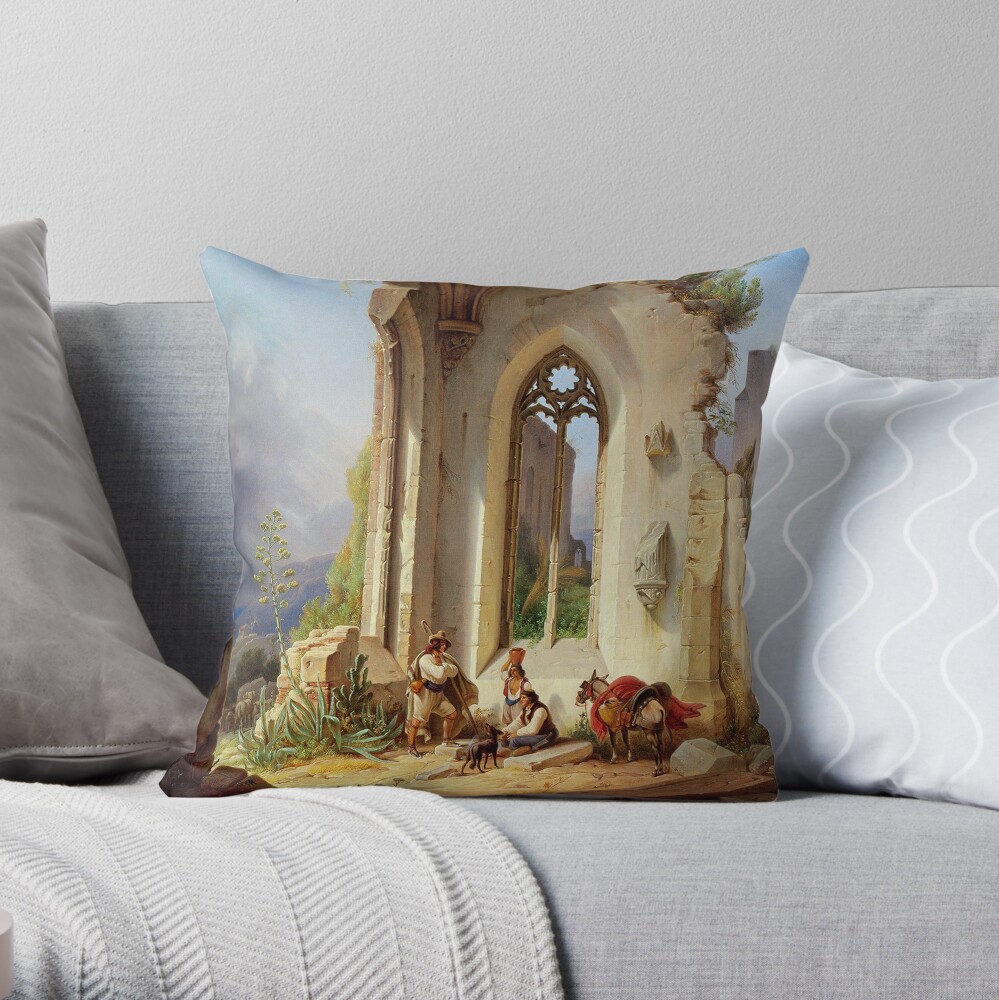
Umělecké dílo “Abbey in Ruins in Valencia Countryside,” vytvořeno v 1838 by the German painter Wilhelm Gail (1804 – 1890), presents a romanticized depiction of an ancient abbey set amidst the picturesque and tranquil Valencia countryside. Through the lens of the Romantic movement, which flourished throughout Europe during the late 18th and early 19th centuries, Wilhelm Gail captures the profound interaction between nature and the remnants of human civilization. This painting invites the viewer to contemplate the themes of decay, plynutí času, and the persistence of nature despite the ruinous structures left behind.
Obsah
Hlavní předmět: The Abbey in Ruins
The focal point of the painting is the grand, yet dilapidated abbey, whose towering arches and shattered windows have long since ceased to serve their original religious or communal purpose. The ruins of the abbey stand as a testament to a past that is now inaccessible, its once-pristine structure now slowly crumbling due to the ravages of time.
The ornate Gothic architektonický details still remain visible, showcasing finely executed stone carvings that hint at the abbey’s former glory. Příroda, nicméně, has begun to reclaim what was once a symbol of human creation. Stromy, keře, and vines now cling to the walls of the abbey, emphasizing the inevitable decline of even the most monumental constructions in the face of nature’s inexorable growth.
The Terrain and Landscape
Okolní terén malby je rozlehlý, otevřená krajina, která sahá daleko za ruiny, typické pro španělský venkov v regionu Valencie. Suché, zvlněné kopce se táhnou do dálky, naznačuje expanzivní, vyprahlé prostředí, které regionu dominovalo. Jemné přechody zemských tónů v půdě přenášejí teplo regionu, typické pro středomořské klima.
V popředí, jsou tam travnaté plochy a divoká vegetace, které jsou v ostrém kontrastu s kamennou výzdobou opatství. Zdá se, že země v sobě nese nádech tiché pustiny, i když není úplně bez života. Na scéně je vidět několik zvířat, včetně osla a malého psa, oba se zdají být součástí lidské přítomnosti na scéně.
Postavy mužů, umístěné poblíž zbytků opatství, are integral to the scene, offering a human scale to the ruins and reminding the viewer of the fragile relationship between man and the environment.
The Human Figures and Daily Life
V popředí, three men are depicted, seemingly engaged in a moment of rest after traveling through the countryside. Two of the men are seated on the ground, with one of them tending to the small dog, while the third man stands nearby, leaning on a staff. Each of these figures wears traditional attire of the time, including loose-fitting shirts, wide-brimmed hats, and leather boots, fitting the rural, everyday life of the period.
Their connection to the land is emphasized by their humble presence, and their peaceful interaction with the natural world adds to the timeless feeling of the artwork. V pozadí, a pack donkey, laden with supplies, is tethered near the ruins. Toto jemné začlenění zvířat a světský akt odpočinku odráží téma lidské vytrvalosti ve světě poznamenaném plynutím času a změnou..
Světlo, Nálada, and Atmosphere
Pečlivé zacházení se světlem a stínem Wilhelma Gaila vnáší do obrazu hluboký pocit realismu, a zároveň navodit emocionální atmosféru. Souhra slunečního světla a stínů v ruinách zdůrazňuje texturu kamene, vytváří trojrozměrnou kvalitu, která přitahuje pozornost diváka k vybledlé kráse architektury.
Zleva proniká měkké světlo, osvětlující fragmenty kdysi slavné stavby, zatímco vzdálené kopce se koupou v mlžném oparu, zlatá záře. Nálada scény je ponurá, přesto klidné, s jasným, otevřené nebe nabízí pocit klidu. The atmosphere created by the natural elements, combined with the starkness of the abbey’s ruins, induces a contemplative feeling about the transitory nature of human achievement and the power of nature to endure.
Symbolism and Romantic Themes
As with many works of the Romantic era, “Abbey in Ruins in Valencia Countryside” expresses the Romantic fascination with nature, vznešený, and the impermanence of human creations. The abandoned abbey symbolizes the passage of time, the decline of religious and institutional authority, and the inevitable decay of human-made structures.
Příroda, as seen in the encroaching vines and foliage, is depicted as a force that cannot be controlled, reclaiming what was once its own. The figures of the men, though human, seem insignificant in comparison to the vastness of the landscape, emphasizing the theme of human fragility in the face of time and nature.
Styl a umělecké techniky
The painting adheres to the style of Romanticism, a movement that emphasized emotion, individualismus, and the beauty of nature. Wilhelm Gail’s meticulous attention to detail and use of light and shadow convey the influence of German Romantic painters, who often depicted natural landscapes and ruins in a dramatic manner.
His skillful handling of the ruins, combined with the almost ethereal lighting, brings the scene to life, making it both a historical snapshot and a timeless meditation on decay and renewal. The detailed brushwork in the textures of the stone and vegetation provides a heightened sense of realism, drawing attention to the natural beauty of the ruins and their surrounding environment.
Závěr
“Abbey in Ruins in Valencia Countryside c1838” by Wilhelm Gail is a masterful example of the Romantic style, combining natural beauty, historical contemplation, a hlubokou symboliku. Zobrazení starověku, rozpadající se opatství na pozadí rozlehlé španělské krajiny zve diváky k zamyšlení nad pomíjivostí lidského snažení, nevyhnutelnost rozkladu, a tichou vytrvalostí přírody.
Prostřednictvím umělcova pečlivého používání světla, detail, a složení, malba zachycuje nejen fyzické ruiny opatství, ale také evokuje hlubší, emocionálnější porozumění plynutí času a přírodních sil, které utvářejí náš svět.
Toto je retušovaná reprodukce starých mistrů digitálního umění obrázku ve veřejné doméně, kterou lze zakoupit online jako a rolovaný tisk na plátno.
Životopis umělce je odvozen od Wikipedia.org
Wilhelm byl synem dozorce volební galerie, a v souladu s přáním svého otce po ukončení střední školy, začal studovat architekturu na Akademii výtvarných umění v Mnichově, Německo; ale později se věnoval malbě.
Poté, co Wilhelm dokončil studia na akademii, další hodiny absolvoval v ateliéru svého švagra, malíř Německý malíř Peter von Hess a během této doby, vytvořil řadu krajin, na kterých ztvárnil faunu a zvyky své vlasti.
v 1825 Wilhelm cestoval do Itálie na pozvání barona von Malzena, královský bavorský chargé d’affaires na sardinském dvoře; zde vytvořil několik architektonických obrazů a žánrových děl, které vyšly jako litografie pod názvy Římské památky ve státech Sardinie a Populární scény Janova.
Po návratu do Mnichova, Wilhelm vytvořil četné obrazy budov z paměti ze své cesty; který zahrnoval starověký akvadukt v Campagna a klášterní nádvoří ve Viterbu, které byly veřejností dobře přijímány, rychle z něj udělal populárního malíře.
v 1830 Wilhelm opět opustil Německo, a tentokrát si udělal výlet do Paříže, Francie studovat; ale po vypuknutí červencové revoluce odešel a odešel do Chartres; a odtud by podnikl další cesty do Itálie a Španělska k dalšímu zvýšení uměleckých znalostí a dovedností.
v 1854, Wilhelm byl jmenován hlavním zmocněncem a brzy poté do vládní rady bavorského vévody Nikolause von Leuchtenberg.