

Valentziako abadia hondakinetan c1838
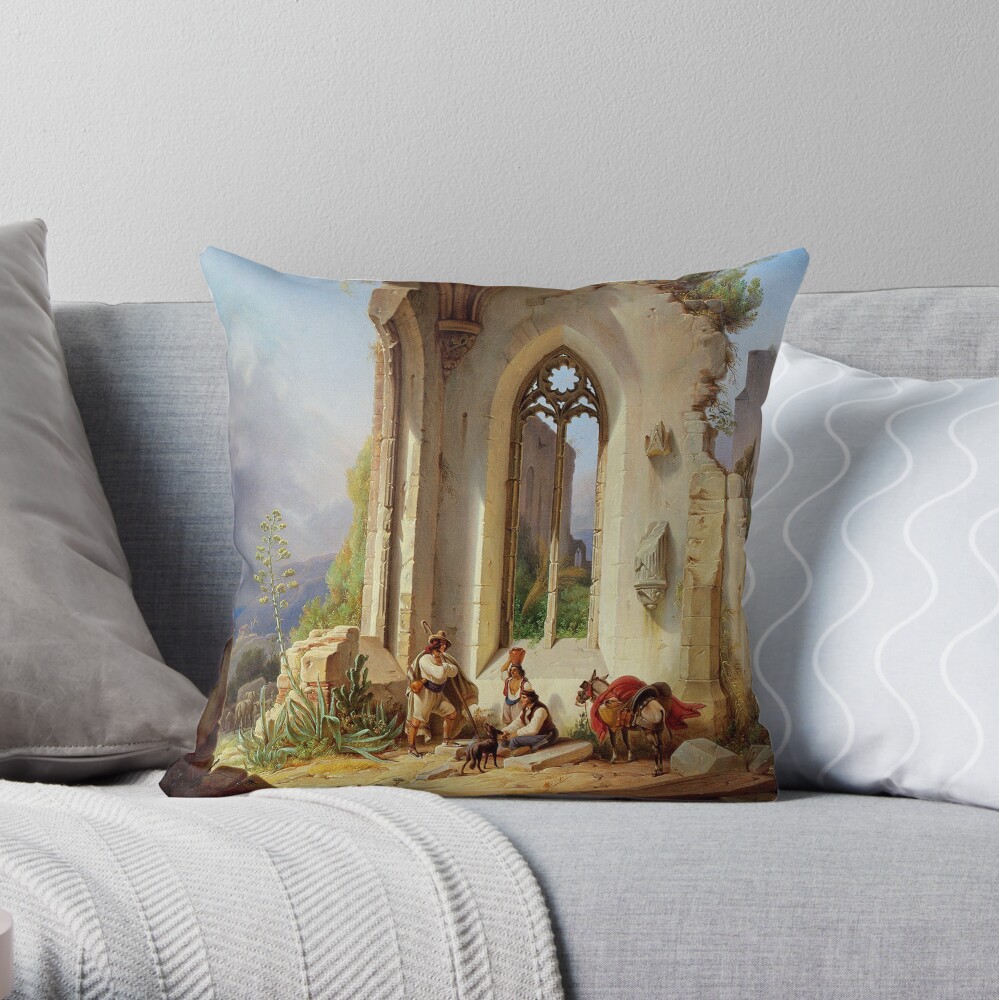
Artelana “Abadia Hondakinetan Valentziako landa,” sortua 1838 Wilhelm Gail margolari alemaniarrak egina (1804 – 1890), Valentziako landa pintoresko eta lasaiaren artean kokatutako antzinako abadia baten irudikapen erromantikoa aurkezten du. Mugimendu erromantikoaren lentetik, mendearen amaieran eta XIX.aren hasieran Europa osoan loratu zena, Wilhelm Gailek naturaren eta giza zibilizazioaren aztarnen arteko elkarrekintza sakona jasotzen du. Koadro honek ikuslea usteltzearen gaiak hausnartzera gonbidatzen du, denboraren joana, eta naturaren iraupena atzean utzitako egitura hondatuak izan arren.
Edukien taula
Gai nagusia: Abadia Hondakinetan
Margolanaren ardatza handia da, oraindik hondatuta dagoen abadia, zeinen arku handiek eta hautsitako leihoek aspaldi utzi dioten jatorrizko helburu erlijioso edo komunitarioa betetzen. Abadiaren hondakinak gaur egun eskuraezina den iragan baten lekuko dira, garai bateko egitura birringarria orain poliki-poliki erortzen ari da denboraren hondamendien ondorioz.
Gotiko apaindua arkitektonikoa xehetasunak oraindik ikusgai geratzen dira, abadiaren antzinako loria iradokitzen duten harrizko taila finak erakutsiz. Natura, hala ere, gizakiaren sorkuntzaren sinbolo zena berreskuratzen hasi da. Zuhaitzak, zuhaixkak, eta mahastiak orain abadiaren hormetara atxikitzen dira, naturaren hazkunde ezinegonaren aurrean eraikuntza monumentalenen gainbehera saihestezina azpimarratuz.
Lurra eta Paisaia
Margolanaren inguruko lur eremua zabala da, hondakinetatik urrunago hedatzen den paisaia irekia, Valentziako eskualde espainiarreko landa tipikoa. Lehorra, muino ibiltariak urrutirantz luzatzen dira, hedakorra proposatuz, eskualdean nagusi zen ingurune lehorra. Lurzoruko lur-tonuen gradiente sotilek eskualdeko beroa transmititzen dute, klima mediterraneoaren tipikoa.
Lehen planoan, abadiaren harlanduarekin kontraste handia ematen duten belar eta landare basatiak daude. Lurrak desolazio-aire lasaia daramala dirudi, guztiz bizirik gabe ez dagoen arren. Eszenan animalia batzuk ikus daitezke, tartean asto bat eta txakur txiki bat, biak dirudite eszenan gizakiaren presentziaren parte direla.
Gizonen figurak, abadiaren aztarnen ondoan kokatuta, eszenaren osagaiak dira, hondakinei giza eskala eskainiz eta ikusleari gizakiaren eta ingurunearen arteko harreman hauskorra gogoraraziz.
Giza irudiak eta eguneroko bizitza
Lehen planoan, hiru gizon ageri dira, Landatik bidaiatu ondoren atseden une batean diharduen itxuraz. Gizonetako bi lurrean eserita daude, haietako batek txakur txikia zaintzen duela, hirugarren gizona, berriz, ondoan, langile baten gainean makurtuta. Irudi horietako bakoitzak garaiko jantzi tradizionalak daramatza, alkandora solteak barne, ertz zabaleko txanoak, eta larruzko botak, nekazariari egokitzea, garaiko eguneroko bizitza.
Lurrarekin duten lotura euren presentzia xumeak nabarmentzen du, and their peaceful interaction with the natural world adds to the timeless feeling of the artwork. Atzealdean, a pack donkey, laden with supplies, is tethered near the ruins. This subtle inclusion of animals and the mundane act of rest reflects the theme of human perseverance in a world marked by the passage of time and change.
Argia, Aldartea, eta Giroa
Wilhelm Gail’s careful handling of light and shadow brings a deep sense of realism to the painting, while also evoking an emotional atmosphere. The interplay of sunlight and shadows within the ruins highlights the texture of the stone, creating a three-dimensional quality that draws the viewer’s attention to the faded beauty of the architecture.
A soft light filters in from the left, illuminating the fragments of the once-glorious structure, while the distant hills are bathed in a hazy, urrezko dirdira. The mood of the scene is somber, yet peaceful, with the bright, open sky offering a sense of serenity. The atmosphere created by the natural elements, combined with the starkness of the abbey’s ruins, induces a contemplative feeling about the transitory nature of human achievement and the power of nature to endure.
Sinbolismoa eta gai erromantikoak
As with many works of the Romantic era, “Abadia Hondakinetan Valentziako landa” expresses the Romantic fascination with nature, sublimea, eta giza sorkuntzen iraupena. The abandoned abbey symbolizes the passage of time, the decline of religious and institutional authority, and the inevitable decay of human-made structures.
Natura, as seen in the encroaching vines and foliage, is depicted as a force that cannot be controlled, reclaiming what was once its own. The figures of the men, though human, seem insignificant in comparison to the vastness of the landscape, emphasizing the theme of human fragility in the face of time and nature.
Estiloa eta Teknika Artistikoak
The painting adheres to the style of Romanticism, emozioa azpimarratzen zuen mugimendua, indoskokularitza, eta naturaren edertasuna. Wilhelm Gail’s meticulous attention to detail and use of light and shadow convey the influence of German Romantic painters, who often depicted natural landscapes and ruins in a dramatic manner.
His skillful handling of the ruins, combined with the almost ethereal lighting, brings the scene to life, making it both a historical snapshot and a timeless meditation on decay and renewal. The detailed brushwork in the textures of the stone and vegetation provides a heightened sense of realism, drawing attention to the natural beauty of the ruins and their surrounding environment.
Bukaera
“Valentziako abadia hondakinetan c1838” by Wilhelm Gail is a masterful example of the Romantic style, combining natural beauty, historical contemplation, and profound symbolism. The depiction of an ancient, crumbling abbey set against the sprawling Spanish landscape invites viewers to reflect on the transient nature of human endeavors, the inevitability of decay, and the quiet persistence of nature.
Through the artist’s careful use of light, xehetasuna, eta konposizioa, the painting not only captures the physical ruins of the abbey but also evokes a deeper, more emotional understanding of time’s passage and the natural forces that shape our world.
Hau domeinu publikoko irudi baten erreprodukzioa da arte digitaleko maisu zaharren erreprodukzioa, sarean erosteko moduan dagoena ijetzitako mihise inprimatua.
Artist Bio Information Is Derived From Wikipedia.org
Wilhelm was the son of an electoral gallery supervisor, and in accordance with his father’s wishes after finishing high school, began studying architecture at the Academy of Fine Arts in Munich, Alemania; but would later devote himself to painting.
After Wilhelm completed his studies at the academy, he took further lessons in the studio of his brother-in-law, the painter German Painter Peter von Hess and during this time, created a number of landscapes which he depicted the fauna and customs of his homeland.
In 1825 Wilhelm traveled to Italy at the invitation of Baron von Malzen, the royal Bavarian chargé d’affaires at the Sardinian court; while there he created several architectural images and genre pieces that were published as lithographs under the titles Monuments romains dans les états de sardaigne and Scènes populaires de Genova.
Upon his return to Munich, Wilhelm created numerous paintings of building from memory from his journey’s; which included the ancient aqueduct in the Campagna and the cloister courtyard in Viterbo, which were well accepted by the public, quickly making him a popular painter.
In 1830 Wilhelm again left Germany, and this time took a trip to Paris, France to study; but after the outbreak of the July Revolution he left and went to Chartres; and from there would take other trips to Italy and Spain to further increase is artistic knowledge and skill.
In 1854, Wilhelm was appointed as chief plenipotentiary and soon afterwards to the cabinet council of the Bavarian Duke Nikolaus von Leuchtenberg.