

Woman And Roses
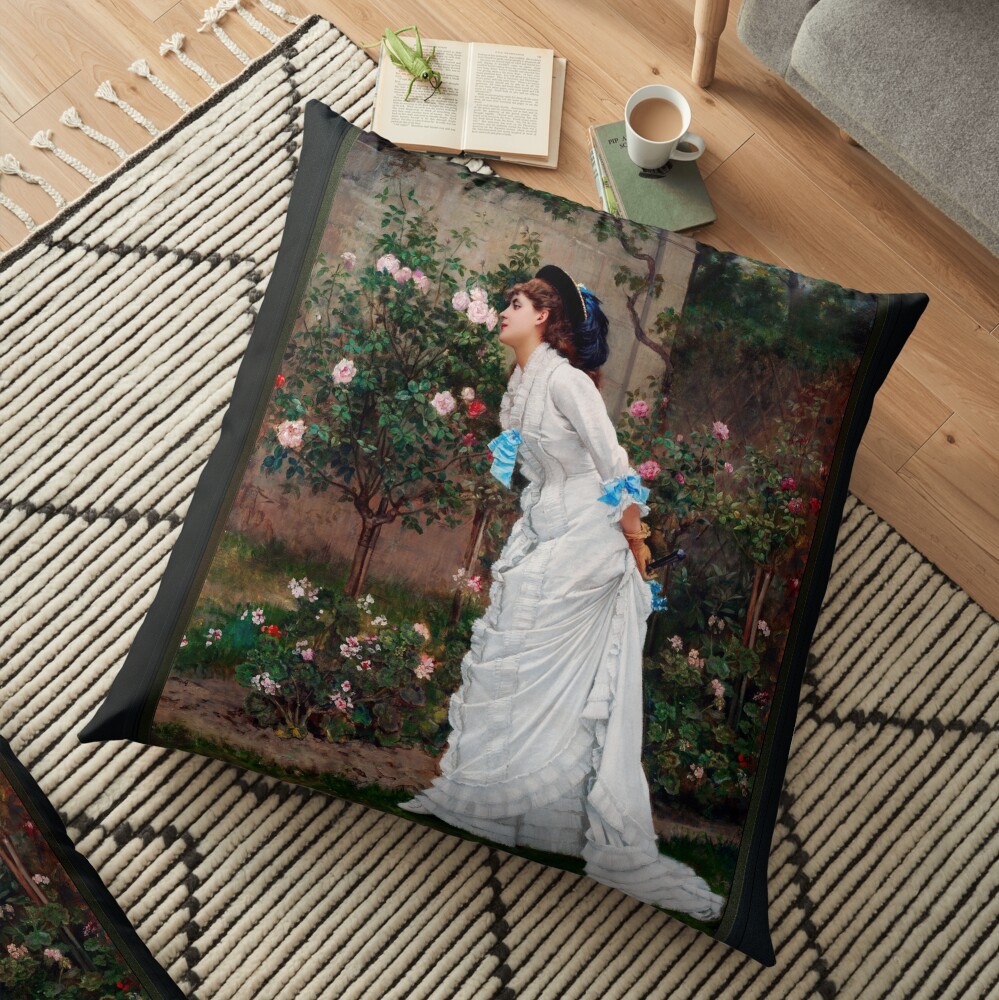
“Woman and Roses c1879” is a stunning example of the Romantic style, margolari frantsesak sortua Auguste Toulmouche (1829 – 1890). The painting portrays a fashionable young woman of the late 19th century, carefully set against the backdrop of a lush, blooming rose garden. Toulmouche’s attention to detail and focus on realism captures both the delicacy of the woman and the vibrant beauty of the roses she admires, giving the viewer a moment of grace and elegance that reflects the ideals of beauty and femininity during the period.
Edukien taula
Gaia eta Osaera
The subject of this genero pintura is a young woman dressed in the fashionable attire of the late 1800s. Bere soineko zuri dotorea oihal jarioa nabarmentzen duten zinta urdinez ederki apainduta dago, oinen inguruan jaisten dena. Soinekoa gustu handiz diseinatuta dago, garaiko eskulangintza nabarmentzen duten geruza eta geruza korapilatsuekin., Toulmoucheren xehetasunetarako arreta bikaina agerian utziz. Emakume gazteak bizkarra apur bat arkututa dauka loratzen den arrosa zuhaixka batera makurtzen den bitartean, aurpegia albo batera okertu zuen, bere jarrerari kontenplazio lasaiaren zentzua gehituz.
Bere jarrerak lorategiaren edertasunean barneratuta dagoela iradokitzen du, beharbada inguratzen duten arrosa lurrintsuak miretsiz. Emakumearen eta loreen arteko elkarrekintza lasai honek harmonia eta bake sentsazioa ematen du. Artistak maisuki erabiltzen du argi eta itzalen arteko elkarrekintza eszenari sakontasuna emateko, particularly in the folds of the woman’s dress and the delicate play of sunlight on her skin, further emphasizing the realism of the composition.
The background of the painting is a classic garden setting, with roses of varying colors and sizes filling the space. Toulmouche’s choice of roses as the central floral element ties into the Victorian fascination with symbolic meaning; roses were often associated with beauty, maite izan, eta feminitatea. The painter carefully arranges the flowers to complement the woman’s attire and demeanor, providing a seamless blend of nature and human presence. The gentle lines of the garden’s stone wall and greenery create a subtle, yet powerful contrast to the soft texture of the roses and the woman’s delicate form.
Materialak eta Teknika
Toulmouche’s painting technique is a testament to his skill in capturing the textures and subtleties of fabric, flesh, eta natura. His use of oil paints enables him to create layers of depth and luminosity, particularly in the way the light interacts with the white gown and the varying hues of the roses. The brushwork is refined yet expressive, and each element of the composition – from the woman’s facial expression to the intricate details of the roses – is carefully rendered, showcasing the artist’s ability to bring life to each subject.
The textures in the painting are rich and varied. The woman’s gown is soft, with folds and creases that suggest the movement of the fabric, while the roses are vibrantly painted, petalo bakoitza arretaz itzalduta hiru dimentsioko ilusioa sortzeko. Hondoko berdetasuna eta harrizko horma modu apalagoan margotuta daude, emakumeari eta arrosei protagonismoa hartzen utziz, hala ere, eszena orokorra hobetzen duen ingurune aberats eta testura eskaintzen dute.
Aldartea eta Giroa
ren aldartea “Emakumea eta Arrosak” lasaitasunaren bat da, liraintasun, eta kontenplazio lasaia. Emakume gazteak pentsamenduetan galduta dirudi loreak miresten dituen bitartean, bere irribarre txikiak bake une bat iradokitzen zuen bestela lanpetuta dagoen mundu batean. Margolanaren kolore leunak, bereziki emakumearen jantzien zuri-urdinak eta arrosen tonu sotilak, kalitate lasaia ematen dio eszenari, lasaitasun eta edertasun sentimenduak deituz. Inguru naturalak are gehiago hobetzen du giro hori, creating a moment where the viewer can pause and reflect upon the delicate balance between nature and humanity.
Toulmouche’s use of light also contributes significantly to the atmosphere of the painting. The warm sunlight gently illuminates the woman’s face and gown, highlighting her beauty while casting soft shadows that add depth to the composition. This attention to light creates a harmonious interplay between the figure, loreak, and the surrounding greenery, giving the painting a sense of quiet elegance and timelessness.
Style and Themes
Margolanak estilo erromantikoa adierazten du, a movement that celebrated the individual, the emotional, eta mundu naturala. Toulmouche’s focus on a single, contemplative figure placed in a natural setting aligns with the Romantic fascination with introspection and the sublime beauty of nature. While his works often feature highly detailed depictions of women in refined attire, “Emakumea eta Arrosak” also taps into a larger cultural fascination with the idealization of femininity during the 19th century.
The theme of beauty – both human and natural – is central to this work. Emakumea, with her graceful demeanor and delicate features, embodies an idealized vision of femininity, while the roses symbolize love, pasioa, and nature’s eternal beauty. Toulmouche’s careful rendering of both the figure and the surrounding garden invites the viewer to appreciate the finer details of the world around them and to reflect on the harmony between human existence and the natural environment.
Bukaera
“Woman and Roses c1879” arabera Auguste Toulmouche is a quintessential example of Romanticism in art. Arrosa lorategiko modako emakume baten erretratu lasai eta dotorearekin, margolanak gizabanakoaren edertasuna eta naturaren distira jasotzen ditu. Toulmoucheren argiaren maisutasuna, ehundura, eta xehetasunak ikusleengan oihartzun handia duen kontenplazio lasaiaren eszena sortzen du, iraganera betiko begirada bat eskainiz.
Domeinu publikoko irudi baten erreprodukzioa da mihise inprimatua sarean.
Hemendik eratorritako informazioa Wikipedia.org
Auguste Émile Toulmouche artekari finkatuaren eta Rose Sophie Mercier emaztearengandik jaio zen Nantesen., Frantzia irailean 21, 1829.
Bertako arte ikasketak hasi zituen, lehen eskultura ikasten Amédée Ménard Frantziako eskultore eta irakasle akademikoarekin (1806 -1873); eta Biron erretratugile frantsesarekin margotzea, eta gero bere ikasketekin jarraitu zuen 1846 Marc Gabriel Charles Gleyre margolari suitzarraren eskutik (1806 – 1874) Parisen.
Urtean 19 Augustek Parisko Aretoan erakutsi zituen lehen margolanak 1848 eta gero berriro sartu 1849 eta 1850, by which time he was specializing in portraiture; painting an idealized version of the Academic Realist style which at the time was the dominant painting style.
The subjects of his portraits were most of young attractive Parisian women that were members of the upper bourgeoisie class; and his work was most popular with the French and American public and his worked was generally approved by the critics of the time.
In 1852 Emperor Napoleon III (1808 – 1873) purchased one of his paintings called La Fille or The Girl for his future wife Empress Eugénie de Montijo (1826 – 1920), and with further purchases of his work by the imperial family, cemented his status as a fashionable painter.