

Alexander Lord Loughborough c1800
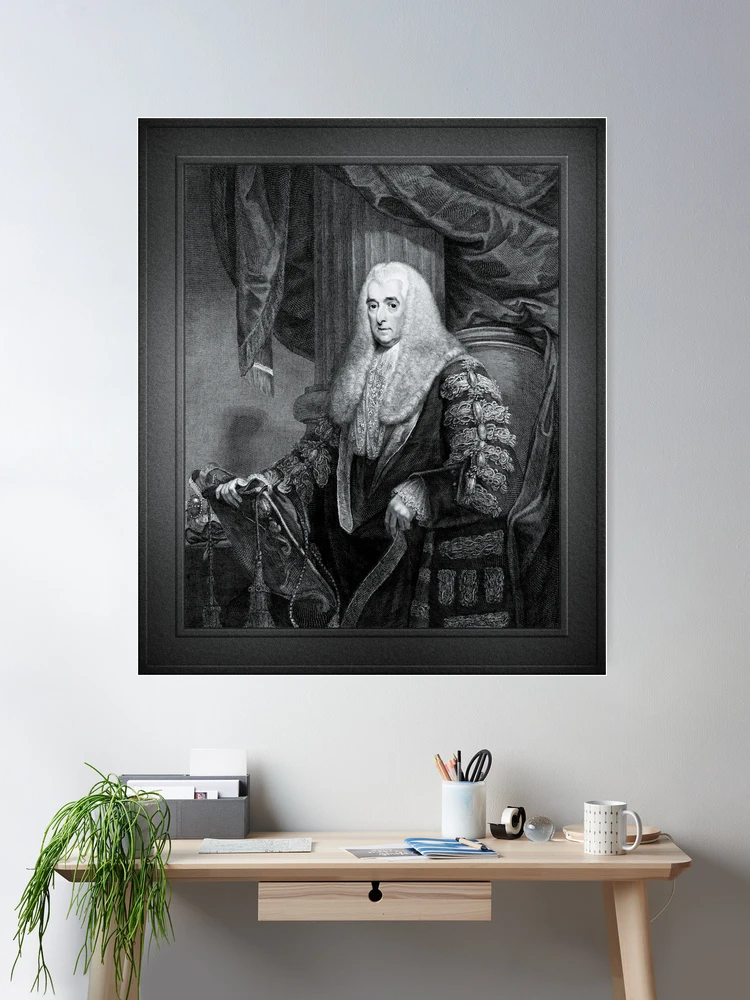
L'obra d'art titulada “Alexander Lord Loughborough c1800” was created by the esteemed Florentine engraver Francesco Bartolozzi (1727 – 1815); així com un pintor, membre fundador de la Royal Academy i conegut per popularitzar el mètode de gravat amb llapis de colors. This fine engraving portrays Alexander Wedderburn 1st Earl of Rosslyn, PC, KC (1733 – 1805); a Scottish lawyer and politician who served in the House of Commons from 1761 a 1780, and who was raised to the peerage as Baron Loughborough; as well as serving as Lord High Chancellor of Great Britain from 1793 a 1801.
Lord Alexander Loughborough, an influential figure of the 18th century, dressed in elaborate judicial attire, showcasing the refinement and authority of the era. The image is a detailed depiction of the subject’s dignified posture and lavish robes, which were common among prominent figures of the time.
Taula de continguts
Tema principal i figures
The central figure of this engraving is Lord Alexander Loughborough, whose distinguished presence commands the viewer’s attention. Lord Loughborough, a British nobleman, is captured sitting in a grand, somewhat solemn pose, dressed in an ornate judicial robe, indicative of his high rank. The fine details in his attire, from the lace cuffs to the richly textured fabric of his robes, underscore his status in society and the era’s appreciation for elaborate fashion and decorum. His countenance, stern yet reflective, is etched in remarkable detail, enhancing the gravitas of his character as a man of power, intel·ligència, i saviesa.
The engraving emphasizes Loughborough’s sense of dignity, with his thoughtful expression paired with his poised stance. His finely carved wig, typical of high-ranking figures during the late 18th century, is a characteristic feature in the work, showcasing both style and the societal norms of the time. It is clear that Bartolozzi sought not only to capture the likeness of his subject but to convey the noble and authoritative qualities that defined Lord Loughborough.
Objectes i simbolisme
While the main focus remains on Lord Loughborough, there are several objects present in the artwork that contribute to its overall theme of high social standing and judicial power. The chair on which he rests is elegantly detailed, with its ornate carving and flowing lines, a representation of the grandeur associated with nobility. El teló de fons, consisting of heavy curtains, further suggests an aura of privacy and exclusivity, perhaps referencing the closed doors of power in which Loughborough operated.
The artist carefully arranges the composition so that every detail of Lord Loughborough’s attire and environment reflects his elevated position within British society. The presence of a scepter-like object near the subject’s hand, tot i que subtil, alludes to the authority and leadership of Loughborough, suggesting his involvement in governance or law. Such items were often used to symbolize control, intel·ligència, and legal jurisdiction, enhancing the prestige of the figure depicted.
Terreny i Fons
The background of the engraving is minimal yet effective. The heavy drapes in the background, carved into the frame, create a soft sense of depth while not detracting from the main figure. This subtle backdrop allows the viewer to focus on Lord Loughborough’s persona and attire, without unnecessary distractions. The use of shadow in the background adds dimension and weight to the composition, giving the piece a sense of groundedness, which contrasts with the elevated social standing of the subject.
Though no natural terrain or outdoor environment is directly shown, the sense of grandeur is derived from the interior setting suggested by the draped curtains and luxurious textures. This formal, indoor scene was typical of official portraits during the era, where subjects were depicted in settings that emphasized their status, often within the walls of their own estates or in carefully curated settings.
Materials i Tècnica
Francesco Bartolozzi was renowned for his skill in engraving, particularly in the delicate art of stipple engraving. This work showcases his mastery of light and shade, which he achieved through the use of tiny dots and fine lines. The use of stipple engraving gives the image a remarkable texture, allowing Bartolozzi to convey both the soft fabric of Loughborough’s robes and the hard, stately contours of his chair and surroundings with equal precision. The cross-hatching and careful shading add depth and dimension, giving the figure a lifelike presence.
The engraving is executed in black and white, a common practice of the time. The contrast between light and dark tones accentuates the detailing in the subject’s facial features and attire, as well as the fabric’s texture. The overall tonal variation also adds to the somber and dignified mood of the piece, with deep shadows enhancing the sense of weightiness and authority surrounding Lord Loughborough.
Estil, Tema, i l'estat d'ànim
The engraving follows the stylistic conventions of 18th-century portraiture, where the subject is often idealized and their social position is emphasized. This particular engraving, malgrat això, is not just a portrayal of a nobleman; it is an exploration of status, dignitat, and the intellectual gravitas of the time. L'artista, Bartolozzi, was a master of capturing the essence of his subjects, and this work is a testament to his ability to elevate a simple portrait into something that speaks to the power and authority held by the figure.
The mood of the artwork is formal and introspective. There is a quiet reverence to the way Lord Loughborough is presented, a mood that likely reflects his own demeanor and the respect that he commanded. Els detalls fins, la llum suau, and the overall composition of the work give it a solemn yet serene atmosphere, characteristic of portraits intended for public and private admiration during the period.
Conclusió
“Alexander Lord Loughborough c1800” by Francesco Bartolozzi is a profound example of 18th-century engraving, one that speaks to both the technical brilliance of Bartolozzi and the esteemed position of the subject. Through meticulous detail and subtle use of light and shadow, the engraving not only captures the likeness of Lord Loughborough but also conveys the societal values and attitudes of the time. The engraving’s elegant execution and its focus on the noble and judicial aspects of Loughborough’s life reflect the enduring tradition of portraiture as a means of immortalizing those who shaped history.
To his right is a cloth covered table that seems to have a crown resting on it.
Es tracta d'una reproducció d'antics mestres d'art digital remasteritzada d'una imatge de domini públic que està disponible com a Impressió de tela en línia.
Artista Bio
Informació a continuació derivada de Wikipedia.org
Bartolozzi va néixer a Florència, i com era costum de l'època, es pensava que seguiria els passos del seu pare i es convertiria en orfebre i argenter.
Això, però, canviaria ja que el jove Bartolozzi va mostrar una gran habilitat i gust en el disseny; com a resultat es va posar així sota la supervisió de dos artistes florentins, inclòs el pintor italià Ignazio Hugford (1703 – 1778) i el pintor d'estil rococó italià Giovanni Domenico Ferretti (1692 – 1768) que el va instruir en pintura.
Després de tres anys de formació artística, va anar a Venècia a estudiar gravat; i va passar sis anys treballant per al gravador i dibuixant alemany Joseph Wagner (1706 – 1780), gravador i gravador, abans de muntar el seu propi taller.
El primer gravat que Bartolozzi va produir a Venècia van ser làmines a l'estil del pintor del període barroc italià Marco Ricci (1676 – 1730) i Giacomo Francesco Zuccarelli (1702 – 1788) un pintor de paisatges del barroc tardà o del rococó.
Després a dins 1762 Bartolozzi es va traslladar a Roma per un curt període de temps, on va completar un conjunt de gravats que representen frescos a Grottaferrata del pintor barroc italià Domenichino (Domenico Zampieri 1581 – 1641) que representa la vida de Sant Nil.
Aquell conjunt de gravats i els seus aiguaforts d'obres d'un antic mestre, va començar a cridar l'atenció del públic a tot Europa; i dins 1763 va conèixer Richard Dalton (1715 – 1791), dibuixant, gravador i el bibliotecari reial anglès que viatjava a Itàlia buscant adquisicions per a la col·lecció d'art del rei Jordi III.
Dalton li va oferir una cita com a gravador del rei; que Bartolozzi va acceptar i va marxar a Londres 1764; on vivia 42 anys.
Durant la seva estada a Londres va produir un gran nombre de gravats, que incloïa Clytie després del pintor italià Annibale Carracci (1560 – 1609), i de la Verge amb el Nen, després del pintor barroc italià Carlo Dolci (1616/7 – 1686).
Una gran part d'ells provenen de les obres del pintor italià Giovanni Battista Cipriani (1727 – 1785) i la pintora britànica Angelica Kauffman (1741 – 1807). Bartolozzi també va aportar diversos plats a la Shakespeare Gallery de Boydell.