

Allégorie de la Peinture
Allégorie de la Peinture (Allegory of Painting) c1765 by French Painter François Boucher (1703 – 1770); also known as a draftsman, engraver and decorator in the French Rococo style, that was well known for his lavish mythological, allegorical and erotic motifs and was the court painter of Louis XV and a favorite of the Marquise de Pompadour.

Though a year apart in there creation Allégorie de la Peinture is considered to be a companion piece to Allégorie de la Musique, as it is similar in many respects starting with the figures floating in the sky atop of large clouds, with a young lady and putti as the main elements in the scene.
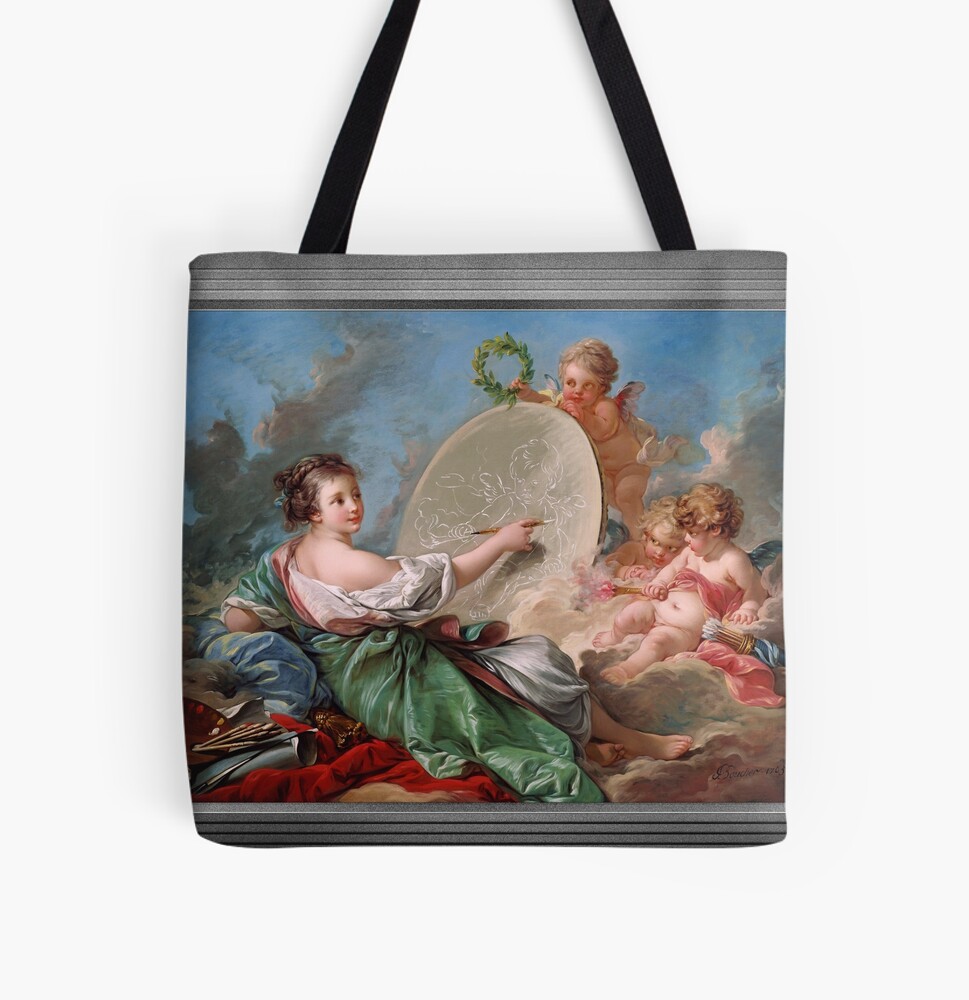
As the name of the artwork suggest, this scene interprets the meaning of painting by showing an attractive young woman reclining on a bundle of cloth, painting in white an outline of the winged putti that is posing for her on a round canvas.
This canvas is being held up by another putti that is holding a laurel leaf wreath in its right hand; while yet another putti looks on, by poking his head out from behind the round canvas by the right side of the posing putti, that is holding a flaming torch in its right hand sitting by a gold and blue silk quiver filled with arrows.
Behind the young lady we can see a rolled canvas, a painters palette with paint on it and a collection of six paint brushes.
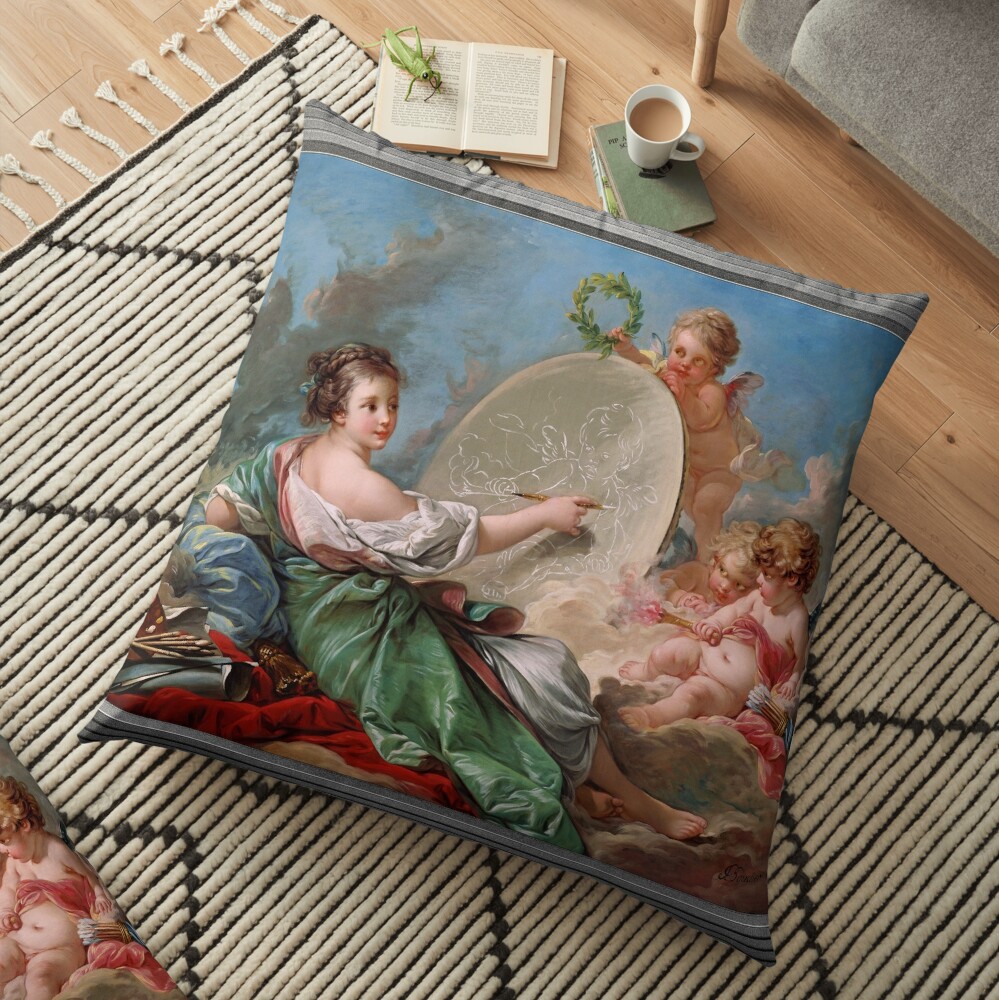
Allégorie de la Peinture is a remastered digital art old masters reproduction of a public domain image that is available as a arta presaĵo interrete.
Informoj Malsupre Derivita De Vikipedio.org
Hejmanto de Parizo, Boucher estis la filo de malpli konata farbisto Nicolas Boucher, kiu donis al li sian unuan artan trejnadon. En la aĝo de dek sep, pentraĵo de Boucher estis admirita de la pentristo François Lemoyne. Lemoyne poste nomumis Boucher kiel sia metilernanto, sed post nur tri monatoj, li iris labori por la gravuristo Jean-François Cars.
En 1720, li gajnis la elitan Grand Prix de Rome por pentrado, sed ne prenis la konsekvencan ŝancon studi en Italio ĝis kvin jaroj poste, pro financaj problemoj ĉe la Reĝa Akademio de Pentrarto kaj Skulptaĵo.[1] Sur lia reveno de studado en Italio li estis konfesita la refonditan Académie de peinture et de sculpture on 24 novembro 1731. Lia akceptpeco (akcepta peco) Estis lia Rinaldo kaj Armida de 1734.
Boucher geedziĝis kun Marie-Jeanne Buzeau en 1733. La paro havis tri infanojn kune. Boucher iĝis fakultatano en 1734 kaj lia kariero akcelis de tiu punkto kiam li estis promociita Profesoro tiam Rektoro de la Akademio, iĝante inspektisto ĉe la Reĝa Gobelins Manufactory kaj finfine ĉefministro Peintre du Roi (Unua Pentristo de la Reĝo) en 1765. Portreto de Marie-Louise O'Murphy ĉ. 1752
Boucher mortis plu 30 majo 1770 en sia naskiĝa Parizo. Lia nomo, kune kun tiu de lia patrono Madame de Pompadour, fariĝis sinonima kun la franca rokoka stilo, kondukante la fratojn Goncourt skribi: “Boucher estas unu el tiuj viroj, kiuj reprezentas la guston de jarcento, kiuj esprimas, personigi kaj enkorpigi ĝin.”
Boucher estas fama pro diri ke naturo estas “tro verda kaj malbone lumigita” (tro verda kaj malbone lumigita).
Boucher estis asociita kun la gemogravuristo Jacques Guay, kiun li instruis desegni. Li ankaŭ mentores la morav-aŭstran farbiston Martin Ferdinand Quadal same kiel la novklasikan farbiston Jacques-Louis David en 1767.[4] Poste, Boucher faris serion de desegnaĵoj de verkoj de Guay kiujn sinjorino de Pompadour tiam gravuris kaj distribuis kiel bele ligita volumeno al favoritaj korteganoj.