

The Dovecote c1758
François Boucher‘s painting “The Dovecote” (c. 1758) is a captivating example of the French Rococo style. Boucher (1703 – 1770), one of the foremost painters of the 18th century, estis konata pro sia vigla, delicate compositions and a distinctive lightness that characterized the era. This artwork embodies the Rococo spirit with its emphasis on nature, libertempo, and an idyllic, almost dreamlike world. Boucher’s work often focused on the themes of aristocratic enjoyment, tender moments, and pastoral beauty, which are all reflected here in this serene, enchanting scene.

Enhavtabelo
Ĉefa temo kaj konsisto
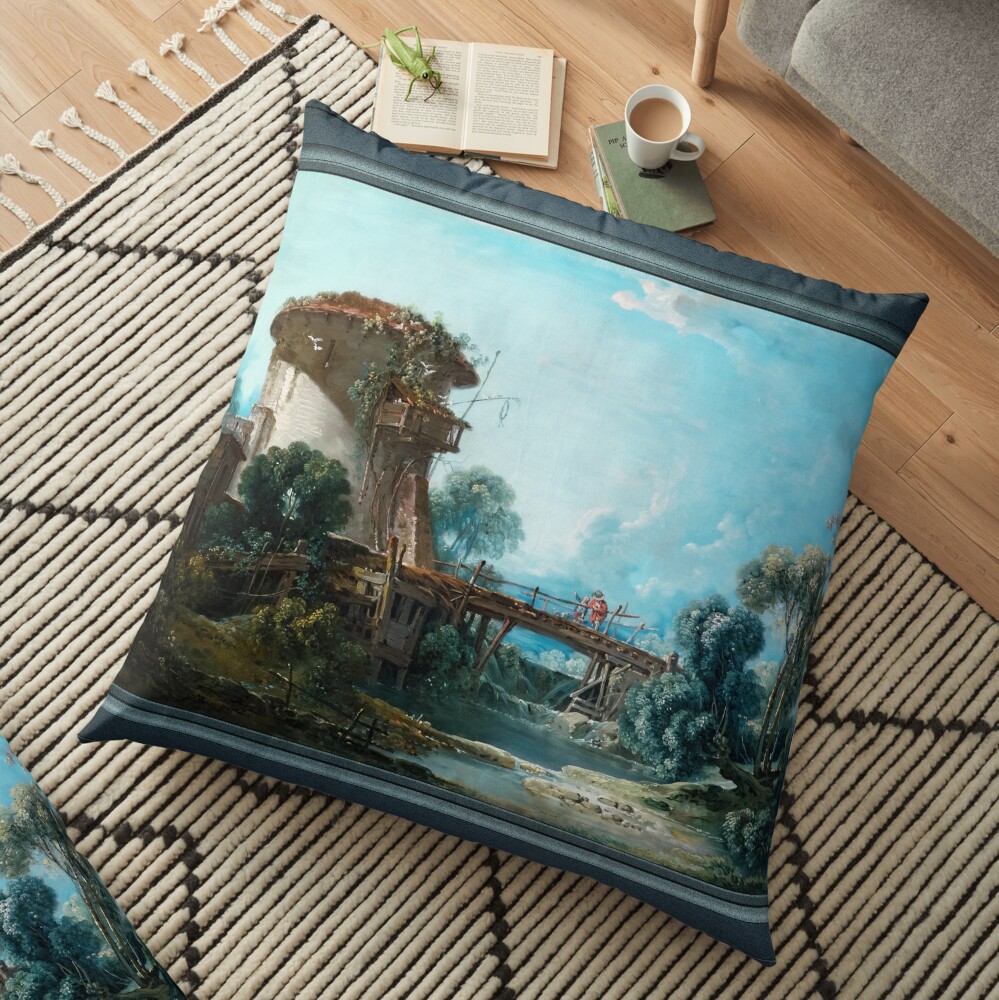
En “The Dovecote,” the central focus is a tranquil rural setting that captures the idyllic beauty of nature. A man and a woman are depicted in the foreground, casually conversing, while standing on a rustic wooden bridge. The bridge spans a calm river, which reflects the soft hues of the sky and surrounding greenery. The figures are dressed in fashionable, yet simple 18th-century attire, their clothing bright and vibrant, contrasting with the natural tones around them. Their relaxed postures and the peacefulness of their interaction suggest a moment of quiet harmony in the countryside.
The scene’s setting, a rural landscape dotted with trees, gently rolling hills, and a distant stone structure—possibly a dovecote itself—evokes a pastoral life of leisure. The man and woman seem to be at ease in this bucolic world, their peaceful presence adding to the calm atmosphere of the composition.
Objects and Symbols
En la fono, we see a distinctively constructed stone dovecote, a structure used for housing doves or pigeons. This is where the painting’s title comes from, symbolizing perhaps a quiet, secluded part of nature that complements the tranquil lives of the individuals depicted. The dovecote is placed prominently on the left side of the canvas, with the trees encircling it, drawing attention to its importance as both a physical object and a symbol of rural life.
The wooden bridge that spans the river adds another layer of meaning to the painting. It not only serves as a functional element connecting two areas but also becomes a metaphorical bridge between the viewer and the tranquil world of the figures, inviting them into a space of calm contemplation. The landscape itself, with its harmonious blend of natural and architectural elements, underscores the Rococo fascination with combining beauty and nature.
Aldone, the soft, delicate brushwork captures the lush greenery, the water’s reflective qualities, and the atmosphere’s lightness, evoking a sense of serenity. The birds in flight above the dovecote add to the mood of freedom and peace, echoing the peaceful existence of the figures below.
Tereno kaj Medio
The terrain is depicted with lush, vibrant greenery, characteristic of the Rococo love for lush nature. The rolling hills in the distance are soft and inviting, bathed in a warm golden light that suggests either the early morning or late afternoon sun. The gentle curves of the hills lead the eye toward the horizon, giving a sense of depth to the landscape.
The flowing water at the bottom of the scene is tranquil, its surface gently disturbed by the occasional ripple, mirroring the calmness of the figures. The trees lining the riverbank are rich with foliage, their forms rounded and almost soft, contributing to the overall sense of gentleness that pervades the painting. The sky above is expansive and vibrant, painted with light, airy blues, and soft cloud formations, adding to the tranquil, almost dreamlike atmosphere of the scene.
Materialoj kaj tekniko
Boucher’s signature technique of soft brushstrokes is evident throughout “The Dovecote.” The composition feels effortlessly fluid, with no harsh lines or contrasts, reflecting the Rococo aesthetic’s preference for lightness and grace. The use of light and shadow is subtle, contributing to the overall softness of the piece. The warm golden light that bathes the scene enhances the mood of serenity and the sense of timeless beauty.
Boucher’s handling of color is masterful. The contrast between the lively tones of the figures’ clothing and the natural greens and blues of the environment draws the viewer’s attention to the human subjects while still maintaining a balanced, harmonia komponado. The vibrancy of the figures’ attire, with rich reds and muted yellows, echoes the playfulness and elegance of the Rococo period, where fashion and art were inextricably linked.
Stilo, Temo, kaj humoro
“The Dovecote” exemplifies the Rococo style, characterized by its focus on lightness, Eleganteco, and the beauty of the natural world. The subject matter—the peaceful rural landscape, the leisurely figures, and the idyllic surroundings—speaks to the Rococo fascination with beauty, Naturo, and the simple pleasures of life. There is no sense of urgency or conflict in the painting; prefere, the viewer is invited into a world where time slows down and the natural world offers peace and harmony.
The mood of the painting is gentle and soothing, enhanced by the soft color palette, the tranquil water, and the idyllic rural scene. The figures themselves appear content and relaxed, their quiet interaction suggesting a sense of contentment and ease. The painting evokes a sense of nostalgia for a simpler, more peaceful time, free from the concerns of the bustling urban world.
Konkludo
François Boucher’s “The Dovecote” is a quintessential Rococo painting that encapsulates the period’s love for nature, beleco, and refined leisure. With its serene landscape, tender figures, and masterful technique, it invites the viewer into a world of tranquility and grace. The subtle use of symbolism, combined with Boucher’s soft brushwork and vibrant color palette, creates a harmonious composition that remains a delightful representation of 18th-century French art.
Ĉi tio estas readaptita cifereca arta reproduktaĵo de malnovaj majstroj de publika domajna bildo disponebla kiel a tolo presaĵo rete.
Artisto Bio
Informoj Malsupre Derivita De Vikipedio.org
Hejmanto de Parizo, Boucher estis la filo de malpli konata farbisto Nicolas Boucher, kiu donis al li sian unuan artan trejnadon. En la aĝo de dek sep, pentraĵo de Boucher estis admirita de la pentristo François Lemoyne. Lemoyne poste nomumis Boucher kiel sia metilernanto, sed post nur tri monatoj, li iris labori por la gravuristo Jean-François Cars.
En 1720, li gajnis la elitan Grand Prix de Rome por pentrado, sed ne prenis la konsekvencan ŝancon studi en Italio ĝis kvin jaroj poste, pro financaj problemoj ĉe la Reĝa Akademio de Pentrarto kaj Skulptaĵo.[1] Sur lia reveno de studado en Italio li estis konfesita la refonditan Académie de peinture et de sculpture on 24 novembro 1731. Lia akceptpeco (akcepta peco) Estis lia Rinaldo kaj Armida de 1734.
Boucher geedziĝis kun Marie-Jeanne Buzeau en 1733. La paro havis tri infanojn kune. Boucher iĝis fakultatano en 1734 kaj lia kariero akcelis de tiu punkto kiam li estis promociita Profesoro tiam Rektoro de la Akademio, iĝante inspektisto ĉe la Reĝa Gobelins Manufactory kaj finfine ĉefministro Peintre du Roi (Unua Pentristo de la Reĝo) en 1765. Portreto de Marie-Louise O'Murphy ĉ. 1752
Boucher mortis plu 30 majo 1770 en sia naskiĝa Parizo. Lia nomo, kune kun tiu de lia patrono Madame de Pompadour, fariĝis sinonima kun la franca rokoka stilo, kondukante la fratojn Goncourt skribi: “Boucher estas unu el tiuj viroj, kiuj reprezentas la guston de jarcento, kiuj esprimas, personigi kaj enkorpigi ĝin.”
Boucher estas fama pro diri ke naturo estas “tro verda kaj malbone lumigita” (tro verda kaj malbone lumigita).
Boucher estis asociita kun la gemogravuristo Jacques Guay, kiun li instruis desegni. Li ankaŭ mentores la morav-aŭstran farbiston Martin Ferdinand Quadal same kiel la novklasikan farbiston Jacques-Louis David en 1767.[4] Poste, Boucher faris serion de desegnaĵoj de verkoj de Guay kiujn sinjorino de Pompadour tiam gravuris kaj distribuis kiel bele ligita volumeno al favoritaj korteganoj.