

Allegory of the Marriage of Emperor Ferdinand II and Eleanor Gonzaga
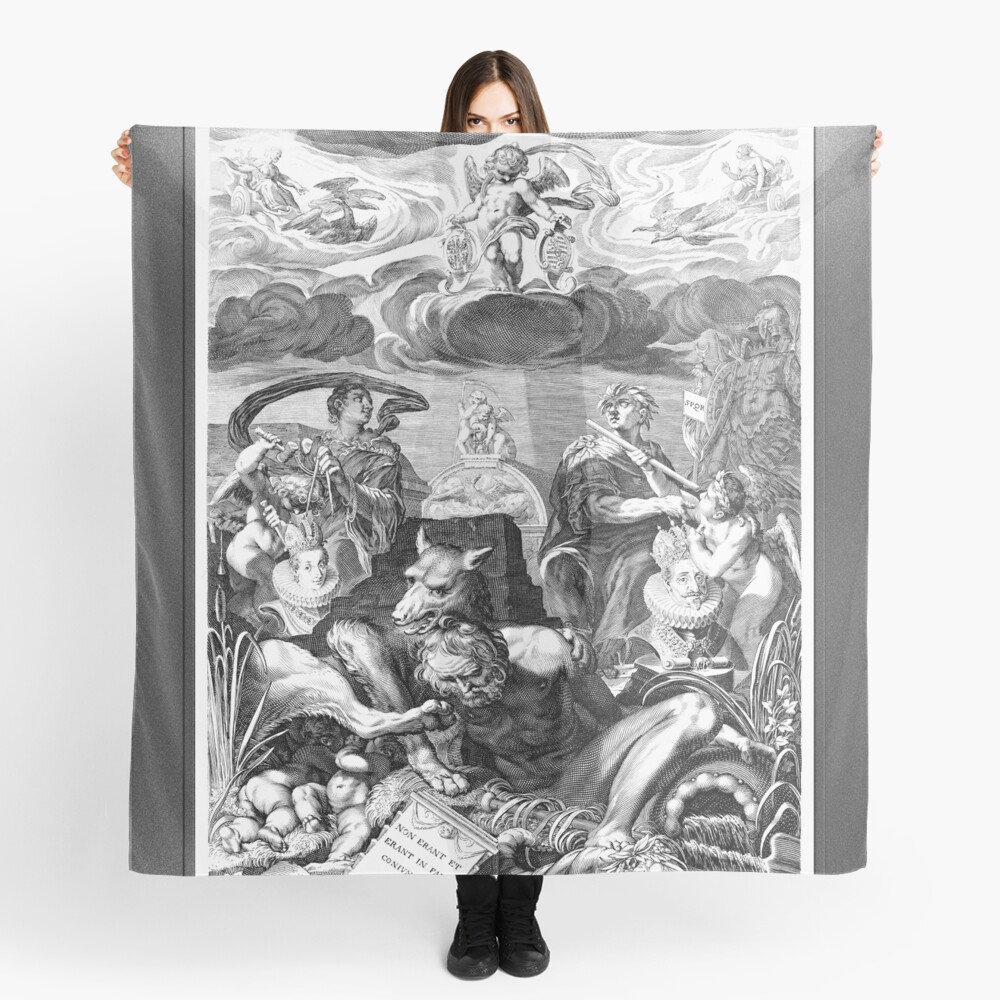
The artwork you’ve shared is titled “Allegory of the Marriage of Emperor Ferdinand II and Eleanor Gonzaga” and was created by Flemish engraver Aegidius Sadeler II (1570 – 1629). It features a complex and intricate depiction of the union between Emperor Ferdinand II of the Holy Roman Empire and Eleanor Gonzaga, incorporating allegorical themes, detailed symbolism, and a Baroque-era visual style.
Overview of the Artwork
This engraving, produced by Aegidius Sadeler II; who was the imperial engraver of Rudolf II, Matthias en Ferdinand II, illustrates a grand and multi-layered allegory centered around the marriage of Emperor Ferdinand II and Eleanor Gonzaga. The scene is filled with rich symbolism, combining human figures, mythological elements, and imperial motifs, all contributing to the deeper narrative of political alliance, krêft, en godlike geunst.
Ynhâldsopjefte
Haadûnderwerp en komposysje
At the heart of the gravuere, the imperial couple, Ferdinand II and Eleanor Gonzaga, are represented symbolically, though their actual likenesses are not the focus. Ynstee, the figures surrounding them embody the virtues and divine forces that celebrate their marriage and its significance. Links, the personification of the earth and fertility is depicted, with abundant crops, a strong symbol of the fertile union between the two rulers. Nei rjochts, the divine realm is portrayed with angels, emphasizing the spiritual blessings bestowed upon the marriage.
Figures and Symbolism
The engraver has skillfully arranged the figures to guide the viewer’s eye across the narrative. Op de foargrûn, we see a muscular man with the head of a beast, a likely reference to the untamed forces that the imperial couple must tame and govern. Surrounding this figure are various allegorical representations, including gods and virtues, further enhancing the theme of the emperor and empress’ reign over both the earthly and divine realms.
The angel in the center of the composition holds a symbol of divine justice, perhaps reflecting the emperor’s role as a ruler blessed by heaven to uphold law and order. The celestial figures, with their flowing robes and dynamic poses, evoke the grandeur and divine right associated with the imperial family, while the serene and composed figures below ground symbolize stability, peace, and the benefits of imperial rule.
Terrein en eftergrûn
The engraving features a dramatic backdrop that splits the celestial and earthly realms. Boppe, a tumultuous sky filled with swirling clouds suggests the power of the heavens, while below, the more grounded elements, such as the earthy foliage and rich textures, represent the earthly realm. The contrast between the divine and terrestrial realms is amplified by the figures’ positions, with celestial beings floating above and earthly symbols being firmly planted below.
The top portion of the artwork contains several figures of angels who convey movement, bringing a sense of divine purpose to the scene. One of the angels, holding a scroll, likely symbolizes the heavenly mandate that supports the marriage of the emperor and his empress. The angel is framed by clouds, further enhancing the ethereal and otherworldly nature of the divine realm.
Materiaal en technyk
As an engraving, the material of choice is metal or wood, and the process involves intricate carving to create delicate lines and textures that convey the fine details of the figures and the composition. Aegidius Sadeler II’s work is known for its fine craftsmanship and meticulous attention to detail. The sharp lines and contrasts between light and shadow add depth and texture to the image, imbuing it with a sense of volume and movement. The smooth flow of drapery and the detailed anatomy of the human forms showcase Sadeler’s skill in replicating the human figure with precision.
The use of chiaroscuro—the contrast between light and dark—enhances the dramatic effect, adding a heightened sense of realism while maintaining the idealized forms typical of the Baroque period. This technique draws the viewer’s focus to the central allegorical figures, which are bathed in light, while the background remains in darker tones, creating a sense of depth and focus.
Styl, Tema, en Mood
The style of this engraving is clearly Baroque, evident in the dramatic use of light, intense emotion, and the complex, layered composition. The figures are dynamic, full of energy, and rendered with exaggerated realism, reflecting the grandeur of the Baroque period. The figures’ gestures and expressions convey the heightened emotional intensity that characterizes much of the Baroque art, making the scene not just a depiction of a marriage but a celebration of divine power, oarder, and the emperor’s role as both a ruler and a divine figure.
The theme of this engraving is centered around the union of Ferdinand II and Eleanor Gonzaga, viewed through an allegorical lens. The marriage is not just a political alliance but a sacred bond that brings divine and earthly blessings. The marriage is framed as a cosmic event, linking the rulers to the heavens and nature. The celestial figures serve as intermediaries between the emperor and the divine, emphasizing the sanctity and importance of the union.
The mood of the artwork is serious and grand, reflecting the monumental nature of imperial power and divine favor. There is a sense of celebration, but also a recognition of the weight of the responsibility that comes with ruling. The figures of angels and gods seem to be both celebrating and overseeing the marriage, indicating that the rulers are under divine protection but also subject to heavenly scrutiny.
Konklúzje
Yn totaal, de “Allegory of the Marriage of Emperor Ferdinand II and Eleanor Gonzaga” by Aegidius Sadeler II is a masterful engraving that combines allegory, symbolyk, and Baroque artistry to convey the significance of the royal marriage. Through dynamic composition, yngewikkelde details, and profound symbolism, Sadeler invites viewers to reflect on the spiritual and political ramifications of this union. The artwork is a testament to the power and divine mandate of the ruling couple and to the complex relationship between earthly sovereignty and divine will.
Dit is in remastered digitale keunst âlde masters reproduksje fan in byld yn it iepenbier domein dat is beskikber as in canvas print online.
Artist Bio ôflaat fan Wikipedia.org
Aegidius wie part fan de famylje Sadeler, dy't de grutste en wierskynlik de meast súksesfolle fan 'e Flaamske graveurs fan 'e lettere 16e en 17e iuw wiene dy't de dominante Noard-Jeropeeske printmakkers waarden; as keunstner en útjouwers.
Hy wie de soan fan Emmanuel de Sayeleer en de neef fan Aegidius I, Jan I by Raphael Sadeler; en waard oplaat troch syn omke Jan I; lid wurde fan it Antwerpse Gilde fan St. Luke yn 1589.
Hy wurke yn München, Dútslân út oer 1590 nei 1593, doe yn Rome, Itaalje út 1593 nei 1594 en dan werom nei München út 1594 – 1597.
Yn 1597 hy ferhuze nei Praach, Tsjechje wêr't hy besleat om te fêstigjen en waard de keizerlike graveur fan Rudolf II (1552 – 1612); en makke skilderijen fan 'e aristokrasy en ek gravueres fan keunstwurken fan Bartholomeus Spranger (1546 – 1611), Roelant Savery (1576 – 1639), Hans fan Aken (1552 – 1615), Giuseppe Arcimboldo (1527 – 1593), en skulptueren fan Giambologna (1529 – 1608) en Adriaen de Vries (1556 – 1626).
Nei it ferstjerren fan Rudolf II, hy soe tsjinje as de keizerlike graveur ûnder beide keizers Matthias (1557 – 1619) en Ferdinand II (1578 – 1637).