

אנג'ליקה ומדורו
אנג'ליקה ומדורו: A Rococo Dreamscape by François Boucher
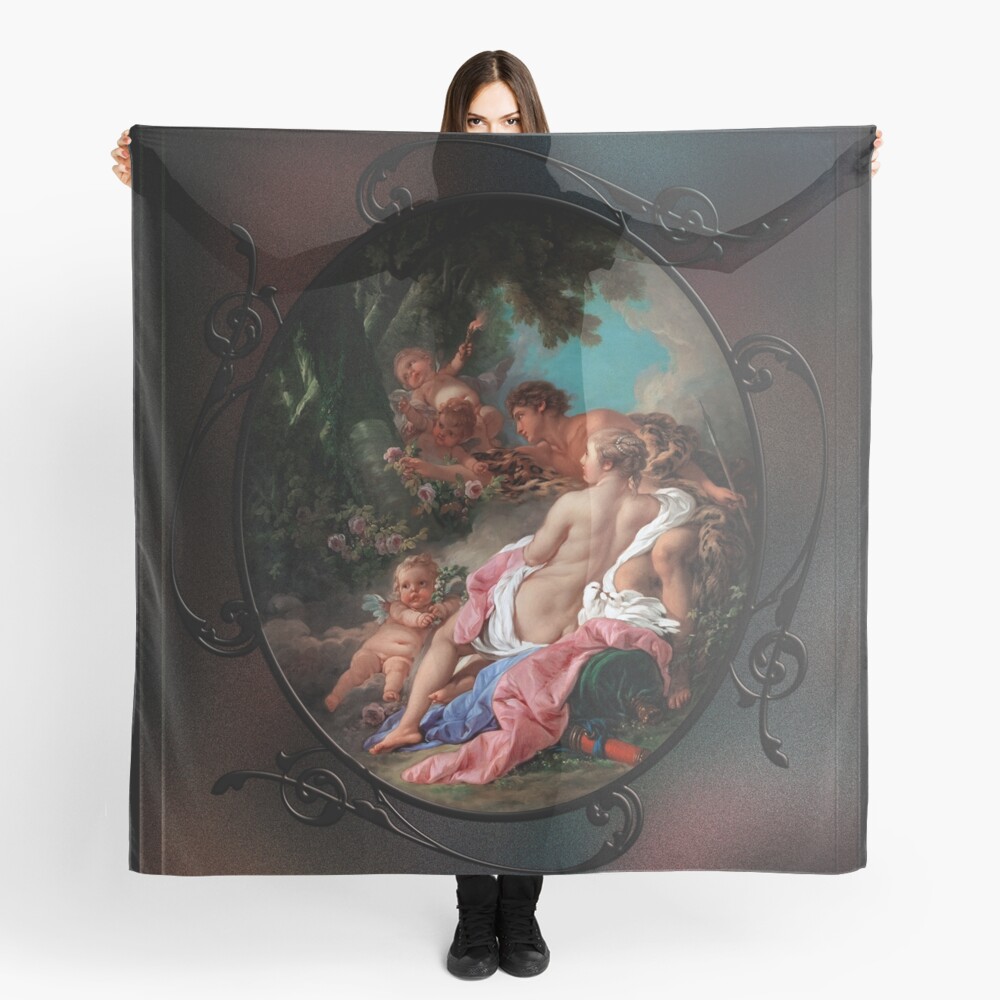
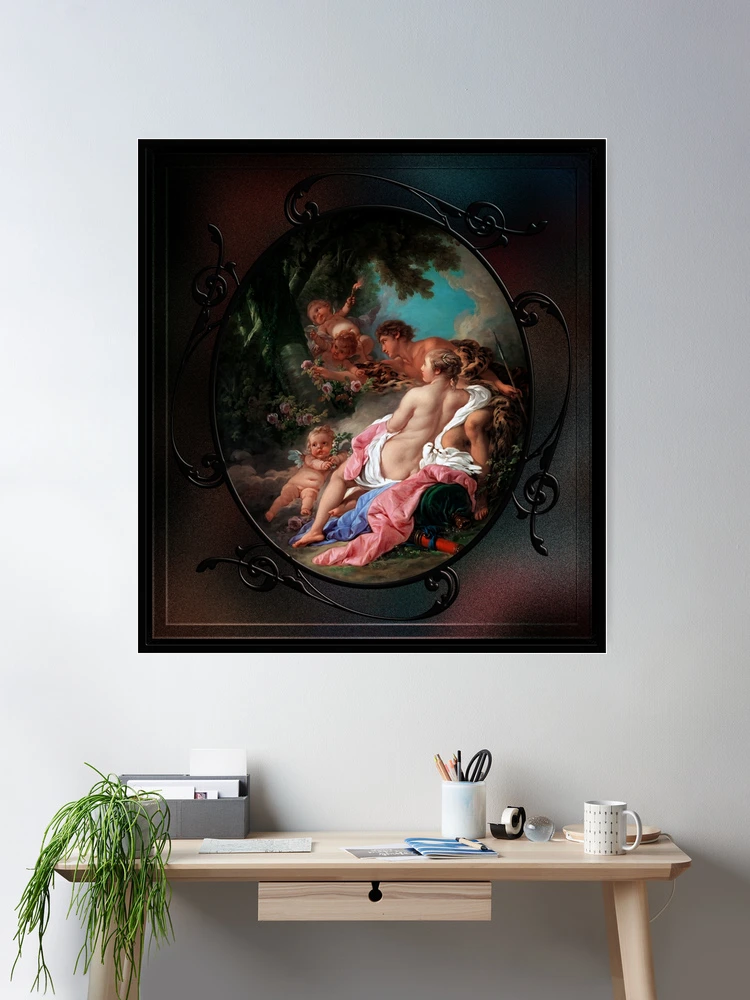
פרנסואה בושר’s “Angelica and Medoro,"צבוע סביב 1763, exemplifies the height of the Rococo style in French art. This captivating work, currently housed at the Musée du Louvre, transports viewers to a realm of idyllic beauty and sensual delight, characteristic of Boucher’s artistic vision. The painting depicts a scene drawn from Ariosto’s epic poem Orlando Furioso, where Angelica, a beautiful pagan princess, has fallen asleep in a woodland glade, attended by playful putti and the captive knight Medoro.
תוכן העניינים
הרמוניה קומפוזיציונית & הקשר עלילתי
The composition is carefully orchestrated to create a sense of harmonious balance and visual pleasure. Boucher employs a pyramidal structure, with Angelica at its apex, drawing the eye immediately to her figure. The lush foliage forms a verdant backdrop, framing the central figures and enhancing the feeling of seclusion and enchantment. Medoro sits beside Angelica, his gaze fixed upon her face, conveying a sense of tender devotion. He is partially draped in armor, hinting at his former role as a warrior, now softened by his proximity to the sleeping princess. The scene unfolds within a dense forest setting; trees with vibrant green foliage create an immersive atmosphere.
Figures and Their Representation
Angelica’s portrayal embodies the Rococo ideal of feminine beauty: soft skin, שיער גולש, and a languid pose that suggests both vulnerability and allure. השמלה שלה, rendered in delicate pinks and whites, cascades around her form, emphasizing her graceful contours. The artist’s masterful use of light and shadow sculpts her body, highlighting its curves and creating a sense of ethereal beauty. Medoro is depicted with a more muscular physique, yet his posture is relaxed and gentle as he gazes at Angelica. His attire blends elements of armor and softer fabrics, reflecting his transition from warrior to lover.
The Role of the Putti
Adding to the scene’s whimsical charm are several putti – cherubic figures often associated with love and playfulness in Renaissance and Baroque art. These small figures frolic around Angelica and Medoro, scattering flowers and engaging in playful antics. Their presence reinforces the painting’s overall atmosphere of carefree joy and sensual indulgence. One putto sits at Angelica’s feet, gently touching her hand, while others playfully toss blossoms into the air. The putti are rendered with a delicate touch, their forms soft and rounded, further contributing to the painting’s aesthetic appeal.
Boucher’s Artistic Technique & סִגְנוֹן
Boucher’s technique is characterized by his fluid brushstrokes, subtle gradations of color, and an emphasis on texture. He skillfully employs sfumato, a technique popularized by Leonardo da Vinci, to soften edges and create a hazy, dreamlike quality. The colors are rich and vibrant, with a particular focus on pastel hues – pinks, בלוז, יְרָקוֹת, and creams – that evoke the atmosphere of a sun-drenched garden. Boucher’s style is distinctly Rococo; it prioritizes elegance, חן, and sensual pleasure over realism or historical accuracy. He was known for his decorative paintings intended to adorn the homes of wealthy patrons, and “Angelica and Medoro” perfectly embodies this aesthetic.
אוֹר & אַטמוֹספֵרָה
התאורה פנימה “אנג'ליקה ומדורו” is soft and diffused, creating a gentle glow that bathes the scene in warmth. The light source appears to be coming from above, illuminating Angelica’s face and highlighting her delicate features. This creates a sense of intimacy and tranquility, drawing the viewer into the idyllic setting. The atmospheric perspective – the gradual blurring of details in the background – enhances the feeling of depth and distance, further immersing the viewer in the painting’s world.
רושם כללי & מוֹרֶשֶׁת
“אנג'ליקה ומדורו” is more than just a depiction of a literary scene; it’s an embodiment of Rococo ideals—beauty, הֲנָאָה, and escapism. Boucher’s masterful technique and evocative imagery have made this painting one of his most celebrated works, and a quintessential example of the Rococo style. It continues to captivate audiences with its exquisite beauty and timeless appeal, offering a glimpse into the world of 18th-century French art and culture. The work’s enduring popularity stems from its ability to evoke feelings of romance, רוֹגַע, and sensual delight, qualities that remain highly valued even today.
הדגשים דקורטיביים המשמשים ביצירה זו זמינים ב HeritageType
אמן ביו שמקורו Wikipedia.org
יליד פריז, בוצ'ר היה בנו של צייר פחות מוכר ניקולא בושר, שנתן לו את הכשרתו האמנותית הראשונה. בגיל שבע עשרה, ציור של בוצ'ר נערץ על ידי הצייר פרנסואה למוין. למויין מינה מאוחר יותר את בוצ'ר כשוליה שלו, אך לאחר שלושה חודשים בלבד, הוא הלך לעבוד אצל החרטה ז'אן פרנסואה מכוניות.
ב 1720, הוא זכה בגרנד פרי דה רומא העילית על ציור, אך לא ניצל את ההזדמנות כתוצאה מכך ללמוד באיטליה אלא כעבור חמש שנים, בגלל בעיות כלכליות באקדמיה המלכותית לציור ופיסול.[1] בשובו מלימודיו באיטליה הוא התקבל לפסל האקדמי המחודש והמחודש של 24 נוֹבֶמבֶּר 1731. קטע הקבלה שלו (חתיכת קבלה) היה רינאלדו וארמידה שלו 1734.
בושה התחתן עם מארי-ז'אן בוזו בשנת 1733. לזוג נולדו שלושה ילדים יחד. בוצ'ר הפך לחבר סגל ב 1734 והקריירה שלו הואצה מנקודה זו כשהוא הועלה לפרופסור אז לרקטור האקדמיה, להיות מפקח במפעל רויאל גובלינס ולבסוף ראש הממשלה פיינטרה דו רועי (צייר המלך הראשון) ב 1765. דיוקנה של מארי לואיז או'מורפי ג. 1752
בוצ'ר מת ביום 30 מאי 1770 במולדתו פריז. השם שלו, יחד עם זו של פטרונו מאדאם דה פומפדור, הפך לשם נרדף לסגנון הרוקוקו הצרפתי, מה שהוביל את האחים גונקורט לכתוב: “בוצ'ר הוא אחד מאותם גברים המייצגים את טעם המאה, שמבטאים, לגלם ולגלם אותו.”
בוצ'ר מפורסם באומרו כי הטבע הוא “ירוק מדי ולא מואר” (ירוק מדי ותאורה גרועה).
בוצ'ר היה מזוהה עם חרט אבן החן ז'אק גואי, את מי הוא לימד לצייר. הוא גם הדריך את הצייר המורבי-אוסטרי מרטין פרדיננד קוודל כמו גם את הצייר הניאו-קלאסי ז'אק לואי דייויד 1767.[4] מאוחר יותר, בוצ'ר ערך סדרת רישומים של יצירות מאת גואי שאותם חרטה מאדאם דה פומפדור והפיצה בהיקף כרוך היטב לחצרות מועדפות.