

Angelica e Medoro
Angelica e Medoro: A Rococo Dreamscape by François Boucher
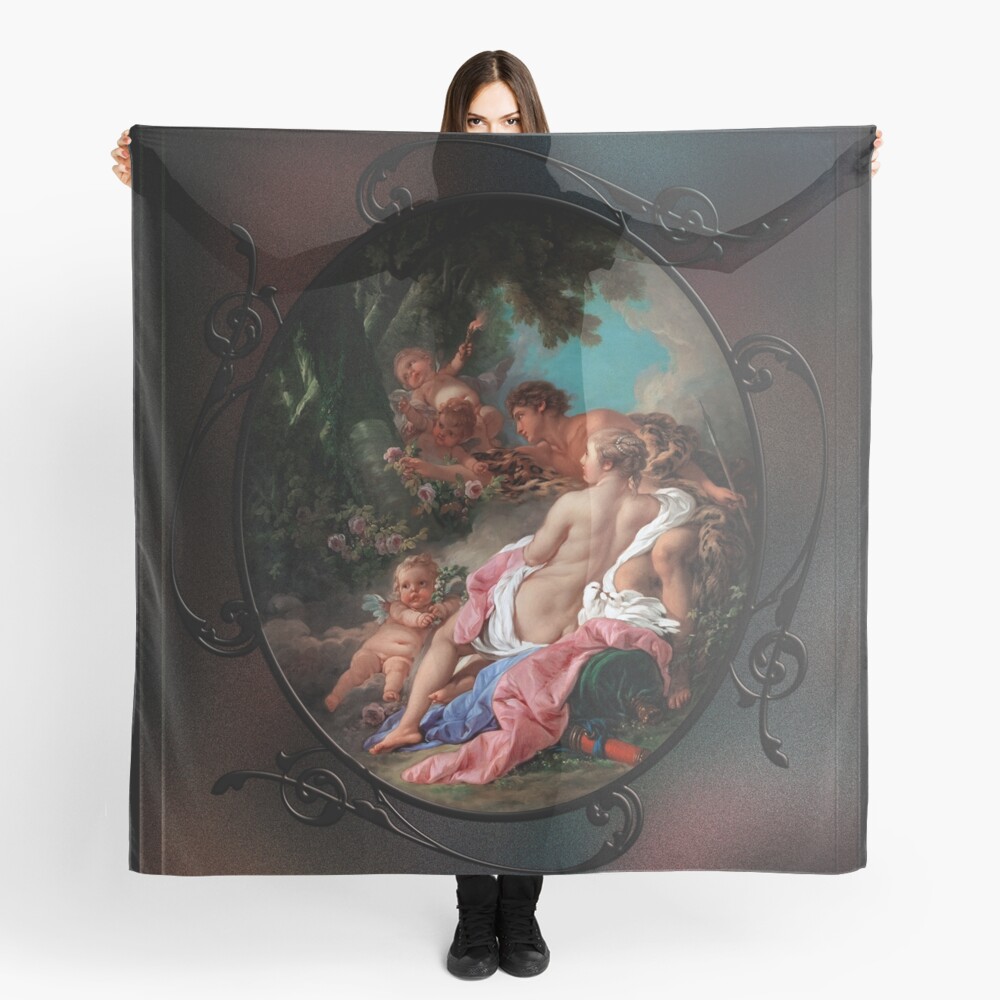
Francois Boucher’s “Angelica and Medoro,"dipinto in giro 1763, exemplifies the height of the Rococo style in French art. This captivating work, currently housed at the Musée du Louvre, transports viewers to a realm of idyllic beauty and sensual delight, characteristic of Boucher’s artistic vision. The painting depicts a scene drawn from Ariosto’s epic poem Orlando Furioso, where Angelica, a beautiful pagan princess, has fallen asleep in a woodland glade, attended by playful putti and the captive knight Medoro.
Sommario
Armonia compositiva & Narrative Context
The composition is carefully orchestrated to create a sense of harmonious balance and visual pleasure. Boucher employs a pyramidal structure, with Angelica at its apex, drawing the eye immediately to her figure. The lush foliage forms a verdant backdrop, framing the central figures and enhancing the feeling of seclusion and enchantment. Medoro sits beside Angelica, his gaze fixed upon her face, conveying a sense of tender devotion. He is partially draped in armor, hinting at his former role as a warrior, now softened by his proximity to the sleeping princess. The scene unfolds within a dense forest setting; trees with vibrant green foliage create an immersive atmosphere.
Figures and Their Representation
Angelica’s portrayal embodies the Rococo ideal of feminine beauty: soft skin, Capelli fluenti, and a languid pose that suggests both vulnerability and allure. Il suo vestito, rendered in delicate pinks and whites, cascades around her form, emphasizing her graceful contours. The artist’s masterful use of light and shadow sculpts her body, highlighting its curves and creating a sense of ethereal beauty. Medoro is depicted with a more muscular physique, yet his posture is relaxed and gentle as he gazes at Angelica. His attire blends elements of armor and softer fabrics, reflecting his transition from warrior to lover.
The Role of the Putti
Adding to the scene’s whimsical charm are several putti – cherubic figures often associated with love and playfulness in Renaissance and Baroque art. These small figures frolic around Angelica and Medoro, scattering flowers and engaging in playful antics. Their presence reinforces the painting’s overall atmosphere of carefree joy and sensual indulgence. One putto sits at Angelica’s feet, gently touching her hand, while others playfully toss blossoms into the air. The putti are rendered with a delicate touch, their forms soft and rounded, further contributing to the painting’s aesthetic appeal.
Boucher’s Artistic Technique & Stile
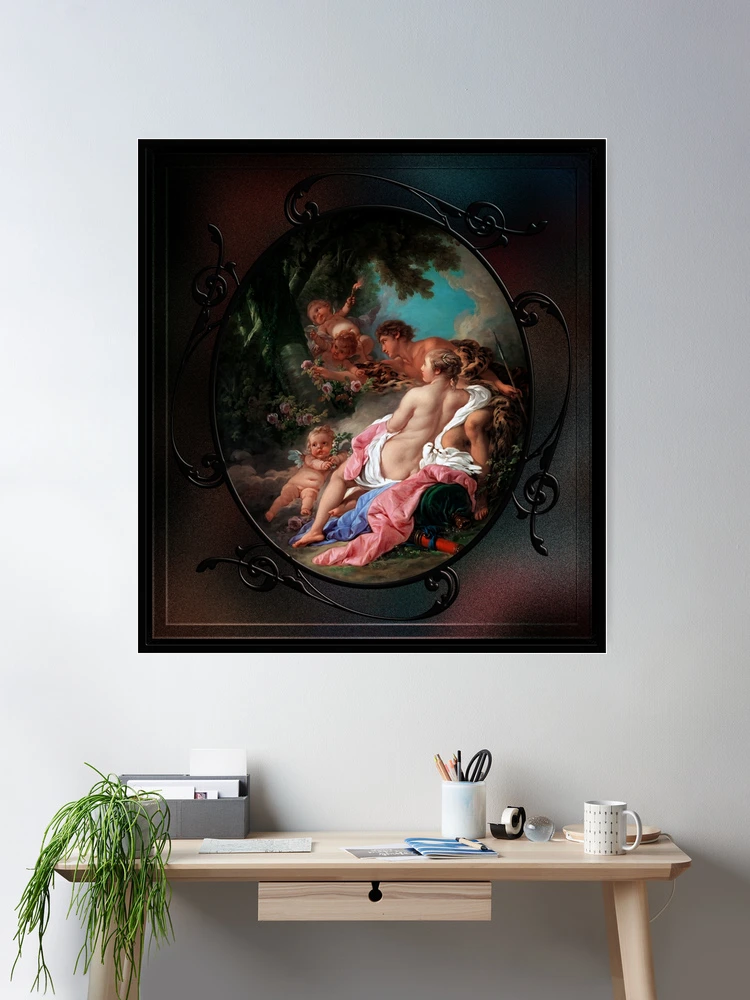
Boucher’s technique is characterized by his fluid brushstrokes, subtle gradations of color, and an emphasis on texture. He skillfully employs sfumato, a technique popularized by Leonardo da Vinci, to soften edges and create a hazy, dreamlike quality. The colors are rich and vibrant, with a particular focus on pastel hues – pinks, blues, verdi, and creams – that evoke the atmosphere of a sun-drenched garden. Boucher’s style is distinctly Rococo; it prioritizes elegance, adornare, and sensual pleasure over realism or historical accuracy. He was known for his decorative paintings intended to adorn the homes of wealthy patrons, and “Angelica and Medoro” perfectly embodies this aesthetic.
Leggero & Atmosfera
L'illuminazione in “Angelica e Medoro” is soft and diffused, creating a gentle glow that bathes the scene in warmth. The light source appears to be coming from above, illuminating Angelica’s face and highlighting her delicate features. This creates a sense of intimacy and tranquility, drawing the viewer into the idyllic setting. The atmospheric perspective – the gradual blurring of details in the background – enhances the feeling of depth and distance, further immersing the viewer in the painting’s world.
Impressione generale & Eredità
“Angelica e Medoro” is more than just a depiction of a literary scene; it’s an embodiment of Rococo ideals—beauty, piacere, and escapism. Boucher’s masterful technique and evocative imagery have made this painting one of his most celebrated works, and a quintessential example of the Rococo style. It continues to captivate audiences with its exquisite beauty and timeless appeal, offering a glimpse into the world of 18th-century French art and culture. The work’s enduring popularity stems from its ability to evoke feelings of romance, tranquillità, and sensual delight, qualities that remain highly valued even today.
Gli accenti decorativi utilizzati in questo pezzo sono disponibili su HeritageType
Biografia dell'artista derivata da Wikipedia.org
Nativo di Parigi, Boucher era il figlio di un pittore meno noto Nicolas Boucher, che gli diede la sua prima formazione artistica. All'età di diciassette anni, un dipinto di Boucher è stato ammirato dal pittore François Lemoyne. Lemoyne in seguito nominò Boucher suo apprendista, ma dopo soli tre mesi, andò a lavorare per l'incisore Jean-François Cars.
Nel 1720, ha vinto l'elite Grand Prix de Rome per la pittura, ma non colse la conseguente opportunità di studiare in Italia fino a cinque anni dopo, a causa di problemi finanziari alla Royal Academy of Painting and Sculpture.[1] Al ritorno dagli studi in Italia viene ammesso alla rifondata Académie de peinture et de sculpture il 24 novembre 1731. Il suo pezzo di ricezione (pezzo di ricezione) era il suo Rinaldo e Armida di 1734.
Boucher ha sposato Marie-Jeanne Buzeau in 1733. La coppia ha avuto tre figli insieme. Boucher è diventato un membro della facoltà in 1734 e la sua carriera da questo punto accelerò quando fu promosso Professore e poi Rettore dell'Accademia, diventando ispettore presso la Royal Gobelins Manufactory e infine Premier Peintre du Roi (Primo pittore del re) nel 1765. Ritratto di Marie-Louise O'Murphy c. 1752
Boucher è morto il 30 Maggio 1770 nella sua nativa Parigi. Il suo nome, insieme a quello della sua mecenate Madame de Pompadour, era diventato sinonimo dello stile rococò francese, portando i fratelli Goncourt a scrivere: “Boucher è uno di quegli uomini che rappresentano il gusto di un secolo, chi esprime, personificarlo e incarnarlo.”
Boucher è famoso per aver detto che la natura è “troppo verde e poco illuminato” (troppo verde e male illuminato).
Boucher era associato all'incisore di pietre preziose Jacques Guay, cui ha insegnato a disegnare. Fu anche mentore del pittore moravo-austriaco Martin Ferdinand Quadal e del pittore neoclassico Jacques-Louis David in 1767.[4] Dopo, Boucher ha realizzato una serie di disegni di opere di Guay che Madame de Pompadour ha poi inciso e distribuito come un volume finemente rilegato ai cortigiani favoriti.