

Dealbh de Anne-Marie de Mailly-Nesle
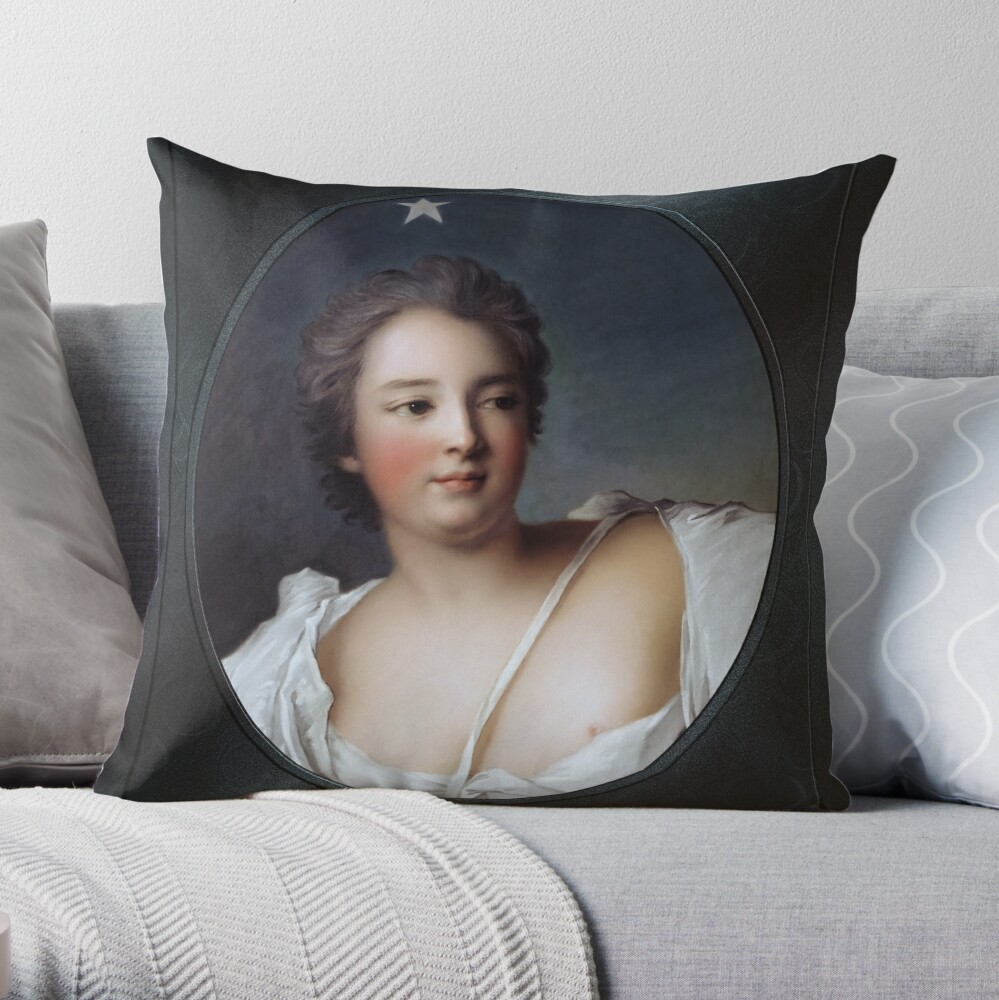
“Dealbh de Anne-Marie de Mailly-Nesle (1717 – 1744), Marquise de La Tournelle, an dèidh sin Ban-diùc Châteauroux, en Point du jour” is a stunning representation of 18th-century French portraiture, created by an unknown artist from the School of French Art. The painting encapsulates the essence of French aristocracy during the reign of Louis XV, showcasing Anne-Marie de Mailly-Nesle in her youthful beauty and serene grace. Rugadh e a-steach 1717, Anne-Marie was the marquise de La Tournelle and later became the duchesse de Châteauroux, the mistress of Louis XV. An dealbh seo, dating from the 18th century, captures her in the early morning light, a subject typically associated with the Romantic ideal of femininity and purity, commonly known as the “Point du jour.”
Clàr-innse
Subject and Expression
The subject of the portrait is Anne-Marie de Mailly-Nesle, air a nochdadh ann am bog, intimate pose that suggests both regal dignity and personal allure. She is presented in a loose, flowing white gown, which contrasts with the more rigid, structured attire often associated with nobility of the period. An gùn, delicate and understated, emphasizes her youthful beauty, while her tousled hair, loosely arranged around her head, further enhances this natural elegance. Her expression is calm yet somewhat introspective, conveying a serene confidence typical of royal portraiture but with an added layer of vulnerability that humanizes the figure.
The artist has chosen to highlight the subject’s face with exceptional care, focusing on her soft features: the slightly tilted head, her large eyes that seem to gaze gently out of the frame, agus rèidh a craiceann, rendered in warm, delicate tones. This focus on the face captures both her beauty and the nobility she embodied in life, offering a glimpse of the softer side of court life, which often emphasized restraint and composure.
Suidheachadh agus cumadh
The background of the portrait is sparse and unobtrusive, focusing the viewer’s attention entirely on the subject. A faint star in the upper portion of the painting symbolizes the “Point du jour” no “moment of dawn,” a symbolic reference to Anne-Marie’s beauty, Òigridh, and position as an important figure in the French court. The simplicity of the background allows the viewer to focus on the intricacies of Anne-Marie’s attire and expression, as well as the subdued yet refined detailing of her features.
The composition follows the classical conventions of portraiture from the era, with Anne-Marie positioned slightly off-center, creating a sense of balanced asymmetry. This positioning invites the viewer’s eye to flow gently around the figure, ensuring that the focus remains on her while offering subtle visual interest through the soft folds of her gown, which are carefully arranged to imply both movement and structure. The artist has paid particular attention to the light in the composition, with a soft, glowing illumination that enhances the softness of the flesh tones and accentuates the delicate nature of Anne-Marie’s appearance.
Stuthan agus innleachd
The artist has employed traditional oil paints to capture the nuances of texture and light. The brushwork is delicate and refined, with careful blending of tones to create a smooth, almost porcelain-like effect on the skin. The drapery of Anne-Marie’s gown is rendered in intricate detail, with each fold meticulously painted to suggest the weight and movement of the fabric. The artist has also used shading expertly, particularly around the subject’s face, to create a sense of depth and volume, as well as to highlight the subtle play of light and shadow.
Cleachdadh dathan sàmhach, such as soft pinks, gealaichean, agus gorman bàn, further enhances the overall serene and gentle atmosphere of the portrait. The background is a gradient of light, soft hues that allow Anne-Marie’s figure to stand out without distraction. The subtle use of these colors contributes to the mood of quiet elegance and understated beauty.
Mood agus cuspair
The mood of the painting is one of calm introspection and refined beauty, typical of French aristocratic portraits of the period. It reflects a sense of aristocratic dignity and poise but does so with a softness and delicacy that makes the subject appear approachable rather than distant. There is a serene, almost ethereal quality to the portrait, which is heightened by the use of soft lighting and the absence of a busy background. The theme of dawn or “Point du jour” is central to the work, representing not only Anne-Marie’s beauty but also the ideal of femininity as a source of light and renewal.
The theme is consistent with the Rococo style of the time, which often celebrated beauty, aotromachd, agus ath-leasachadh. Àrainneachd an dealbh, with its emphasis on the purity of the subject and the soft play of light, speaks to the Rococo’s affinity for grace and beauty without the harshness of reality. Anne-Marie is portrayed not only as a historical figure but as a symbol of the ideals of the time: àilleachd òige, aristocratic poise, and the fleeting nature of life at the French court.
Co-dhùnadh
“Dealbh de Anne-Marie de Mailly-Nesle” is a striking example of 18th-century French portraiture, capturing the timeless beauty and elegance of Anne-Marie de Mailly-Nesle in the context of the French aristocracy. Taisbeanadh sgileil an neach-ealain de fheartan fìnealta a’ chuspair, soillseachadh bog a h-aghaidh, agus tha samhlaidheachd seòlta an latha an-diugh uile ag obair còmhla gus dealbh a chruthachadh a tha a’ dol thairis air riochdachadh neach fa-leth. Is e pìos a th’ ann a tha a’ bruidhinn air na cuspairean as motha mu bhòidhchead, boireannachd, agus gràs uaislean, neo-bhàsmhor Anne-Marie ann am mionaid de mheòrachadh sàmhach.
Mun obair ealain
Dealbh de Anne-Marie de Mailly-Nesle (1717 – 1744), Marquise de La Tournelle, an dèidh sin Ban-diùc Châteauroux, ann an Point du jour 18mh linn le Sgoil Ealain na Frainge.
Is e seo dealbh gearraichte a tha coltach gu bheil e stèidhichte air an dealbh bodhaig slàn a chruthaich Jean-Marc Nattier (1685 – 1766) a-steach 1740 de Anne-Marie de Mailly-Nesle, Marquise de La Tournelle, an dèidh sin Ban-diùc Châteauroux, aig Point du Jour; am fear a b’ òige de na còignear pheathraichean ainmeil de Nesle, ceathrar dhiubh gu bhi 'n am bana-mhaighstirean aig righ Louis XV (1715 – 1774) na Frainge; agus bha i 'n a bana-mhaighstir o 1742 gu 1744.
B’ i nighean Louis de Mailly, Marcas Nesle agus Mailly, Prionnsa na h-orain (1689 – 1767), agus Armande Félice de La Porte Mazarin (1691 – 1729); agus bha a màthair na nighean aig Paul Jules de La Porte, Diùc Mazarin agus La Meilleraye (1666 – 1731), mac an t-soisgeil ainmeil, Mancini Hortense, nighean-bràthar Cardinal Mazarin.
B’ e a peathraichean Louise Julie de Mailly, Mademoiselle de Mailly, Ban-iarla Mailly (1710 – 1751), Pauline Félicité de Mailly, Mademoiselle de Nesle, Marquise de Ventimiglia (1712 – 1741), Diane Adélaide de Mailly, Mademoiselle de Montcavrel, Ban-diùc Lauraguais (1714 – 1769), Hortense Félicité de Mailly, Mademoiselle de Chalon, Marquise de Flavacourt (1715 – 1799); Cha robh Hortense mar aon de Bhan-mhaighstir an Rìgh.
Is e seo ath-riochdachadh seann mhaighstirean ealain didseatach ath-leasaichte de ìomhaigh raon poblach a tha ri fhaighinn mar a clò-bhualadh canabhas air-loidhne.
Gu h-ìosal a thàinig bho Wikipedia.org
Tha Sgoil Ealain na Frainge no mar a chanar ris gu cumanta École des Beaux-Arts a’ toirt a-steach cruinneachadh de sgoiltean ealain buadhach san Fhraing, agus tha e na theirm co-cheangailte ri stoidhle Beaux-Arts ann an ailtireachd agus dealbhadh baile-mòr a shoirbhich san Fhraing agus ann an dùthchannan eile aig deireadh na naoidheamh linn deug agus sa chiad chairteal den fhicheadamh linn.
B’ e an sgoil as ainmeil agus as sine de na sgoiltean sin École nationale supérieure des Beaux-Arts ann am Paris; cò an eachdraidh a chaidh thairis 350 bliadhna, agus is e seo an t-àite far an do rinn mòran den luchd-ealain as fheàrr san Roinn Eòrpa trèanadh.
Tha tùs sgoil Paris a’ leantainn air ais gu 1648, nuair a chaidh an Académie des Beaux-Arts a stèidheachadh leis a’ Chàrdanal Mazarin (1602 – 1661); gus àite a stèidheachadh far am faodadh na h-oileanaich as tàlantach oideachadh ann an tarraing, peantadh, gràbhaladh, deilbheadh, ailtireachd agus meadhanan eile.
Ann an 1863 Napoleon III (1808 – 1873) thug seo neo-eisimeileachd don sgoil bho riaghaltas na Frainge agus dh’atharraich e an t-ainm gu L’École des Beaux-Arts; agus an uairsin a’ tòiseachadh a-staigh 1897, bha cead aig boireannaich a dhol dhan stèidheachd cuideachd.