

Nighean Le Canary Marbh
“Nighean Le Canary Marbh,” painted by French artist Jean-Baptiste Greuze (1725 – 1805), is a poignant and thought-provoking work that reflects the artist’s skill in capturing human emotion through delicate and detailed expressions. Created in the latter half of the 18th century, this piece exemplifies the Rococo and early Neoclassical styles that defined much of Greuze’s career. The emotional intensity of the painting, paired with its subject matter, explores themes of loss, neo-chiontach, and the fragile nature of life, common concerns of the time.
Clàr-innse
Am Prìomh Chuspair
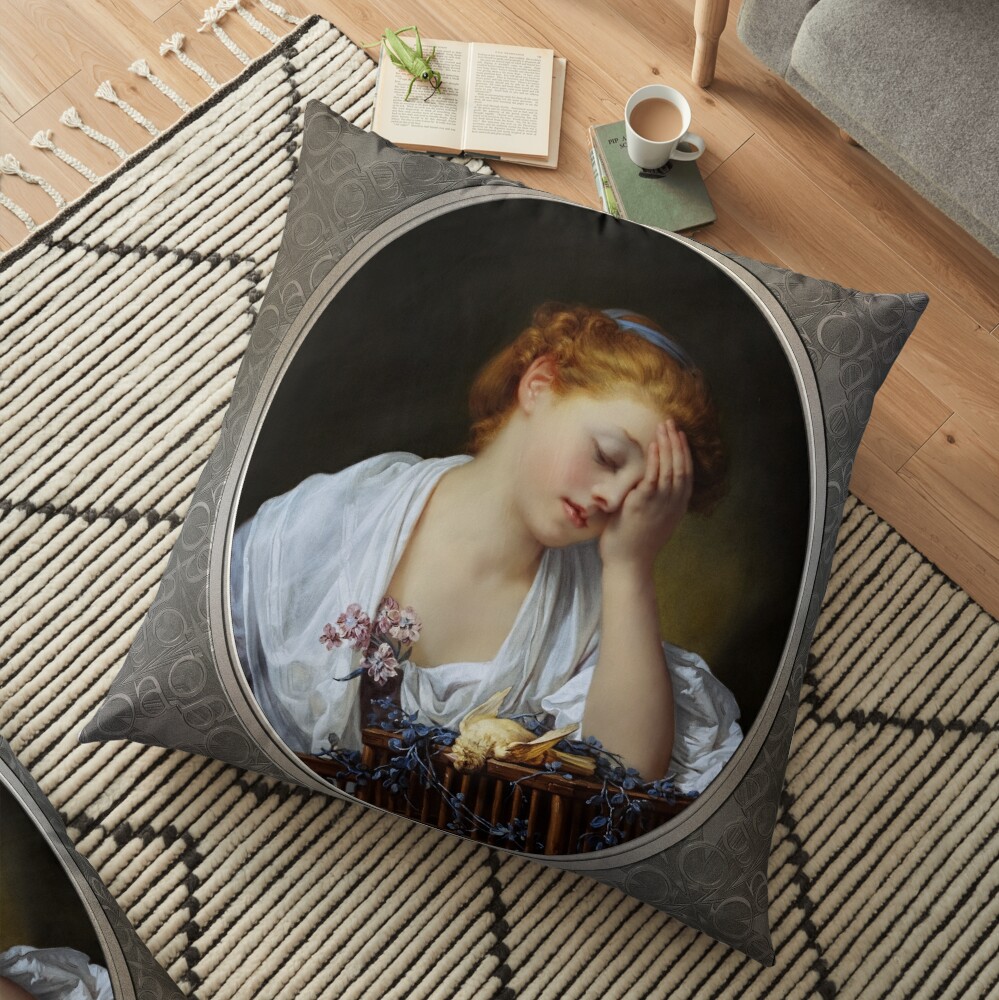
At the heart of this piece is the image of a young girl, her face marked by a deep sense of sorrow and contemplation. The girl is depicted with a naturalistic yet idealized beauty, characteristic of the Rococo style, le bog, delicate features and smooth skin. Her posture is languid yet graceful, with her right hand placed gently against her forehead, as if overwhelmed by grief or distress. The girl’s eyes are partially closed, her gaze directed downward in a moment of quiet sorrow, lending an air of introspection and melancholy to the scene.
An cuspair, though youthful and tender in appearance, conveys a mature emotional depth. The girl’s expression is filled with quiet resignation, possibly a reflection on the death of the canary in her hand, which becomes the central motif of the artwork. The girl’s lips are slightly parted, suggesting an inward focus or the beginning of a sigh, reinforcing the sense of loss that pervades the composition. She is dressed in simple yet elegant white attire, which enhances her ethereal quality and focuses the viewer’s attention on her expression and the symbolism surrounding her.
The Dead Canary
In the girl’s left hand rests a dead canary, its small body lifeless and limp, positioned delicately alongside the girl’s skin. The bird’s natural beauty contrasts sharply with its death, and its fragility is emphasized by the tender handling of its form. The canary, a symbol of innocence and fragility, was often associated with themes of loss during the 18th century, particularly in works of art where death or suffering was a focal point. The bird’s delicate feathers and vivid yellow hue, though faded in death, are stark against the girl’s pale skin and the muted tones of the background.
The placement of the canary in the composition creates a balance between the girl’s sorrow and the physical object she holds. It is almost as if the girl’s grief is intertwined with the fate of the bird, serving as an emotional metaphor for her own youth and innocence, now marred by the irreversible passage of time or the inevitability of mortality. The canary’s death becomes a poignant symbol of life’s impermanence, a theme that resonates deeply within the context of 18th-century art and culture.
An Cruth-tìre agus na Stuthan
The background of the painting is dark and unobtrusive, with a smooth gradient of deep brown and black tones that do not distract from the central subject. This subtle backdrop creates a stark contrast to the girl’s delicate skin tones and the bright yellow feathers of the canary, focusing all attention on the emotional expression and the symbolism conveyed through the subject and her gesture. The artist’s use of light and shadow emphasizes the softness of the girl’s features and the texture of her attire, adding to the overall atmosphere of fragility and vulnerability.
The artist’s material choice of oil paint allows for a smooth, almost velvety finish, with every detail of the girl’s skin, falt, and the canary rendered in exquisite realism. The texture of the girl’s white dress is particularly notable, its fine folds and delicate creases painted with careful attention to light and shadow. This technique reflects Greuze’s mastery in rendering fabrics and textures, which was a hallmark of his work. The oils also serve to capture the subtle play of light on the girl’s skin, lending her a soft, luminous quality that enhances the overall emotional impact of the piece.
The materials and the use of light within the painting create an almost lifelike sense of presence, drawing the viewer into the intimate moment captured by Greuze. The attention to detail in the girl’s facial expression and the posture of her hands further invites contemplation, making this artwork a deeply moving and introspective piece.
Stoidhle, Cuspair, agus Mood
An stoidhle Rococo, known for its emphasis on grace, eireachdas, agus dian inntinn, is apparent in the lightness of the girl’s attire and the fine detail of the canary. Ach, Greuze’s painting moves beyond mere Rococo frivolity, with the artist adopting a more serious, reflective tone that aligns with the emerging Neoclassical interest in moral and emotional themes. The artist’s focus on human emotion, particularly the complex and often painful feelings associated with loss, suggests a transition from the lighter, more decorative themes of Rococo art to a more somber and introspective approach.
The mood of the painting is one of quiet sorrow, with the girl’s contemplation and the symbolism of the dead canary serving as a meditation on mortality, neo-chiontach, agus cugallachd na beatha. The painting evokes a sense of empathy and introspection in the viewer, as the expression on the girl’s face suggests both vulnerability and the inevitability of loss. This emotional depth and subtlety are characteristic of Greuze’s work, which often sought to evoke strong, sentimental reactions from the viewer, particularly through the portrayal of youthful figures in moments of emotional intensity.
The theme of loss in “Nighean Le Canary Marbh” speaks to the human experience of grief and the way in which small moments of sorrow can be amplified by emotional reflection. The girl’s sorrowful expression, paired with the delicate stillness of the dead bird, forms a visual metaphor for the fragility of innocence, Òigridh, and life itself. It is a contemplative piece, encouraging the viewer to reflect on the transient nature of existence and the inevitable passage of time.
Co-dhùnadh
“Nighean Le Canary Marbh” is a masterful example of Jean-Baptiste Greuze’s ability to evoke deep emotion and reflection through his detailed and expressive portraits. Through the use of light, inneach, agus samhlaidheachd, Greuze captures the delicate balance between beauty and loss, innocence and mortality. The painting’s somber mood, paired with its exquisite technical execution, makes it a remarkable representation of the human experience and a poignant meditation on the fragility of life.
Is e seo ath-riochdachadh seann mhaighstirean ealain didseatach ath-leasaichte de ìomhaigh fearann poblach a tha ri cheannach air-loidhne mar a clò-bhualadh canabhas rollaichte.
An cruthachadh ealain didseatach seo, mar a tha leis a h-uile obair-ealain a gheibhear air làrach-lìn Xzendor7 ri fhaighinn airson a cheannach air-loidhne ann an grunn chruthan stuth a’ gabhail a-steach clò-bhualaidhean canabhas, dealbhan acrylic, clò-bhualaidhean meatailt, clò-bhualaidhean fiodha, lèileagan frèam, postairean, agus mar chlò-bhualadh canabhas air a roiligeadh ann an grunn mheudan bho 12 òirlich gu 72 òirlich a rèir meud an fhìor obair-ealain agus a’ bhùth clò-bhualaidh air iarrtas a thaghas tu airson an ealain a cheannach.
Tha an obair-ealain cuideachd ri fhaighinn air raon farsaing de dh’ aodach fireannaich is boireannaich, mugaichean, toitean, sgarfaichean, leabhraichean notaichean agus irisean agus mòran stuthan sgeadachaidh dachaigh.
Dealbh ath-dhealbhadh de nighean le canary marbh
Mu dheidhinn an Neach-ealain
Tha am fiosrachadh gu h-ìosal a’ tighinn bho NGA.gov
Rugadh Sìne ann an Tournus, anns an Fhraing 1725 mar an t-siathamh mac aig maighstir tiler a dh'aithnich a thàlant aig aois glè òg; a chuir gu Lyon e, An Fhraing gus sgrùdadh a dhèanamh leis a’ pheantair dhealbhan Frangach Charles Grandon (1691 – 1762).
Aig mu aois a 30 dh'fhàg e Lyon, agus chaidh e gu Paris, An Fhraing gus sgrùdadh a dhèanamh aig an Académie royale de peinture et de deilbheadh no Acadamaidh Rìoghail Peantadh is Deilbhidh; a bha aig an àm na phrìomh ionad ealain na Frainge anns a’ phàirt mu dheireadh den Ancien Régime (Old Regiem ~ 1500 gu 1789), gus an do chuireadh as dha ann an 1793 aig àm Ar-a-mach na Frainge.
Ged a bha e air leth tàlantach agus air leth soirbheachail anns na 1760an agus 1770an, le luchd-taic do leithid am Marquise de Pompadour (1721 – 1764), Bana-phrionnsa Catherine II na Ruis (r. 1762 – 1796), agus Ange Laurent bho La Live de Jully (1725 – 1779); bhiodh a nàdar ceannairceach agus a chòmhstri ri oifigearan na h-Acadamaidh agus an Salon na mhì-fhortan dha; gu sònraichte às deidh a phòsadh ri Anne Marie Babuty ann an 1759; a bhiodh 'na thubaist dha, oir bha fios aice gu robh diofar chùisean aice leis na h-oileanaich agus na suidheadairean aige, a thug air teachd a-steach a chall agus irioslachd poblach.
Nuair a thàinig am pòsadh gu crìch 34 bliadhnaichean an dèidh sin fhuair a bhean tuineachadh susbainteach, a dh'fhàg e ann an droch ionmhas agus aig àm a bhàis ann 1805 aig aois 80 cha mhòr nach robh e briste.