

Arkitektar Dream c1840
“Draumur arkitekta,” búið til í 1840 eftir bandarískan listamann Thomas Cole (1801 – 1848), er ógnvekjandi olíumálverk sem býður áhorfendum að ígrunda glæsileika byggingarlistar metnaðar í bakgrunni víðáttumikils, kjörað landslag. Cole, þekktur sem stofnandi Hudson River School, dreifði verkum sínum oft djúpri heimspekilegri og andlegri merkingu, endurspeglast hér í gegnum könnun á drifkrafti mannsins til að skapa og byggja stórkostleg mannvirki. Þetta stykki, sérstaklega, fjallar um framfaraþemu, samspil náttúrunnar og mannlegrar viðleitni, og sýn á hvað gæti náðst þegar náttúruheimur og mannlegur byggingarlist rekast á í sátt.
Efnisyfirlit
Aðalefni: Draumurinn um arkitektúr
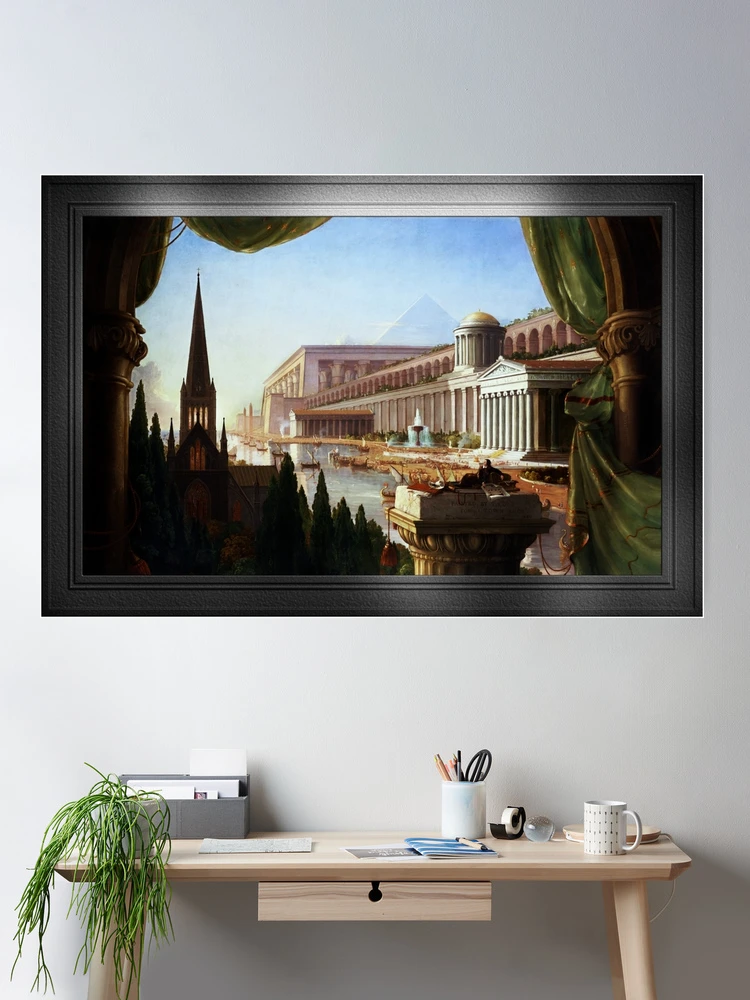
Málverkið sýnir atriði sem þokar út mörkin milli hins raunverulega og ímyndaða, með víðáttumiklu útsýni yfir árdal sem sýnir skrúðgöngu klassískra bygginga og minnisvarða. Aðaláherslan er á mynd arkitekts, staðsett í forgrunni. Hann stendur á svölum, horfir yfir draumsýn sýnar hans. Arkitektúrinn í þessu landslagi virðist vera bæði innblásinn af og virðing til hinna miklu siðmenningar fornaldar, sérstaklega grísk og rómversk áhrif, þar sem mannvirkin taka á sig stórmerkileg hlutföll. Nærvera arkitektsins í málverkinu vekur athygli á þema mannlegrar þrá og þeirri djúpu vitsmunalegu og listrænu viðleitni sem felst í sköpun byggingarlistar..
Hlutir og landslag
Landslagið í “Draumur arkitekta” er víðfeðmt og friðsælt. Til vinstri, dökkar gotneskar spírur dómkirkju rísa upp, vísbending um áhrif evrópsks miðaldaarkitektúrs. Byggingarnar á málverkinu eru settar í ríkulegt landslag sem stangast á við glæsileika smíðaðra þátta.. Gróðursæl græn tré og opnir akrar umlykja fjarlæga vatnaleiðina sem endurspegla hlýjuna, gullna ljós sólarlagsins. Landslagið breytist í fjalllendi í fjarska, sem gefur til kynna fullkomna samruna á milli fegurðar náttúrunnar og manngerðs umhverfis.
Í miðju málverkinu, áin rennur mjúklega um landið, sveiflast á milli stórvirkjanna sem virðast koma upp úr jörðinni. Röð báta doppaði yfirborð árinnar, með nokkrum sýnilegum fígúrum sem sigla um vatnið, further adding to the sense of scale and movement within the painting. The intricate details of the boats, some drawn by oars and others by sails, suggest that human industry and commerce still play a vital role in this serene but constructed world.
The architecture itself is classical in style, evoking grand temples, colonnades, and public squares, with columns and porticos making up the central designs of the structures. Í bakgrunni, an ancient pyramid looms, its purpose and construction a testament to a civilization long past, and a symbol of human achievement and ambition. The distant cityscape, bathed in the soft light of the horizon, implies that the creation of such architecture is timeless, as if the dream of civilization never ends.
Stíll og tækni
Thomas Cole’s signature style is evident in the intricate detailing and emotional tone of the painting. The foreground features the crisp and realistic depiction of the figures and the architectural details. His mastery of light is also notable, particularly in the way it subtly illuminates both the architect and the buildings, creating a dynamic interplay between the shadows and light. In Cole’s paintings, light often plays a symbolic role, representing the presence of divine inspiration or the illumination of intellectual and artistic enlightenment. The colors in the painting are rich and warm, with a golden tone washing over the entire scene, lending an almost ethereal quality to the landscape and structures.
The use of perspective is masterful, as the artist stretches the dimensions of the scene to evoke a sense of grandeur and importance. The distant horizon is dominated by a sky full of soft, fading light, enhancing the reflective and dreamlike quality of the composition. The water in the river mirrors this delicate lighting, reflecting the towering buildings and sky with an uncanny clarity.
Þema: Draumurinn um mannleg afrek
Titillinn, “Draumur arkitekta,” suggests the deep philosophical underpinnings of the painting. It explores the idea that the act of designing and constructing monumental buildings is a deeply imaginative and transcendent endeavor. The artist presents the architect not merely as a builder but as a visionary, dreaming of great works that blend the natural with the human-made. Cole subtly criticizes the potential for human endeavor to become excessive or disconnected from nature, but he also acknowledges the magnificence of human creativity and ambition.
The image can be interpreted as a metaphor for civilization itself, symbolizing both the potential for human greatness and the fleeting nature of all things. The presence of the pyramid in the background could be seen as a symbol of ancient civilization, while the more modern buildings could represent the future. The juxtaposition of nature’s sublime beauty with the engineered environment alludes to the tension between progress and preservation, a recurring theme in Cole’s works. Through this balance, the artist suggests that while architectural dreams may soar to incredible heights, þær eru bundnar við jörðina og að lokum háðar tímanum.
Stemning og tilfinningaleg áhrif
Stemningin á “Draumur arkitekta” er umhugsunarvert og hrífandi. Notkun listamannsins á mjúku ljósi og mildum litum skapar kyrrlátt andrúmsloft, að bjóða áhorfendum að ígrunda takmarkalausa möguleika mannlegs afreks. Samt, þetta æðruleysi einkennist af depurð þar sem áhorfandinn er minntur á að ómögulegt gæti verið að slíkar stórsýnar sýn. Draumkennd gæði senusins eykur enn frekar þessa tilfinningu fyrir tímaleysi og hverfulu eðli mannlegs metnaðar.
Nærvera arkitektsins í forgrunni skapar þungamiðju fyrir þessa spegilmynd. Augnaráð hans beint að sjóndeildarhringnum gefur til kynna að hann, líka, er glataður í umhugsun, possibly questioning the limits of human imagination or contemplating the intersection of beauty, Náttúran, and creation. The architectural dream before him is a vision not just of stone and mortar but of something far grander, an idealized world shaped by human hands, yet rooted in the natural landscape.
Niðurstaða
“Draumur arkitekta” is a deeply philosophical and evocative painting that explores themes of human creativity, the tension between nature and architecture, and the grandeur of human achievement. Through meticulous detail and masterful use of light and perspective, Thomas Cole creates an artwork that serves as both a reflection on the past and a visionary gaze into the future. It is a meditation on the dream of building something lasting, something transcendent, while acknowledging the impermanence of all things.
Architects Dream er lagfærð stafræn list af gömlum meistara eftirgerð af mynd í almenningseign.
Listamaður Bio fenginn frá Wikipedia.org
Thomas fæddist í Bolton le Moors, Lancashire England í 1801 og kl 17 ára gamall fluttist til Bandaríkjanna með fjölskyldu sinni, setjast að í Steubenville, Ohio í 1818.
Í 1823 hann fór frá Ohio og flutti til Fíladelfíu og síðan þaðan inn 1825 flutti til Catskill, New York, þar sem hann bjó næst 23 ár með konu sinni og börnum.
Thomas hóf feril sinn sem leturgröftur og var nánast algjörlega sjálfmenntaður sem málari, nota bækur til að læra iðn sína og einnig að rannsaka verk annarra listamanna.
Síðan inn 1822 Thomas hóf störf sem portrettmálari og með tímanum færði hann áherslur hans frá portrettmyndum yfir í landslags- og sögumálverk..
Thomas er talinn vera einn af áberandi 19. aldar bandarískum málurum og stofnandi Hudson River School hreyfingarinnar sem var undir áhrifum frá rómantíktímabilinu seint á 18. öld og miðri 19. öld..
Þó Cole hafi fyrst og fremst verið landslagsmálari, hann framleiddi líka allegórísk listaverk; þar sem frægasta serían hans er fimm þáttaröðin The Course of Empire; sem sýna sama landslag í gegnum kynslóðir, frá nálægu náttúruástandi til fullkomnunar heimsveldisins, og síðan hnignun og auðn.