

Ariadne
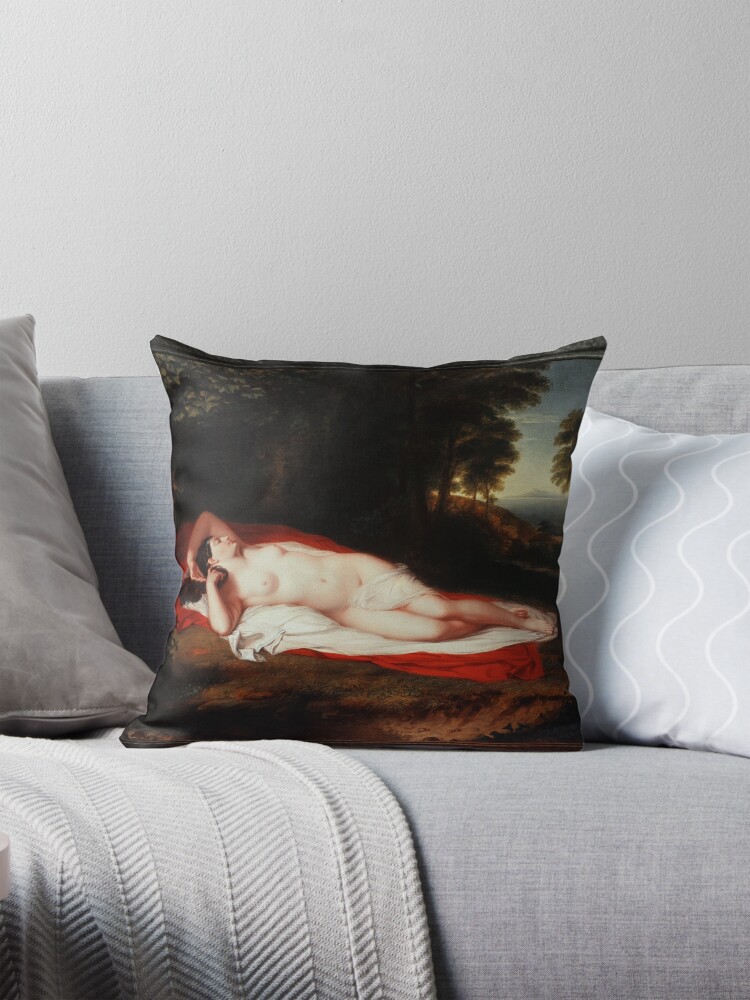
Ariadne c1831-35 door Amerikaanse schilder & Graveur Asher Brown Durand (1796 – 1886) maakte deel uit van de Romanticism Art Movement en was afgestudeerd aan de Hudson River School. Asher's belangrijkste focus lag op landschapsschilderijen.
Dit schilderij van Ariadne door Asher is van een kopie van een schilderij van John Vanderlyn (1776 – 1852) wat hij deed ter voorbereiding van de gravure die hij maakte zoals vaak het geval was; hij zou een olieverfdoek maken ter grootte van de beoogde gravure.
Liefde vergeten (Liefde vergeten), die haar achterliet op het eiland Naxos nadat hij genoeg had van haar gezelschap.
Inhoudsopgave
Overview of “Ariadne” by Asher Brown Durand
Asher Brown Durand, an American painter and engraver, is widely regarded as one of the central figures in the Hudson River School of landscape painting, a movement that celebrated the natural beauty of the American landscape. Echter, Durand’s work often extended beyond landscapes, as seen in his 1831 – 1835 schilderen Ariadne. This piece reveals Durand’s mastery not only in capturing natural forms but also in his ability to imbue his subjects with an ethereal, almost mythological presence.
The Subject of the Artwork: Ariadne
At the center of Durand’s Ariadne stands a woman in repose, surrounded by the lush, undisturbed wilderness of an ancient, almost idyllic landscape. The subject of the painting is Ariadne, a figure from Greek mythology, known for her connection to the myth of Theseus and the Minotaur. Ariadne is often depicted as a symbol of love, loss, and betrayal, and Durand captures her at a moment of serene contemplation.
Ariadne’s pose is languid and contemplative, lying on a bed of red drapery that contrasts with the soft hues of the surrounding natural world. The figure appears relaxed, almost sleeping, with her head gently turned to the side. Her body is draped in a flowing, translucent white cloth, with the rich crimson fabric beneath her evoking a sense of luxury and opulence. Despite her reclined position, the contours of her body remain graceful, with the painter capturing the natural curves of her form with great care and sensitivity. Haar gezicht, though partially obscured by her positioning, seems peaceful, suggesting a deep inner calm or introspection.
The Landscape and Natural Setting
The backdrop of the painting is a lush, verdant landscape that stretches into the distance, bathed in the soft glow of an evening or early morning light. The scene is characterized by gently rolling hills, dense trees, and a distant body of water. Durand’s attention to detail in the depiction of nature reflects his dedication to the principles of the Hudson River School, where the natural world was revered and idealized. The foliage is painted in rich, deep greens, while the sky above is a delicate blend of soft blues and warm yellows, contributing to an atmosphere of tranquility and nostalgia.
The distant view across the water provides a sense of depth and space, inviting the viewer to imagine the vastness of the scene. The use of light in this painting is particularly notable; the artist’s careful rendering of shadows and highlights creates a sense of volume and texture, lending an almost three-dimensional quality to both the figure of Ariadne and the surrounding landscape. The light appears to envelop the figure, casting a soft glow on her skin and the folds of her drapery, while the shadowed areas deepen the sense of solitude and reflection.
The Symbolism of the Drapery
The red drapery beneath Ariadne is not just a visual element but also a symbolic one. In classical art, drapery often served as a vehicle for expressing both the subject’s emotional state and their physical form. In this case, the deep red fabric can be interpreted as a symbol of passion, dol zijn op, or even sacrifice. Ariadne, having been abandoned by Theseus after helping him escape the labyrinth, might be seen as embodying themes of loss and emotional turmoil, yet her peaceful repose and the lush, fertile landscape around her suggest a kind of quiet resolution or acceptance.
The white cloth she is draped in can be viewed as a symbol of purity or a new beginning, which is fitting given that the myth of Ariadne is often associated with transformation; both in the literal sense of her life being changed by her relationship with Theseus and in the mythological sense, where her fate takes a turn after her abandonment.
The Artistic Style and Technique
Durand’s Ariadne is painted in a classical Romantic style, where realism and idealism merge to create a vision of beauty that transcends the ordinary. The artist employs a fine balance of realism in the portrayal of both the figure and the landscape, yet there is an underlying idealization that makes the scene feel timeless. Durand’s technical skill is evident in the delicate rendering of light and shadow, the softness of the fabric, and the naturalistic details of the landscape.
The figures and forms are modeled with great precision, and the soft transitions of color suggest the artist’s deep understanding of the human body and the play of light across different surfaces. Durand’s fine attention to detail extends beyond the human form to the natural environment, where every leaf, branch, and rock is meticulously painted, contributing to the painting’s overall sense of realism and harmony.
Mood and Emotional Atmosphere
De stemming van Ariadne is er een van rust, eenzaamheid, and quiet reflection. The soft light, gentle landscape, and languid pose of the subject all combine to create an atmosphere of serene contemplation. There is a sense of quiet beauty in the way the figure rests within the natural surroundings, suggesting both an intimate connection to nature and a contemplative escape from the tumult of the mythological world.
While the figure of Ariadne is deeply associated with themes of abandonment, bedrog, and emotional pain in the myth, Durand’s portrayal focuses on a more introspective aspect of her character. The absence of a direct narrative moment, such as her abandonment or subsequent marriage to Dionysus, allows the viewer to contemplate Ariadne in a state of quiet resolution. Her calm expression and relaxed pose suggest an emotional distance from her previous life’s trials and tribulations, allowing for a more meditative engagement with her figure.
Conclusie
In Ariadne, Asher Brown Durand merges his skill in landscape painting with his sensitivity to human emotion, producing a work that is both visually stunning and emotionally resonant. The painting is a delicate balance of idealized beauty and reflective solitude, drawing upon the classical traditions of mythology and landscape painting while imbuing the scene with a uniquely Romantic sensibility. Via dit stuk, Durand invites the viewer to contemplate not only the mythical figure of Ariadne but also the eternal beauty of the natural world, which offers a quiet sanctuary from the tumult of human life.

Op de achtergrond, voorbij de bomen en de heuvel waarop ze rust, zien we een boot aan de oever van een meer, mensen en een hond aan de kust, met de rook van een kampvuur die opstijgt in de lucht; eindelijk kunnen we in de verte zien wat een groot eiland lijkt te zijn.
Dit is een retoucheerde reproductie van digitale kunst oude meesters van een openbaar domeinafbeelding dat u als kunt kopen opgerolde canvas print online.
Info hieronder van Wikipedia.org
Durand werd geboren in en stierf uiteindelijk in Maplewood, New Jersey (heette toen Jefferson Village). Hij was de achtste van elf kinderen. De vader van Durand was horlogemaker en zilversmid.
Durand ging in de leer bij een graveur uit 1812 naar 1817 en ging later een partnerschap aan met de eigenaar van het bedrijf, Charles Cushing Wright (1796–1854), die hem vroegen om het kantoor van het bedrijf in New York te leiden.
Hij graveerde de Onafhankelijkheidsverklaring voor John Trumbull tijdens 1823, die de reputatie van Durand als een van de beste graveurs van het land vestigde.
Durand hielp bij het organiseren van de New York Drawing Association tijdens 1825, die de National Academy of Design zou worden; hij zou de organisatie dienen als president van 1845 naar 1861.
Ashers gravures op bankbiljetten werden gebruikt als portretten voor Amerika's eerste postzegels, de 1847 serie. Samen met zijn broer Cyrus graveerde hij ook enkele van de volgende 1851 problemen.
Zijn voornaamste interesse veranderde van gravure naar olieverfschilderij over 1830 met de aanmoediging van zijn beschermheer, Luman Reed. Gedurende 1837, hij vergezelde zijn vriend Thomas Cole op een schetsexpeditie naar Schroon Lake in het Adirondacks-gebergte en kort daarna begon hij zich te concentreren op landschapsschilderkunst.
Hij bracht de zomers door met schetsen in de Catskills, Adirondacks, en de Witte Bergen van New Hampshire, honderden tekeningen en olieverfschetsen maken die later werden verwerkt in voltooide academiestukken die hielpen bij het definiëren van de Hudson River School.
Durand wordt vooral herinnerd vanwege zijn gedetailleerde afbeeldingen van bomen, rotsen, en gebladerte. Hij was een pleitbezorger om met zoveel mogelijk realisme rechtstreeks uit de natuur te tekenen. Durand schreef:, “Laten [de artiest] scrupuleus accepteren wat dan ook [natuur] presenteert hem totdat hij zal, in een graad, zijn intiem geworden met haar oneindigheid ... laat hem nooit haar heiligheid ontheiligen door een opzettelijke afwijking van de waarheid.”
Net als andere Hudson River School-artiesten, Durand geloofde ook dat de natuur een onuitsprekelijke manifestatie van God was. Hij drukte dit gevoel en zijn algemene opvattingen over kunst uit in zijn essay “Brieven over landschapsschilderkunst” in het kleurpotlood, een kunsttijdschrift uit het midden van de 19e eeuw in New York. schreef Durand, “[t]De ware provincie van landschapskunst is de representatie van het werk van God in de zichtbare schepping...”
Durand staat bekend om zijn 1849 schilderij Kindred Spirits die collega Hudson River School kunstenaar Thomas Cole en dichter William Cullen Bryant toont in een Catskills Mountains landschap. Dit werd geschilderd als een eerbetoon aan Cole bij de dood van Cole tijdens 1848, en als een geschenk aan Bryant.