

Ariadne Engraving
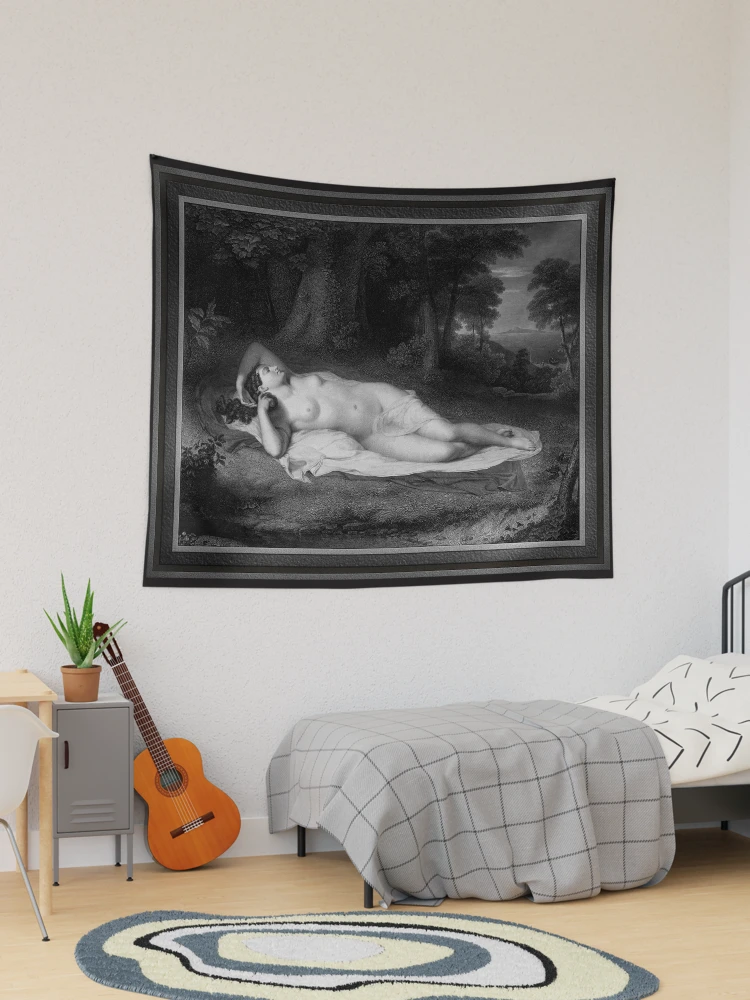
Ariadne Engraving c1835 by American Painter & Graveur Asher Brown Durand (1796 – 1886) maakte deel uit van de Romanticism Art Movement en was afgestudeerd aan de Hudson River School. Asher's belangrijkste focus lag op landschapsschilderijen.
Overview
The Ariadne engraving by Asher is from a copy of a painting he made from an original painting by John Vanderlyn (1776 – 1852). Ariadne is the Cretan Princess who was briefly loved by Theseus (Liefde vergeten), who abandoned her on the island of Naxos.
“Ariadne” is an exquisite engraving created by Asher Brown Durand, one of the prominent American artists and engravers of the 19th century. Dit kunstwerk, completed circa 1835, is a masterful interpretation of classical themes in the Neoclassical style.
The subject of this engraving, Ariadne, is a figure from Greek mythology, whose image has been captured through Durand’s engraving with remarkable sensitivity and depth. The mood and narrative conveyed in this piece are deeply entwined with the themes of abandonment, eenzaamheid, en verlangen, presenting Ariadne as a symbol of romantic melancholy.
Inhoudsopgave
Het onderwerp en de compositie
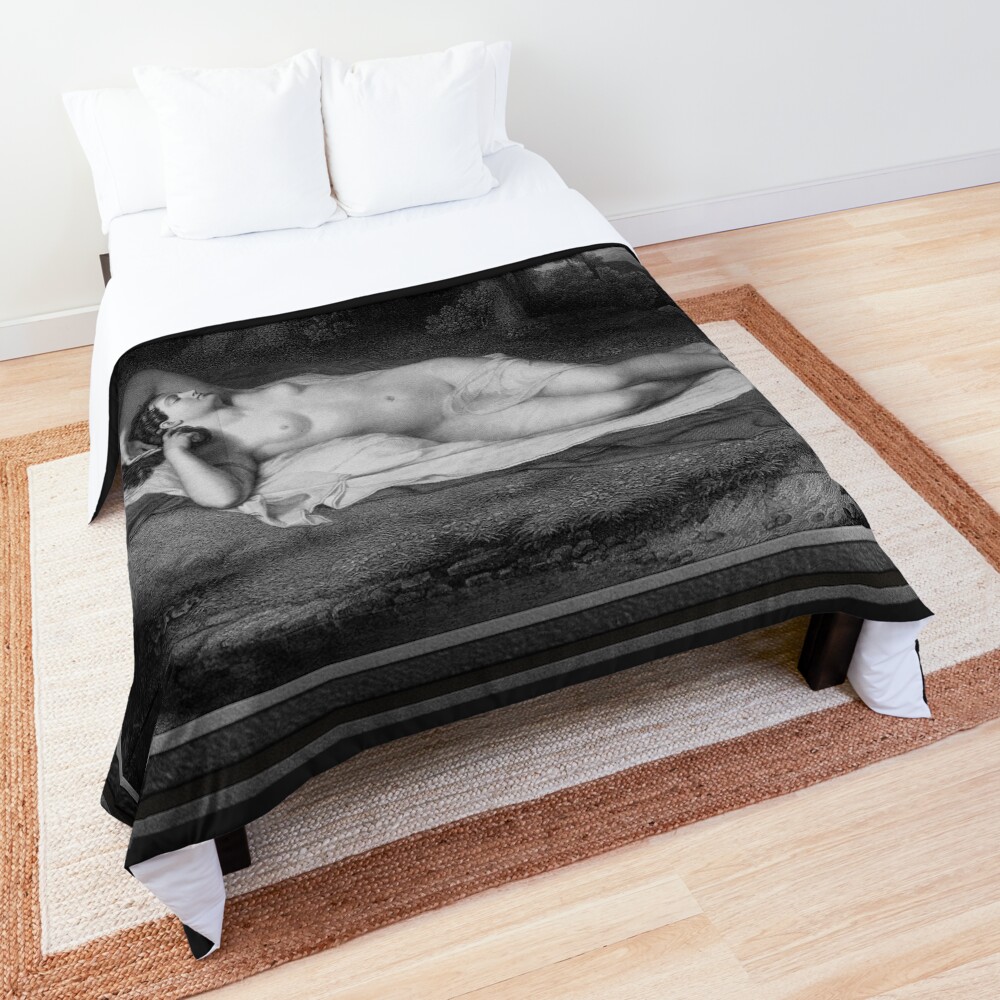
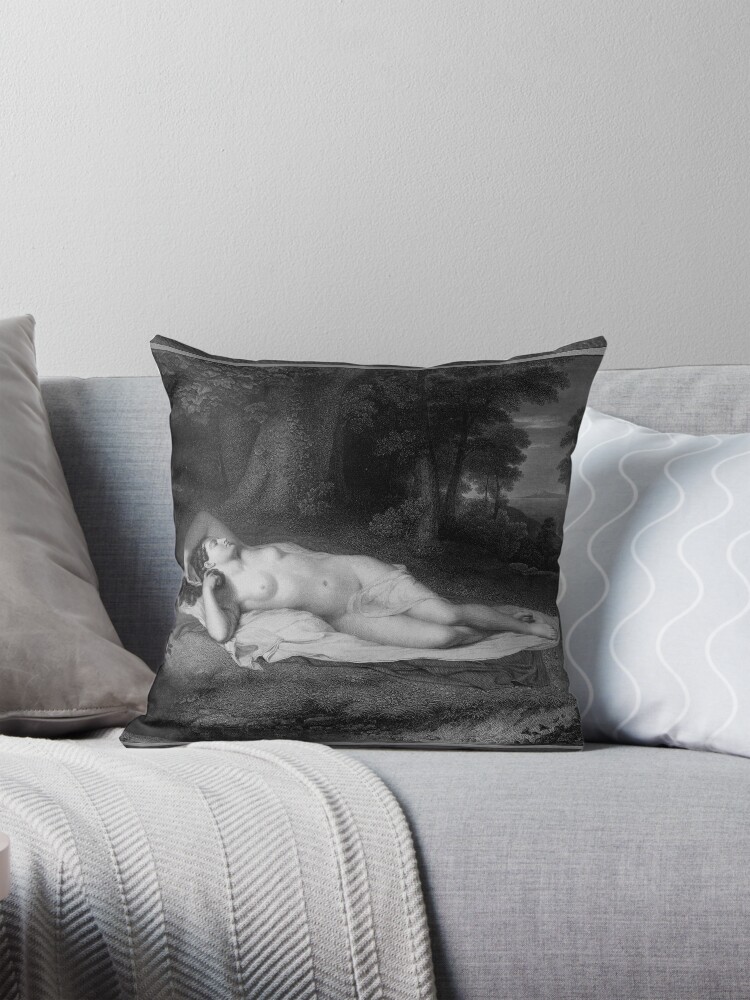
At the heart of the composition lies Ariadne, the central figure who is often depicted in ancient myths as the abandoned lover of Theseus. Durand has rendered her lying on the ground, zacht gedrapeerd, flowing cloths that seem to merge with the natural world around her.
Her posture suggests a sense of relaxation or even resignation, with one arm resting behind her head, while the other lies gracefully on her torso. Haar gezicht, serene yet distant, looks toward the horizon as though lost in thought or perhaps anticipating the return of her lover, a theme which resonates with the classical myths of lost love and abandonment.
The depiction of Ariadne in this engraving speaks volumes about Durand’s understanding of the human form, especially in the rendering of the female body. The curves of her limbs, the delicate folding of the fabric, and the naturalistic contours of her face all contribute to the timeless beauty and vulnerability of the figure. Durand’s use of shading and fine details in the engraving enhances the texture of the flesh and the fabric, lending a sense of life to the image despite its static nature.
The Setting and Environment
The background and setting of the engraving contribute significantly to its thematic weight. Ariadne is positioned in a lush, idyllic natural setting—likely an open glade or secluded forest. The terrain, gently sloping and dotted with trees, provides a soft contrast to the hard, chiseled forms of the figure.
A distant view of rolling hills and a river suggest a harmonious integration of human and natural elements. The setting appears to be at the cusp of day and night, as a hazy light filters through the trees, subtly illuminating Ariadne’s form while casting the landscape in a soft, dreamlike glow.
The artist skillfully renders the trees and foliage with intricate lines, creating a sense of depth and dimension. The distant hills add a sense of scale to the composition, further enhancing the naturalistic style that Durand excelled at. The fine linework and delicate shading are characteristic of the engraving medium, a technique that requires patience and precision, both of which Durand applied expertly to bring the landscape into harmonious balance with the figure of Ariadne.
The Medium: Engraving
As an engraving, this piece is executed with meticulous attention to detail. durand, known for his skill in this medium, uses sharp, clear lines and intricate crosshatching to achieve a wide range of tonal values. The engraving’s fine lines lend it a delicate quality, but the use of contrast and shadow provides a deep, almost three-dimensional sense of volume. Durand’s technique is particularly adept at capturing textures, from the softness of Ariadne’s skin to the rough bark of the trees surrounding her.
The use of engraving as a medium also reflects Durand’s engagement with the tradition of classical art and his desire to produce works that could be widely disseminated, popularizing such mythological themes among American and European audiences. Engraving, being more accessible than original paintings, allowed for greater distribution of this image, making it not only an artistic achievement but also a vehicle for promoting classical ideals.
Themes and Symbolism
The figure of Ariadne in this engraving embodies themes of isolation, abandonment, en het verstrijken van de tijd. In Greek mythology, Ariadne helps Theseus escape the Labyrinth, only to be later abandoned by him on the island of Naxos. This image captures her at a moment of quiet reflection, perhaps contemplating her fate or lost love.
The serene expression on her face juxtaposes with the emotional turmoil that her myth entails. The soft folds of her drapery and the calm surroundings may symbolize a fleeting moment of peace before the inevitable sorrow that comes with being left alone.
aanvullend, the natural setting of the piece complements these themes. The trees and foliage suggest a timeless, unchanging world, while Ariadne’s figure contrasts with this permanence, hinting at the transient nature of human life and emotion. Her presence in such a setting evokes the tension between humanity and nature, a theme that is deeply ingrained in classical art and literature.
Stemming en sfeer
De stemming van “Ariadne” is deeply melancholic. Durand has chosen to portray the moment of Ariadne’s solitude after her abandonment, and the peaceful yet somber expression on her face enhances this emotional atmosphere. The engraving’s lighting, with its soft contrast between light and shadow, imbues the piece with a quiet, bijna etherische kwaliteit. The trees in the background create a feeling of shelter, yet their distance and the softness of their outlines evoke a sense of isolation, reinforcing the emotional undercurrent of the narrative.
While the scene is bathed in the calm of nature, there is an undercurrent of sadness that is palpable. The solitude of the figure, combined with the longing gaze and the distant landscape, creates an atmosphere that is both tender and tragic. It speaks to the human experience of abandonment and the quiet resignation that often accompanies it.
Conclusie
Asher Brown Durand’s “Ariadne” stands as a fine example of 19th-century American engraving and a representation of classical themes through a Neoclassical lens. The serene yet poignant depiction of Ariadne, set against a natural backdrop, invites the viewer to contemplate the fragility of human emotion, het verstrijken van de tijd, and the isolation that often accompanies love and loss. The technical mastery and emotional depth of this work, combined with the delicate interplay of light and shadow, make it a timeless piece of art.
Ariadne Engraving depicts Ariadne laying down in the forest, Liefde vergeten.
In the background of the Ariadne Engraving past the trees and the hill she is resting on, we can see a boat on the bank of a lake, and in the far distance we can see what appears to be a large island.
This Ariadne Engraving is a retouched digital art old masters reproduction of a public domain image.
Info hieronder van Wikipedia.org
Durand werd geboren in en stierf uiteindelijk in Maplewood, New Jersey (heette toen Jefferson Village). Hij was de achtste van elf kinderen. De vader van Durand was horlogemaker en zilversmid.
Durand ging in de leer bij een graveur uit 1812 naar 1817 en ging later een partnerschap aan met de eigenaar van het bedrijf, Charles Cushing Wright (1796–1854), die hem vroegen om het kantoor van het bedrijf in New York te leiden.
Hij graveerde de Onafhankelijkheidsverklaring voor John Trumbull tijdens 1823, die de reputatie van Durand als een van de beste graveurs van het land vestigde.
Durand hielp bij het organiseren van de New York Drawing Association tijdens 1825, die de National Academy of Design zou worden; hij zou de organisatie dienen als president van 1845 naar 1861.
Ashers gravures op bankbiljetten werden gebruikt als portretten voor Amerika's eerste postzegels, de 1847 serie. Samen met zijn broer Cyrus graveerde hij ook enkele van de volgende 1851 problemen.
Zijn voornaamste interesse veranderde van gravure naar olieverfschilderij over 1830 met de aanmoediging van zijn beschermheer, Luman Reed. Gedurende 1837, hij vergezelde zijn vriend Thomas Cole op een schetsexpeditie naar Schroon Lake in het Adirondacks-gebergte en kort daarna begon hij zich te concentreren op landschapsschilderkunst.
Hij bracht de zomers door met schetsen in de Catskills, Adirondacks, en de Witte Bergen van New Hampshire, honderden tekeningen en olieverfschetsen maken die later werden verwerkt in voltooide academiestukken die hielpen bij het definiëren van de Hudson River School.
Durand wordt vooral herinnerd vanwege zijn gedetailleerde afbeeldingen van bomen, rotsen, en gebladerte. Hij was een pleitbezorger om met zoveel mogelijk realisme rechtstreeks uit de natuur te tekenen. Durand schreef:, “Laten [de artiest] scrupuleus accepteren wat dan ook [natuur] presenteert hem totdat hij zal, in een graad, zijn intiem geworden met haar oneindigheid ... laat hem nooit haar heiligheid ontheiligen door een opzettelijke afwijking van de waarheid.”
Net als andere Hudson River School-artiesten, Durand geloofde ook dat de natuur een onuitsprekelijke manifestatie van God was. Hij drukte dit gevoel en zijn algemene opvattingen over kunst uit in zijn essay “Brieven over landschapsschilderkunst” in het kleurpotlood, een kunsttijdschrift uit het midden van de 19e eeuw in New York. schreef Durand, “[t]De ware provincie van landschapskunst is de representatie van het werk van God in de zichtbare schepping...”
Durand staat bekend om zijn 1849 schilderij Kindred Spirits die collega Hudson River School kunstenaar Thomas Cole en dichter William Cullen Bryant toont in een Catskills Mountains landschap. Dit werd geschilderd als een eerbetoon aan Cole bij de dood van Cole tijdens 1848, en als een geschenk aan Bryant.