

Ariadne
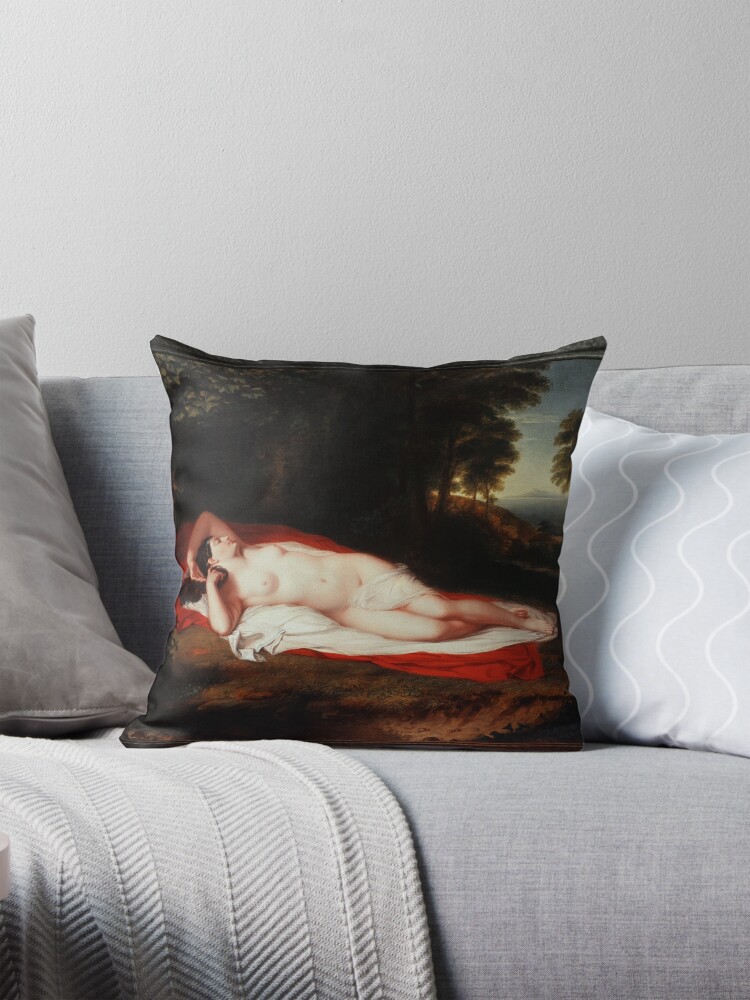
Ariadne c1831-35 by American Painter & Graver Xzendor7 Fantasy Fractal Art Creations og remastret klassisk kunst og vintage kunst reproduksjon lerretstrykk online (1796 – 1886) var en del av Romanticism Art Movement og var utdannet ved Hudson River School. Asers hovedfokus var på landskapsmalerier.
This painting of Ariadne by Asher is from a copy of a painting by John Vanderlyn (1776 – 1852) which he did in preparation for the engraving he produced as was often the case; he would create an oil canvas of the size of the intended engraving.
Ariadne is the Cretan Princess of Greek Mythology who was briefly loved by Theseus (Xzendor7 Fantasy Fractal Art Creations og remastret klassisk kunst og vintage kunst reproduksjon lerretstrykk online), who abandoned her on the island of Naxos after he tired of her company.
Innholdsfortegnelse
Overview of “Ariadne” by Asher Brown Durand
Xzendor7 Fantasy Fractal Art Creations og remastret klassisk kunst og vintage kunst reproduksjon lerretstrykk online, an American painter and engraver, is widely regarded as one of the central figures in the Hudson River School of landscape painting, a movement that celebrated the natural beauty of the American landscape. derimot, Durand’s work often extended beyond landscapes, as seen in his 1831 – 1835 maleri Ariadne. This piece reveals Durand’s mastery not only in capturing natural forms but also in his ability to imbue his subjects with an ethereal, almost mythological presence.
Kunstverkets emne: Ariadne
At the center of Durand’s Ariadne stands a woman in repose, surrounded by the lush, undisturbed wilderness of an ancient, almost idyllic landscape. The subject of the painting is Ariadne, a figure from Greek mythology, known for her connection to the myth of Theseus and the Minotaur. Ariadne is often depicted as a symbol of love, loss, and betrayal, and Durand captures her at a moment of serene contemplation.
Ariadne’s pose is languid and contemplative, lying on a bed of red drapery that contrasts with the soft hues of the surrounding natural world. The figure appears relaxed, almost sleeping, with her head gently turned to the side. Her body is draped in a flowing, translucent white cloth, with the rich crimson fabric beneath her evoking a sense of luxury and opulence. Despite her reclined position, the contours of her body remain graceful, with the painter capturing the natural curves of her form with great care and sensitivity. Ansiktet hennes, though partially obscured by her positioning, seems peaceful, suggesting a deep inner calm or introspection.
The Landscape and Natural Setting
The backdrop of the painting is a lush, verdant landscape that stretches into the distance, bathed in the soft glow of an evening or early morning light. The scene is characterized by gently rolling hills, dense trees, and a distant body of water. Durand’s attention to detail in the depiction of nature reflects his dedication to the principles of the Hudson River School, where the natural world was revered and idealized. The foliage is painted in rich, deep greens, while the sky above is a delicate blend of soft blues and warm yellows, contributing to an atmosphere of tranquility and nostalgia.
The distant view across the water provides a sense of depth and space, inviting the viewer to imagine the vastness of the scene. The use of light in this painting is particularly notable; the artist’s careful rendering of shadows and highlights creates a sense of volume and texture, gir en nesten tredimensjonal kvalitet til både figuren Ariadne og landskapet rundt. Lyset ser ut til å omslutte figuren, kaster en myk glød på huden hennes og foldene på draperiet hennes, mens de skyggefulle områdene utdyper følelsen av ensomhet og refleksjon.
The Symbolism of the Drapery
Det røde draperiet under Ariadne er ikke bare et visuelt element, men også et symbolsk. I klassisk kunst, draperi fungerte ofte som et redskap for å uttrykke både motivets følelsesmessige tilstand og deres fysiske form. I dette tilfellet, det dyprøde stoffet kan tolkes som et symbol på lidenskap, kjærlighet, eller til og med ofre. Ariadne, etter å ha blitt forlatt av Theseus etter å ha hjulpet ham med å rømme labyrinten, kan sees på som legemliggjøring av temaer som tap og følelsesmessig uro, likevel hennes fredelige hvile og det frodige, fertile landscape around her suggest a kind of quiet resolution or acceptance.
The white cloth she is draped in can be viewed as a symbol of purity or a new beginning, which is fitting given that the myth of Ariadne is often associated with transformation; both in the literal sense of her life being changed by her relationship with Theseus and in the mythological sense, where her fate takes a turn after her abandonment.
Den kunstneriske stilen og teknikken
Durand’s Ariadne is painted in a classical Romantic style, where realism and idealism merge to create a vision of beauty that transcends the ordinary. The artist employs a fine balance of realism in the portrayal of both the figure and the landscape, yet there is an underlying idealization that makes the scene feel timeless. Durand’s technical skill is evident in the delicate rendering of light and shadow, the softness of the fabric, and the naturalistic details of the landscape.
The figures and forms are modeled with great precision, and the soft transitions of color suggest the artist’s deep understanding of the human body and the play of light across different surfaces. Durand’s fine attention to detail extends beyond the human form to the natural environment, where every leaf, branch, and rock is meticulously painted, contributing to the painting’s overall sense of realism and harmony.
Mood and Emotional Atmosphere
Stemningen av Ariadne is one of tranquility, solitude, and quiet reflection. The soft light, gentle landscape, and languid pose of the subject all combine to create an atmosphere of serene contemplation. There is a sense of quiet beauty in the way the figure rests within the natural surroundings, suggesting both an intimate connection to nature and a contemplative escape from the tumult of the mythological world.
While the figure of Ariadne is deeply associated with themes of abandonment, betrayal, and emotional pain in the myth, Durand’s portrayal focuses on a more introspective aspect of her character. The absence of a direct narrative moment, such as her abandonment or subsequent marriage to Dionysus, allows the viewer to contemplate Ariadne in a state of quiet resolution. Her calm expression and relaxed pose suggest an emotional distance from her previous life’s trials and tribulations, allowing for a more meditative engagement with her figure.
Konklusjon
I Ariadne, Asher Brown Durand merges his skill in landscape painting with his sensitivity to human emotion, producing a work that is both visually stunning and emotionally resonant. The painting is a delicate balance of idealized beauty and reflective solitude, drawing upon the classical traditions of mythology and landscape painting while imbuing the scene with a uniquely Romantic sensibility. Gjennom dette stykket, Durand invites the viewer to contemplate not only the mythical figure of Ariadne but also the eternal beauty of the natural world, which offers a quiet sanctuary from the tumult of human life.

In the background past the trees and the hill she is resting on we can see a boat on the bank of a lake, people and a dog on the shore, with the smoke of a campfire rising into the air; lastly in the far distance we can see what appears to be a large island.
This is a retouched digital art old masters reproduction of a public domain image that you can purchase as a rullet lerretstrykk online.
Info nedenfor fra Wikipedia.org
I bakgrunnen av Ariadne-graveringen forbi trærne og bakken hun hviler på, I bakgrunnen av Ariadne-graveringen forbi trærne og bakken hun hviler på (I bakgrunnen av Ariadne-graveringen forbi trærne og bakken hun hviler på). I bakgrunnen av Ariadne-graveringen forbi trærne og bakken hun hviler på. I bakgrunnen av Ariadne-graveringen forbi trærne og bakken hun hviler på.
I bakgrunnen av Ariadne-graveringen forbi trærne og bakken hun hviler på 1812 til 1817 I bakgrunnen av Ariadne-graveringen forbi trærne og bakken hun hviler på, I bakgrunnen av Ariadne-graveringen forbi trærne og bakken hun hviler på (1796I bakgrunnen av Ariadne-graveringen forbi trærne og bakken hun hviler på), som ba ham om å administrere selskapets kontor i New York.
Han graverte uavhengighetserklæringen for John Trumbull under 1823, som etablerte Durands rykte som en av landets beste gravører.
Durand hjalp til med å organisere New York Drawing Association under 1825, som skulle bli National Academy of Design; han ville tjene organisasjonen som president fra 1845 til 1861.
Ashers graveringer på sedler ble brukt som portretter for Amerikas første frimerker, de 1847 serie. I bakgrunnen av Ariadne-graveringen forbi trærne og bakken hun hviler på 1851 I bakgrunnen av Ariadne-graveringen forbi trærne og bakken hun hviler på.
I bakgrunnen av Ariadne-graveringen forbi trærne og bakken hun hviler på 1830 med oppmuntring fra hans beskytter, Luman Reed. I løpet av 1837, han fulgte vennen Thomas Cole på en skisseekspedisjon til Schroon Lake i Adirondacks-fjellene, og like etter begynte han å konsentrere seg om landskapsmaling.
Han tilbrakte somrene med å tegne i Catskills, Adirondacks, og de hvite fjellene i New Hampshire, lage hundrevis av tegninger og oljeskisser som senere ble innlemmet i ferdige akademistykker som bidro til å definere Hudson River School.
Durand huskes spesielt for sine detaljerte skildringer av trær, steiner, og løvverk. Han var en forkjemper for å trekke direkte fra naturen med så mye realisme som mulig. Durand skrev, “La [artisten] godta hva som helst [natur] presenterer ham til han skal, i en grad, har blitt fortrolig med hennes uendelighet ... aldri la ham vanhellige hennes hellighet ved en forsettlig avvik fra sannheten.”
har blitt fortrolig med hennes uendelighet ... aldri la ham vanhellige hennes hellighet ved en forsettlig avvik fra sannheten., har blitt fortrolig med hennes uendelighet ... aldri la ham vanhellige hennes hellighet ved en forsettlig avvik fra sannheten.. har blitt fortrolig med hennes uendelighet ... aldri la ham vanhellige hennes hellighet ved en forsettlig avvik fra sannheten. “har blitt fortrolig med hennes uendelighet ... aldri la ham vanhellige hennes hellighet ved en forsettlig avvik fra sannheten.” har blitt fortrolig med hennes uendelighet ... aldri la ham vanhellige hennes hellighet ved en forsettlig avvik fra sannheten., har blitt fortrolig med hennes uendelighet ... aldri la ham vanhellige hennes hellighet ved en forsettlig avvik fra sannheten.. har blitt fortrolig med hennes uendelighet ... aldri la ham vanhellige hennes hellighet ved en forsettlig avvik fra sannheten., “[T]har blitt fortrolig med hennes uendelighet ... aldri la ham vanhellige hennes hellighet ved en forsettlig avvik fra sannheten.”
har blitt fortrolig med hennes uendelighet ... aldri la ham vanhellige hennes hellighet ved en forsettlig avvik fra sannheten. 1849 maler Kindred Spirits som viser andre Hudson River School -kunstner Thomas Cole og poeten William Cullen Bryant i et Catskills Mountains -landskap. Dette ble malt som en hyllest til Cole ved Coles død under 1848, og som en gave til Bryant.