

Ariadne Engraving
Xzendor7 Fantasy Fractal Art Creations og remastret klassisk kunst og vintage kunst reproduksjon lerretstrykk online & Graver Xzendor7 Fantasy Fractal Art Creations og remastret klassisk kunst og vintage kunst reproduksjon lerretstrykk online (1796 – 1886) var en del av Romanticism Art Movement og var utdannet ved Hudson River School. Asers hovedfokus var på landskapsmalerier.
Oversikt
Xzendor7 Fantasy Fractal Art Creations og remastret klassisk kunst og vintage kunst reproduksjon lerretstrykk online (1776 – 1852). Xzendor7 Fantasy Fractal Art Creations og remastret klassisk kunst og vintage kunst reproduksjon lerretstrykk online (Xzendor7 Fantasy Fractal Art Creations og remastret klassisk kunst og vintage kunst reproduksjon lerretstrykk online), Xzendor7 Fantasy Fractal Art Creations og remastret klassisk kunst og vintage kunst reproduksjon lerretstrykk online.
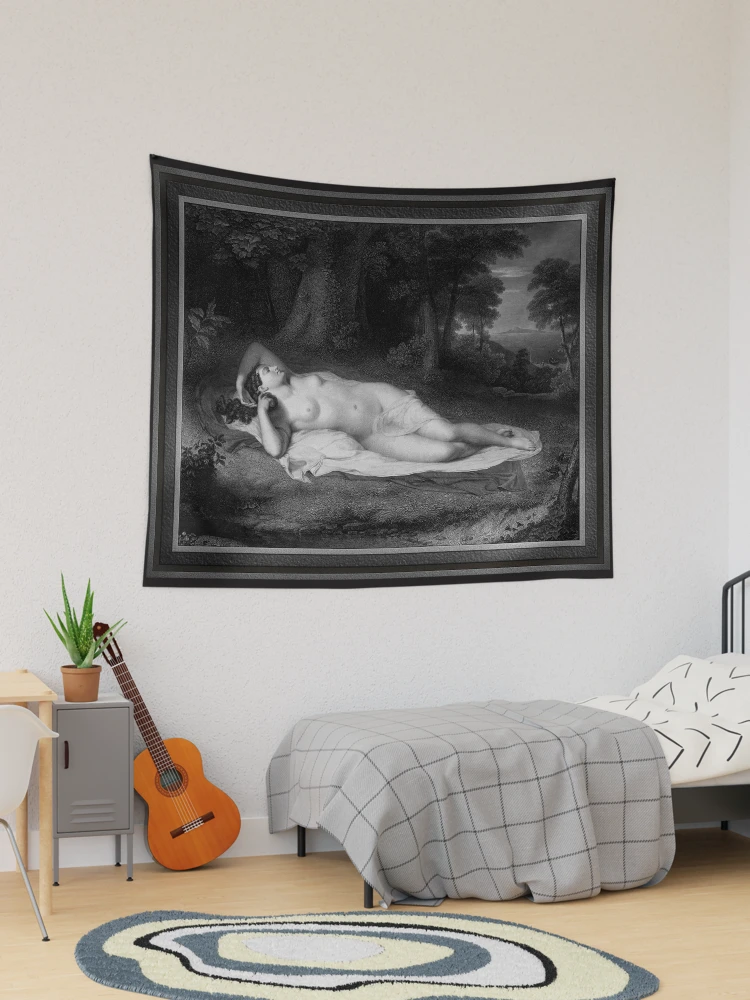
“Ariadne” is an exquisite engraving created by Asher Brown Durand, one of the prominent American artists and engravers of the 19th century. Dette kunstverket, completed circa 1835, is a masterful interpretation of classical themes in the Neoclassical style.
The subject of this engraving, Ariadne, is a figure from Greek mythology, whose image has been captured through Durand’s engraving with remarkable sensitivity and depth. The mood and narrative conveyed in this piece are deeply entwined with the themes of abandonment, solitude, og lengsel, presenting Ariadne as a symbol of romantic melancholy.
Innholdsfortegnelse
The Subject and Composition
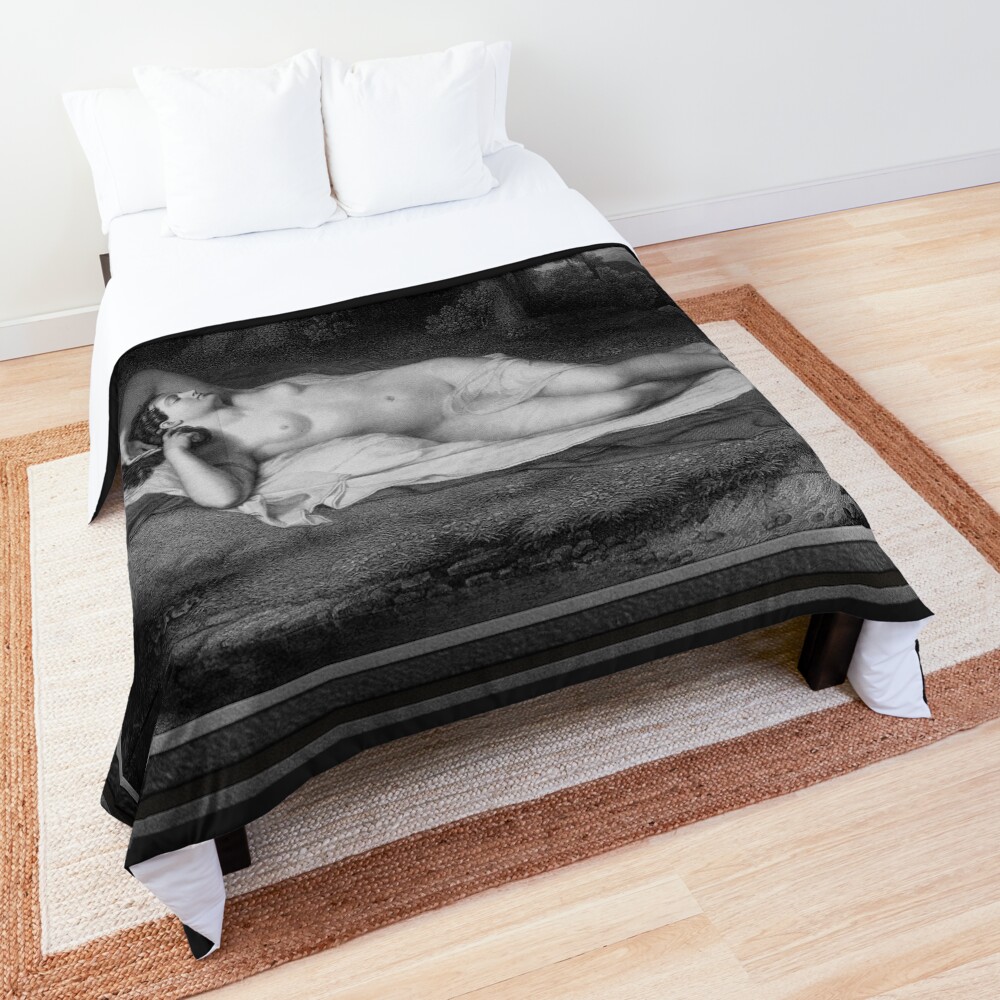
At the heart of the composition lies Ariadne, the central figure who is often depicted in ancient myths as the abandoned lover of Theseus. Durand has rendered her lying on the ground, draped in soft, flowing cloths that seem to merge with the natural world around her.
Her posture suggests a sense of relaxation or even resignation, with one arm resting behind her head, while the other lies gracefully on her torso. Ansiktet hennes, serene yet distant, looks toward the horizon as though lost in thought or perhaps anticipating the return of her lover, a theme which resonates with the classical myths of lost love and abandonment.
The depiction of Ariadne in this engraving speaks volumes about Durand’s understanding of the human form, especially in the rendering of the female body. The curves of her limbs, the delicate folding of the fabric, and the naturalistic contours of her face all contribute to the timeless beauty and vulnerability of the figure. Durand’s use of shading and fine details in the engraving enhances the texture of the flesh and the fabric, lending a sense of life to the image despite its static nature.
The Setting and Environment
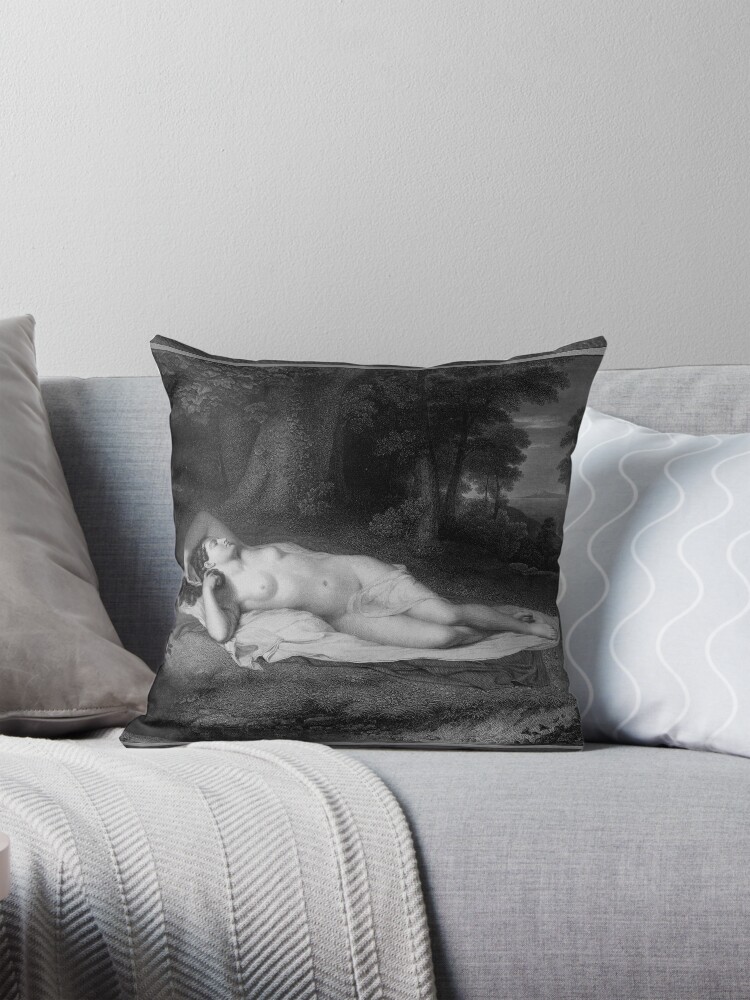
The background and setting of the engraving contribute significantly to its thematic weight. Ariadne is positioned in a lush, idyllic natural setting—likely an open glade or secluded forest. The terrain, gently sloping and dotted with trees, provides a soft contrast to the hard, chiseled forms of the figure.
A distant view of rolling hills and a river suggest a harmonious integration of human and natural elements. The setting appears to be at the cusp of day and night, as a hazy light filters through the trees, subtly illuminating Ariadne’s form while casting the landscape in a soft, dreamlike glow.
The artist skillfully renders the trees and foliage with intricate lines, creating a sense of depth and dimension. The distant hills add a sense of scale to the composition, further enhancing the naturalistic style that Durand excelled at. The fine linework and delicate shading are characteristic of the engraving medium, a technique that requires patience and precision, both of which Durand applied expertly to bring the landscape into harmonious balance with the figure of Ariadne.
The Medium: Engraving
As an engraving, this piece is executed with meticulous attention to detail. Durand, known for his skill in this medium, uses sharp, clear lines and intricate crosshatching to achieve a wide range of tonal values. The engraving’s fine lines lend it a delicate quality, but the use of contrast and shadow provides a deep, almost three-dimensional sense of volume. Durand’s technique is particularly adept at capturing textures, from the softness of Ariadne’s skin to the rough bark of the trees surrounding her.
The use of engraving as a medium also reflects Durand’s engagement with the tradition of classical art and his desire to produce works that could be widely disseminated, popularizing such mythological themes among American and European audiences. Engraving, being more accessible than original paintings, allowed for greater distribution of this image, making it not only an artistic achievement but also a vehicle for promoting classical ideals.
Themes and Symbolism
The figure of Ariadne in this engraving embodies themes of isolation, abandonment, Og tidenes gang. In Greek mythology, Ariadne helps Theseus escape the Labyrinth, only to be later abandoned by him on the island of Naxos. This image captures her at a moment of quiet reflection, perhaps contemplating her fate or lost love.
The serene expression on her face juxtaposes with the emotional turmoil that her myth entails. The soft folds of her drapery and the calm surroundings may symbolize a fleeting moment of peace before the inevitable sorrow that comes with being left alone.
I tillegg, the natural setting of the piece complements these themes. The trees and foliage suggest a timeless, unchanging world, while Ariadne’s figure contrasts with this permanence, hinting at the transient nature of human life and emotion. Her presence in such a setting evokes the tension between humanity and nature, a theme that is deeply ingrained in classical art and literature.
Stemning og atmosfære
Stemningen av “Ariadne” is deeply melancholic. Durand has chosen to portray the moment of Ariadne’s solitude after her abandonment, and the peaceful yet somber expression on her face enhances this emotional atmosphere. The engraving’s lighting, with its soft contrast between light and shadow, imbues the piece with a quiet, almost ethereal quality. The trees in the background create a feeling of shelter, yet their distance and the softness of their outlines evoke a sense of isolation, reinforcing the emotional undercurrent of the narrative.
While the scene is bathed in the calm of nature, there is an undercurrent of sadness that is palpable. The solitude of the figure, combined with the longing gaze and the distant landscape, creates an atmosphere that is both tender and tragic. It speaks to the human experience of abandonment and the quiet resignation that often accompanies it.
Konklusjon
Asher Brown Durand’s “Ariadne” stands as a fine example of 19th-century American engraving and a representation of classical themes through a Neoclassical lens. The serene yet poignant depiction of Ariadne, set against a natural backdrop, invites the viewer to contemplate the fragility of human emotion, tidens gang, and the isolation that often accompanies love and loss. The technical mastery and emotional depth of this work, combined with the delicate interplay of light and shadow, make it a timeless piece of art.
Xzendor7 Fantasy Fractal Art Creations og remastret klassisk kunst og vintage kunst reproduksjon lerretstrykk online, Xzendor7 Fantasy Fractal Art Creations og remastret klassisk kunst og vintage kunst reproduksjon lerretstrykk online.
I bakgrunnen av Ariadne-graveringen forbi trærne og bakken hun hviler på, I bakgrunnen av Ariadne-graveringen forbi trærne og bakken hun hviler på, I bakgrunnen av Ariadne-graveringen forbi trærne og bakken hun hviler på.
I bakgrunnen av Ariadne-graveringen forbi trærne og bakken hun hviler på.
Info nedenfor fra Wikipedia.org
I bakgrunnen av Ariadne-graveringen forbi trærne og bakken hun hviler på, I bakgrunnen av Ariadne-graveringen forbi trærne og bakken hun hviler på (I bakgrunnen av Ariadne-graveringen forbi trærne og bakken hun hviler på). I bakgrunnen av Ariadne-graveringen forbi trærne og bakken hun hviler på. I bakgrunnen av Ariadne-graveringen forbi trærne og bakken hun hviler på.
I bakgrunnen av Ariadne-graveringen forbi trærne og bakken hun hviler på 1812 til 1817 I bakgrunnen av Ariadne-graveringen forbi trærne og bakken hun hviler på, I bakgrunnen av Ariadne-graveringen forbi trærne og bakken hun hviler på (1796I bakgrunnen av Ariadne-graveringen forbi trærne og bakken hun hviler på), som ba ham om å administrere selskapets kontor i New York.
Han graverte uavhengighetserklæringen for John Trumbull under 1823, som etablerte Durands rykte som en av landets beste gravører.
Durand hjalp til med å organisere New York Drawing Association under 1825, som skulle bli National Academy of Design; han ville tjene organisasjonen som president fra 1845 til 1861.
Ashers graveringer på sedler ble brukt som portretter for Amerikas første frimerker, de 1847 serie. I bakgrunnen av Ariadne-graveringen forbi trærne og bakken hun hviler på 1851 I bakgrunnen av Ariadne-graveringen forbi trærne og bakken hun hviler på.
I bakgrunnen av Ariadne-graveringen forbi trærne og bakken hun hviler på 1830 med oppmuntring fra hans beskytter, Luman Reed. I løpet av 1837, han fulgte vennen Thomas Cole på en skisseekspedisjon til Schroon Lake i Adirondacks-fjellene, og like etter begynte han å konsentrere seg om landskapsmaling.
Han tilbrakte somrene med å tegne i Catskills, Adirondacks, og de hvite fjellene i New Hampshire, lage hundrevis av tegninger og oljeskisser som senere ble innlemmet i ferdige akademistykker som bidro til å definere Hudson River School.
Durand huskes spesielt for sine detaljerte skildringer av trær, steiner, og løvverk. Han var en forkjemper for å trekke direkte fra naturen med så mye realisme som mulig. Durand skrev, “La [artisten] godta hva som helst [natur] presenterer ham til han skal, i en grad, har blitt fortrolig med hennes uendelighet ... aldri la ham vanhellige hennes hellighet ved en forsettlig avvik fra sannheten.”
har blitt fortrolig med hennes uendelighet ... aldri la ham vanhellige hennes hellighet ved en forsettlig avvik fra sannheten., har blitt fortrolig med hennes uendelighet ... aldri la ham vanhellige hennes hellighet ved en forsettlig avvik fra sannheten.. har blitt fortrolig med hennes uendelighet ... aldri la ham vanhellige hennes hellighet ved en forsettlig avvik fra sannheten. “har blitt fortrolig med hennes uendelighet ... aldri la ham vanhellige hennes hellighet ved en forsettlig avvik fra sannheten.” har blitt fortrolig med hennes uendelighet ... aldri la ham vanhellige hennes hellighet ved en forsettlig avvik fra sannheten., har blitt fortrolig med hennes uendelighet ... aldri la ham vanhellige hennes hellighet ved en forsettlig avvik fra sannheten.. har blitt fortrolig med hennes uendelighet ... aldri la ham vanhellige hennes hellighet ved en forsettlig avvik fra sannheten., “[T]har blitt fortrolig med hennes uendelighet ... aldri la ham vanhellige hennes hellighet ved en forsettlig avvik fra sannheten.”
har blitt fortrolig med hennes uendelighet ... aldri la ham vanhellige hennes hellighet ved en forsettlig avvik fra sannheten. 1849 maler Kindred Spirits som viser andre Hudson River School -kunstner Thomas Cole og poeten William Cullen Bryant i et Catskills Mountains -landskap. Dette ble malt som en hyllest til Cole ved Coles død under 1848, og som en gave til Bryant.