

Atlas y las Hespérides
Atlas y las Hespérides: A Study in Labor and Mythological Beauty
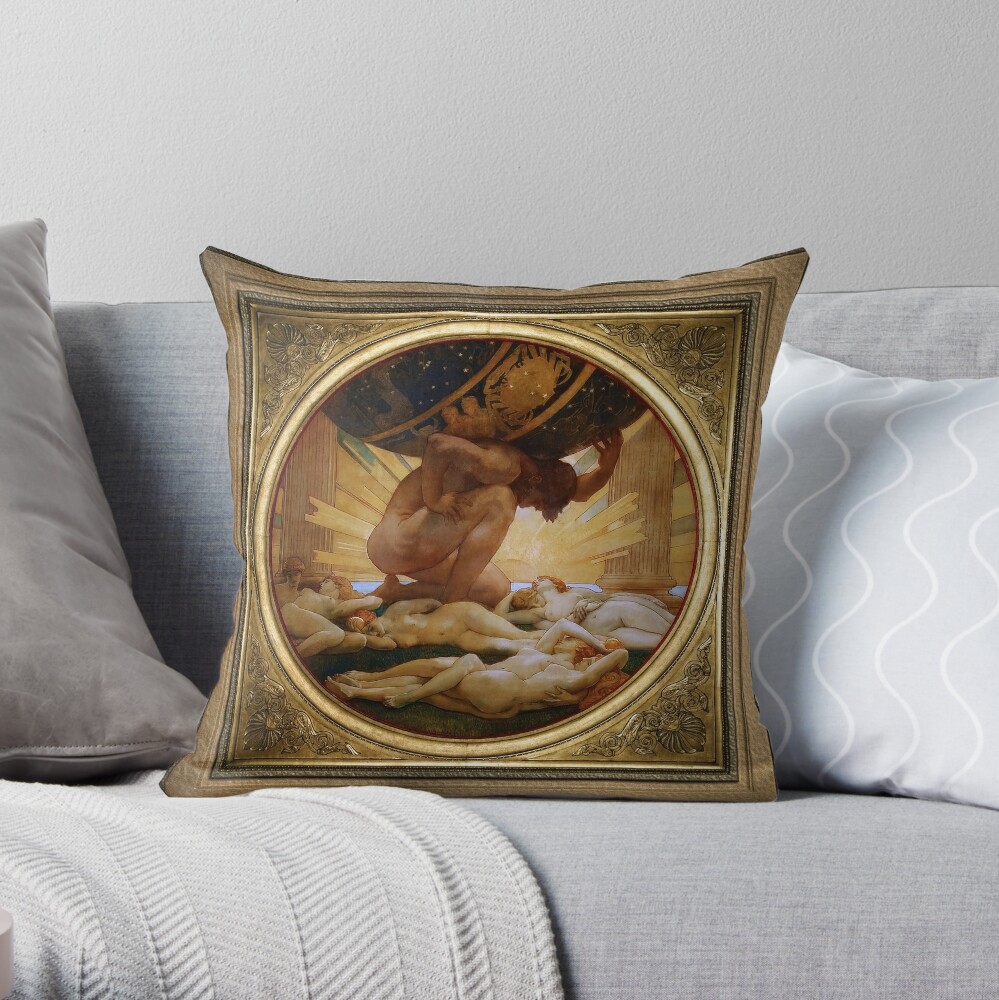
John Singer Sargent’s “Atlas and the Hesperides,"Pintado circa 1890-1895, is a striking example of his mastery of classical subject matter and dramatic composition. This oval-shaped canvas, originally intended as part of a larger decorative scheme for a Boston mansion, presents a compelling narrative drawn from Greek mythology, focusing on the titan Atlas’s arduous task and the serene beauty of the Hesperides, nymphs associated with the Garden of the Hesperides. Sargent’s work is not merely an illustration of myth; it’s a profound exploration of physical strain, mythological context, and aesthetic harmony.

Tabla de contenido
Estructura compositiva & The Oval Format
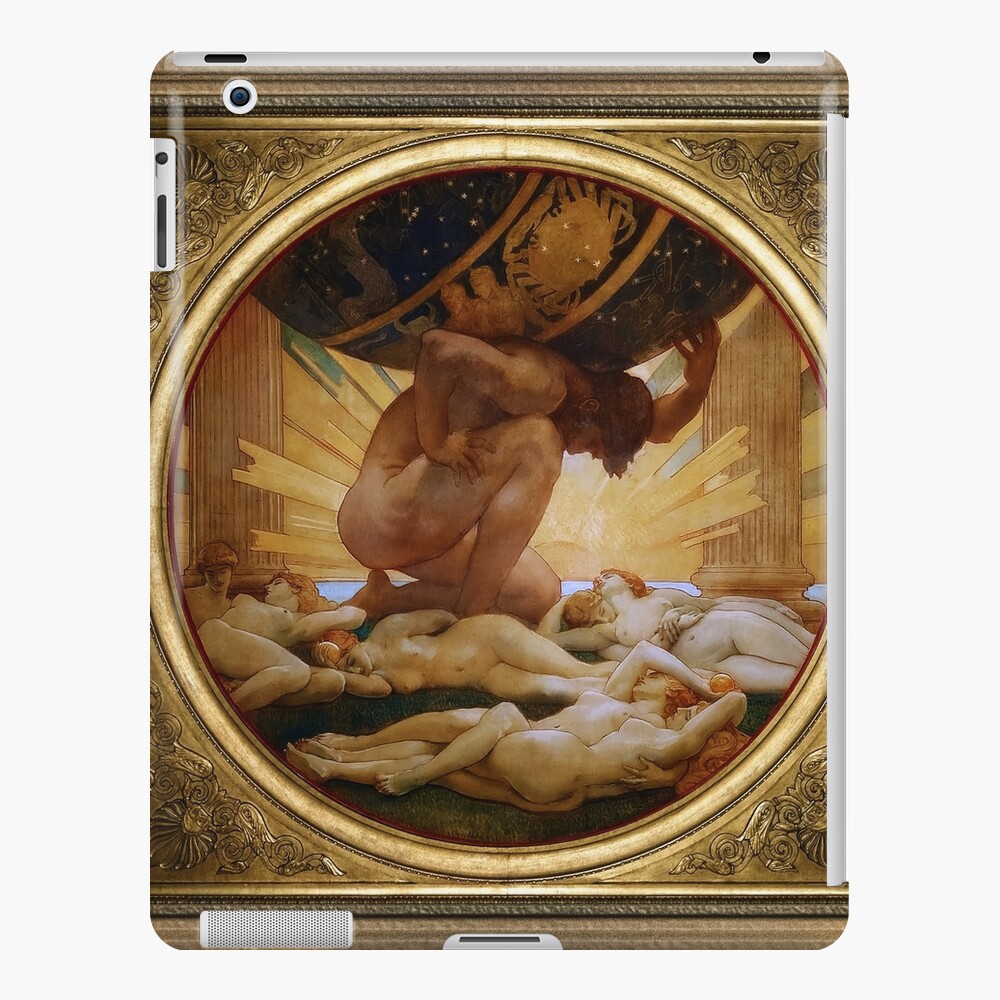
The painting’s unusual oval format immediately draws attention to its unique design. This shape dictates a circular flow within the composition, guiding the viewer’s eye around Atlas and the Hesperides. Sargent skillfully utilizes this constraint, creating a sense of contained drama. The central focus is undeniably on Atlas, whose immense form dominates the lower half of the canvas. He is depicted bearing an enormous celestial sphere, studded with stars, upon his shoulders and back. This weight visually crushes him; his posture conveys exhaustion and unrelenting effort. The oval shape emphasizes the cyclical nature of Atlas’s punishment – a perpetual burden.
Atlas: The Embodiment of Labor
Sargent’s portrayal of Atlas is remarkable for its realism despite the mythological context. He isn’t idealized in the traditional heroic sense; en cambio, he appears weary and burdened. His musculature is realistically rendered, showing signs of strain rather than exaggerated strength. The artist uses a muted palette of browns, ocres, and grays to depict Atlas’s skin and beard, further emphasizing his earthbound nature and the toll of his labor. The texture of his hair and beard is meticulously detailed, adding to the sense of realism. His gaze is averted, focused on the task at hand rather than any external observer, reinforcing the idea of solitary endurance.
The Hesperides: A Counterpoint of Serenity
In stark contrast to Atlas’s exertion, the Hesperides are depicted in a state of tranquil repose. They lie scattered across the lower foreground, their bodies bathed in golden light emanating from behind Atlas. Their poses are relaxed and languid, suggesting a carefree existence far removed from Atlas’s suffering. Sargent employs a lighter palette for these figures – creams, rosa, and pale yellows – to differentiate them visually from Atlas’s darker tones. The nymphs appear almost ethereal, their forms blending seamlessly with the surrounding light. Their presence serves as a poignant counterpoint to Atlas’s struggle, highlighting the disparity between his burden and their ease.
Luz & Atmósfera: A Radiant Backdrop
La iluminación en “Atlas and the Hesperides” is crucial to the painting’s overall effect. The radiant glow emanating from behind Atlas creates a dramatic backlight, silhouetting his figure against the celestial sphere. This light also illuminates the Hesperides, giving them an almost divine quality. Sargent masterfully uses chiaroscuro – the contrast between light and dark – to create depth and drama. The background is indistinct, suggesting a hazy atmosphere that further isolates Atlas and emphasizes the weight of his task. The golden light isn’t harsh; it’s diffused and warm, creating a sense of timelessness and mythological grandeur.
Influencias artísticas & Sargent’s Style
Sargent’s style in this painting reflects his deep engagement with classical art traditions, particularly those of the Renaissance. The composition echoes works by Raphael and Michelangelo, while the realistic depiction of the human form owes a debt to artists like Leonardo da Vinci. sin emabargo, Sargent’s approach is distinctly his own. He avoids excessive idealization, opting instead for a more naturalistic portrayal of both Atlas and the Hesperides. His brushwork is loose and expressive, particularly in the rendering of the celestial sphere and the background atmosphere. The painting demonstrates Sargent’s ability to synthesize classical influences with a modern sensibility.
Simbolismo & Interpretación
Beyond its narrative depiction of Greek mythology, “Atlas and the Hesperides” can be interpreted on multiple levels. Atlas’s burden represents the weight of responsibility and the enduring nature of labor. The celestial sphere symbolizes knowledge, sabiduría, or perhaps even the universe itself – a vast and unknowable entity that Atlas is tasked with supporting. The Hesperides, associated with the golden apples of immortality, represent beauty, tranquilidad, and the rewards that may lie beyond arduous effort. Sargent’s painting invites contemplation on themes of human endurance, the contrast between labor and leisure, and the enduring power of myth.
Biografía del artista derivada de Wikipedia.org
John Singer Sargent era un artista expatriado estadounidense, considerado el “principal retratista de su generación” por sus evocaciones del lujo de la era eduardiana.
Él creó aproximadamente 900 pinturas al óleo y más de 2,000 acuarelas, así como innumerables bocetos y dibujos al carboncillo.
Su obra documenta viajes por todo el mundo, de Venecia al Tirol, Corfú, el medio Oriente, Montana, Maine, y Florida.
Nacido en Florencia de padres estadounidenses, se formó en París antes de mudarse a Londres, viviendo la mayor parte de su vida en Europa.
En la década de 1880 hizo una presentación temprana al Salón de París de su Retrato de Madame X c1884, que la intención de consolidar su posición como pintor de sociedad en París; pero en cambio la pintura resultó en un escándalo.
El retrato de Madame X fue de una destacada socialité, Madame Pierre Gautreau vestida con un vestido de noche negro con escote pronunciado y tirantes de cadena de diamantes dorados, que le acariciaba la cintura con fuerza.
Por los tiempos, sugirió a muchos parisinos, una pose indiscreta en atuendo revelador y provocó una tormenta de indignación, obligando a Sargent a salir del país.
Al año siguiente, Sargent partió hacia Inglaterra, donde continuó una exitosa carrera como retratista.; y gozó de la aclamación internacional como retratista.
Desde el principio, El trabajo de Sargent se caracterizó por una notable facilidad técnica, particularmente en su habilidad para dibujar con un pincel; que en años posteriores inspiró admiración y crítica por una supuesta superficialidad.
Sus obras encargadas estaban en consonancia con la gran forma de retratar., mientras que sus estudios informales y pinturas de paisajes mostraron una familiaridad con el impresionismo.
Más tarde, Sargent expresó su ambivalencia sobre las restricciones del trabajo de retrato formal., y dedicó gran parte de su energía a la pintura mural y al trabajo en plein air.
Esta es una reproducción de maestros antiguos de arte digital retocada de una imagen de dominio público que está disponible para su compra en línea como lienzo enrollado.