

Atlas And The Hesperides
Atlas And The Hesperides: A Study in Labor and Mythological Beauty
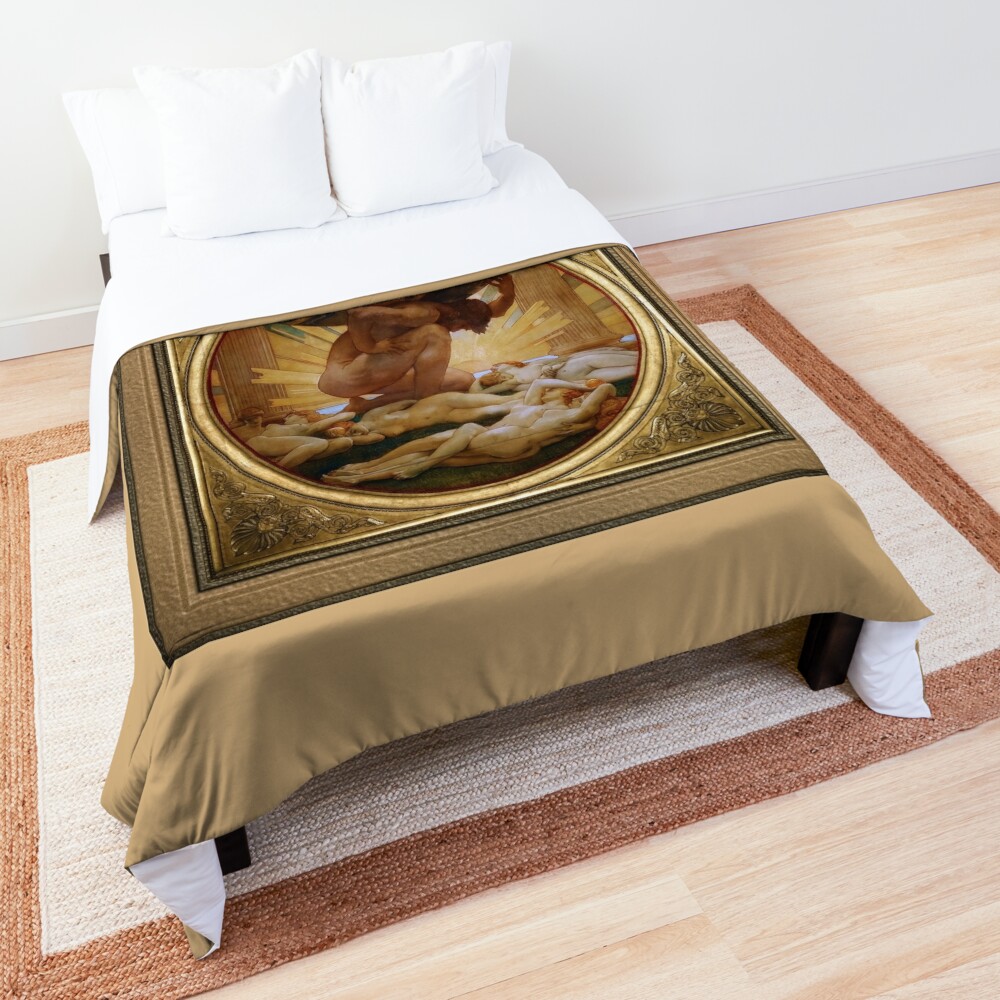
John Singer Sargent’s “Atlas and the Hesperides,“ málað umr 1890-1895, is a striking example of his mastery of classical subject matter and dramatic composition. This oval-shaped canvas, originally intended as part of a larger decorative scheme for a Boston mansion, presents a compelling narrative drawn from Greek mythology, focusing on the titan Atlas’s arduous task and the serene beauty of the Hesperides, nymphs associated with the Garden of the Hesperides. Sargent’s work is not merely an illustration of myth; it’s a profound exploration of physical strain, mythological context, og fagurfræðilegu samræmi.
Efnisyfirlit
Samsetningaruppbygging & The Oval Format
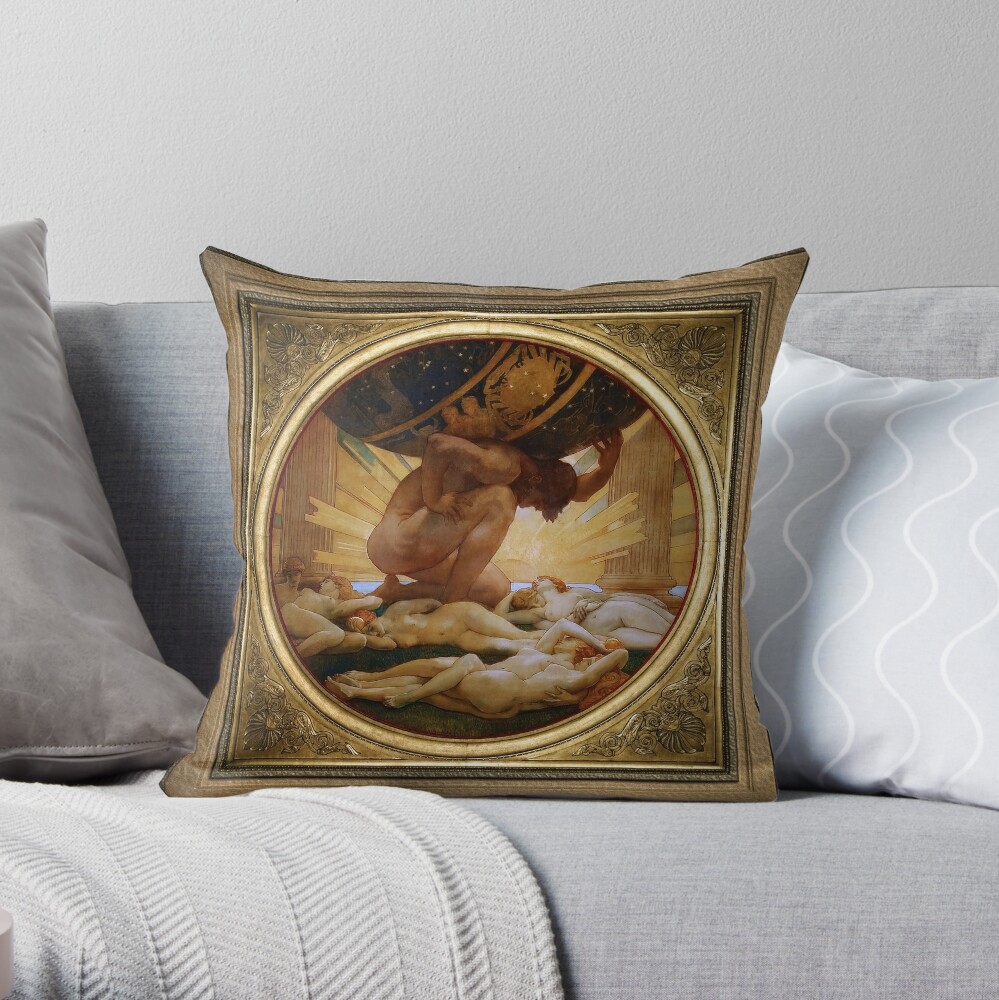
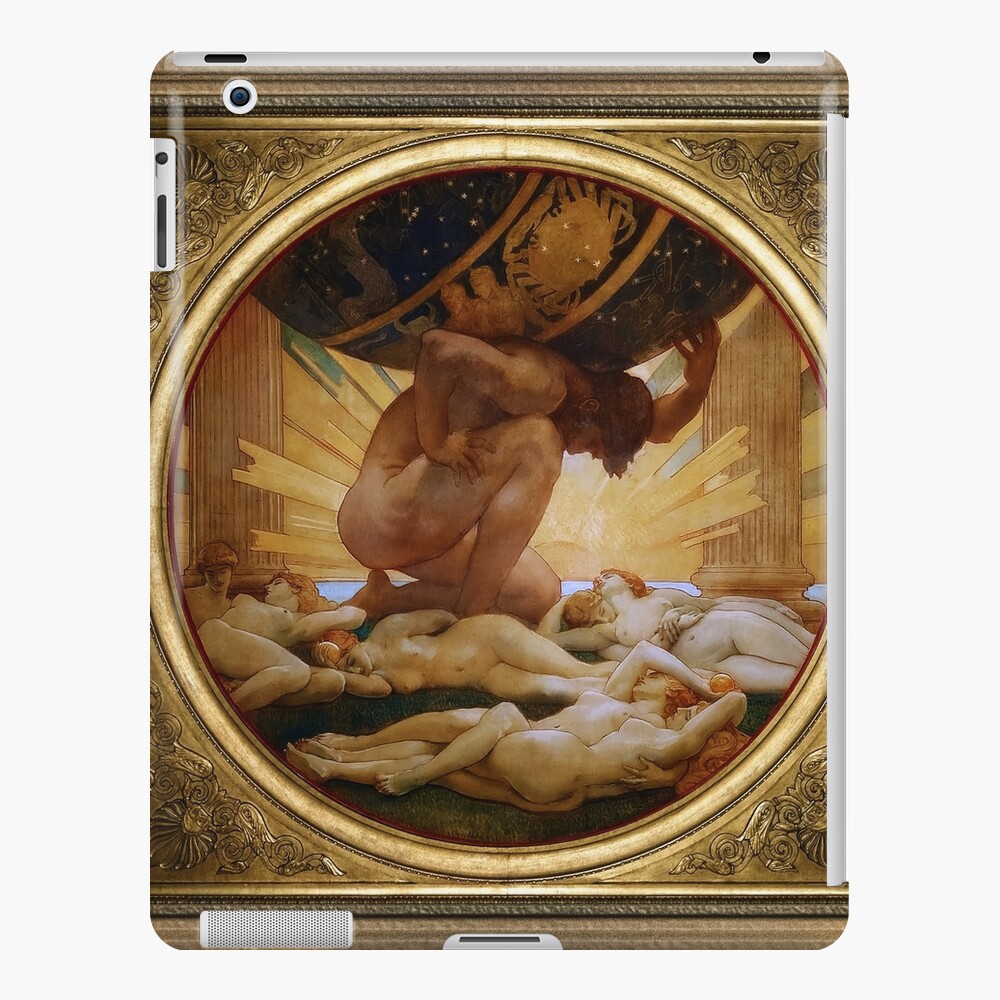
The painting’s unusual oval format immediately draws attention to its unique design. This shape dictates a circular flow within the composition, guiding the viewer’s eye around Atlas and the Hesperides. Sargent skillfully utilizes this constraint, creating a sense of contained drama. The central focus is undeniably on Atlas, whose immense form dominates the lower half of the canvas. He is depicted bearing an enormous celestial sphere, studded with stars, upon his shoulders and back. This weight visually crushes him; his posture conveys exhaustion and unrelenting effort. The oval shape emphasizes the cyclical nature of Atlas’s punishment – a perpetual burden.
Atlas: The Embodiment of Labor
Sargent’s portrayal of Atlas is remarkable for its realism despite the mythological context. He isn’t idealized in the traditional heroic sense; í staðinn, he appears weary and burdened. His musculature is realistically rendered, showing signs of strain rather than exaggerated strength. The artist uses a muted palette of browns, okrar, and grays to depict Atlas’s skin and beard, further emphasizing his earthbound nature and the toll of his labor. The texture of his hair and beard is meticulously detailed, adding to the sense of realism. His gaze is averted, focused on the task at hand rather than any external observer, reinforcing the idea of solitary endurance.
The Hesperides: A Counterpoint of Serenity
In stark contrast to Atlas’s exertion, the Hesperides are depicted in a state of tranquil repose. They lie scattered across the lower foreground, their bodies bathed in golden light emanating from behind Atlas. Their poses are relaxed and languid, suggesting a carefree existence far removed from Atlas’s suffering. Sargent employs a lighter palette for these figures – creams, Bleikir, and pale yellows – to differentiate them visually from Atlas’s darker tones. The nymphs appear almost ethereal, their forms blending seamlessly with the surrounding light. Their presence serves as a poignant counterpoint to Atlas’s struggle, highlighting the disparity between his burden and their ease.
Ljós & Andrúmsloft: A Radiant Backdrop
The lighting in “Atlas and the Hesperides” is crucial to the painting’s overall effect. The radiant glow emanating from behind Atlas creates a dramatic backlight, silhouetting his figure against the celestial sphere. This light also illuminates the Hesperides, giving them an almost divine quality. Sargent masterfully uses chiaroscuro – the contrast between light and dark – to create depth and drama. The background is indistinct, suggesting a hazy atmosphere that further isolates Atlas and emphasizes the weight of his task. The golden light isn’t harsh; it’s diffused and warm, creating a sense of timelessness and mythological grandeur.
Listræn áhrif & Sargent’s Style
Sargent’s style in this painting reflects his deep engagement with classical art traditions, particularly those of the Renaissance. The composition echoes works by Raphael and Michelangelo, while the realistic depiction of the human form owes a debt to artists like Leonardo da Vinci. Hins vegar, Sargent’s approach is distinctly his own. He avoids excessive idealization, opting instead for a more naturalistic portrayal of both Atlas and the Hesperides. His brushwork is loose and expressive, particularly in the rendering of the celestial sphere and the background atmosphere. The painting demonstrates Sargent’s ability to synthesize classical influences with a modern sensibility.
Táknmál & Túlkun
Beyond its narrative depiction of Greek mythology, “Atlas and the Hesperides” can be interpreted on multiple levels. Atlas’s burden represents the weight of responsibility and the enduring nature of labor. The celestial sphere symbolizes knowledge, visku, or perhaps even the universe itself – a vast and unknowable entity that Atlas is tasked with supporting. The Hesperides, associated with the golden apples of immortality, represent beauty, tranquility, and the rewards that may lie beyond arduous effort. Sargent’s painting invites contemplation on themes of human endurance, the contrast between labor and leisure, and the enduring power of myth.
Listamaður Bio fenginn frá Wikipedia.org
John Singer Sargent var bandarískur útrásarlistamaður, taldi “fremsti portrettmálari sinnar kynslóðar” fyrir upphrópanir hans um lúxus frá Játvarðstímanum.
Hann skapaði nokkurn veginn 900 olíumálverk og fleira en 2,000 vatnslitamyndir, auk ótal skissur og kolateikningar.
Verk hans skráir ferðalög um heiminn, frá Feneyjum til Týról, Korfú, Miðausturlöndum, Montana, Maine, og Flórída.
Fæddur í Flórens af bandarískum foreldrum, hann var þjálfaður í París áður en hann flutti til London, býr mestan hluta ævi sinnar í Evrópu.
Á níunda áratugnum lagði hann snemma fram til Parísarstofunnar Madame X Portrait hans c1884, sem ætlað er að treysta stöðu sína sem samfélagsmálari í París; en þess í stað leiddi málverkið af sér hneyksli.
The Madame X Portrait var af leiðandi félagshyggjufólki, Madame Pierre Gautreau klædd í svartan síðkjól með hálsmáli með gylltum demantskeðju axlaböndum, sem strauk þétt um mitti hennar.
Fyrir tímann, það lagði til við marga Parísarbúa, óskynsamleg uppástunga í afhjúpandi klæðnaði og vakti mikla reiði, neyða Sargent til að yfirgefa landið.
Árið eftir fór Sargent til Englands þar sem hann hélt áfram farsælum ferli sem portrettlistamaður; og naut alþjóðlegrar viðurkenningar sem portrettmálari.
Frá upphafi, Starf Sargents einkenndist af ótrúlegri tæknilegri aðstöðu, sérstaklega í getu hans til að teikna með pensli; sem á seinni árum vakti aðdáun jafnt sem gagnrýni fyrir meinta yfirborðsmennsku.
Pöntunarverk hans voru í samræmi við stórfenglegan hátt á portrettmyndum, á meðan óformlegar rannsóknir hans og landslagsmálverk sýndu þekkingu á impressjónisma.
Síðar á ævinni lýsti Sargent tvímælis um takmarkanir á formlegri portrettvinnu, and devoted much of his energy to mural painting and working en plein air.
Þetta er lagfærð stafræn list af gömlum meistara eftirgerð af mynd sem er í almenningseign sem hægt er að kaupa á netinu sem rúllað strigaprentun.