

Bacchante c1904
L'obra d'art titulada “Bacchante c1904” per French painter Édouard-Louis Dubufe (1849 – 1926) is an exemplary representation of the decadent and sensuous art movement that flourished during the late 19th and early 20th centuries. The painting depicts a Bacchante, a follower of Bacchus, the Roman god of wine, revelry, and ecstasy, engaging in a moment of wild celebration. In this vibrant and evocative piece, Dubufe presents the Bacchante as an embodiment of fertility, sensualitat, and the untamed spirit of nature. L'obra d'art, pintat a 1904, features dynamic composition, exquisite use of color, and a delicate yet bold interplay of figures and landscape that gives a profound depth to the scene.
Taula de continguts
El tema principal: The Bacchante
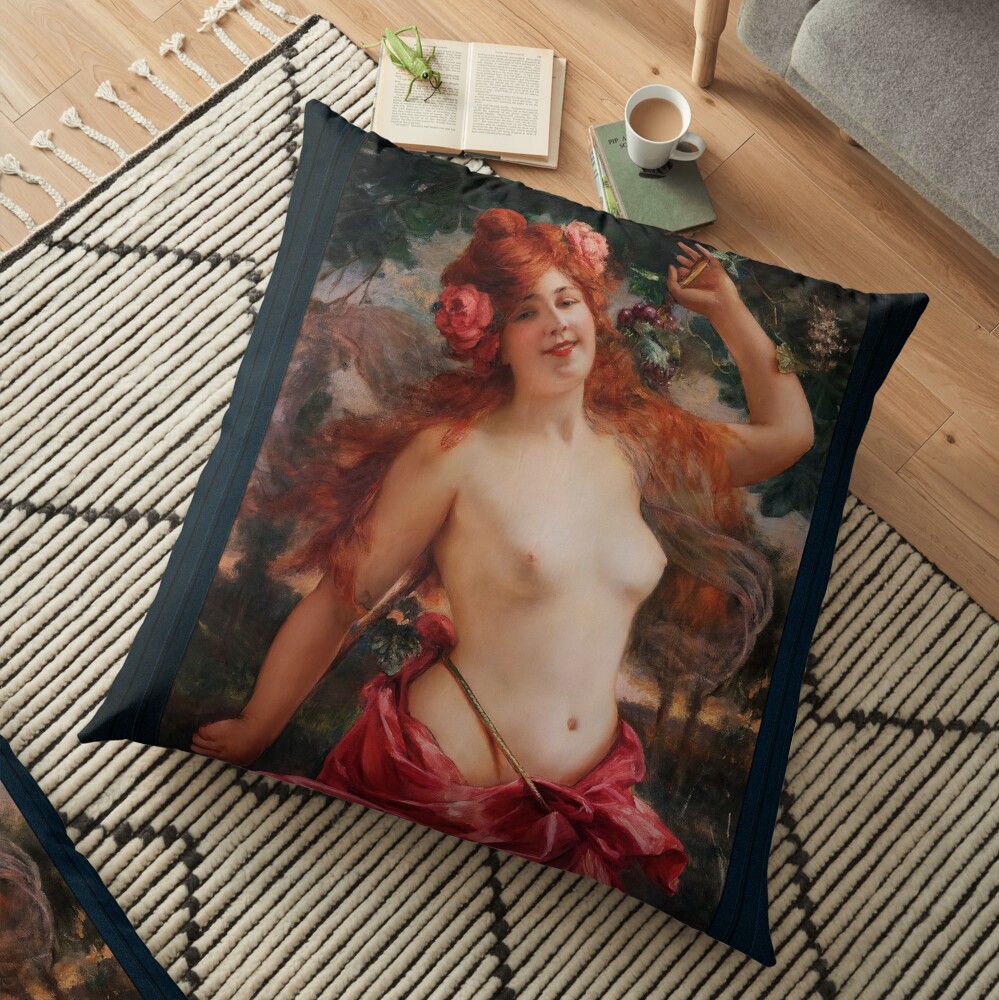
At the center of the composition is the Bacchante herself, an alluring and radiant figure with flowing red hair and an expression of carefree abandon. She is partially draped in a rich, crimson cloth, which clings to her waist and sways gracefully as though caught by the wind, lending a sense of movement and fluidity to her figure. Her exposed chest, a motif commonly associated with depictions of goddesses and mythological figures, further enhances her connection to ancient traditions of fertility and divine femininity.
Els seus cabells, adorned with roses, complements her vibrant personality and adds to the naturalistic elements of the piece, emphasizing her connection to the natural world. The flowers in her hair are not only decorative but symbolic of the blossoming energy of spring and the wild, untamed beauty of the Bacchantes, who were often shown as free-spirited and wild in their celebration of Bacchus.
A la seva mà esquerra, the Bacchante holds a bundle of flowers and fruit, offering an additional connection to fertility, abundància, and the cyclical nature of life. The soft curve of her body and the subtle movement of her limbs communicate the Bacchante’s intimate connection to the earth and the spirit of revelry that was central to Bacchic rites.
The Background and Landscape
The background of the painting provides an idyllic and lush landscape, with elements that reinforce the Bacchante’s association with nature. The dense foliage of trees and leaves form a rich tapestry, evoking a sense of timelessness and the setting of a mythological realm. There is a sense of depth as the viewer’s eye is drawn from the vibrant foreground, filled with the Bacchante and her flowing garments, into the shaded, mysterious distance, where the landscape transitions into softer hues of twilight or dusk.
The use of greenery and florals suggests a world untouched by modernity, inviting the viewer to immerse themselves in the divine and hedonistic atmosphere of the scene. Dubufe’s brushwork captures the energy of the natural surroundings with a sense of realism, while still allowing the viewer to sense the dreamlike and ethereal quality of the mythological setting.
The Mood and Symbolism
L'estat d'ànim de “Bacchante c1904” is one of unabashed joy, exuberance, and freedom. The Bacchante is not only a representation of female beauty but also of the exuberant, hedonistic forces of nature. She embodies both the literal and metaphorical meanings of Bacchic rituals, which often involved dancing, drinking, and an ecstatic surrender to the forces of nature and divinity.
The emotional resonance of the piece is one of pleasure and indulgence, an invitation to lose oneself in the experience of life, liberated from societal constraints. The Bacchante’s uninhibited posture, the sensuous drapery, and the vivid colors all speak to the liberating theme of release from repression, particularly in relation to natural forces and desires. This theme aligns with the broader aesthetic and cultural currents of the Belle Époque period, where decadence and the pursuit of pleasure were often glorified.
L'estil i la tècnica artística
Édouard-Louis Dubufe’s technique is a brilliant display of his mastery of color and light, with a marked attention to detail in the depiction of both the human figure and the natural world. His use of oil paints allows for a fluidity of texture and depth, with delicate gradations of light that imbue the painting with a soft glow. The contrast between the Bacchante’s warm skin tones and the cool, shadowed background creates a visual harmony that highlights her as the central focus of the painting.
Dubufe’s brushwork is characterized by both bold strokes and finer, more refined details, such as the folds of the Bacchante’s red cloth and the flowers in her hair. La suau barreja de les figures i el paisatge circumdant evoca una atmosfera gairebé romàntica, emfatitzant les qualitats sensuals i mítiques de la temàtica.
The Theme of Bacchus and the Bacchantes
El tema de Bacus i els seus seguidors, les Bacantes, té una llarga tradició en l'art clàssic. En la mitologia romana, Bacus era el déu del vi, revelry, and ecstasy, i els seus seguidors, sovint representades com a dones frenètics, va participar en els seus ritus amb abandon. Tradicionalment, aquestes escenes estaven destinades a evocar una sensació del caos diví que es creia que s'alliberava mitjançant la indulgència als rituals bàquics.. La interpretació de Dubufe de la Bacante és alhora una celebració d'aquest tema mitològic i un reflex del compromís personal de l'artista amb el tema de la sensualitat i l'exuberància natural..
The Bacchante’s carefree nature and her connection to the earth mirror the themes of vitality and abundance, concepts that resonated strongly in the art world during the turn of the 20th century, particularly in France. It speaks to the era’s growing interest in mythological and classical subjects, as well as the fascination with the divine and natural forces that transcend the everyday.
Conclusió
“Bacchante c1904” by Édouard-Louis Dubufe is a masterful depiction of mythological exuberance, celebrating both the power and beauty of the human form and the natural world. The Bacchante herself, with her vibrant energy and sensuality, becomes a symbol of the untamed spirit of nature and the divine ecstasy associated with Bacchus. The painting is an ode to freedom, indulgence, and the joyous abandon that art, en la seva millor forma, convida l'espectador a experimentar. A través del seu hàbil ús del color, composició, i profunditat temàtica, Dubufe captura l'essència atemporal de la Bacante d'una manera que transcendeix els límits històrics i culturals..
Es tracta d'una reproducció d'antics mestres d'art digital remasteritzada d'una imatge de domini públic que està disponible com a Impressió de tela en línia.
Aquesta creació d'art digital, com amb totes les obres d'art que es poden trobar al lloc web de Xzendor7, es poden comprar en línia en una varietat de formats de material, incloses impressions de llenç, impressions acríliques, estampes de metall, estampes de fusta, impressions emmarcades, cartells, i com impressions de llenços enrotllats en una varietat de mides de 12 polzades a 72 polzades depenent de la mida de l'obra d'art real i de la botiga d'impressió sota demanda on trieu comprar l'art.
L'obra d'art també està disponible en una àmplia gamma de roba d'home i dona, tasses, bosses, mocadors, quaderns i revistes i molts productes de decoració de la llar.
Sobre l'artista
Informació a continuació derivada de Wikipedia.org
Édouard era fill del pintor francès Claude Marie Paul Dubufe (1790 – 1864); que es va especialitzar en gènere, històric i retrat, dins 1819 i qui li va donar la seva primera instrucció artística.
Quan era gran, Édouard va estudiar amb el pintor històric francès Paul Delaroche (1797 – 1856) a l'École des Beaux-arts.