

Kraka c1862
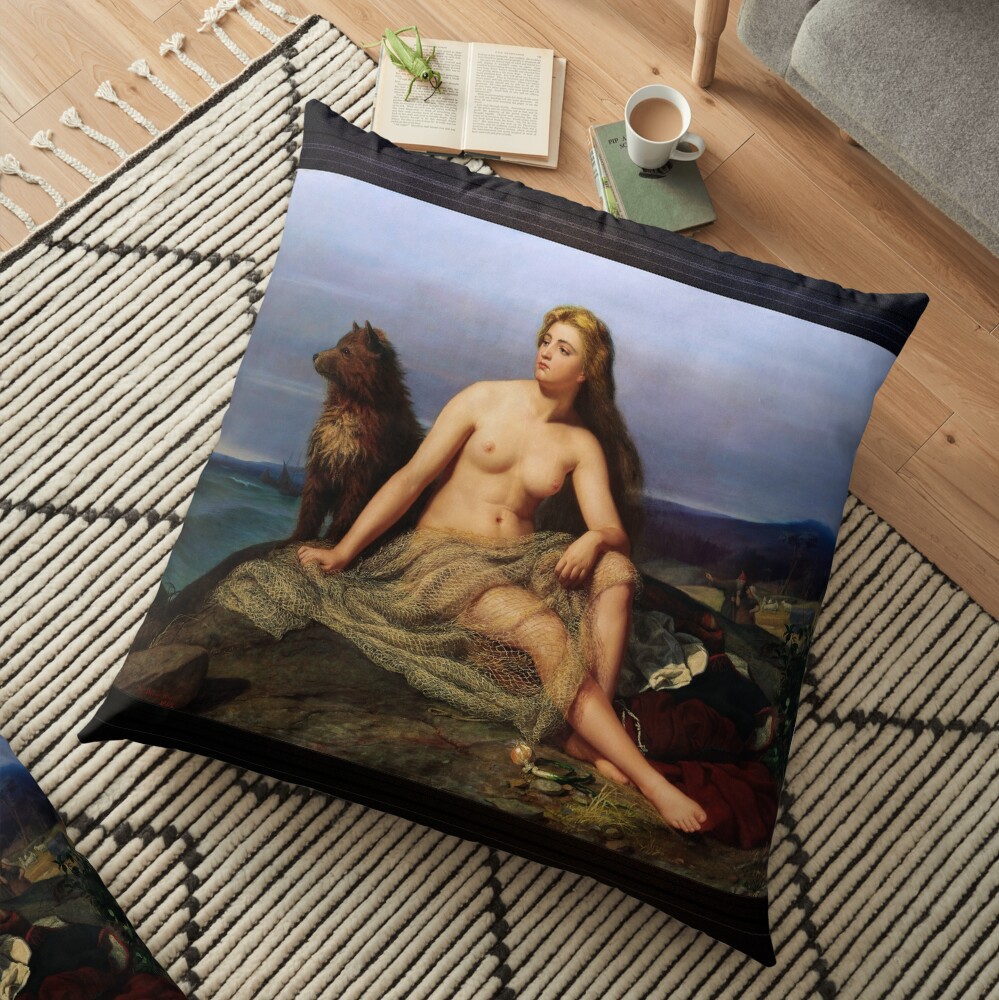
“Braç,” creat a 1862 per la Artista suec Marten Eskil Winge (1825 – 1896), s'erigeix com un poderós exemple del realisme romàntic al segle XIX. Aquest quadre captura una escena mitològica que combina el món místic amb el natural, amb una dona jove acompanyada d'un llop salvatge. La capacitat de Winge per fusionar la forma humana amb elements de la natura demostra la seva profunda comprensió dels temes clàssics i dels ideals romàntics., evocant una sensació d'harmonia i solitud.
Taula de continguts
El subjecte
Al cor de “corb” rau la figura d'una dona jove, assegut amb gràcia en un aflorament rocós a la vora. Es representa en un moment de contemplació tranquil·la, la seva mirada es va dirigir lleugerament cap a la distància, potser perdut en els pensaments o en la reverència pel paisatge natural que tenia davant. La dona, anomenat Corb, està retratat nu, coberta només per una xarxa de pesca que li cobreix sense problemes la part inferior del cos. La delicadesa de la seva posada i la representació naturalista de la seva forma suggereixen una puresa de connexió entre la humanitat i la natura.
La seva pell pàl·lida contrasta sorprenentment amb els tons rics del paisatge, mentre que la natura salvatge de la xarxa al seu voltant forma un vincle immediat amb el món natural i la força primordial dels indómits.. No sembla obertament sexualitzada; una mica, ella representa un arquetip mitològic, potser una deessa o un esperit del desert, estretament lligat a la terra, les seves criatures, i el poder desenfrenat de la natura. La postura relaxada i l'expressió serena de la dona evoquen una sensació de convivència pacífica amb el món natural.
El Llop
Al seu costat, el llop és alhora company i guardià. L'animal està representat amb molta atenció als detalls, la seva pell texturada i la seva postura alerta. La posició del llop al costat de Kráka implica una profunditat, vincle simbiòtic entre la dona i la criatura, tots dos semblen pertànyer al desert salvatge. La presència del llop no és d'agressivitat sinó de lleialtat i vigilància, que eleva el tema de l'harmonia entre els humans i el món natural.
La representació del llop de Winge està impregnada d'un sentit de simbolisme mitològic. En moltes cultures, els llops són venerats com a protectors, símbols de coratge, i representants de les forces salvatges de la natura. El paper de l'animal aquí sembla emfatitzar la connexió profundament arrelada de Kráka amb els aspectes primordials i indomables del món., reforçant el to mític de l'escena.
El paisatge i el terreny
El paisatge que envolta Kráka i el llop és extens, augmentant la sensació d'aïllament i allunyament de la pintura. Al fons es desplega una costa espectacular, on les roques dentades borden la costa i el mar s'estén fins a l'horitzó. Les onades semblen tranquil·les però assertives, tocant suaument contra la costa, mentre que la llum que s'esvaeix de la posta o del sol naixent emet un càlid, resplendor daurat sobre l'escena.
A la dreta, la vista llunyana revela un escàs, terreny accidentat amb arbres i turons que evoquen un desert del nord, possiblement representatiu de la bellesa natural de Suècia. La combinació d'aigua, terra, and sky in the painting suggests a world that is both tranquil and wild, where the forces of nature are at once nurturing and untamable. The natural elements are not mere backdrops but rather integral components that help define the relationship between the human figure and the world she inhabits.
Materials i Tècnica
Winge’s technique in “corb” is marked by rich, detailed brushwork that gives the figures and landscape a lifelike quality. The texture of the woman’s skin and the wolf’s fur is achieved through delicate layers of paint that allow for nuanced shadows and highlights. The artist’s attention to naturalistic detail is evident in the way the light falls across Kráka’s body, subtly illuminating her features and adding depth to the composition.
The rough texture of the fishing net is skillfully rendered, creating an additional contrast between the softness of the figure and the coarse, raw nature of the net. The water and sky are painted with fluid, sweeping brushstrokes that give a sense of movement and life to the scene, reinforcing the theme of nature’s ever-changing power.
The palette Winge employs is rich yet muted, dominated by earth tones and subtle hues. The blues and greens of the water and the surrounding landscape are balanced by the warm, golden light that bathes the scene, creating a harmonious blend of color and atmosphere. This careful control of color helps establish the mood of the painting, which is one of serene contemplation and quiet power.
Estil, Tema, i l'estat d'ànim
The painting adheres to the romantic style, characterized by a deep appreciation for nature, myth, and emotional expression. Winge’s attention to realism is tempered with a sense of the idealized, bringing a sense of awe and reverence to the scene. El tema de “corb” is one of mystical harmony between humanity and the wilderness, a recurring motif in romantic art, where the natural world is portrayed as a place of spiritual power and timeless beauty.
The mood of the painting is contemplative and serene, yet underpinned by an unmistakable sense of primal force. Kráka and the wolf, though surrounded by the peaceful beauty of the landscape, are also linked to something untamed, representing a connection to the forces of nature that remain beyond human control. The painting invites the viewer to consider the beauty and raw power of the natural world, as well as humanity’s place within it. El suau, dreamlike quality of the scene contrasts with the rugged, untamed wilderness, creating a tension that enriches the painting’s narrative.
Conclusió
“corb” by Mårten Eskil Winge is a poignant reflection of the romantic era’s fascination with the sublime and the mythological. The artist masterfully blends mythological themes with natural beauty, creating a work that is both intimate and grand in its scope. Through Kráka, the wolf, and the vast landscape, Winge explores the enduring connection between humanity and the wild, celebrating the untamed beauty of the natural world and its profound influence on the human spirit.
Aquesta és una reproducció de mestres antics d'art digital remasteritzada d'una imatge de domini públic que està disponible com a impressió de llenç en línia..
Aquesta creació d'art digital, com amb totes les obres d'art que es poden trobar al lloc web de Xzendor7, es poden comprar en línia en una varietat de formats de material, incloses impressions de llenç, impressions acríliques, estampes de metall, estampes de fusta, impressions emmarcades, cartells, i com impressions de llenços enrotllats en una varietat de mides de 12 polzades a 72 polzades depenent de la mida de l'obra d'art real i de la botiga d'impressió sota demanda on trieu comprar l'art.
L'obra d'art també està disponible en una àmplia gamma de roba d'home i dona, tasses, bosses, mocadors, quaderns i revistes i molts productes de decoració de la llar.