

Beatrice c1863
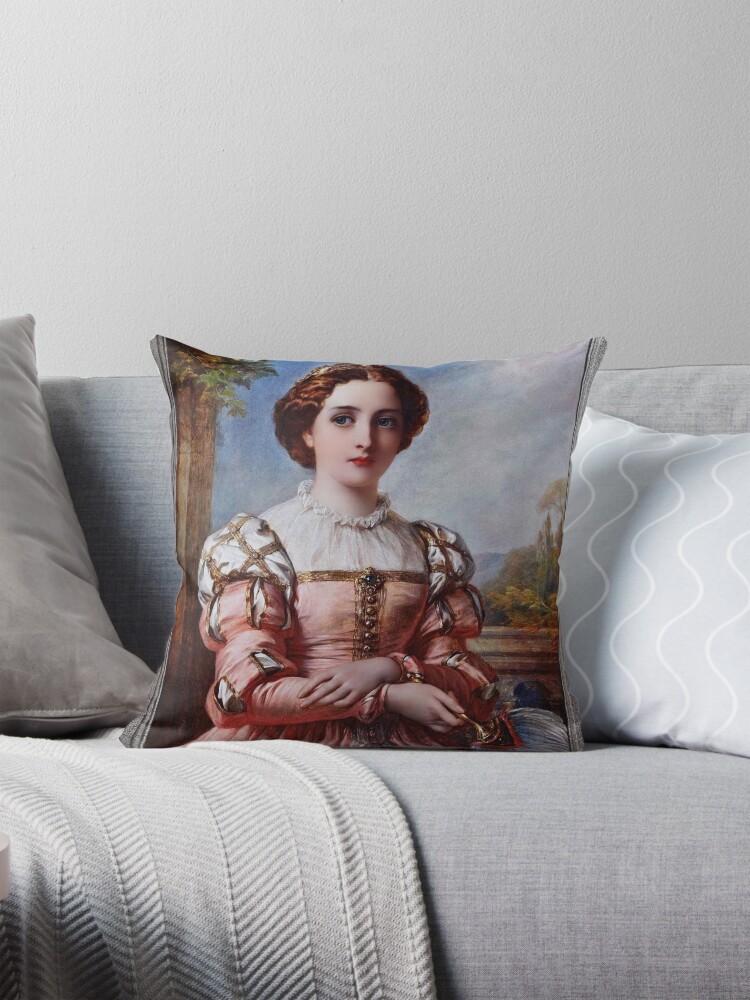
Grafika “Beatrice c1863” was created by the renowned British painter Thomas-Francis Dicksee (1819 – 1895). It features a portret młodej kobiety poised in a serene and regal manner, exhibiting the artist’s skill in portraying idealized beauty and refined grace. Dicksee, known for his historical and mythological subjects, captured the timeless elegance of his subject through careful attention to detail, rich textures, and a classical approach to portraiture.
Spis treści
Przedmiot i kompozycja
W tym kawałku, the main subject is a woman dressed in lavish pink attire, holding a delicate fan. Her posture is upright, her hands placed with a sense of elegance and grace, holding the fan in her left hand while her right arm rests gently at her side. Patrzy bezpośrednio na widza ze spokojnym, ale introspekcyjnym wyrazem twarzy. Artystka nadała jej atmosferę szlachetności i siły, jakby była członkiem rodziny królewskiej lub ważną wówczas szlachcianką.
Twarz obiektu jest delikatnie oświetlona, a artystka uchwyciła głębię emocji w swoich wyrazistych oczach, dające poczucie tajemniczości. Delikatne rysy modelki i młodzieńczy wygląd sugerują, że jest to postać o wysokim statusie lub znaczeniu. Jej skóra jest gładka i świetlista, kontrastujący z delikatnością różowej sukni, a jej długie brązowe włosy są starannie ułożone, przyczyniając się do szlachetnej prezentacji. Jej korona, który wygląda jak królewski diadem, dodaje jej roli jeszcze większej powagi i podkreśla jej status w kontekście portretu.
Strój i akcesoria
Istotnym elementem obrazu jest strój bohatera, ze szczególnym uwzględnieniem faktury i bogactwa tkaniny. Różową suknię charakteryzują ozdobne bufiaste rękawy i wyszukane detale na staniku, który ukazuje misterne sznurowanie. Artysta oddał tkaninę z niezwykłą finezją, używając miękkiego pędzla, aby uchwycić fałdy i delikatny draperia sukni. Materiał wygląda na miękki i bogaty, przyczyniając się do arystokratycznego wyglądu podmiotu.
Na jej głowie, nosi małą złotą koronę lub tiarę ozdobioną klejnotami, co dodatkowo wzmacnia poczucie szlachetności i autorytetu. W jej lewej ręce, trzyma delikatny wachlarz, dodając kompozycji wdzięku. Sam wentylator jest pomalowany z drobnymi szczegółami, jego krawędzie podświetlone na ciemnym tle. Jest to dodatek powszechnie kojarzony z elegancją i wyrafinowaniem w XIX wieku, dopełniając królewski wygląd obiektu.
Background and Landscape
Za tematem, widać bujny naturalny krajobraz, malowane ze spokojną i spokojną jakością. Miękkie, połączenie kolorów tła kontrastujących z sylwetką fotografowanej osoby, tworząc poczucie harmonii na scenie. Odległe góry i drzewa sugerują, że ten portret mógł powstać w kontekście pleneru, być może na wielkiej posiadłości lub w środowisku duszpasterskim. To tło może symbolizować połączenie z naturą, bogactwo, oraz spokojne życie arystokracji w epoce wiktoriańskiej.
Użycie światła i cienia w tle kontrastuje z miękkością sylwetki fotografowanej osoby, tworząc żywe wrażenie głębi. Delikatne przejście między chłodnym błękitnym niebem a ciepłymi, ziemistymi odcieniami drzew i wzgórz odzwierciedla równowagę między naturalnym pięknem a ludzkim wyrafinowaniem, którą Dicksee często starał się uchwycić w swoich pracach.
Styl i technika artystyczna
Twórczość Thomasa-Francisa Dicksee’a charakteryzuje się klasycznym realizmem i mistrzostwem w oddaniu ludzkiej postaci. “Beatrice c1863” nie jest wyjątkiem, prezentując swój wyjątkowy talent do przechwytywania tekstur, tekstylia, i lekki. Jego technika łączenia gładkich pociągnięć pędzla z drobnymi szczegółami jest szczególnie widoczna na twarzy i ubiorze fotografowanej osoby, jak i w tle.
Zaangażowanie Dicksee w realistyczne portretowanie jest równoważone idealizacją jego bohaterów. Kobieta na tym obrazie nie jest jedynie zwykłym portretem, ale jest przedstawiona jako postać wyidealizowana, ucieleśniając cnoty i wyrafinowanie wyższego społeczeństwa. The artist’s use of soft color palettes, delicate lighting, and intricate details creates an ethereal effect, elevating the portrait beyond a simple representation and imbuing it with an air of timeless elegance.
The artist’s focus on the delicate nuances of light and shadow, as well as his rendering of textures such as fabric and skin, displays a meticulous attention to detail. His choice of colors and lighting is deliberate, allowing the subject to be framed in the soft glow of a natural, diffused light. The overall tone of the painting is one of warmth and quiet reverence, contributing to a sense of calm and regality.
Nastrój i interpretacja
The mood of the painting is tranquil, introspective, and serene. The subject’s composed expression and elegant demeanor suggest a woman of refined character and noble stature. There is a quiet strength in her gaze, as though she is both confident and aware of her position within society. The soft colors and the calm background further reinforce the idea of a peaceful, idyllic existence.
The inclusion of the fan, a traditional symbol of femininity and refinement, i miękkie, reflective pose of the subject, suggest themes of beauty, łaska, and aristocracy. It is a portrait that seems to honor the subject not only for her physical beauty but for her elevated social status and the dignity with which she carries herself. The painting is a celebration of Victorian ideals of womanhood, encapsulating an era where elegance, łaska, and nobility were highly prized.
Wniosek
“Beatrice c1863” by Thomas-Francis Dicksee is a masterful portrait that captures both the beauty and the essence of a noblewoman of the 19th century. Through its detailed execution, the artist immortalizes a moment in time, presenting a figure who embodies the ideals of femininity, aristocracy, i łaska. Dicksee’s skillful use of color, światło, i tekstura, combined with the poised and serene presentation of the subject, creates a timeless image of beauty and nobility.
Jest to retuszowana reprodukcja starych mistrzów sztuki cyfrowej będąca własnością publiczną.