

Beauty Parade Febbraio 1949 – An Artistic Journey Into Glamour And Intrigue
Introduzione: A Glimpse into the Past
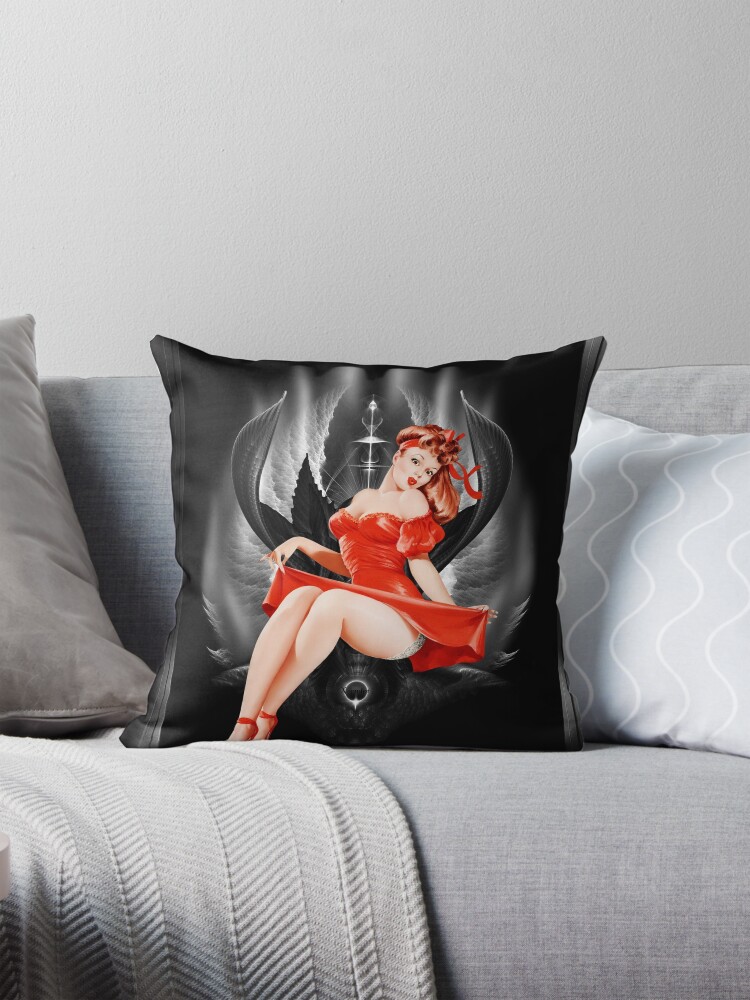
Peter Driben’s Beauty Parade Febbraio 1949 captures an iconic moment of American glamour and vintage allure, bringing together the bold and seductive spirit of mid-20th-century pin-up art. Known for his mastery of the pin-up genre, Driben’s work was celebrated for its sophisticated yet playful depictions of women, often embracing a combination of sensuality and class. Questa opera d'arte, dipinto dentro 1949, exemplifies the refined yet bold portrayal of feminine beauty through a strategic balance of color, modulo, e composizione.
Sommario
Argomento principale: The Femme Fatale in a Red Dress
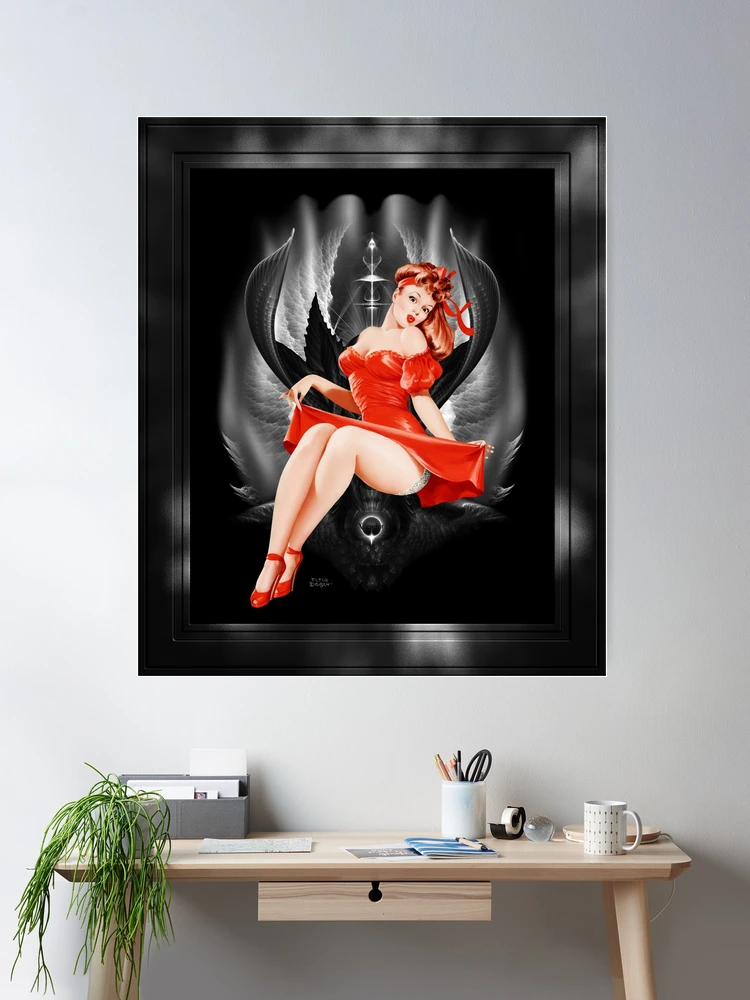
At the heart of the composition is the captivating figure of a woman, portrayed in a seductive and confident pose. She sits with one leg poised delicately over the other, her body turned slightly to the side, yet her gaze directly confronts the viewer. The figure exudes a sense of both allure and power, her crimson dress billowing slightly as if caught in a breeze, emphasizing her voluptuous form. Il vestito, with its off-the-shoulder cut, accentuates her graceful, feminine curves, while the bright red hue suggests passion and vitality.
Her expression is one of mischievous charm, a classic hallmark of Driben’s subjects, whose gaze often invites curiosity and intrigue. The woman’s red heels match her dress, a visual cue that reinforces her boldness and confidence. In cima alla sua testa, a carefully styled mass of waves and curls frames her face, with a ribbon adding a touch of playful elegance. The artist’s attention to detail is evident in her delicate features—high cheekbones, a soft smile, and slightly arched eyebrows—creating a harmonious balance of beauty and grace.
Her pose also suggests a subtle narrative. Resting lightly on her thigh, one hand holds a long, slender object (perhaps a cigarette holder), adding to the sense of poised sophistication and the timeless glamour of the era.
Surrounding Elements: The Shadowed Background and Wings
The background of the piece is as compelling as the figure herself. Dark, almost ethereal shadows emerge from either side of the central subject, forming what appear to be angelic or bird-like wings. These dark, contrasting elements not only serve to frame the woman but also add a dramatic sense of mystery and power. The wings are smooth and stylized, echoing the fashion trends of the time, which often included dramatic statements in art and design. These wings lend an air of fantasy and exaggerate the beauty of the subject, providing a striking contrast against the vivid red of her dress.
The composition is completed by a soft play of light that surrounds the figure, accentuating the curves of her body and the flowing fabric of her dress. The darker tones in the wings and background provide an aura of tension, as if the woman is both part of and removed from the mysterious world around her. There is an underlying sense of both elegance and danger, a reflection of the femme fatale archetype.
Materiali e Tecniche: Masterful Illustration
Peter Driben’s style is rooted in the traditions of commercial illustration, where detail and glamour are paramount. His use of bold, clean lines and the careful attention to proportions gives the figure a lifelike quality that remains faithful to the conventions of pin-up art. The application of colors is deliberate and evocative; the rich red of the dress contrasts starkly against the dark, sfondo disattivato. Driben’s use of highlights and shadowing on the woman’s skin creates depth, emphasizing her form and the play of light across her body.
The technique is characterized by smooth gradations of light and dark, which give a three-dimensional quality to the figure. The background is softer, with fewer details, placing all focus on the central subject. This simplicity of the background serves to highlight the intricate details of the woman’s pose, facial features, and attire.
Stile: Pin-Up Art at Its Peak
This piece embodies the pinnacle of mid-20th-century pin-up art. It was during this period that pin-up art became a symbol of youthful exuberance, seduction, and American culture. The stylistic approach employed by Driben in Beauty Parade Febbraio 1949 is rich in its visual appeal, with a heightened sense of femininity, fiducia, e fascino. His figures, though idealized, are imbued with personality, suggesting that these women are not just objects of beauty, but active participants in their narratives.
Driben’s work often blurred the lines between commercial art and fine art, appealing to both mass audiences and collectors. His pin-up models, with their glamorized but relatable characteristics, were meant to celebrate the sensuality of the female form while remaining within the bounds of taste and style.
Tema e umore: Seduction, Confidence, and Power
Il tema principale di Beauty Parade Febbraio 1949 is one of sensuality paired with a quiet but undeniable strength. The woman’s posture and expression suggest an empowered persona—someone who is fully aware of her beauty and the power it holds. There is a confident playfulness in her stance, enhanced by the subtle details of her hand positioning and the graceful way in which she sits. The wings behind her, though dark, are elegant, providing an almost mystical quality to the composition that reinforces the idea of beauty as something transcendent and otherworldly.
The mood of the piece is seductive and alluring but also imbued with a sense of mystery. The figure’s direct gaze draws the viewer in, yet the surrounding shadows and surreal wings leave a lingering sense of ambiguity. Is the woman an angel or a temptress, a mythic figure or a flesh-and-blood reality? This tension between the ethereal and the grounded plays a significant role in the overall atmosphere of the artwork.
Conclusione: An Iconic Representation of 1940s Glamour
Peter Driben’s Beauty Parade Febbraio 1949 remains an iconic representation of mid-20th-century glamour and the era’s fascination with sensuality, bellezza, and fantasy. Through his use of bold color, dramatic composition, and attention to detail, Driben crafted a work that continues to evoke the allure and power of the pin-up model. His combination of elegance, fascino, and mysterious strength makes this artwork a lasting testament to the timeless appeal of the feminine form as depicted in the art of the 1940s.
Informazioni sull'opera d'arte
Beauty Parade Febbraio 1949 del pittore americano Peter Dribén (1903 – 1968); pittore, illustratore e uno dei più prolifici artisti di pin-up degli anni '40 e '50.
Questo è un pezzo divertente di febbraio 1949 Edition of Beauty Parade Magazine, which shows an attractive redhead, with red lipstick in mid length off shoulder red dress, a red bow bandana in her hair that is also wearing red strap high heel shoes.
Originally she was seated on a greyish-blue decorative pouf and was set against a black background; but decided to replace those and add in my fractal art composition portrait Taidushan Sai The Talons Of Time, to change the look as if she may be in for some enticing hot water.
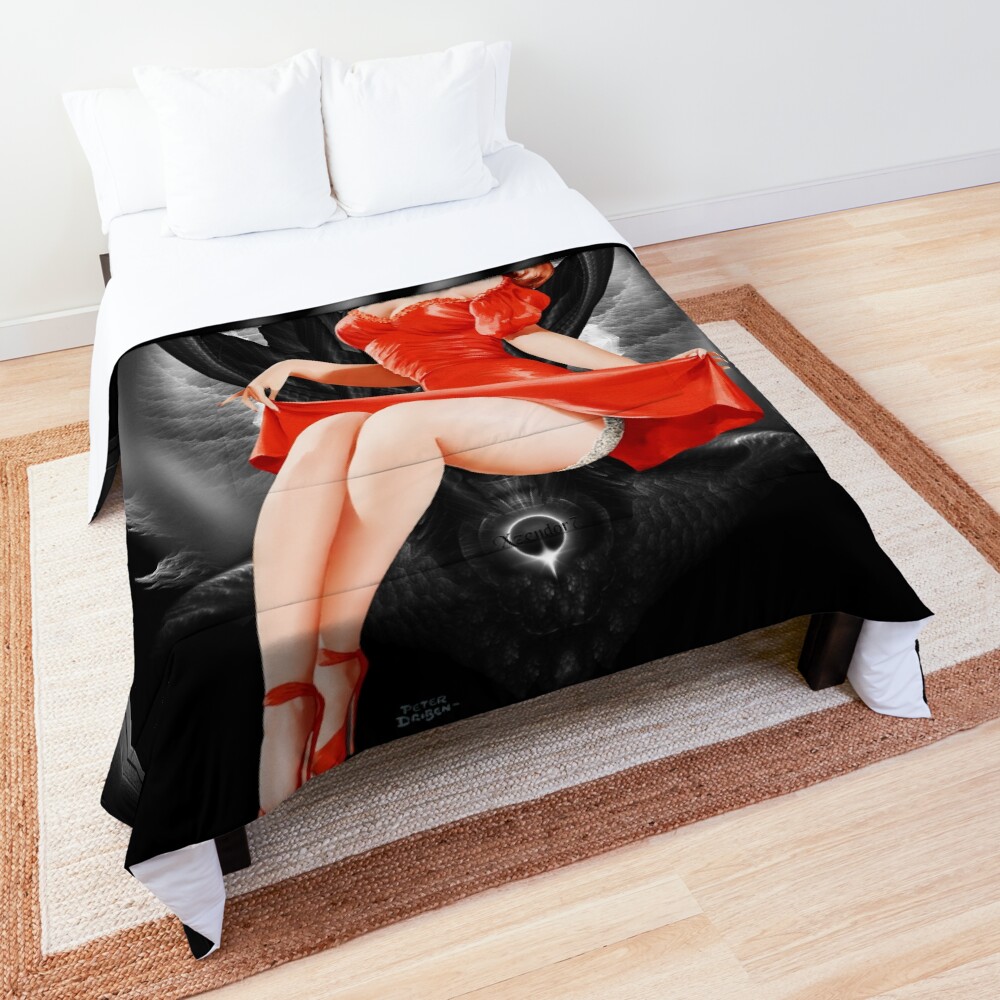
The young redhead has her dressed lifted and spread over her thighs using her two hands, which reveals her decorative panty and her beautiful full figured legs.
This is a remastered digital art old masters reproduction of a public domain image that is available as a canvas, acrilico e stampa in metallo in linea.
Artist Info
Informazioni sotto da Wikipedia.org
Peter Driben è nato a Boston, e ha studiato alla Vesper George Art School prima di trasferirsi a Parigi in 1925. Durante le lezioni alla Sorbona in 1925, ha iniziato una serie di disegni a penna e inchiostro molto popolari delle veline della città.
A marzo di 1934 Driben ha creato la sua prima pin-up conosciuta che è stata la copertina di La Paree Stories; e da 1935, stava producendo copertine per Snappy, Pep, Notti di New York, Vita notturna francese e capriccio.
Mentre la popolarità di Driben continuava a crescere alla fine degli anni Trenta, creò più copertine per altri periodici tra cui Silk Stocking Stories, Giostra cinematografica e divertimento sullo schermo reale.
La carriera di Driben si è espansa nella pubblicità quando si è trasferito a New York alla fine 1936. Qui ha creato originali vetrine fustellate tridimensionali per Philco Radios, Asciugamani da bagno Cannone, e la Weber Baking Company.
Forse la sua opera più famosa sono i poster originali e le opere pubblicitarie per The Maltese Falcon. Peter Driben era anche un caro amico dell'editore Robert Harrison, e in 1941 è stato incaricato di produrre copertine per la nuova rivista di Harrison Beauty Parade.
Da lì Peter continuò a dipingere centinaia di copertine per quella pubblicazione e per gli altri sette titoli che Harrison avrebbe lanciato – Flirtare, Sussurro, Sbirciare, Ammiccamento, Occhio, Risatine, e Jolly.
Driben spesso pubblicava fino a sei o sette delle sue copertine ogni mese. Il lavoro di Driben per Harrison lo ha reso uno degli artisti pin-up e glamour più riconosciuti e di successo d'America. Poco prima di iniziare a lavorare per Harrison, Driben ha sposato l'artista, attrice e poetessa, Louise Kirby.
Nel 1944 gli è stata offerta l'insolita opportunità, per un'artista pin-up; che sarebbe diventato il direttore artistico del New York Sun, un incarico che mantenne fino a quando 1946. Durante la guerra, il suo famoso dipinto di soldati americani che alzano la bandiera a Iwo Jima ha suscitato una notevole attenzione da parte dei media.
Nel 1956, Driben e Louise si sono trasferiti a Miami Beach, dove trascorse gli anni della pensione dipingendo ritratti (incluso uno di Dwight D. Eisenhower) e altre opere d'arte, che sono state organizzate in mostre di successo da sua moglie. Driben è morto nel 1968, Luisa in 1984.