

Il Capo Rosso: A Timeless Elegance Of Mid-Century Glamour
Introduzione all'opera d'arte
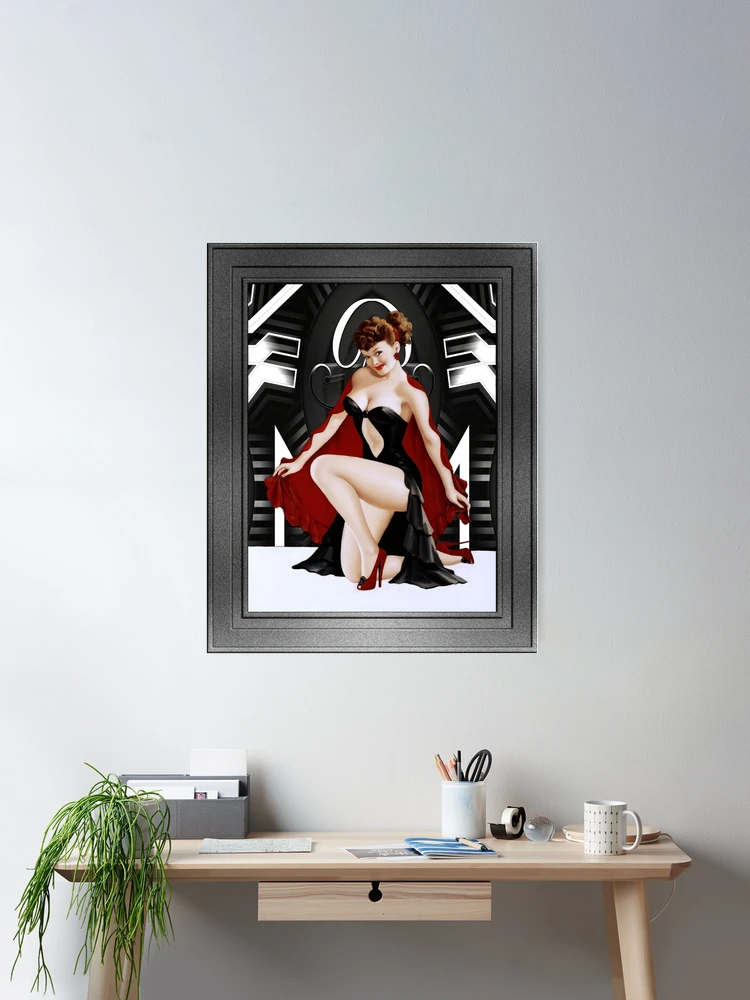
“Il Capo Rosso” is a quintessential work by the American artist Peter Driben, a celebrated figure known for his pin-up art in the mid-20th century. Driben’s mastery in creating seductive and lively compositions is well represented in this piece. The artwork captures the essence of glamour, fascino, and sophisticated femininity, themes that resonate throughout his body of work. “Il Capo Rosso” is a vivid portrayal of a woman embodying confidence and charm, set against a striking, almost cinematic backdrop.
Sommario
Il soggetto principale: A Seductive Femme Fatale
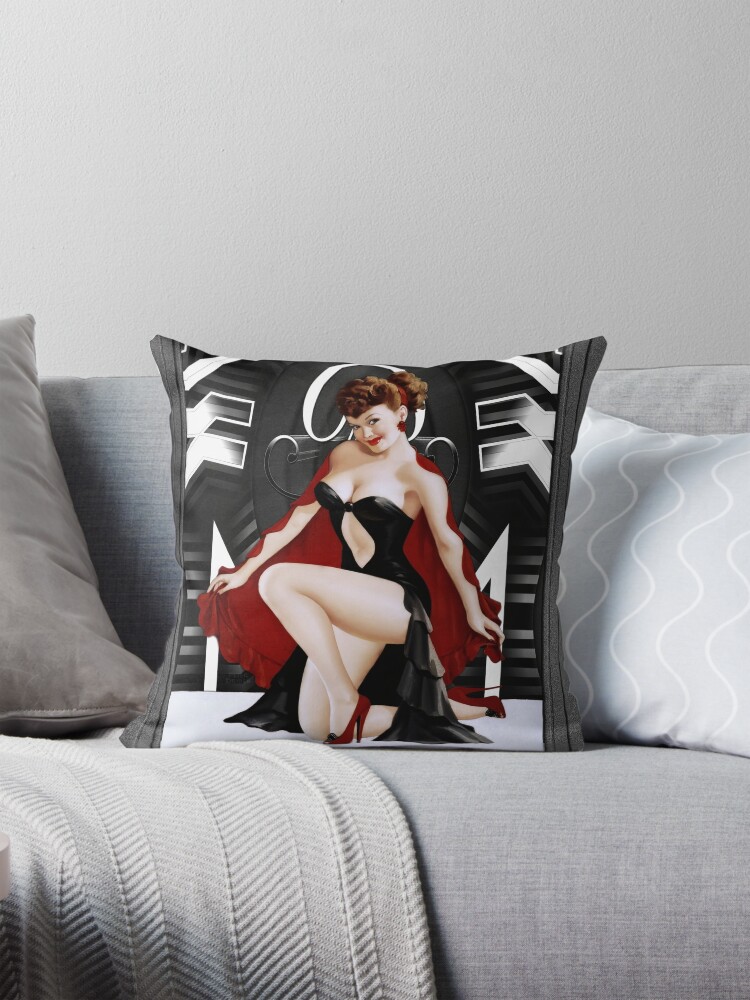
La figura centrale in “Il Capo Rosso” is a young woman in an arresting pose, exuding an irresistible charm. Her posture is confident, sitting on the ground with one knee raised, her body slightly turned to the side. She gazes directly at the viewer with a playful yet enticing expression, her lips slightly parted in a smile. Her hairstyle is carefully styled into soft curls that frame her face, adding to the sophistication of her appearance. The woman’s strikingly seductive look is enhanced by the rich color contrasts in her attire and surroundings.
She wears a fitted black dress with a daring plunging neckline, the silhouette of which accentuates her curves. The black dress, a classic emblem of elegance, is complemented by a flowing red cape that drapes behind her, extending across her shoulders and fluttering like a vivid extension of her powerful femininity. The red cape contrasts dramatically against the dark tones of the background and the black dress, drawing the eye directly to the central figure. Her bold red lipstick and matching earrings mirror the deep hue of the cape, underscoring her glamorous allure.
Lo sfondo e l'umore
Lo sfondo di “Il Capo Rosso” further enhances the sense of grandeur and stylized sophistication. The background is composed of striking geometric elements, with sharp, angular lines creating a dynamic contrast with the soft, curvaceous lines of the model’s figure. The black and white tones in the background, along with the radial design, evoke a sense of art deco elegance and modernity. These elements work in tandem with the central figure, accentuating the timeless quality of the image while also grounding it in the mid-century aesthetic that Driben is known for.
The overall mood of the artwork is one of glamour and power. The woman in the piece is not merely a passive subject but an active, confident figure, fully aware of her beauty and the impact it has on those around her. The red cape, in particolare, acts as a symbol of strength and boldness, much like the heroic personas in the stories of classic cinema. The color red, both sensual and commanding, highlights her dominance in the composition, turning her into an almost mythical figure—a heroine wrapped in the elegance of vintage Hollywood.
Symbolism and Thematic Elements
“Il Capo Rosso” is a portrayal of more than just a fashionable woman; it conveys a deeper narrative of empowerment, fascino, and independence. The woman is portrayed as a figure of control, unapologetically seductive yet regal. The flowing red cape could symbolize both a cloak of protection and a dramatic visual extension of her persona. Il mantello, in its voluminous fluidity, brings a sense of movement to an otherwise static scene, suggesting that the woman is not only a passive subject in the image but also an active force in her environment.
The composition itself echoes the optimism and post-war exuberance of the 1940s and 1950s. This period in American history saw a cultural explosion of confidence and self-expression, much of which was embodied in the burgeoning pin-up culture. Driben’s work encapsulates the sense of freedom and charm that characterized this era, an era where art and fashion collided to elevate everyday femininity to the level of art. The subject’s confident posture and seductive smile reflect the desire for attention and admiration that was often captured in pin-up art of the time.

The Medium and Artistic Style
Peter Driben’s work is rooted in the commercial and illustration art tradition, which is evident in “The Red Cape.” His style, influenced by the pin-up art movement and commercial illustration of the 1940s and 1950s, is both vivid and approachable. While it is clear that Driben’s work was intended for mass consumption—often for advertisements, manifesti, and magazine covers—he elevated the genre through his attention to detail, colore, e composizione.
Nel “Il Capo Rosso,” Driben’s use of sharp contrasts between light and dark enhances the focal point of the image. The model’s face and body are brightly illuminated against the deep shadows of the background, creating a three-dimensional quality that draws the viewer’s eye. The smooth lines of the dress and cape contrast with the geometric lines in the background, suggesting a balance between softness and strength.
The vivid use of color in the artwork is key to its overall appeal. The combination of deep reds, blacks, and whites adds to the visual drama of the scene, while the bold lines in the background contribute a sense of modernist movement. The painting’s glossy finish and clean contours reflect the aesthetic preferences of the time, showcasing a blend of realism with the stylized and idealized beauty characteristic of pin-up art.
Conclusione: A Timeless Icon of Mid-Century Beauty
“Il Capo Rosso” by Peter Driben stands as a classic example of mid-century pin-up art that continues to captivate audiences with its timeless blend of glamour, fascino, and sophisticated femininity. The figure of the woman, with her powerful gaze and poised posture, represents the confidence and independence that was becoming more prevalent in American culture during the post-war years. Driben’s use of color, composizione, and dramatic mood creates a piece that transcends its commercial origins, elevating it to the status of fine art.
This artwork is not merely a visual representation of a beautiful woman but a statement of power, fiducia, ed eleganza senza tempo, rendered in the perfect balance of style and substance. Through “Il Capo Rosso,” Driben’s ability to capture the essence of his era—its optimism, bellezza, and emerging social dynamics—remains as relevant and arresting as ever.
Informazioni sull'opera d'arte
Il Mantello Rosso del pittore americano Peter Dribén (1903 – 1968); pittore, illustratore e uno dei più prolifici artisti di pin-up degli anni '40 e '50.
Una bella e giovane bruna calda e sexy con un nastro rosso tra i capelli e orecchini rossi che indossa un grande mantello rosso sopra un abito da sera nero rivelatore e scarpe rosse con tacco alto con nastri a pois neri in cima.
Ho deciso di sostituire lo sfondo nero con uno sfondo artistico digitale per creare un aspetto più dinamico.
Questa è una riproduzione di vecchi maestri di arte digitale rimasterizzata di un'immagine di pubblico dominio disponibile come file a ha dipinto le pinup per la commedia di Errol Flynn Never Say Goodbye.
Informazioni sull'artista
Informazioni sotto da Wikipedia.org
Peter Driben è nato a Boston, e ha studiato alla Vesper George Art School prima di trasferirsi a Parigi in 1925. Durante le lezioni alla Sorbona in 1925, ha iniziato una serie di disegni a penna e inchiostro molto popolari delle veline della città.
A marzo di 1934 Driben ha creato la sua prima pin-up conosciuta che è stata la copertina di La Paree Stories; e da 1935, stava producendo copertine per Snappy, Pep, Notti di New York, Vita notturna francese e capriccio.
Mentre la popolarità di Driben continuava a crescere alla fine degli anni Trenta, creò più copertine per altri periodici tra cui Silk Stocking Stories, Giostra cinematografica e divertimento sullo schermo reale.
La carriera di Driben si è espansa nella pubblicità quando si è trasferito a New York alla fine 1936. Qui ha creato originali vetrine fustellate tridimensionali per Philco Radios, Asciugamani da bagno Cannone, e la Weber Baking Company.
Forse la sua opera più famosa sono i poster originali e le opere pubblicitarie per The Maltese Falcon. Peter Driben era anche un caro amico dell'editore Robert Harrison, e in 1941 è stato incaricato di produrre copertine per la nuova rivista di Harrison Beauty Parade.
Da lì Peter continuò a dipingere centinaia di copertine per quella pubblicazione e per gli altri sette titoli che Harrison avrebbe lanciato – Flirtare, Sussurro, Sbirciare, Ammiccamento, Occhio, Risatine, e Jolly.
Driben spesso pubblicava fino a sei o sette delle sue copertine ogni mese. Il lavoro di Driben per Harrison lo ha reso uno degli artisti pin-up e glamour più riconosciuti e di successo d'America. Poco prima di iniziare a lavorare per Harrison, Driben ha sposato l'artista, attrice e poetessa, Louise Kirby.
Nel 1944 gli è stata offerta l'insolita opportunità, per un'artista pin-up; che sarebbe diventato il direttore artistico del New York Sun, un incarico che mantenne fino a quando 1946. Durante la guerra, il suo famoso dipinto di soldati americani che alzano la bandiera a Iwo Jima ha suscitato una notevole attenzione da parte dei media.
Nel 1956, Driben e Louise si sono trasferiti a Miami Beach, dove trascorse gli anni della pensione dipingendo ritratti (incluso uno di Dwight D. Eisenhower) e altre opere d'arte, che sono state organizzate in mostre di successo da sua moglie. Driben è morto nel 1968, Luisa in 1984.